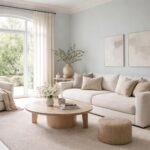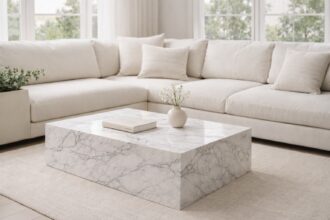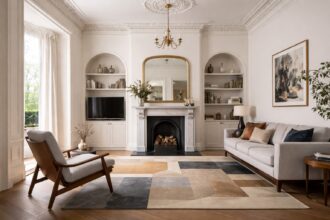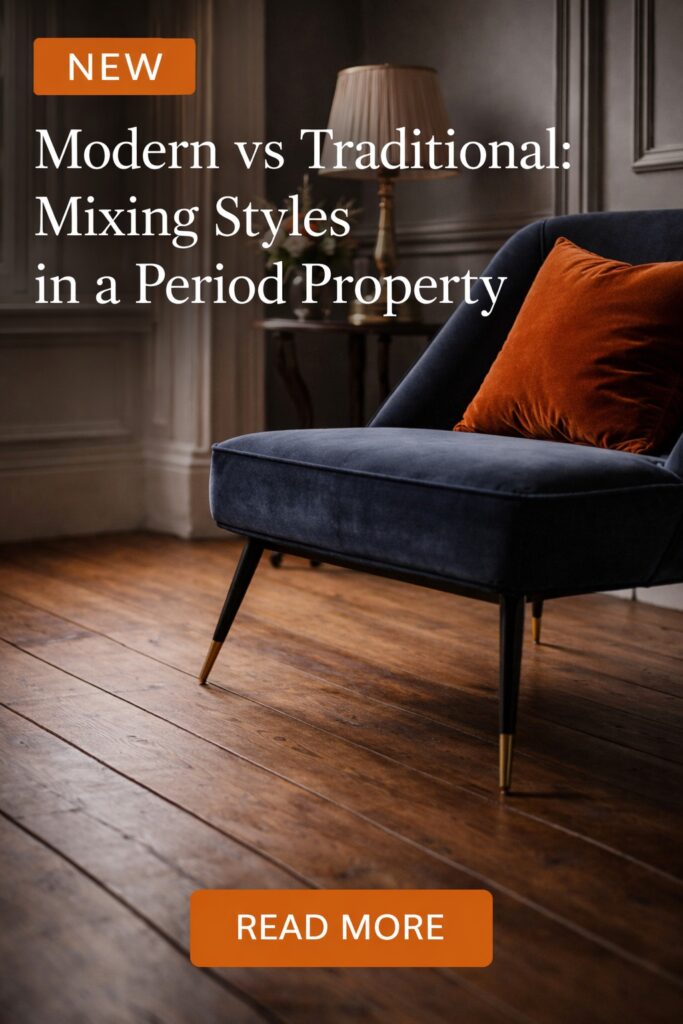
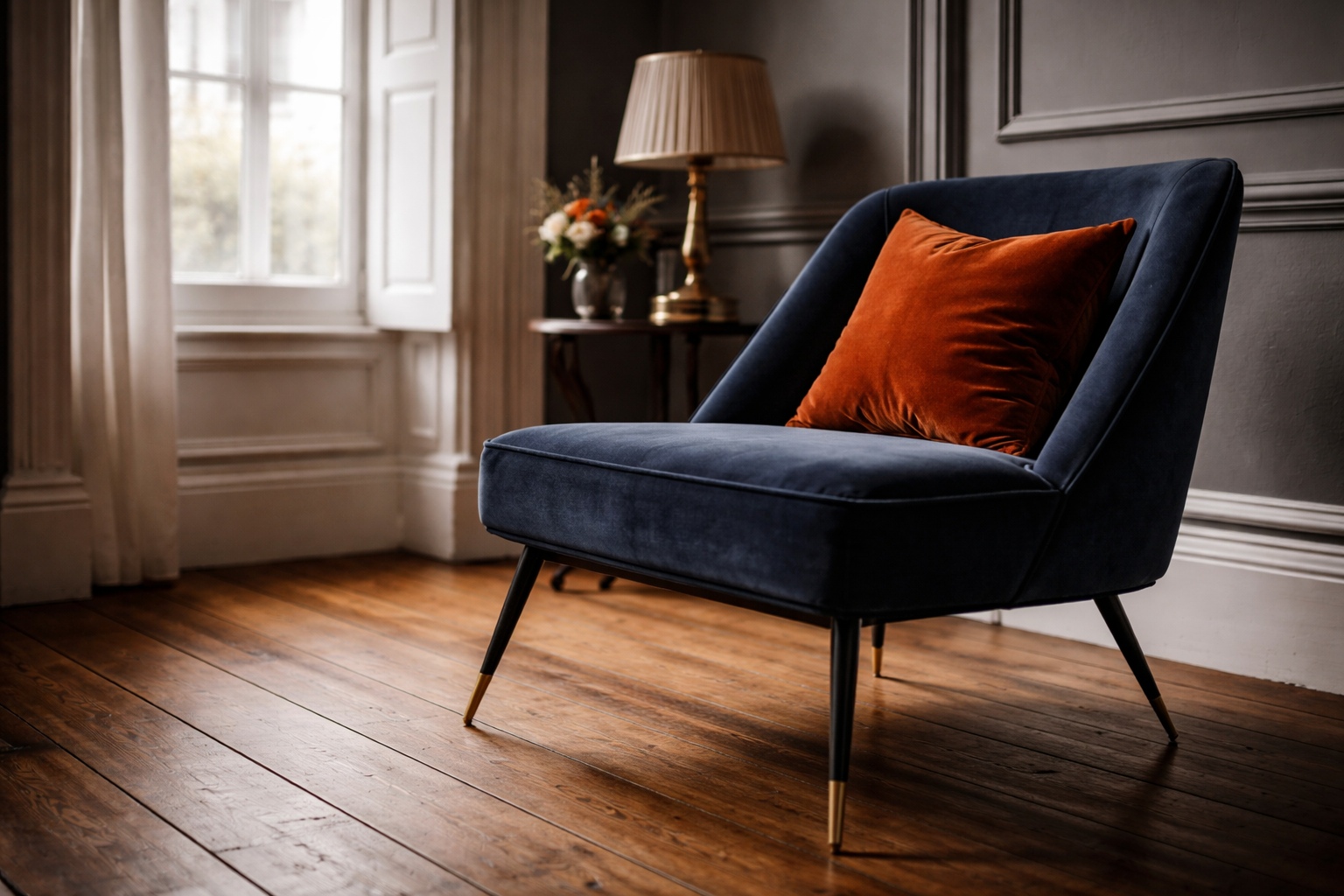
A modern vs traditional living room can feel challenging to design, especially in a period property where original features and contemporary living must work together.
Period properties have a character that modern homes simply cannot replicate. Original fireplaces, decorative cornicing, sash windows, ceiling roses, wall panelling, and generous proportions all contribute to a sense of history and permanence. These details tell a story and give older homes a depth that many newer builds simply do not have.
At the same time, many homeowners are drawn to modern interiors. Clean lines, contemporary furniture, practical layouts, and modern lighting reflect how people live today. Comfort, flexibility, and functionality matter just as much as visual appeal.
The challenge is not choosing one style over the other. The most successful living rooms in period properties are those that blend modern and traditional elements with intention. When done well, the result feels timeless rather than dated, confident rather than confused, and personal rather than staged.
This guide explains how to mix modern and traditional styles in a period living room without losing the integrity of the building or creating visual conflict. Instead of relying on short lived trends, it focuses on design principles that work across architectural eras, countries, and lifestyles.
Some of the links in this post are affiliate links. If you click through and make a purchase, we may earn a small commission at no extra cost to you. We only recommend products we naturally use and love.
Table of Contents
Understanding the Character of a Period Property
Before introducing anything modern, understand what defines a period property.
Older homes were designed with craftsmanship and proportion at their core. Architectural features such as high ceilings, deep skirting boards, ornate plasterwork, solid timber doors, traditional window styles, and chimney breasts were integral to the building, not decorative extras. In a living room, these elements form the framework around which everything else sits.
Treating original features as obstacles often leads to awkward design decisions. Covering fireplaces, flattening walls, or boxing in cornicing can strip a room of its identity. Instead, these features should be recognised as assets.
Blending styles does not mean freezing a home in time. Period properties have always evolved. Rooms were redecorated, layouts adapted, and furnishings replaced as lifestyles changed. Introducing modern elements continues this evolution while allowing the property to remain functional and relevant.
The goal is not preservation at all costs. It is thoughtful progression that respects what makes the property special.
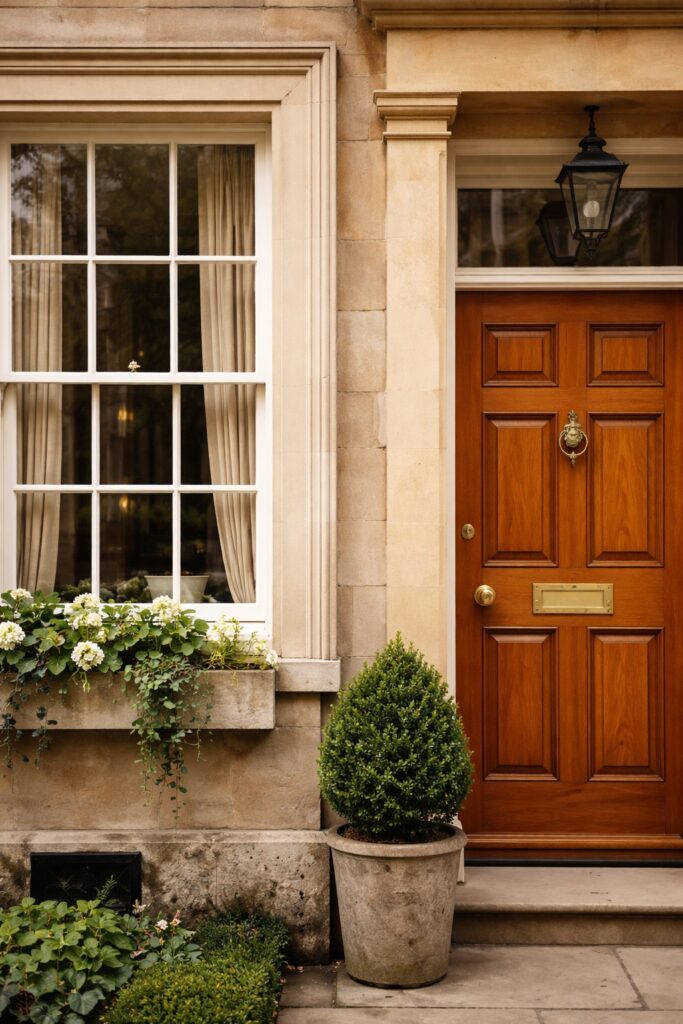
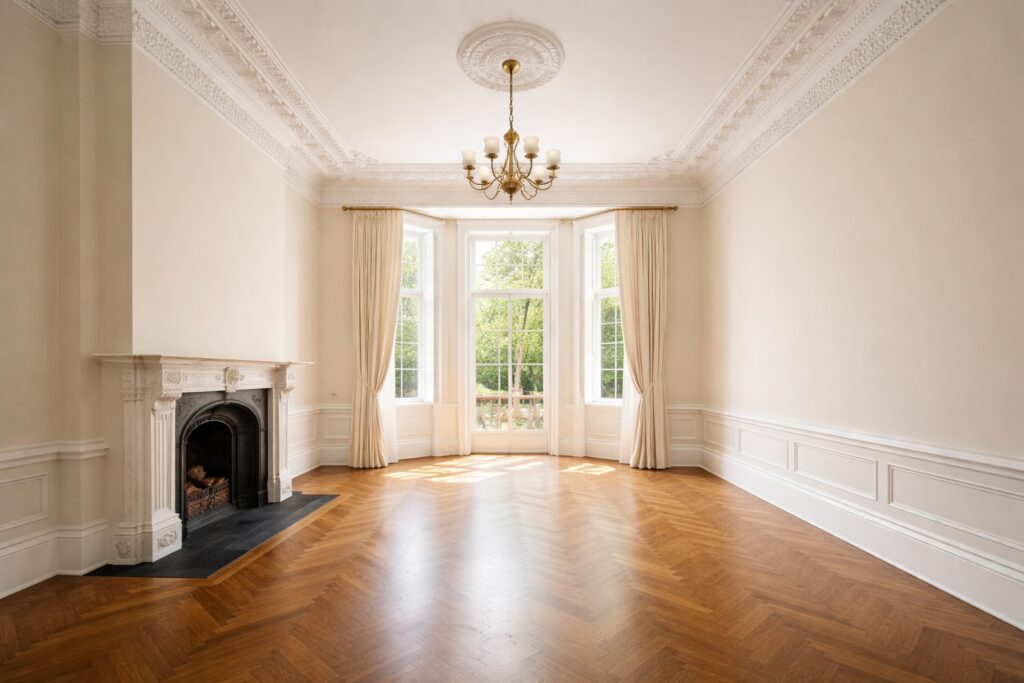
What “Modern” Really Means in a Period Living Room
Modern design is often misunderstood. It is frequently associated with cold minimalism or spaces that feel like galleries. In reality, modern design is about clarity, intention, and simplicity.
In a period living room, modern style usually appears through:
- Clean and considered furniture shapes
- Restrained use of colour
- Thoughtful lighting placement
- Contemporary materials such as metal, glass, and refined fabrics
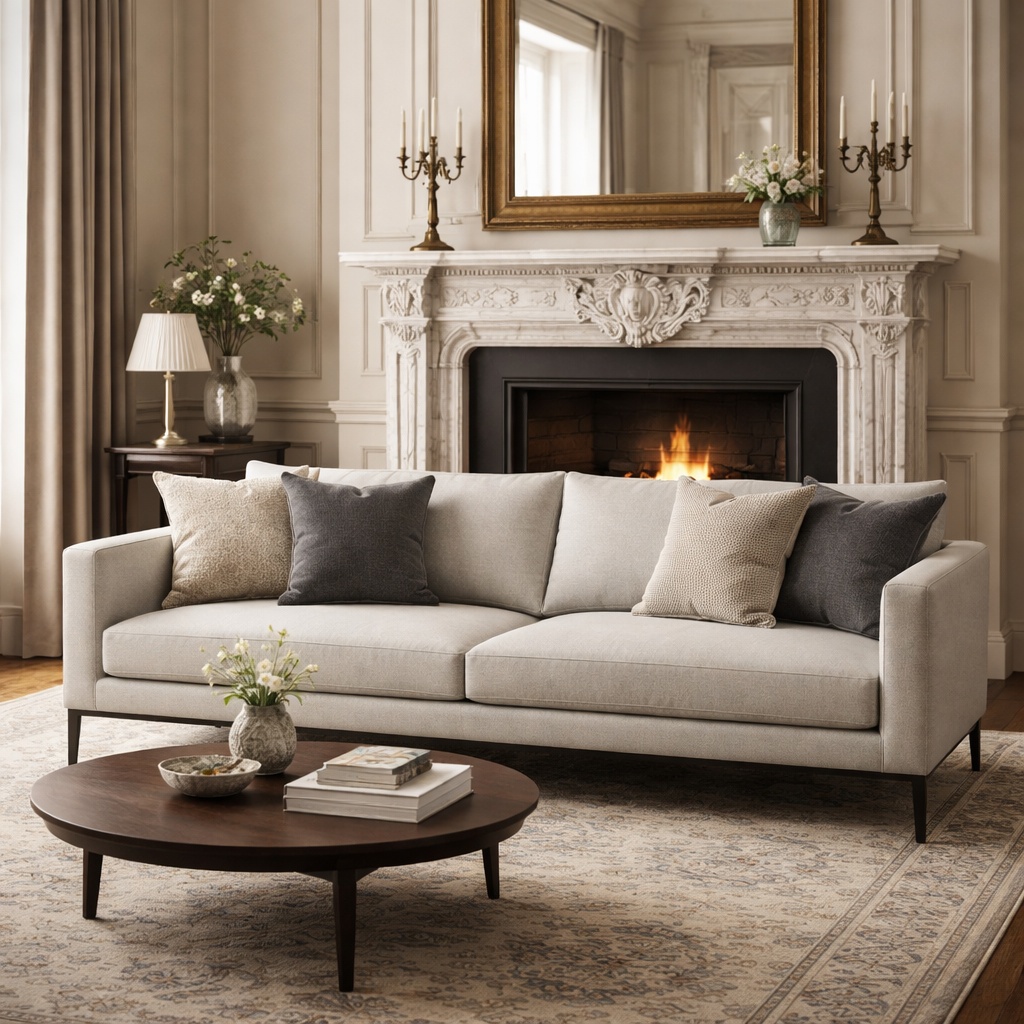
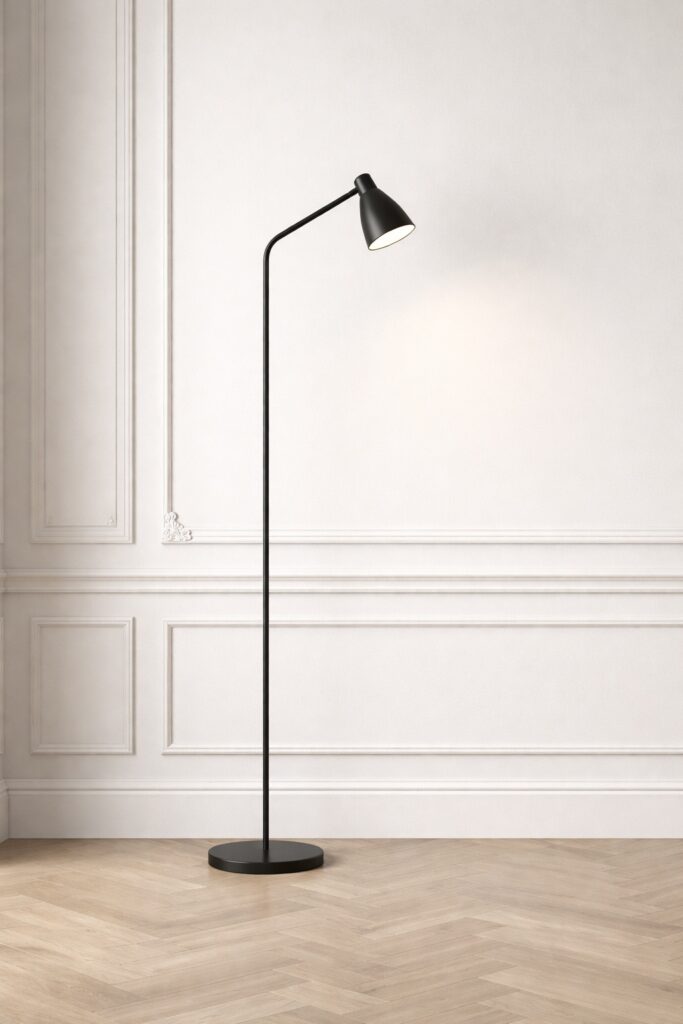
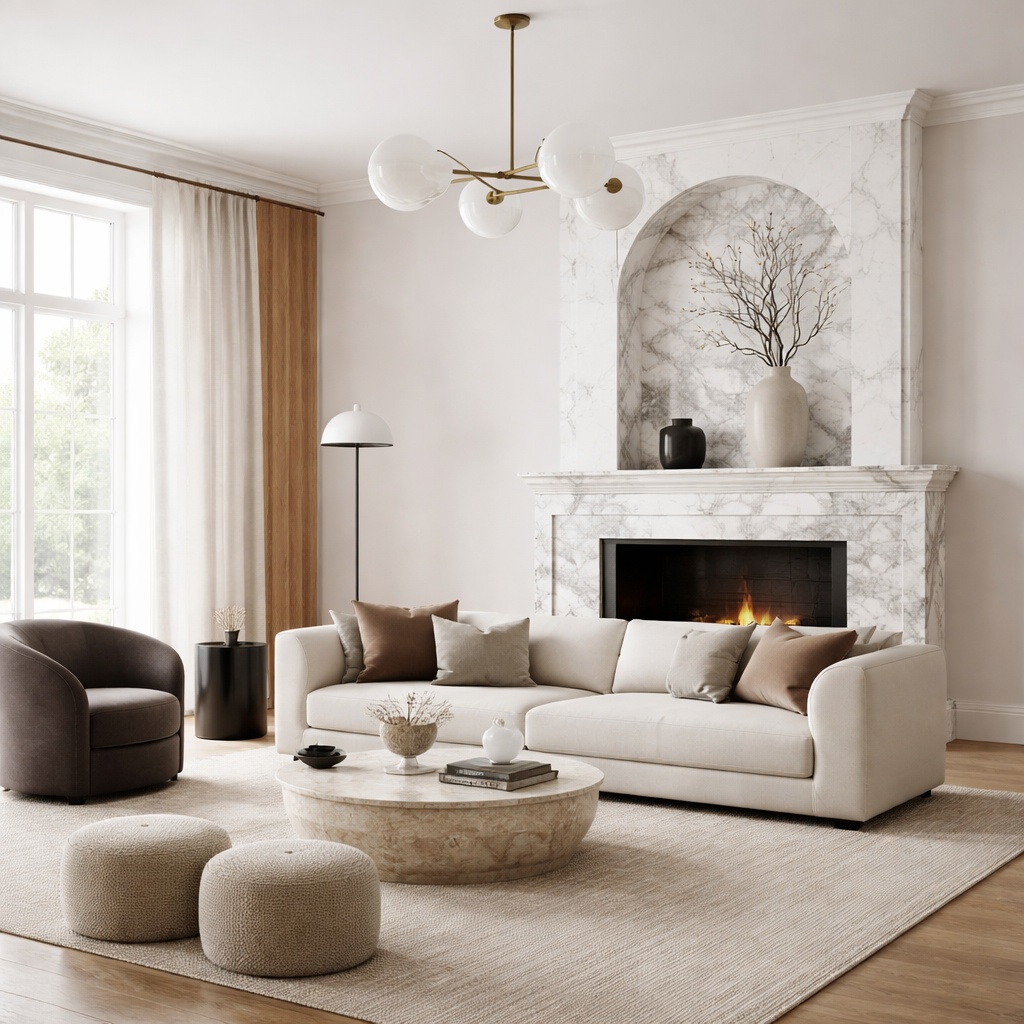
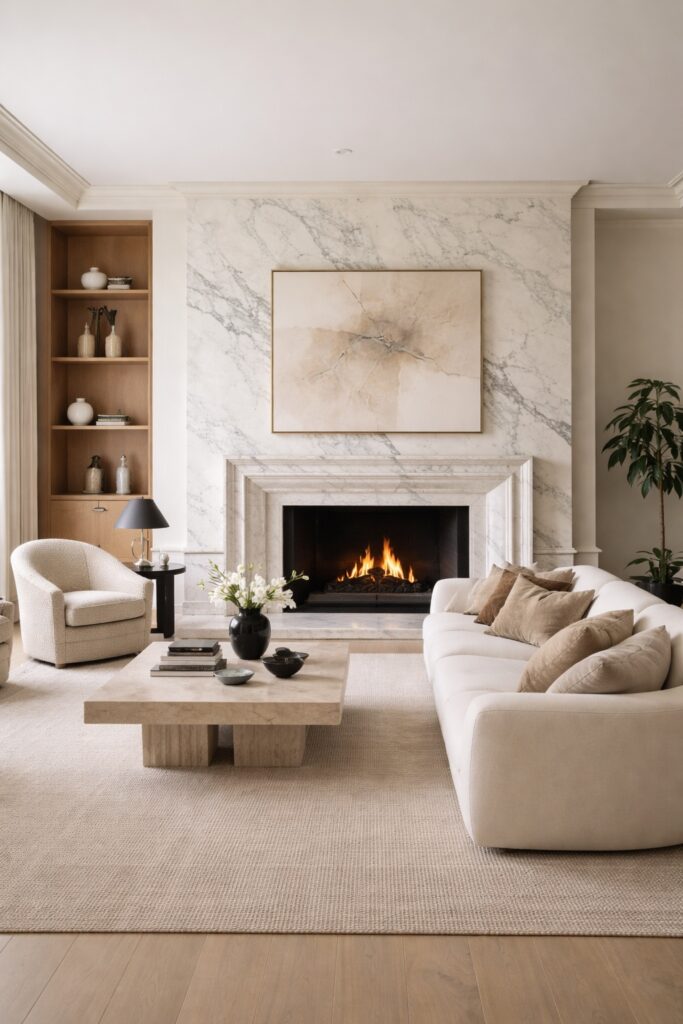
Modern elements work best when they contrast with traditional features rather than compete with them. A streamlined sofa gains presence against an ornate fireplace. A contemporary floor lamp becomes more striking when framed by decorative mouldings.
Designing a modern vs traditional living room is about balance, proportion, and respecting the architectural character of the space.
Modern does not mean dominating the room. It means introducing pieces that feel deliberate and purposeful while allowing the architecture to remain visible and celebrated.
Why Mixing Modern and Traditional Works So Well
Blending styles creates visual tension, and visual tension creates interest.
A fully traditional living room can feel formal or static in daily life. On the other hand, an overly modern interior placed inside a period property can feel disconnected from its surroundings, as if the furniture and architecture belong to different homes.
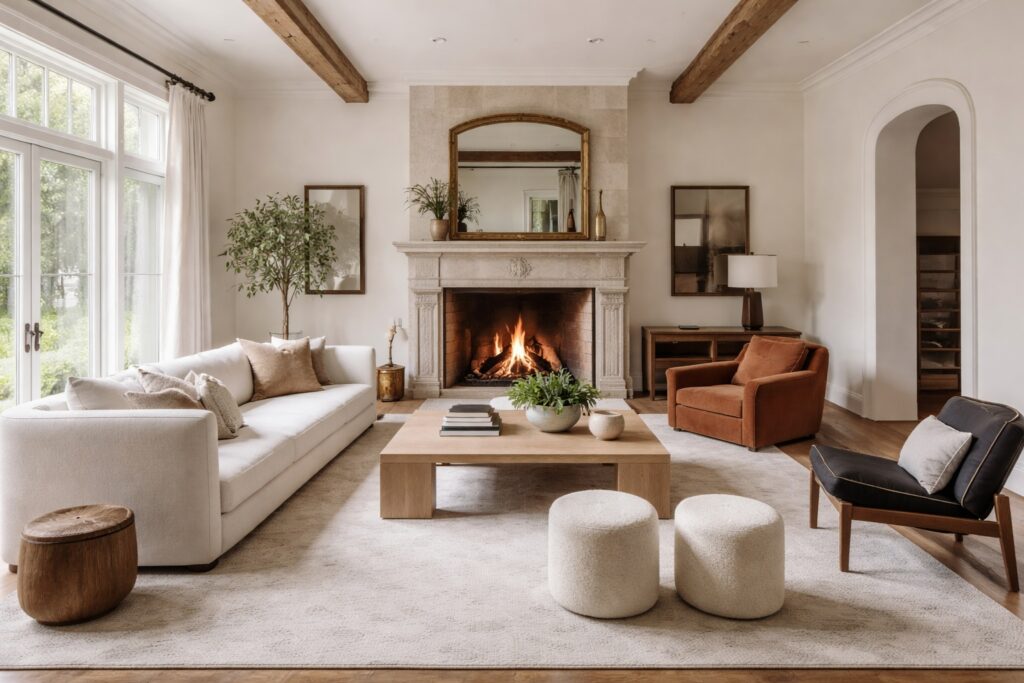
Mixing modern and traditional allows each style to enhance the other. Traditional features bring warmth, depth, and history. Modern elements introduce comfort, functionality, and restraint. Together, they create a living room that feels layered and real.
This approach also helps a room evolve naturally. Modern furniture, lighting, and accessories can change over time, while the underlying architectural features remain constant. The result is a living room that adapts without losing its identity.
Respecting Original Features Without Freezing the Space
One of the most common mistakes in period homes is being overly cautious. Original features can feel intimidating, leading homeowners to avoid making changes, or to decorate in a way that feels like a set.
Respecting a property’s history does not mean avoiding contrast. It means understanding which features define the room and ensuring they remain visible and appreciated.
Original fireplaces, ceiling roses, cornicing, exposed beams, sash windows, and panelled walls usually form the visual anchors of the space. These elements benefit from being well maintained, clearly visible, and thoughtfully lit.
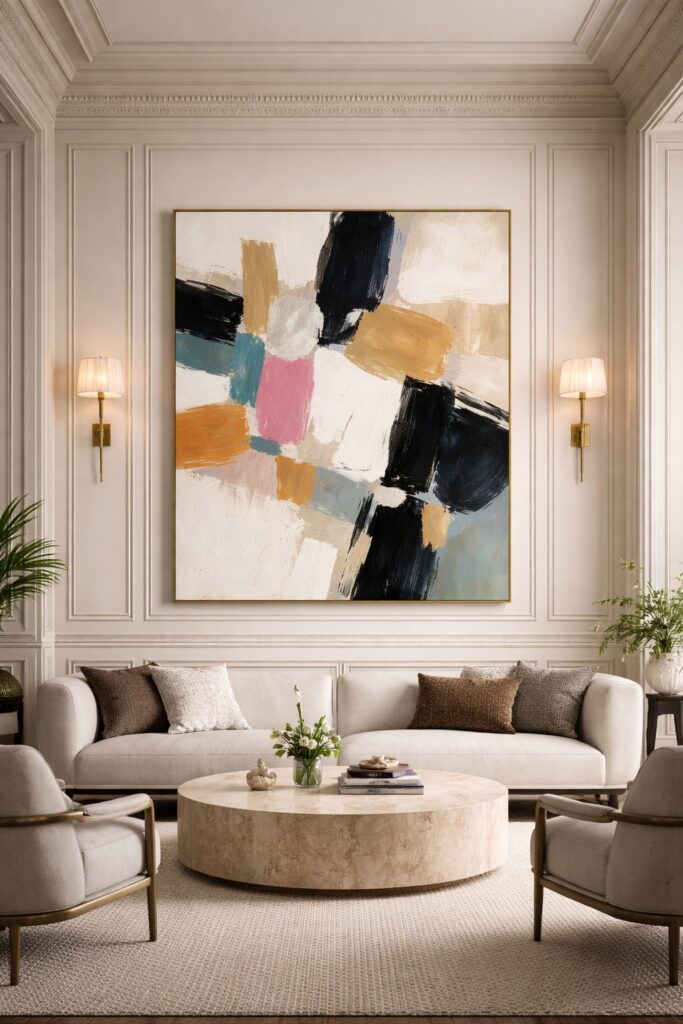
Modern additions should sit around these features rather than fight for attention. A contemporary sofa placed slightly away from an ornate fireplace allows both to breathe. Modern artwork within traditional panelling can highlight scale rather than disrupt it.
A living room should feel lived in, not preserved.
Using Contrast Intentionally, Not Randomly
Contrast is one of the most powerful tools in mixed style interiors, but it must be controlled.
Without contrast, modern and traditional elements blur together and lose their impact. With too much contrast, the room becomes visually noisy and uncomfortable.
Effective contrast often comes from:
- Smooth modern finishes against detailed traditional surfaces
- Clean lines placed next to ornate shapes
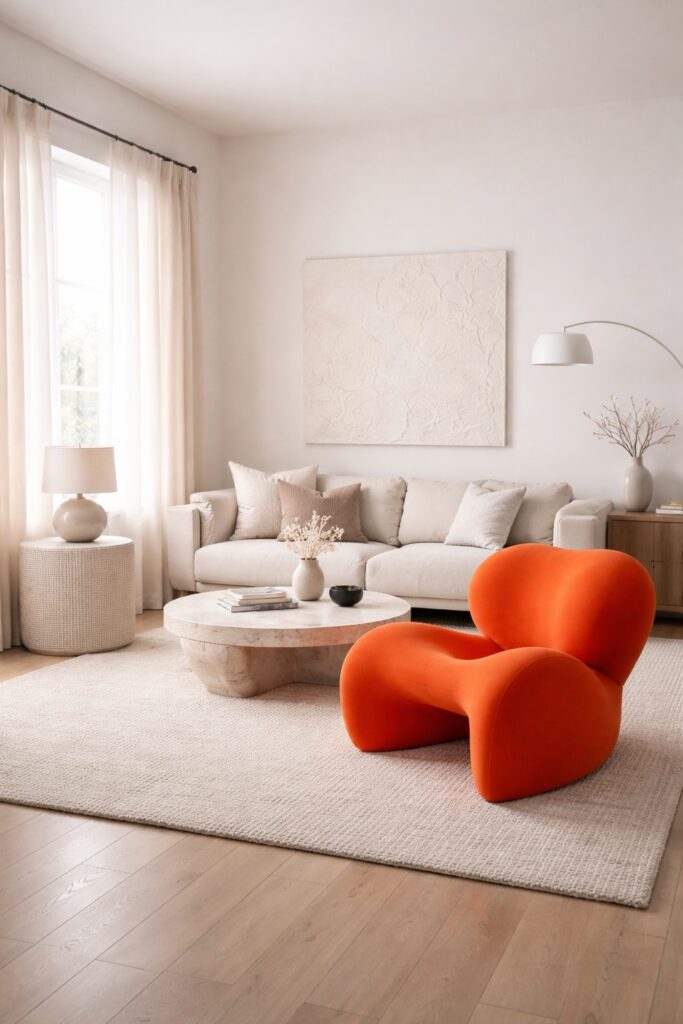
- Neutral colour schemes interrupted by one modern accent
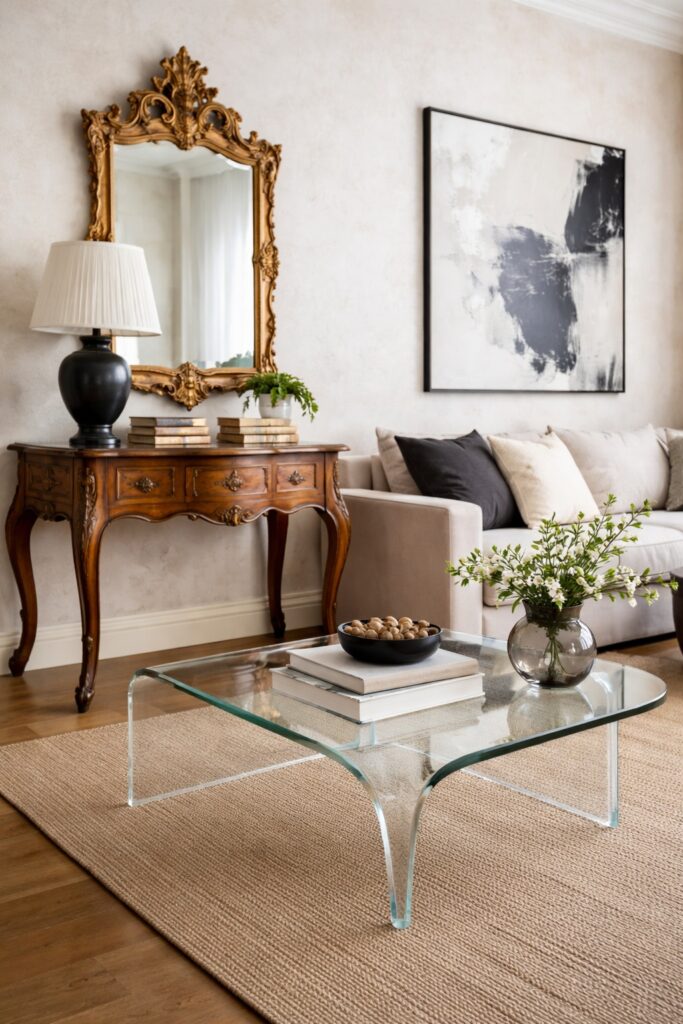
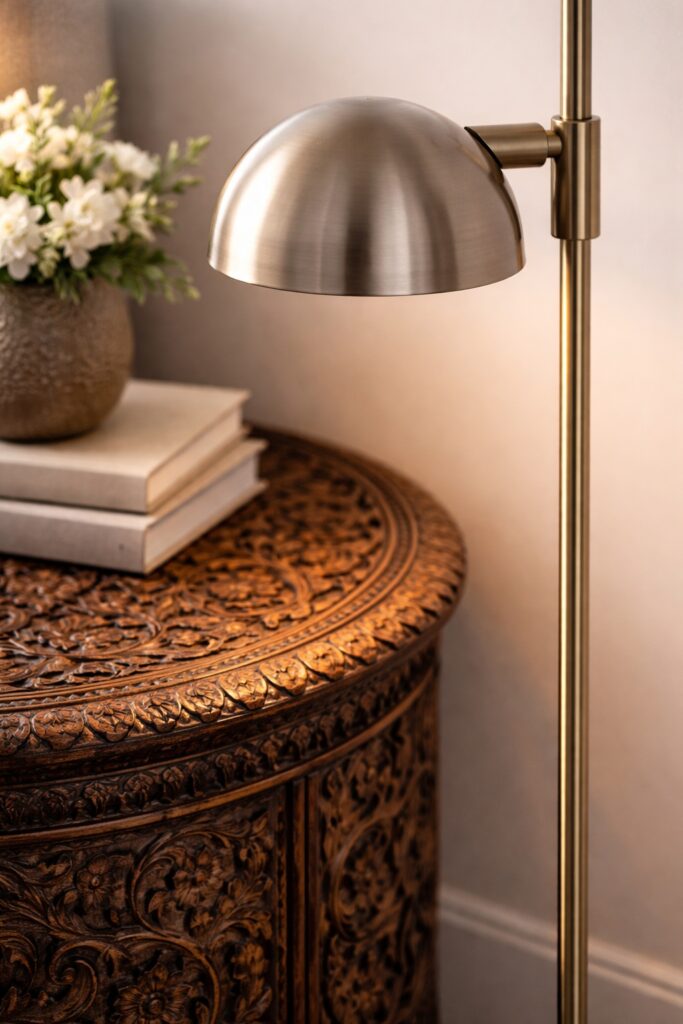
For example, a sleek metal floor lamp can look striking beside a carved wooden side table. The contrast draws attention to both pieces rather than diminishing either.
If something feels out of place, it is usually because it lacks a visual relationship with the rest of the room. Contrast should feel deliberate, not accidental.
Lighting as the Bridge Between Styles
Lighting is one of the most effective ways to blend modern and traditional design.
Period living rooms were designed around daylight and fireplaces. Artificial lighting was never part of the original plan. Many older homes still rely too heavily on a single ceiling fitting, leaving the room feeling flat in the evening.
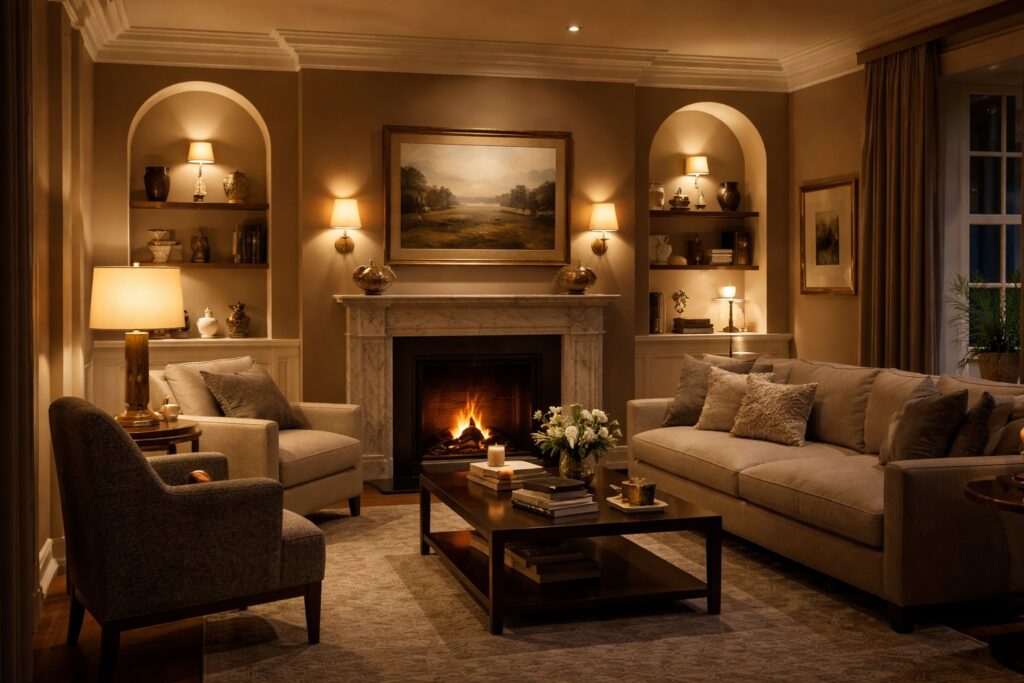
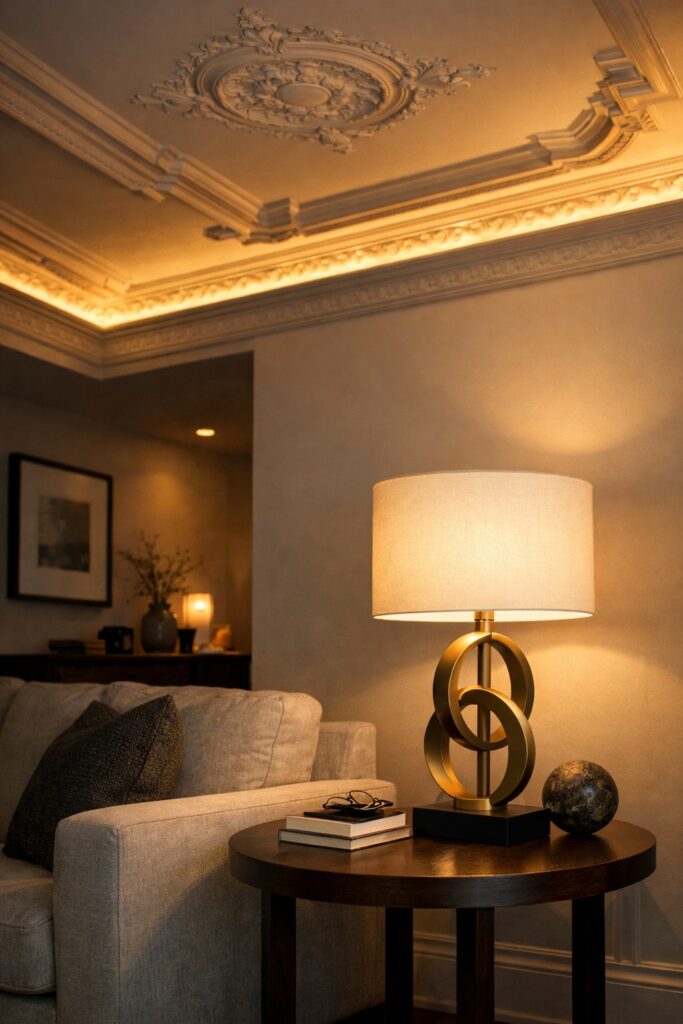
Modern lighting allows you to highlight architectural features while improving how the room functions. Wall lights can emphasise panelling and alcoves. Ceiling fittings can sit quietly alongside decorative plasterwork. Floor and table lamps add warmth, flexibility, and intimacy.
Modern lighting works best in period properties when it is understated. Clean shapes and refined finishes tend to age better than overly decorative designs that attempt to replicate historical styles. If the room already has strong ornamentation, let the architecture do the decorative work.
How Lighting Layers Transform Period Living Rooms
A well designed lighting scheme goes beyond a single light source.
Effective living room lighting includes:
- Ambient lighting for overall illumination
- Accent lighting to highlight architectural features
- Task lighting for seating and reading areas
Layering light allows you to shift mood throughout the day. It also prevents original features from disappearing into shadow during the evening.
Wall lights are particularly effective in period properties because they work with the vertical scale of older rooms. Floor lamps and table lamps add softness and flexibility, making the space feel welcoming rather than formal.
A simple rule: if you can only switch on one light source and the room feels harsh, you need more layers. If you can switch on three different sources and each creates a usable atmosphere, your lighting plan is doing its job.
Furniture Choices That Respect the Architecture
Furniture is often where mixed style living rooms succeed or fail.
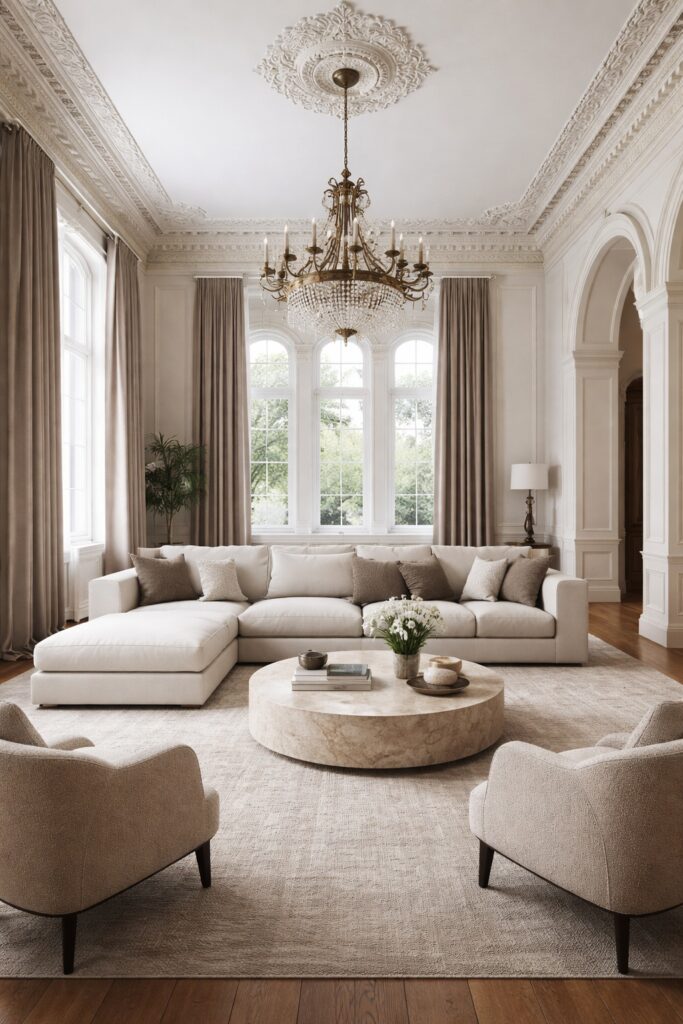
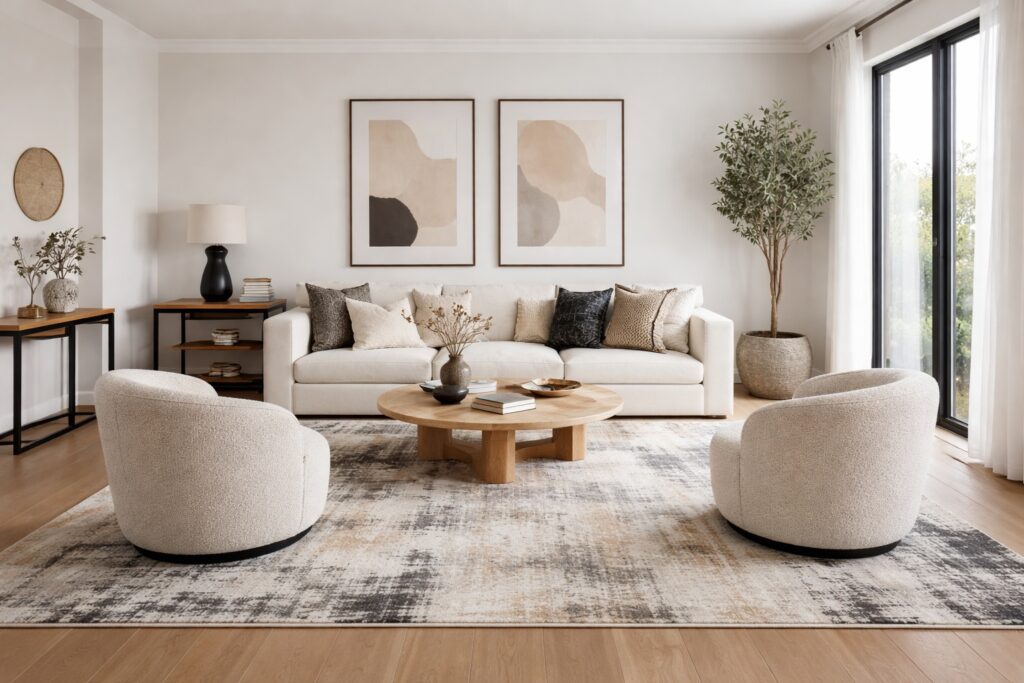
Scale matters more than style in period properties. High ceilings and generous proportions require furniture with presence. Slim, low profile pieces designed for modern apartments can look lost in older homes.
A successful approach combines:
- Modern silhouettes with clean lines
- Traditional proportions that feel grounded
A contemporary sofa with depth and generous cushions often works better than an ultra minimalist design. Pair modern seating with a traditional coffee table or an antique side piece to anchor the space visually.
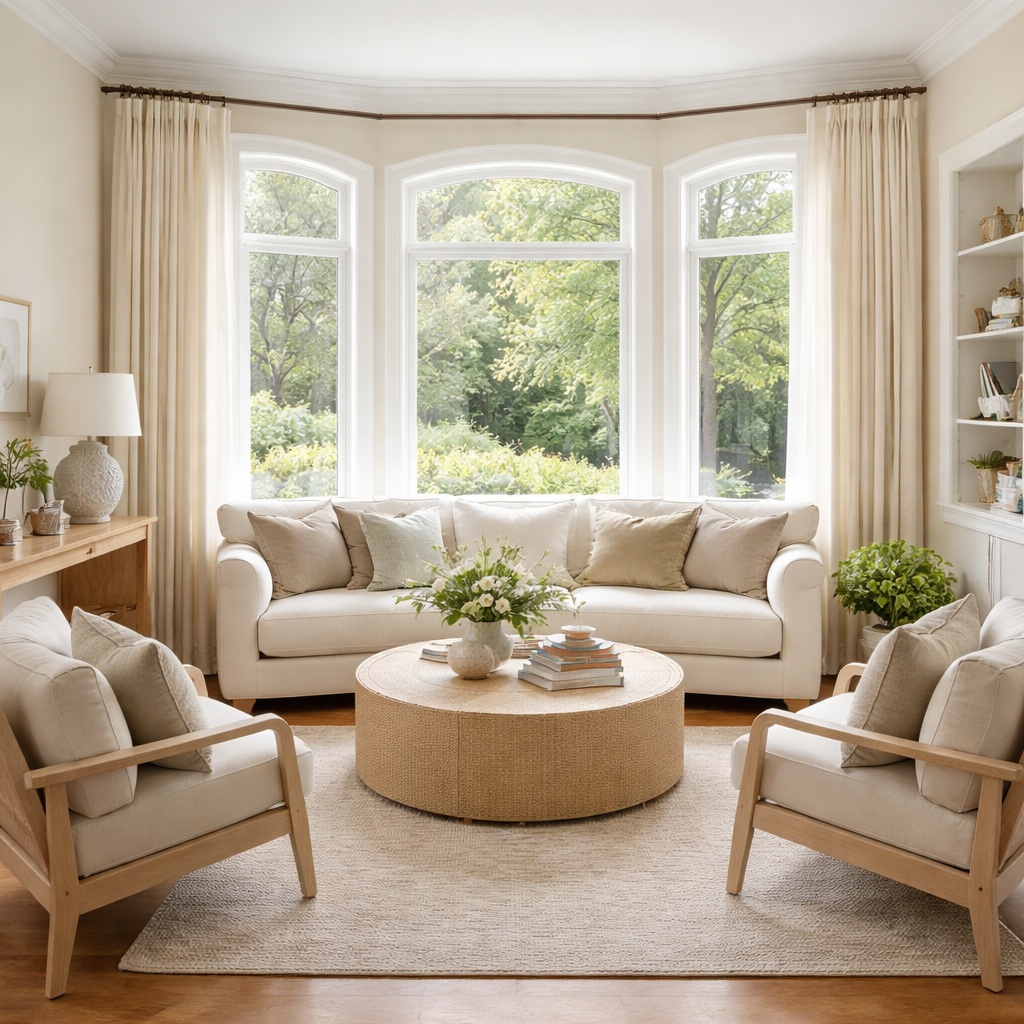
Avoid filling the room edge to edge. Period living rooms benefit from negative space and clear sight lines to architectural features. Leaving space around a fireplace, a bay window, or a chimney breast makes the room feel more intentional and calm.
Mixing Eras Within the Furniture Selection
Blending modern and traditional does not mean choosing one old piece and one new piece and hoping they work together.
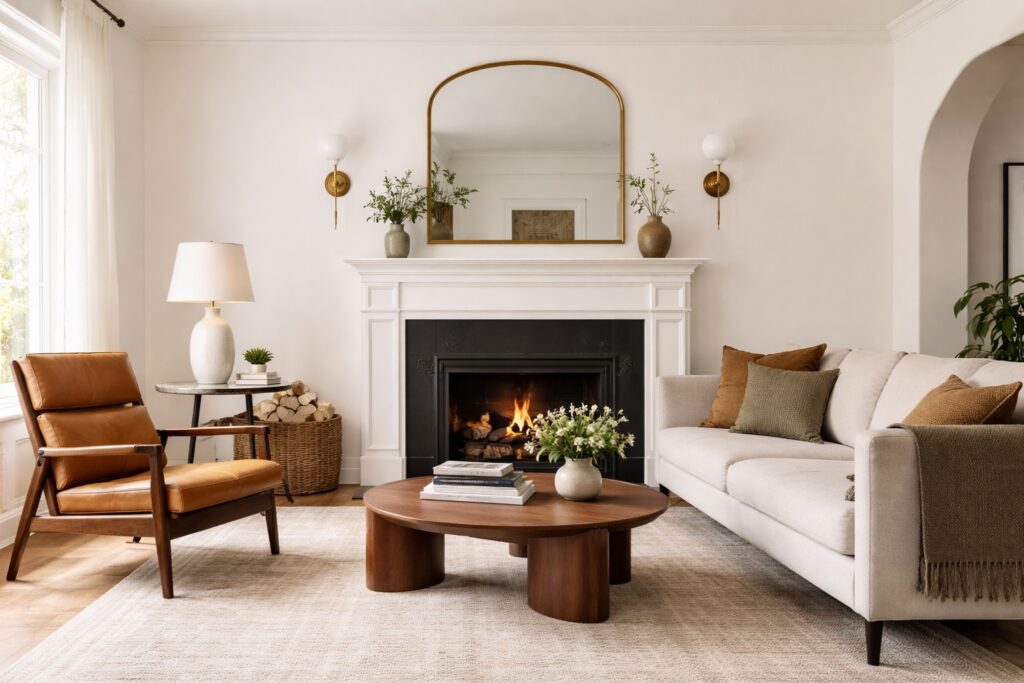
Many successful living rooms include furniture from several eras. A mid century chair can sit comfortably beside a contemporary sofa and a traditional fireplace if proportion, material, and visual weight are considered.
What matters most is:
- Balance
- Quality of materials
- Consistency of tone
Avoid furniture that feels disposable or trend driven. Period properties benefit from pieces that feel considered and lasting, even when modern in design. Often, fewer but stronger pieces create a calmer and more cohesive space.
Layout Rules for Mixing Styles Successfully
Layout shapes how a room feels more than decoration alone.
Start by identifying the natural focal point. In most period living rooms this will be the fireplace, a bay window, or a central architectural feature. Furniture should acknowledge this rather than compete with it.
Modern layouts often break symmetry, but some balance is useful in older homes. This does not require matching furniture, but it does benefit from intentional placement. If you place one statement piece, consider what visually balances it on the opposite side of the room.
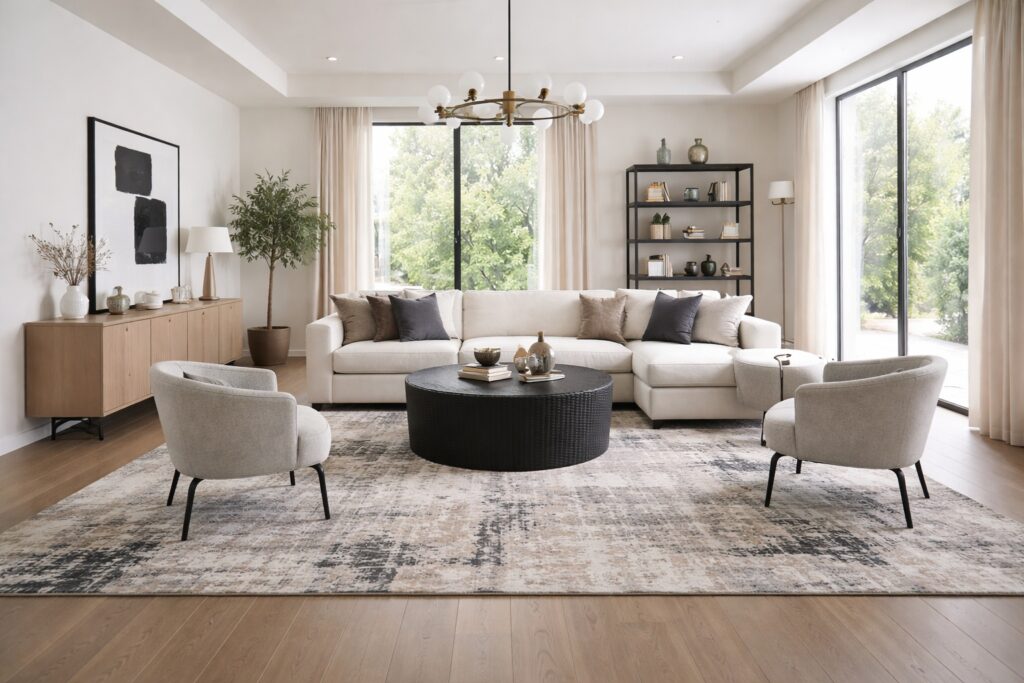
Rugs are especially important. A contemporary rug can modernise a space instantly, but it should be large enough to suit the room’s proportions. Undersized rugs are a common mistake in period properties and can make the whole room feel accidentally arranged.
Colour Palettes That Unite Old and New
Colour quietly connects modern and traditional elements.
Period living rooms often benefit from restrained palettes that allow architectural details to remain visible. This does not mean avoiding colour, but using it thoughtfully.
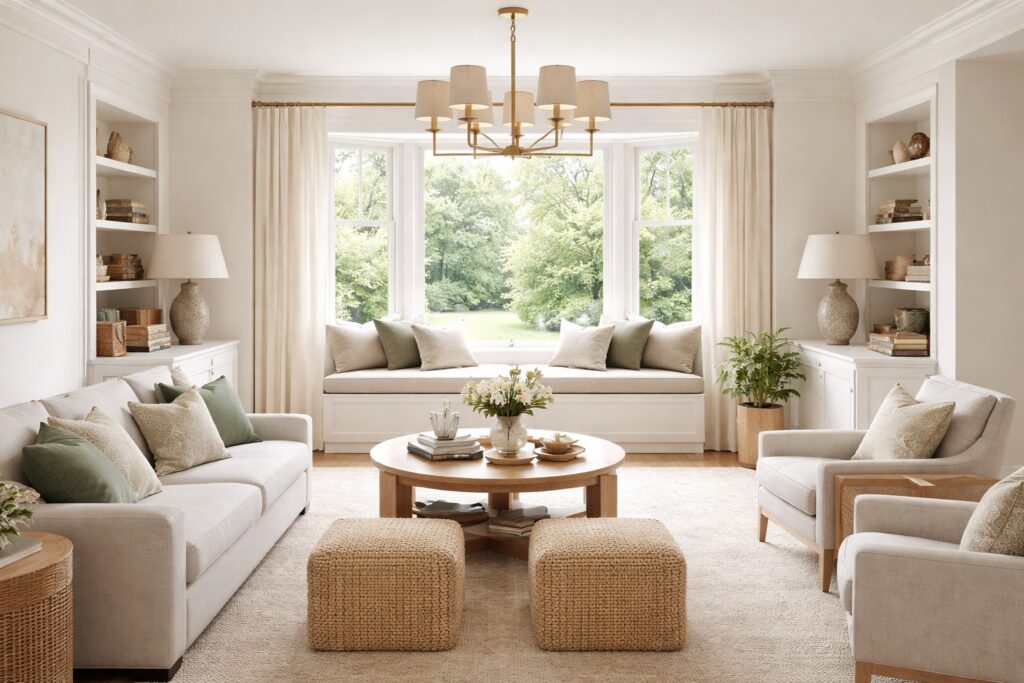
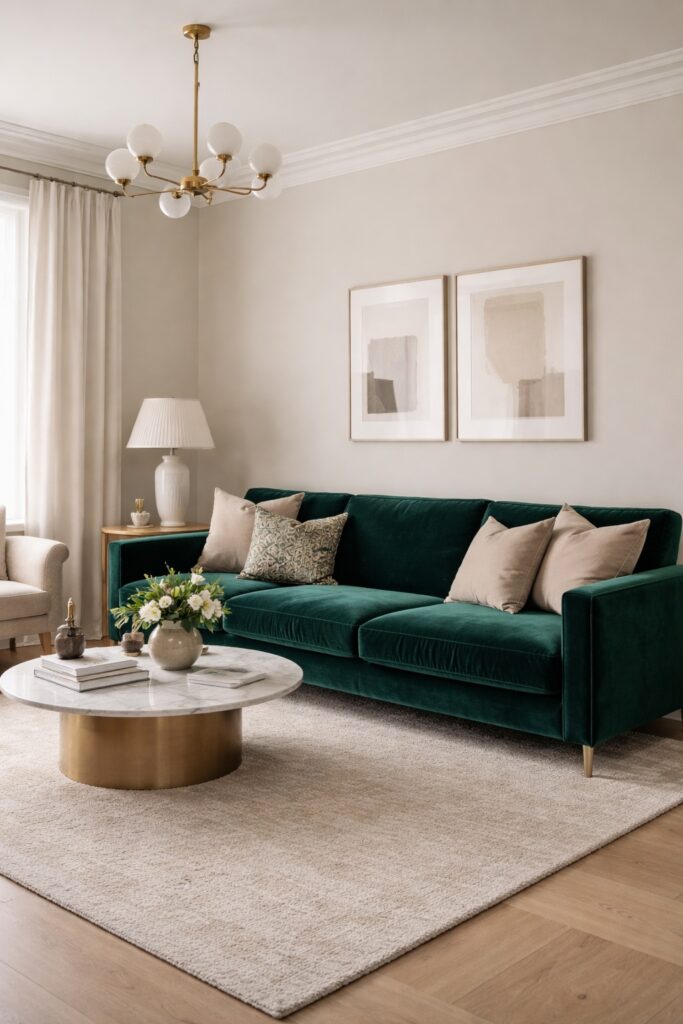
Soft whites, warm greys, muted greens, and earthy tones work exceptionally well in older homes. They create a calm backdrop for traditional features and modern furniture.
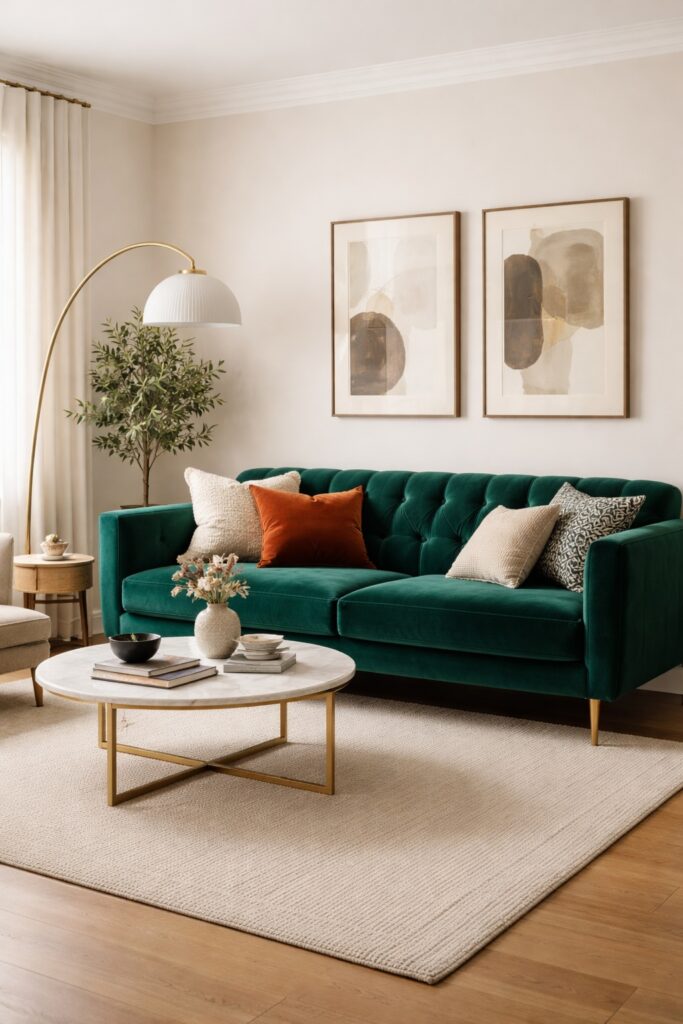
Bolder colours are often best introduced through upholstery, artwork, or a single accent wall rather than dominating the entire room. Repeating colours across different elements helps create cohesion. If you introduce a deep colour in a cushion, echo it subtly in art or a vase rather than adding five unrelated accents.
Texture and Materials as a Unifying Tool
Texture adds depth and warmth to mixed style interiors.
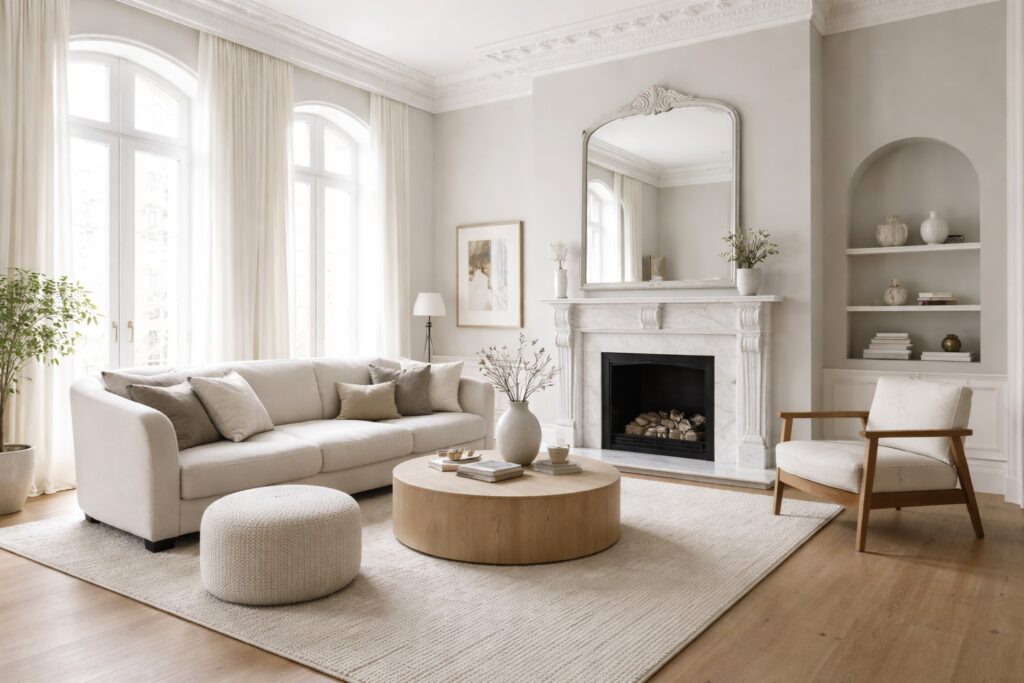
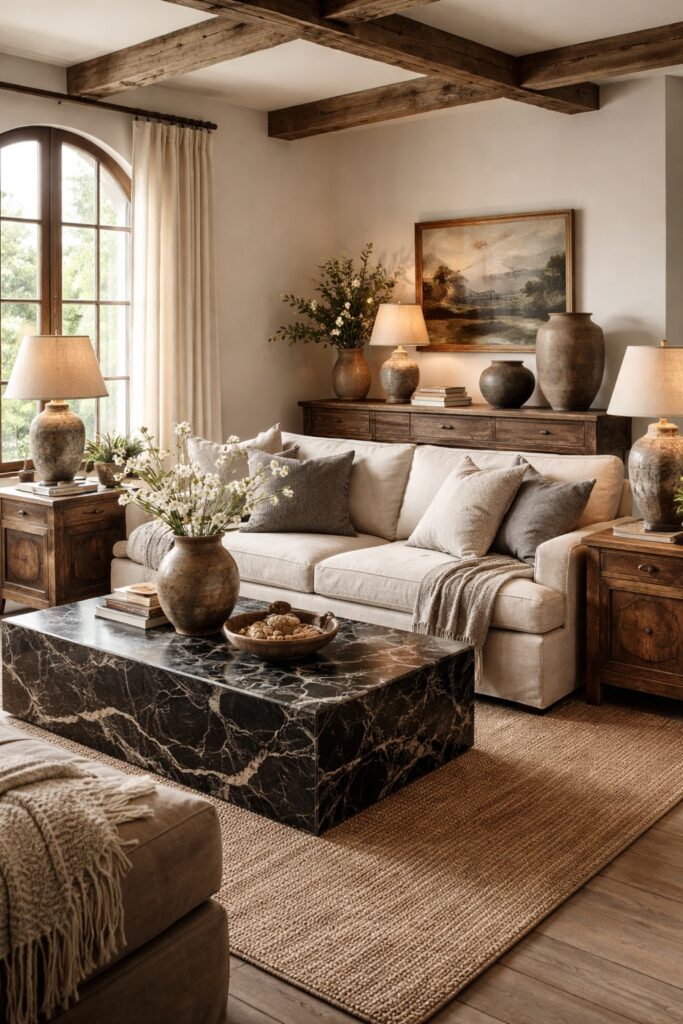
Traditional homes often feature wood, stone, and plaster. Modern interiors introduce metal, glass, and refined fabrics. Combining these materials prevents the room from feeling flat or one dimensional.
Successful combinations include:
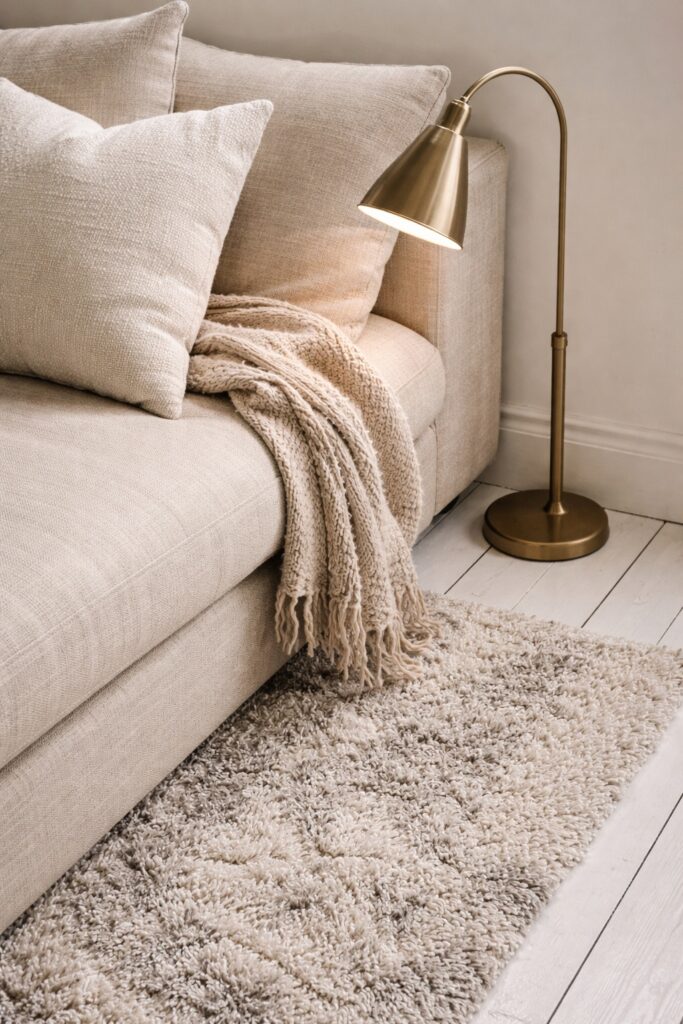
- Linen or wool upholstery with metal lighting
- Aged wood paired with polished stone
- Soft rugs layered over painted floorboards
Texture allows modern elements to feel warmer and traditional features to feel lighter. If your palette is neutral, texture becomes even more important, because it is the main way the room stays visually rich.
Curtains, Window Treatments, and Soft Furnishings
Soft furnishings have a significant impact on how modern or traditional a room feels.
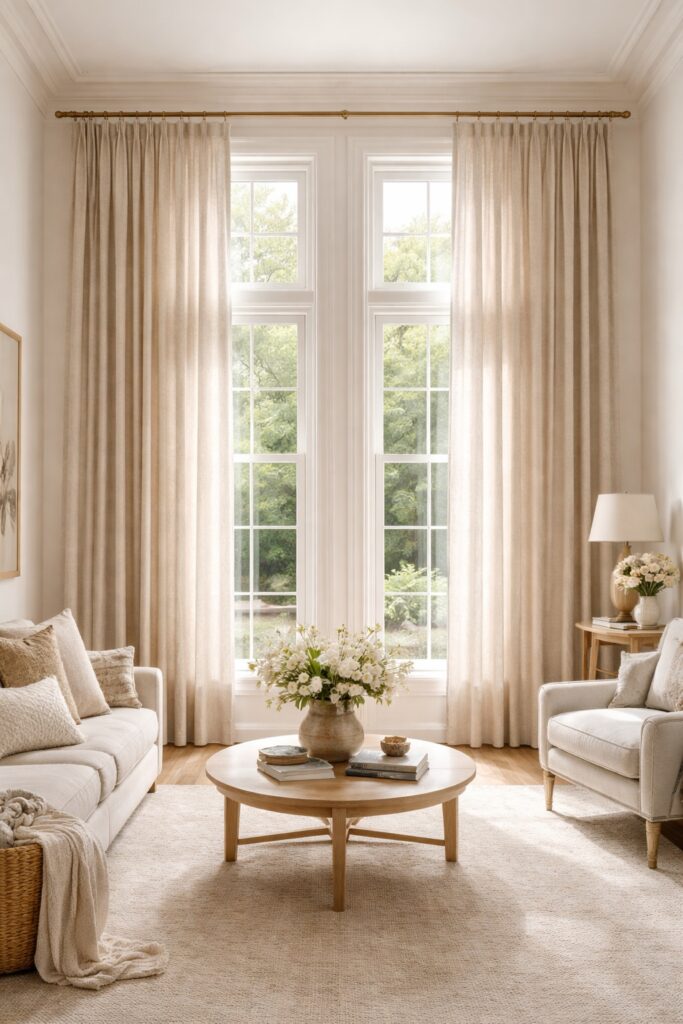
Heavy patterned drapes can push a living room towards formality, while minimal window treatments can feel too stark. Natural fabrics such as linen, cotton, and wool often provide the right balance.
Hanging curtains higher than the window frame can emphasise ceiling height and improve proportions. Keeping colours neutral allows furniture and lighting to stand out.
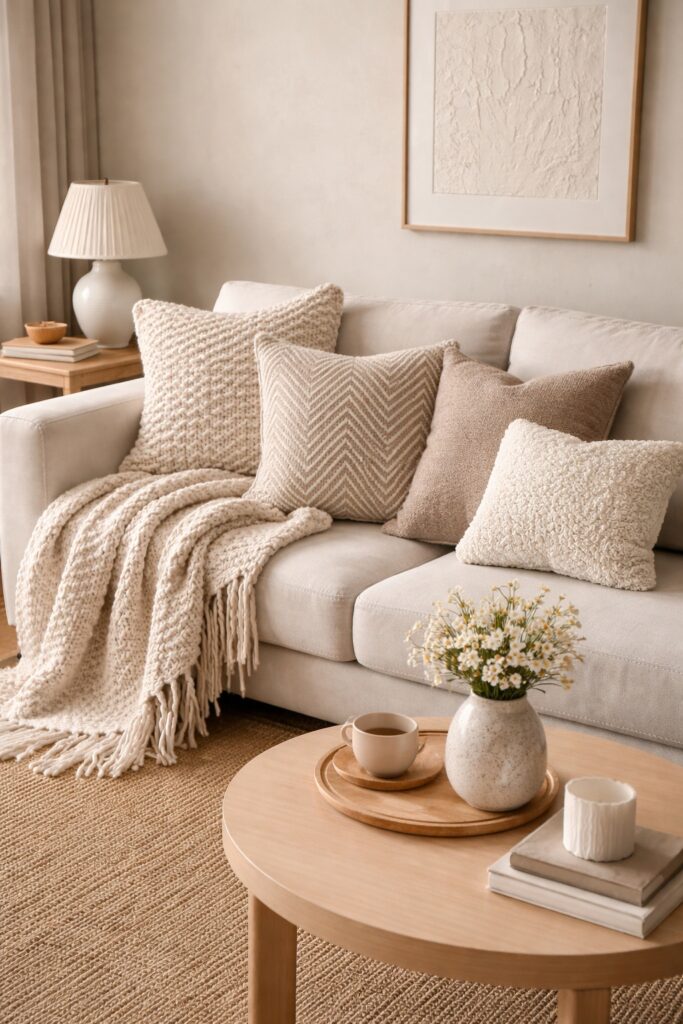
Cushions, throws, and rugs are ideal places to introduce subtle modern textures or colour without permanent commitment. They are also an easy way to rebalance a room seasonally without changing core design choices.
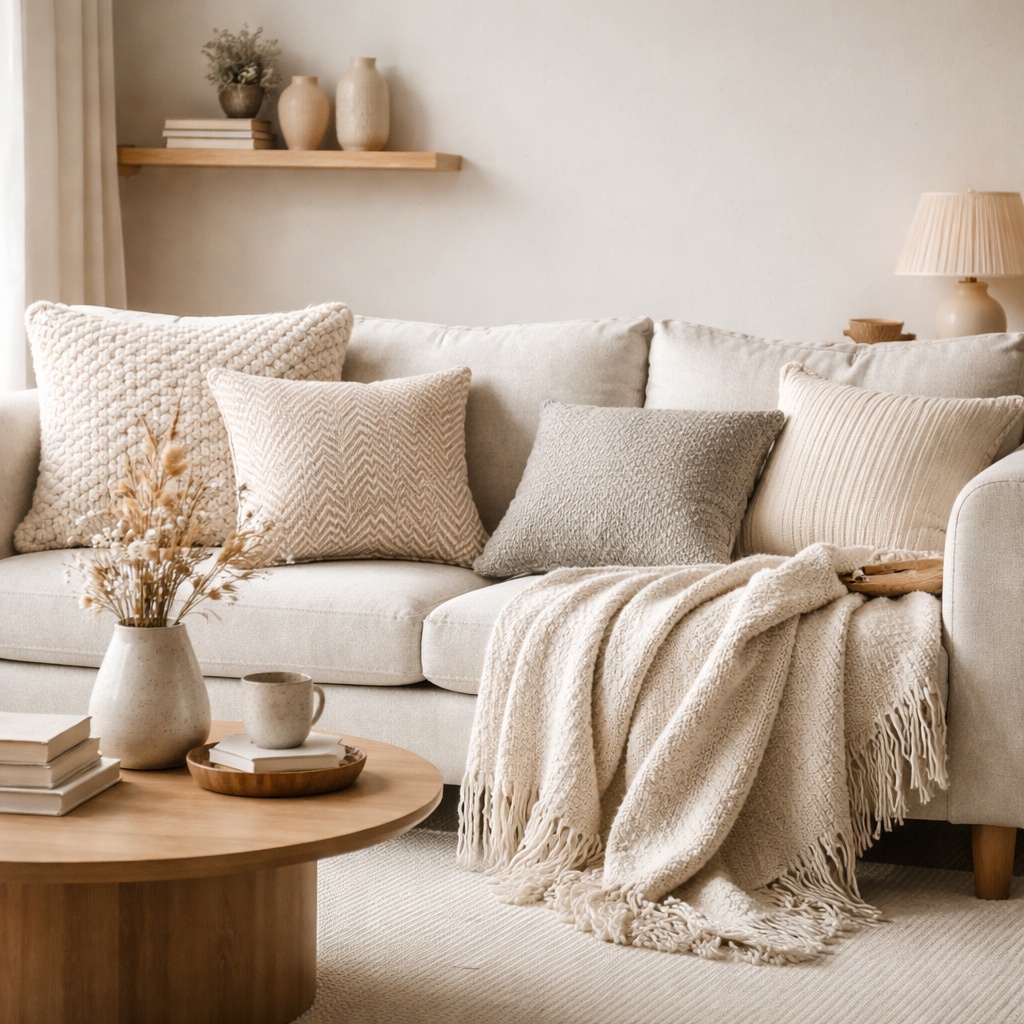
Modern Accessories in a Traditional Setting
Accessories should enhance the room rather than clutter it.
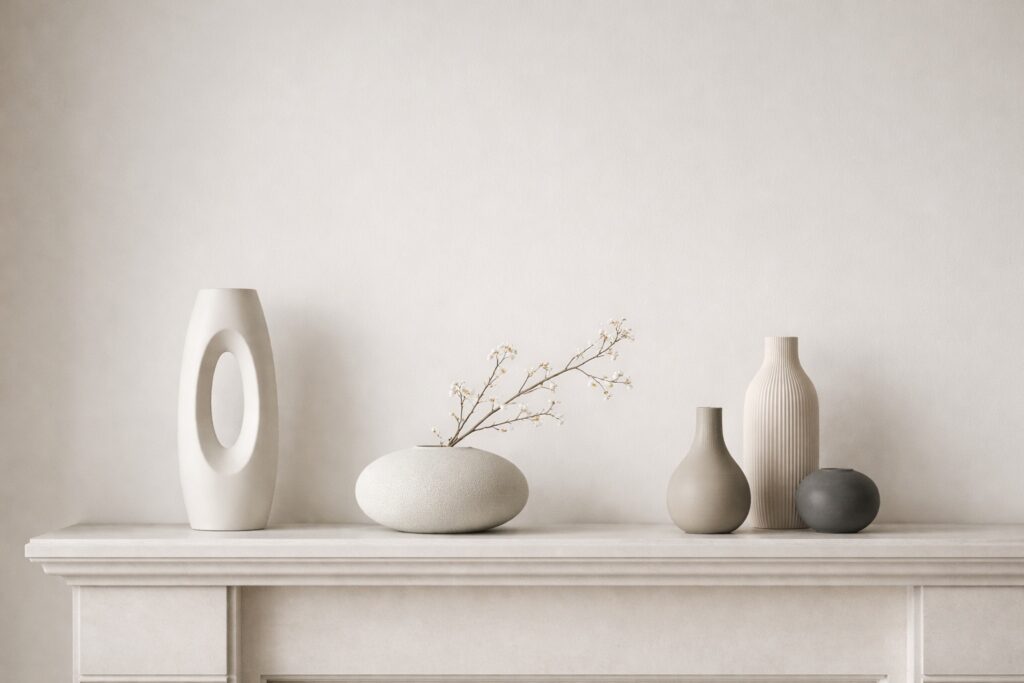
In period living rooms, fewer accessories with stronger presence usually work better than many small decorative items. Contemporary vases, sculptural objects, and understated décor can modernise a space without overwhelming original features.
Avoid matching sets or overly themed styling. A collected feel is more convincing and timeless. Plants, books, and lighting are often enough to soften the space and make it feel lived in.
Art and Decorative Objects as Style Anchors
Artwork plays a central role in mixed style living rooms.
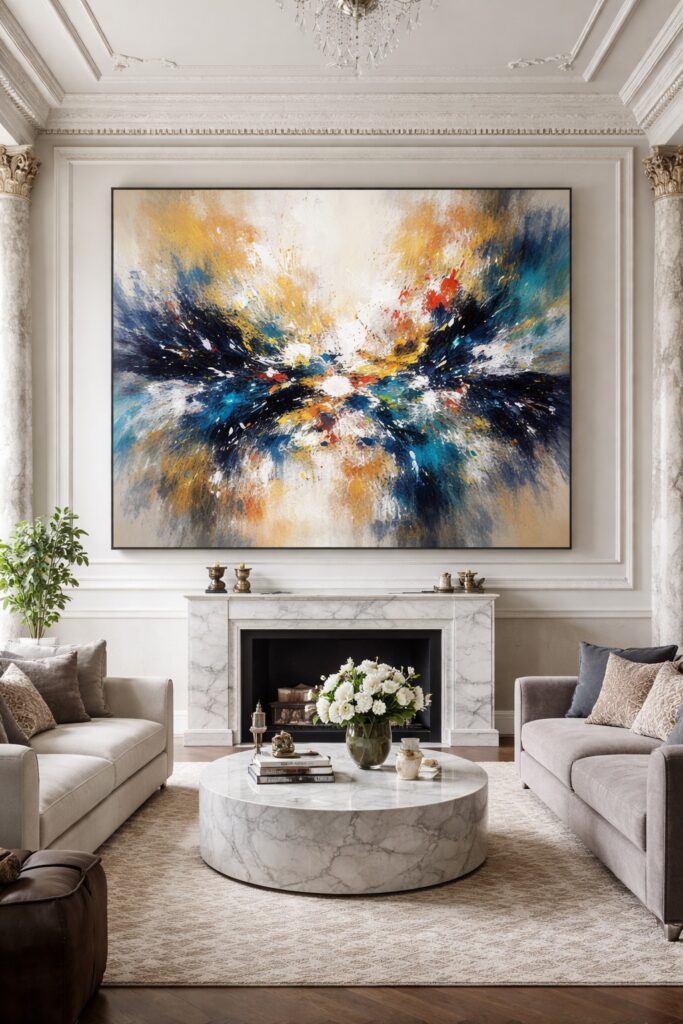
Large scale contemporary art often works particularly well in period properties because it introduces confidence and scale. Smaller, heavily framed pieces can feel lost against high ceilings and detailed walls.
Choose art that resonates personally rather than matching a colour palette exactly. Authenticity matters more than coordination.
Decorative objects should feel intentional but not over styled. Space around objects is just as important as the objects themselves. If every surface is filled, even beautiful objects will start to look like clutter.
Blending Modern Technology Into Traditional Spaces
Modern living rooms rely on technology, but period properties were never designed to display it.
Televisions, speakers, and smart systems can disrupt balance if handled carelessly. The aim is integration rather than concealment at all costs.
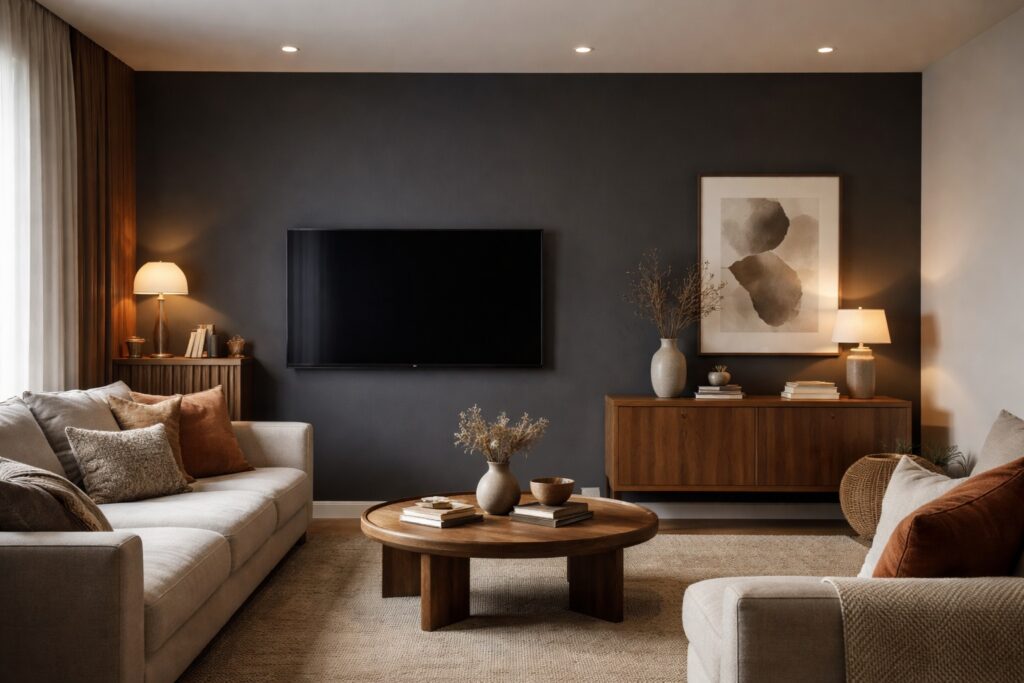
Placing televisions slightly off centre, using darker wall colours, or integrating storage can reduce visual dominance. Cable management is essential for maintaining a calm, considered look.
Smart lighting is one of the most effective modern upgrades. Adjusting brightness and warmth allows the room to adapt throughout the day without altering its physical character. If you can control the atmosphere with lighting rather than adding more décor, you can keep the room cleaner and more timeless.
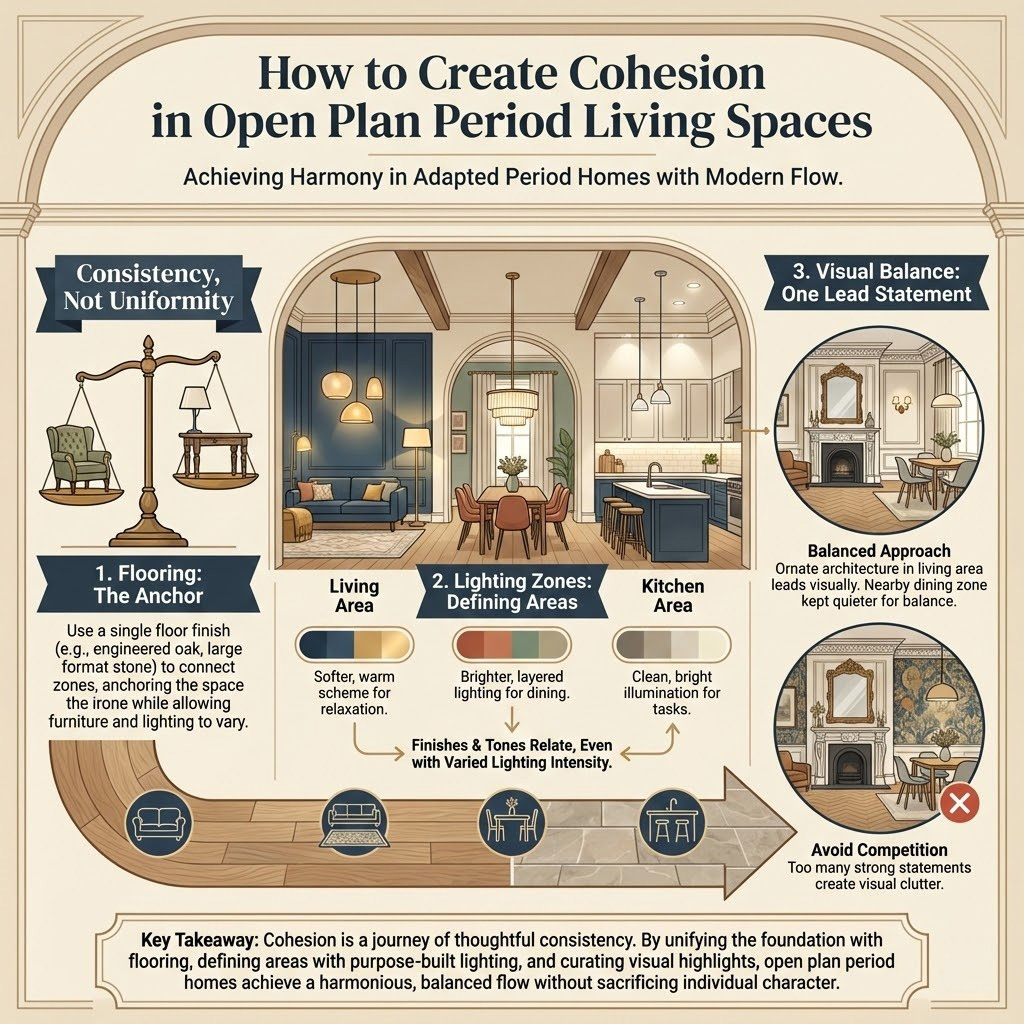
How to Create Cohesion in Open Plan Period Living Spaces
Many period homes have been adapted into open plan layouts. While this improves flow, it can make mixing styles more complex.
Cohesion comes from consistency rather than uniformity. Flooring plays a key role. Using a single floor finish helps anchor the space while allowing furniture and lighting styles to vary.
Lighting zones help define different areas. A softer scheme in the living area can transition into brighter, cleaner lighting elsewhere, as long as finishes and tones relate.
Avoid introducing too many strong statements in adjacent zones. Let one area lead visually. If the living room contains ornate architecture, consider keeping nearby zones quieter so the overall home feels balanced.
Balancing Comfort With Visual Clarity
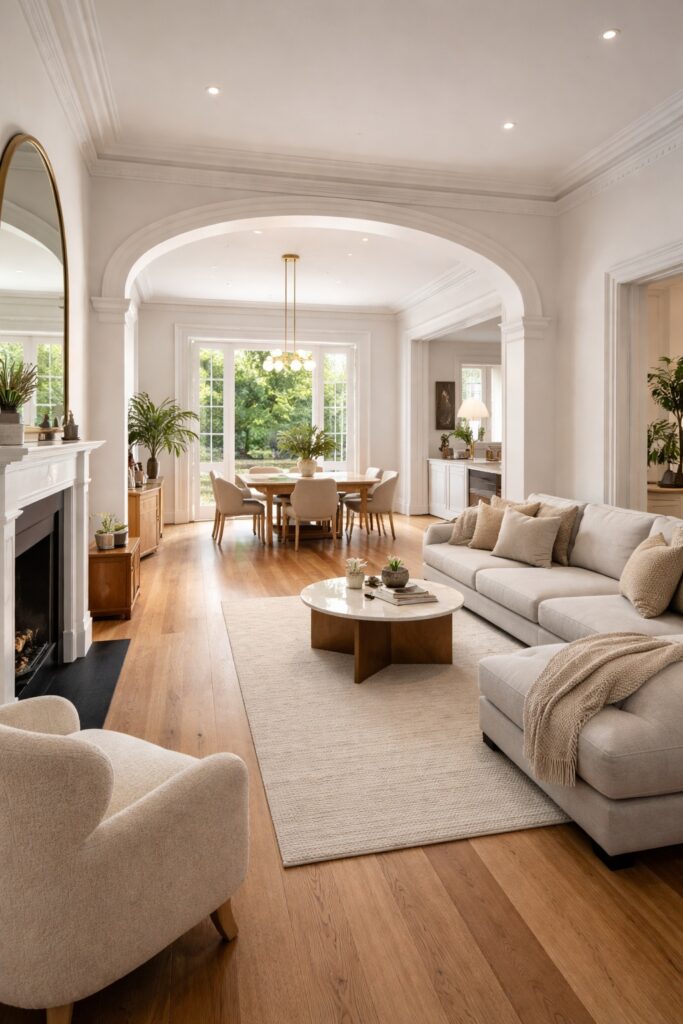
Comfort is essential, but too much softness can overwhelm a period living room.
Large sofas, deep cushions, and layered textiles should be chosen carefully. Comfort does not need to equal bulk. Upholstered furniture with structure often works better than overly relaxed designs.
Leaving space around architectural features maintains visual clarity. Avoid blocking skirting boards, panelling, or fireplaces with oversized furniture. Comfort should be felt rather than seen.
If the room feels heavy, reduce visual weight before removing comfort. Swap bulky side tables for lighter pieces, choose slimmer lamps, and keep the floor area more visible with a properly sized rug and fewer small items.
Using Repetition to Tie Styles Together
Repetition is a powerful design tool.
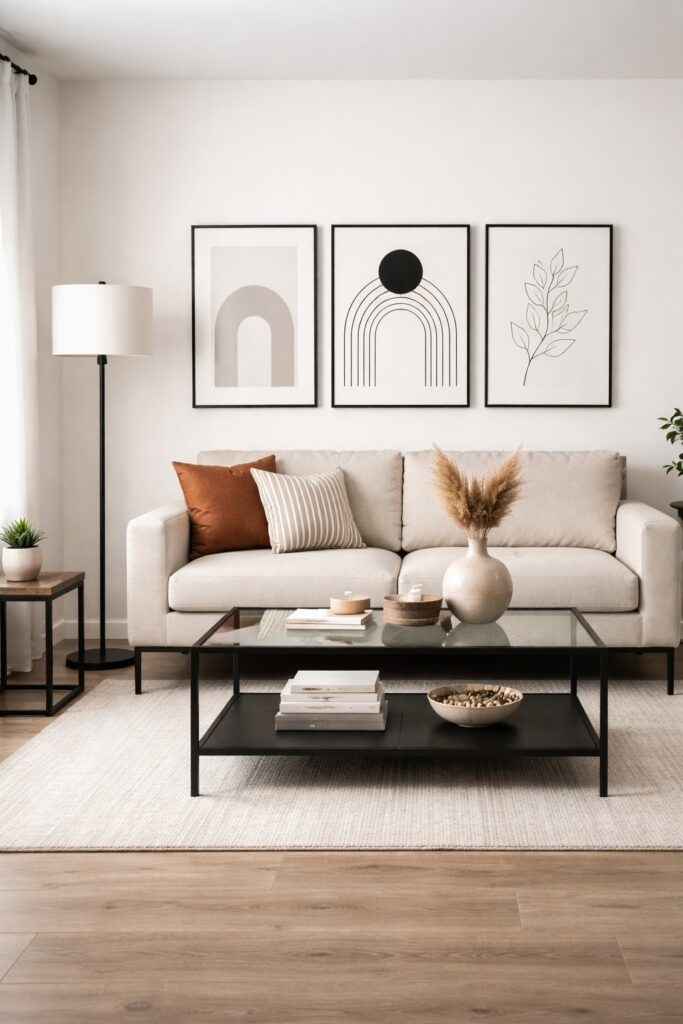
Repeating finishes such as black metal, aged brass handles, warm wood tones, or a specific fabric texture across lighting, furniture, and accessories helps unify the room. This prevents modern pieces from feeling isolated and traditional features from feeling disconnected.
Repetition does not mean duplication. Subtle variations create rhythm without monotony. For example, one black metal finish can appear in a floor lamp, picture frames, and a coffee table detail without everything matching exactly.
When a room feels disjointed, it is often because there is no repeated visual language tying the mix together.
Transitional Pieces That Sit Between Styles
Some designs naturally bridge modern and traditional aesthetics. These are often the easiest choices if you want a mixed look without taking big risks.
Transitional pieces often feature:
- Classic proportions with simplified detailing
- Traditional materials used in contemporary forms
- Neutral finishes that work across eras
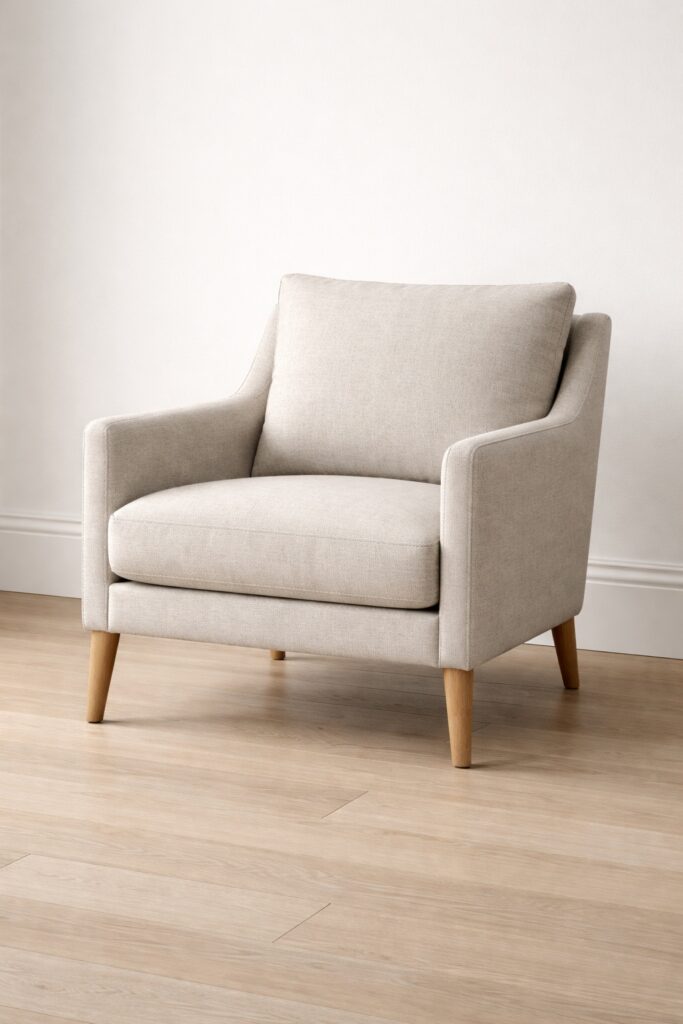
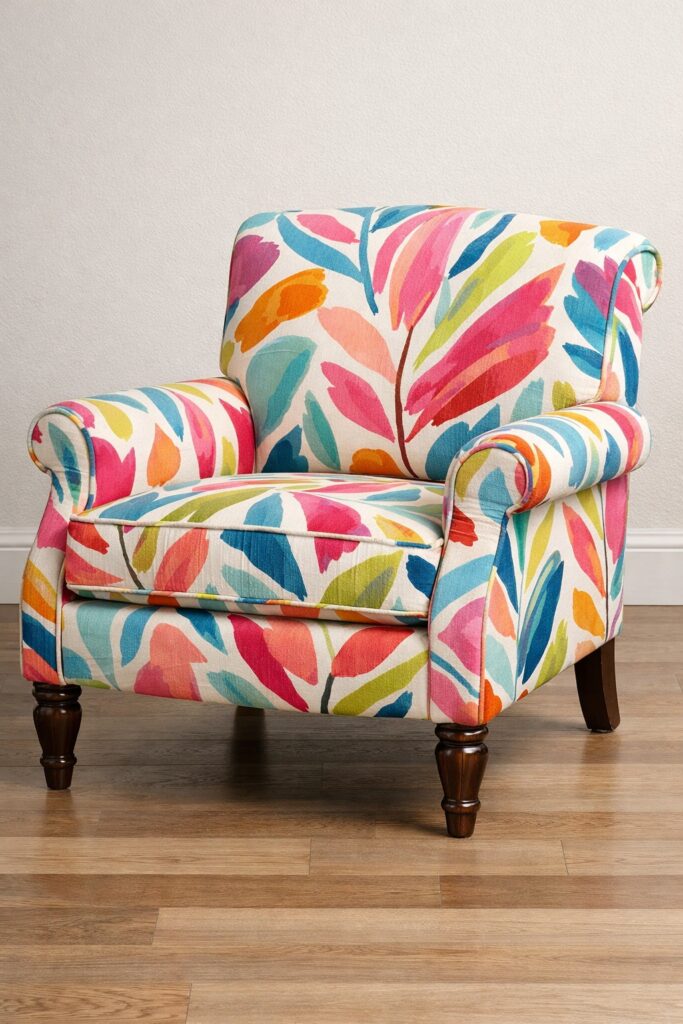
Introducing a few transitional elements can help anchor the room and make bolder choices feel more comfortable. A classic armchair reupholstered in a modern velvet fabric, or a contemporary light fitting in a traditional finish, can act as a bridge between the two styles.
The Role of Craftsmanship in Mixed Style Interiors
Period properties were built with craftsmanship at their core. Modern additions should reflect the same respect for quality.
Solid materials, refined finishes, and thoughtful construction help modern pieces sit comfortably alongside original features. Poor quality furniture often feels out of place regardless of style, because it lacks visual weight and detail.
Craftsmanship creates continuity between old and new. Even a highly modern piece can feel “right” in a period room if it is well made, proportioned correctly, and finished with care.
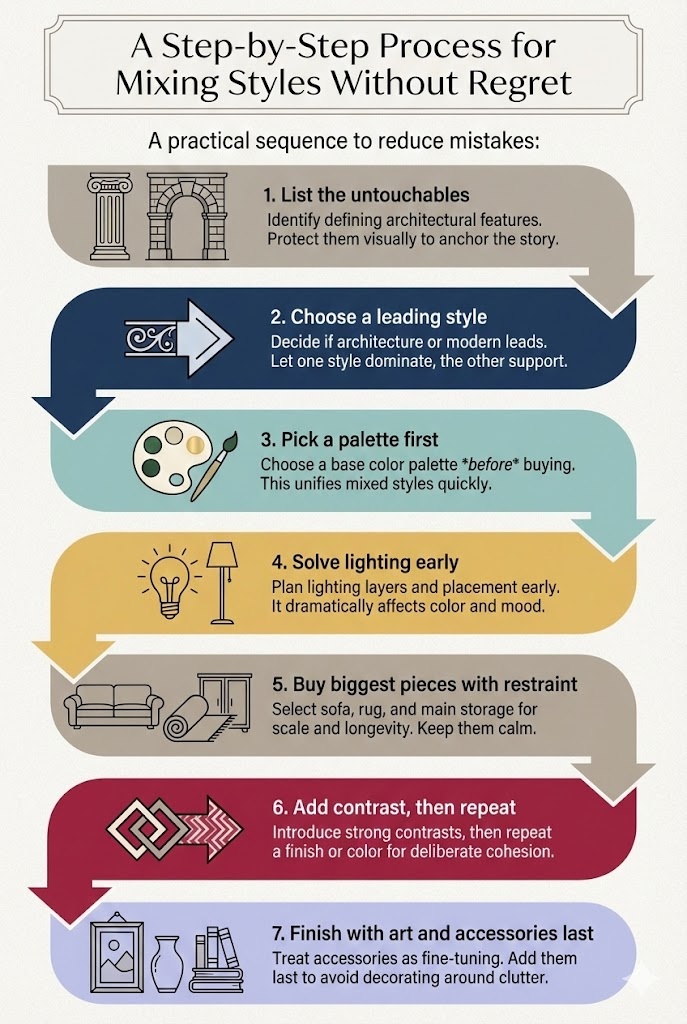
A Step by Step Process for Mixing Styles Without Regret
If you want a practical approach that reduces mistakes, use this sequence:
- List the untouchables
Identify the architectural features that define the room. These are the elements you want to protect visually, not necessarily by leaving them untouched, but by ensuring they remain part of the story. - Choose a leading style
Decide which style will lead. In most period living rooms, the architecture leads, meaning modern elements support it. In some cases, a modern direction leads and the period features become the contrast. Either can work, but decide early. - Pick a palette first
Choose a base palette before buying anything. Colour is the quickest way to unify mixed styles, and the hardest thing to fix after purchases are made. - Solve lighting early
Plan your lighting layers and placement, even if you do not buy everything immediately. Lighting affects how colours and materials look, so it should not be an afterthought. - Buy the biggest pieces with restraint
Sofa, rug, and main storage should be chosen for scale and longevity. Keep these calmer so you can be bolder with lamps, art, and accent pieces later. - Add contrast, then repeat
Introduce one or two strong contrasts, then repeat a finish or colour to create cohesion. This keeps the mix deliberate rather than random. - Finish with art and accessories last
Treat accessories as fine tuning. If you add them too early, you risk decorating around clutter rather than around the architecture. Stacking design books on a coffee table is an easy way to start.
Styling “Recipes” That Work in Most Period Living Rooms
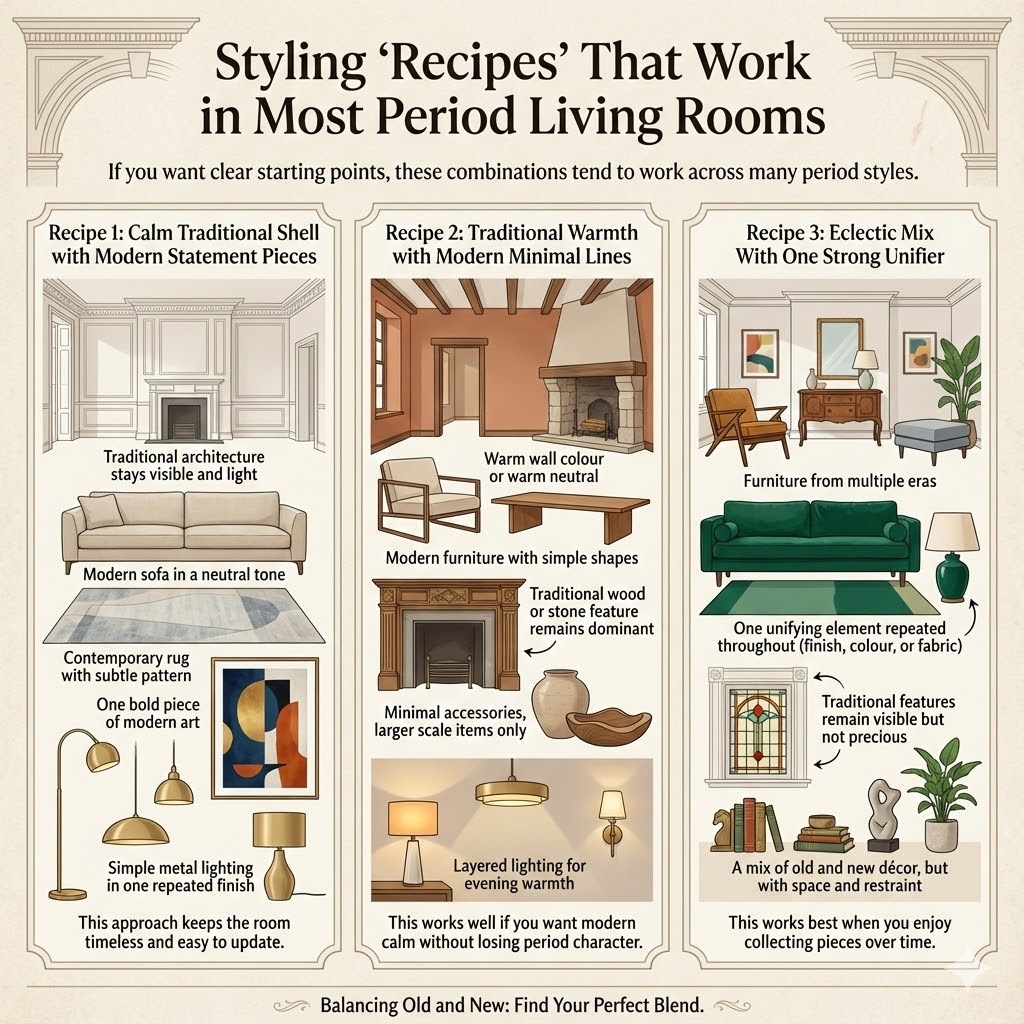
If you want clear starting points, these combinations tend to work across many period styles.
Recipe 1: Calm Traditional Shell with Modern Statement Pieces
- Traditional architecture stays visible and light
- Modern sofa in a neutral tone
- Distressed vintage-style rug with subtle pattern
- One bold piece of modern art
- Simple metal lighting in one repeated finish
This approach keeps the room timeless and easy to update.
Recipe 2: Traditional Warmth with Modern Minimal Lines
- Warm wall colour or warm neutral
- Modern furniture with simple shapes
- Traditional wood or stone feature remains dominant
- Minimal accessories, larger scale items only
- Layered lighting for evening warmth
This works well if you want modern calm without losing period character.
Recipe 3: Eclectic Mix With One Strong Unifier
- Furniture from multiple eras
- One unifying element repeated throughout (finish, colour, or fabric)
- Traditional features remain visible but not precious
- A mix of old and new décor, but with space and restraint
This works best when you enjoy collecting pieces over time.
Adapting the Approach for Different Periods
Not all period properties are the same.
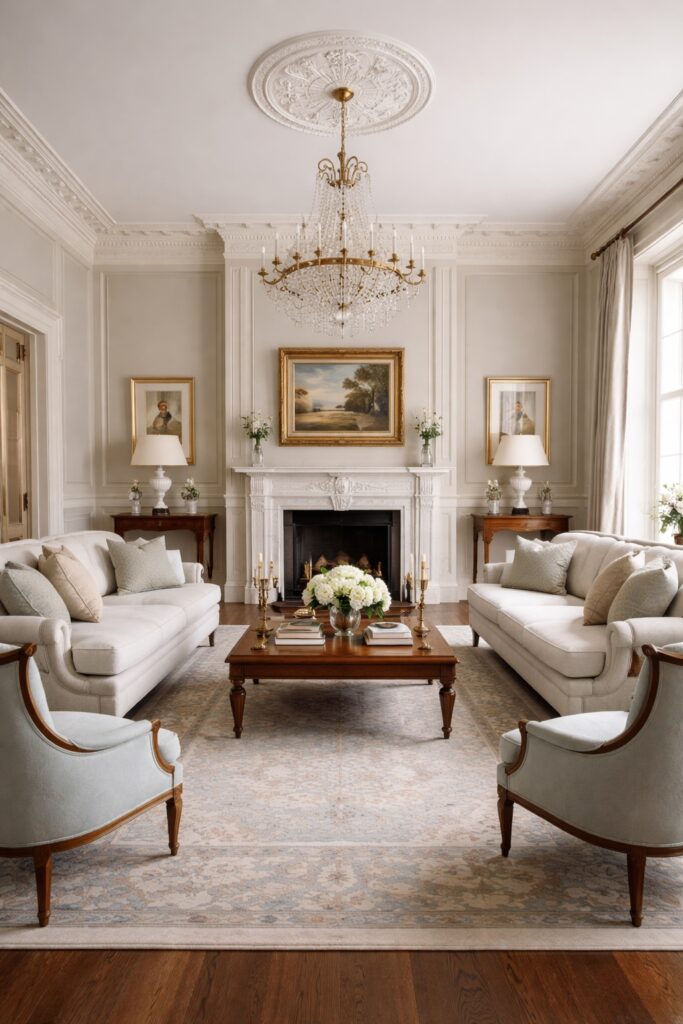
Georgian living rooms often suit symmetry and restraint. Victorian spaces can handle richer textures, deeper colours, and more layered lighting. Edwardian homes tend to sit between the two, often benefiting from a balance of softness and structure.
Understanding the era helps guide decisions around scale, formality, and decoration. The principles remain consistent, but execution changes subtly. A one size fits all approach rarely works in period interiors, because the architecture sets the tone.
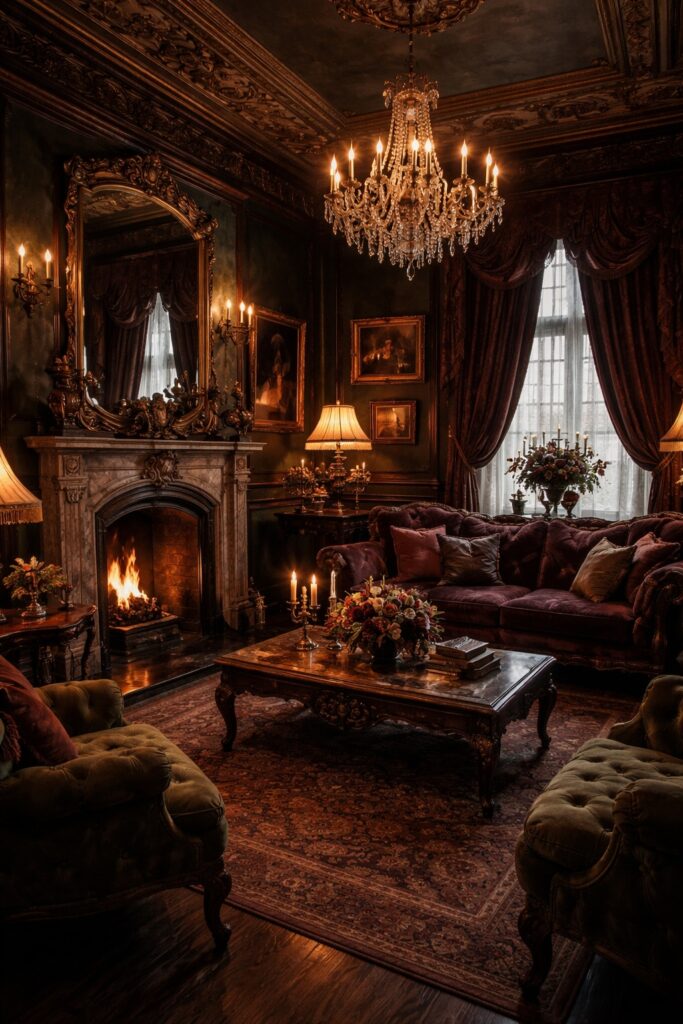
How to Evolve the Space Over Time
One of the strengths of mixed style interiors is flexibility.
Rather than designing the room to feel finished immediately, allow it to evolve. Introduce key furniture and lighting first, then refine with art and accessories over time. This leads to spaces that feel more personal and less “done”.
As modern elements age or tastes change, they can be updated without disturbing the underlying character of the property. This is one reason mixed style living rooms often age better than trend led interiors.
Common Mistakes to Avoid
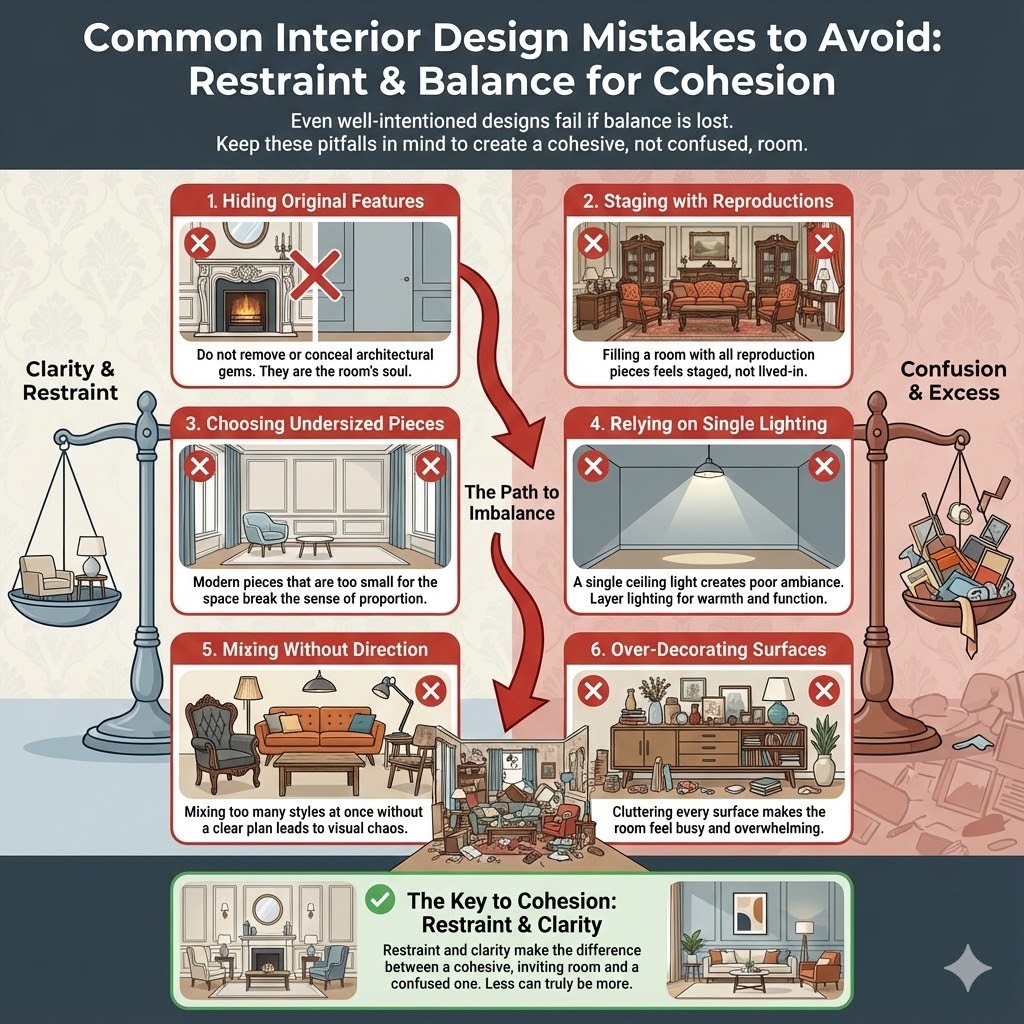
Even well intentioned designs can fail if balance is lost. Common mistakes include:
- Removing or hiding original features
- Filling the room with reproduction period furniture so it feels staged
- Choosing modern pieces that are too small for the space
- Relying on a single ceiling light
- Mixing too many styles at once without a clear direction
- Over decorating surfaces until the room feels busy
Restraint and clarity make the difference between a cohesive room and a confused one.
When to Break the Rules
Rules provide guidance, not limits.
Some of the most successful mixed style living rooms break expectations. A bold modern sofa in a highly traditional room can work beautifully if the rest of the space is restrained. A contemporary colour choice can bring new life to old architecture when used confidently.
If a room feels balanced and comfortable, strict rules matter less than the lived reality of the space.
FAQs
Should modern furniture match the period style?
No. It should match the scale and the tone of the room. A modern piece that is well proportioned and high quality will often feel more “right” than a cheap traditional imitation.
Do I need to keep everything symmetrical?
Not everything, but some balance helps in period rooms. You can break symmetry with modern pieces, but aim for visual equilibrium so the room feels calm.
Is it better to use modern or traditional lighting?
Either can work, but lighting should support the architecture. In many period living rooms, simpler modern lighting allows original features to shine. The real priority is layered lighting, not the label.
What is the fastest way to make a mixed style room feel cohesive?
Repeat one finish or one colour in several places and reduce clutter. Cohesion usually comes from repetition and restraint.
Final Thoughts: Confidence Over Perfection
Mixing modern and traditional styles in a period property is about understanding the space and making deliberate choices.
The most successful living rooms respect history while embracing modern comfort. They evolve naturally, allowing contemporary elements to change while original features remain constant.
Confidence, balance, and intention will always outperform rigid adherence to trends.