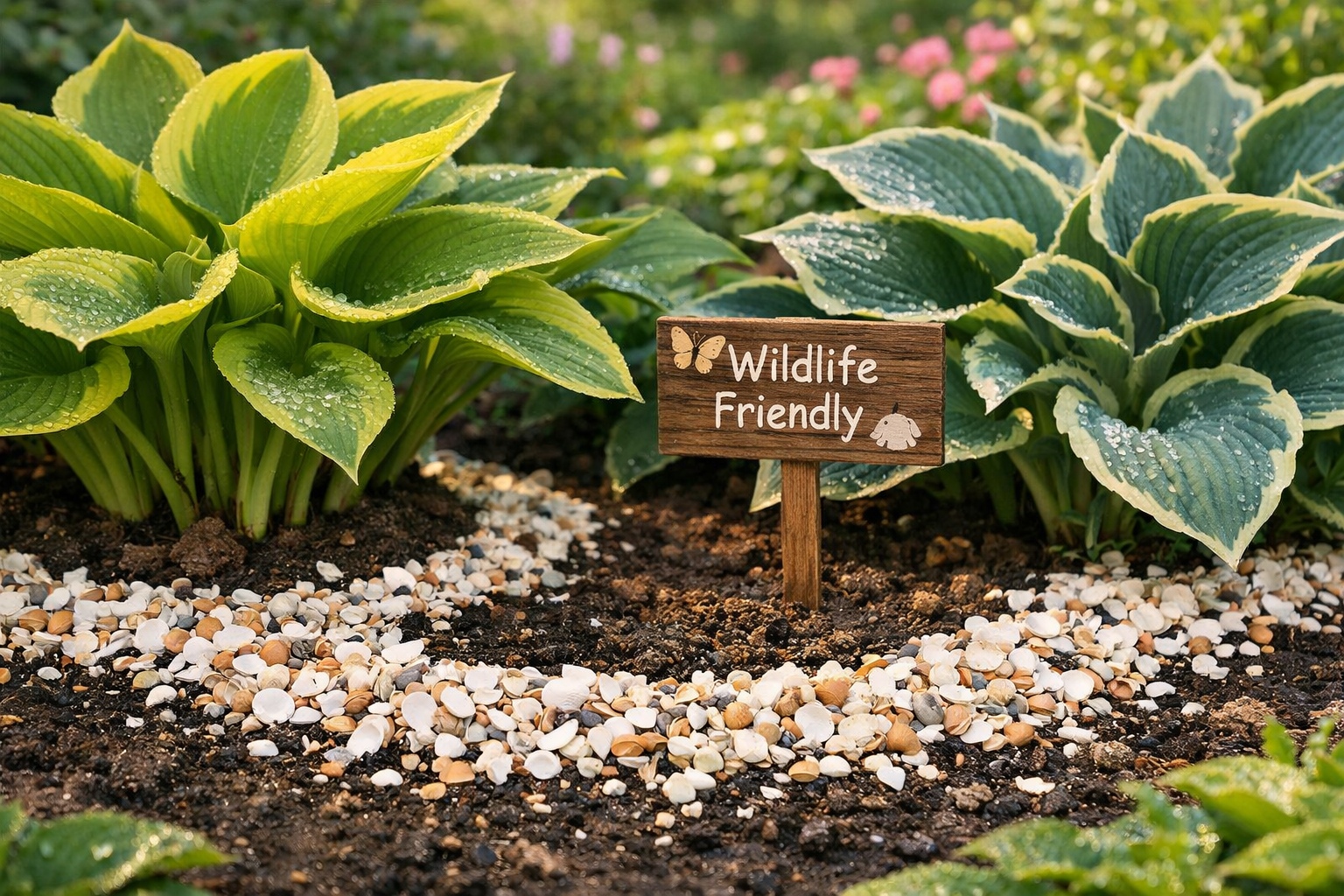
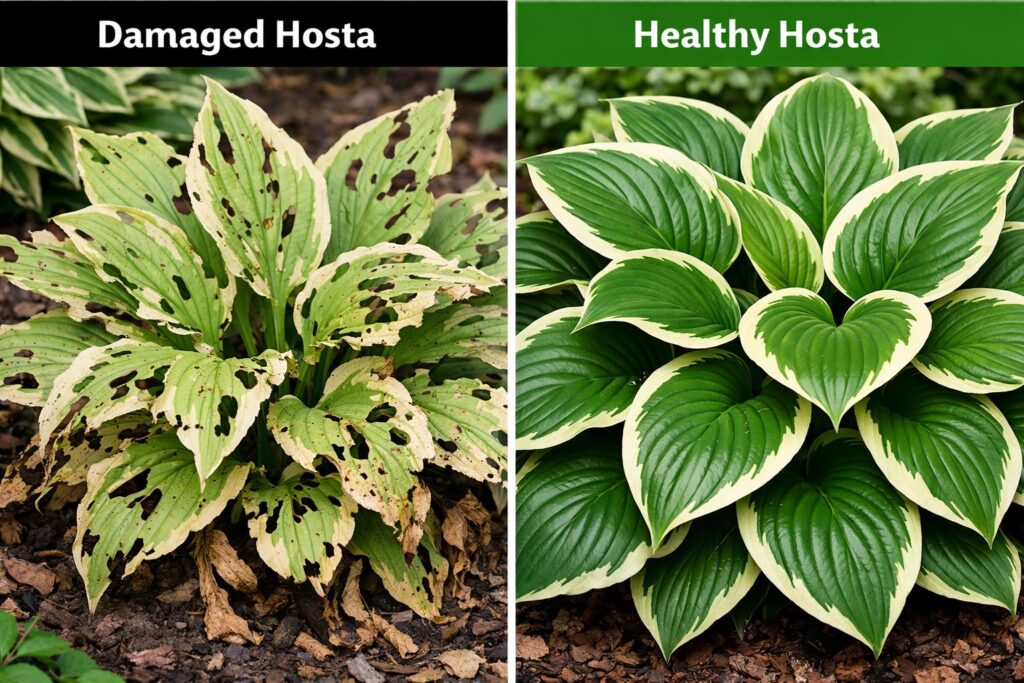
Hostas are one of the most popular shade loving plants in gardens, valued for their lush foliage and wide range of colours and textures. Unfortunately, they are also one of the most attractive plants to slugs and snails. For many gardeners, discovering holes, shredded leaves, or entire plants reduced to stems is a familiar frustration.
While chemical slug pellets can seem like an easy solution, they often come with serious downsides. Many harm wildlife, contaminate soil, and disrupt the natural balance of the garden. Fortunately, there are effective eco-friendly ways to protect hostas that work with nature rather than against it.
This guide explains why slugs and snails target hostas and outlines practical, environmentally responsible methods to reduce damage without relying on toxic chemicals.
Some of the links in this post are affiliate links. If you click through and make a purchase, we may earn a small commission at no extra cost to you. We only recommend products we naturally use and love.
Table of Contents
Why Slugs and Snails Love Hostas
Understanding the problem makes it easier to manage.
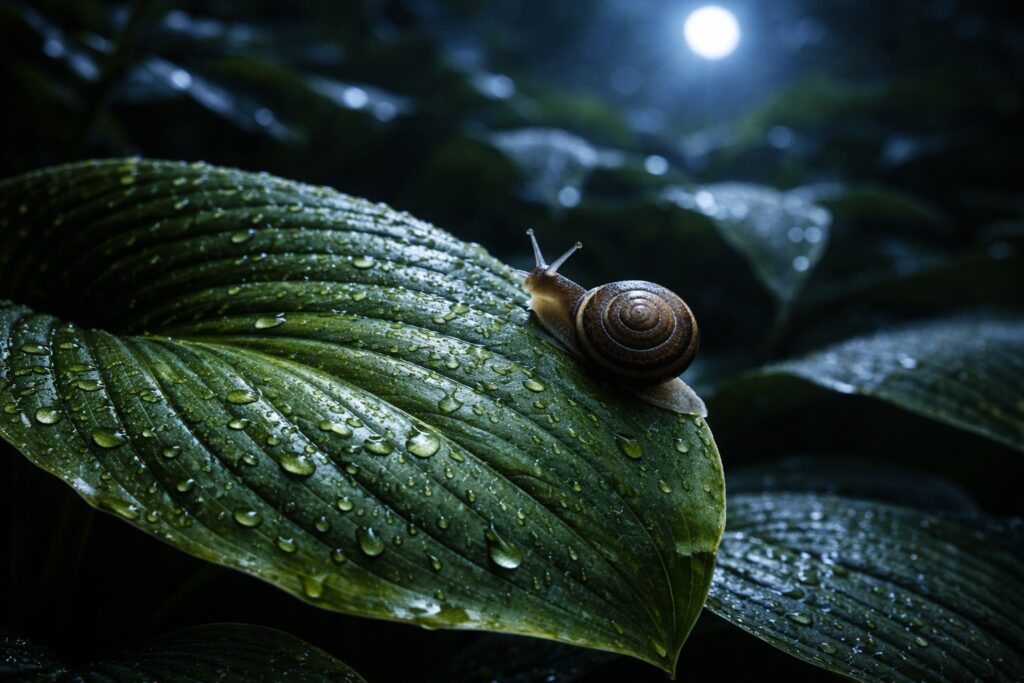
Hostas have soft, moisture rich leaves that are easy for slugs and snails to consume. They also tend to grow in shaded, damp areas, exactly the conditions these pests prefer. Night time watering, dense planting, and organic mulch can all increase slug and snail activity if not managed carefully.
Young hosta leaves are especially vulnerable in spring, when slugs and snails are most active and plants are still tender.
Why Avoid Chemical Slug Control
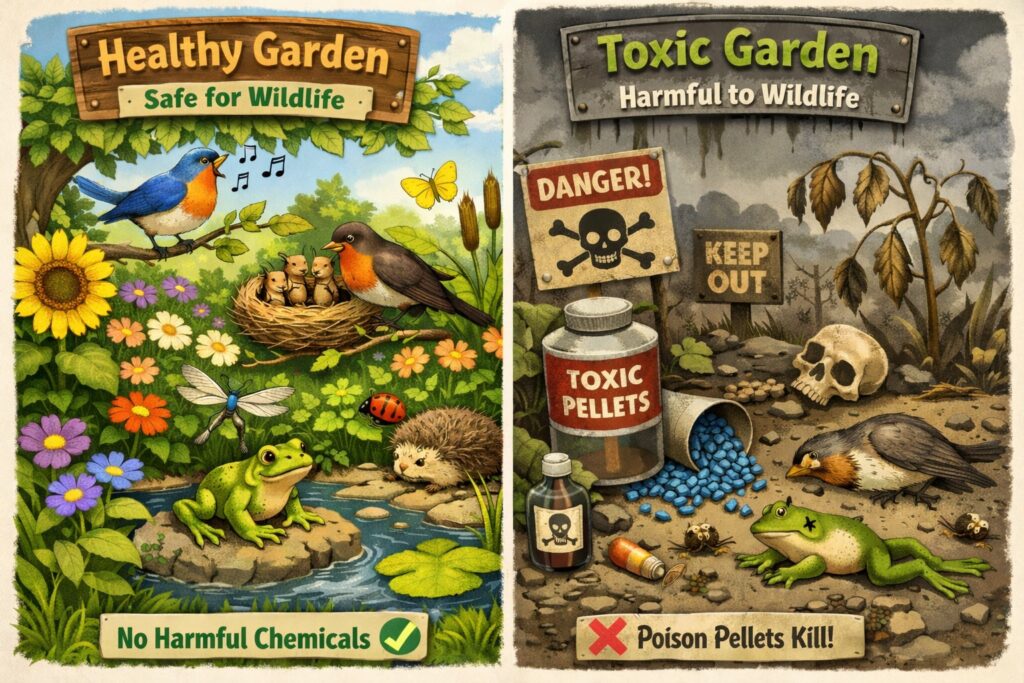
Traditional slug pellets often contain chemicals that can harm more than just slugs.
Some products are toxic to birds, hedgehogs, frogs, pets, and beneficial insects. Even iron based pellets, which are marketed as safer, can disrupt soil health and still pose risks if overused.
Eco-friendly gardening focuses on prevention, balance, and long term solutions, rather than quick fixes that create new problems.
The Royal Horticultural Society recommends non-chemical methods to manage slugs and snails while protecting garden wildlife.
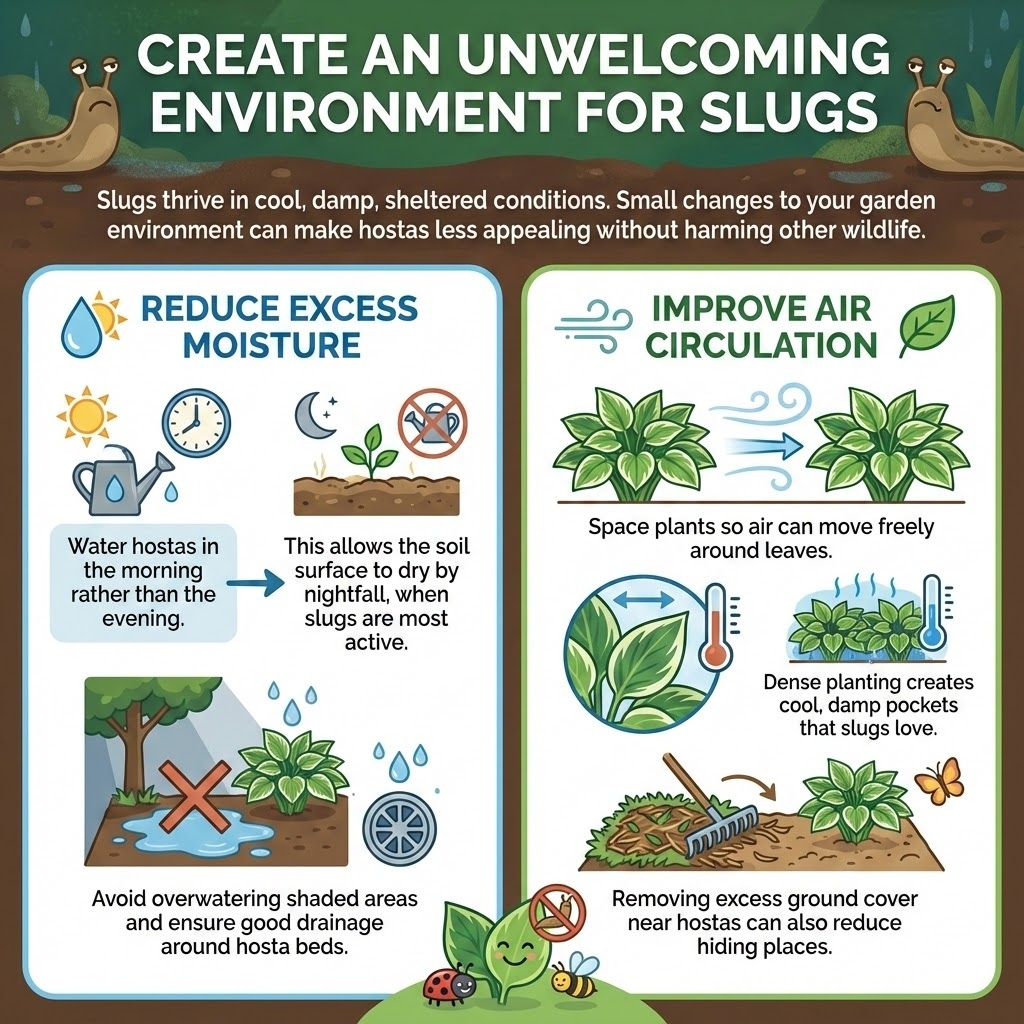
Create an Unwelcoming Environment for Slugs
Slugs thrive in cool, damp, sheltered conditions. Small changes to your garden environment can make hostas less appealing without harming other wildlife.
Reduce Excess Moisture
Water hostas in the morning rather than the evening. This allows the soil surface to dry by nightfall, when slugs are most active.
Avoid overwatering shaded areas and ensure good drainage around hosta beds.
Improve Air Circulation
Space plants so air can move freely around leaves. Dense planting creates cool, damp pockets that slugs love.
Removing excess ground cover near hostas can also reduce hiding places.
Physical Barriers That Actually Work
Physical deterrents are one of the most reliable eco-friendly solutions when used correctly.
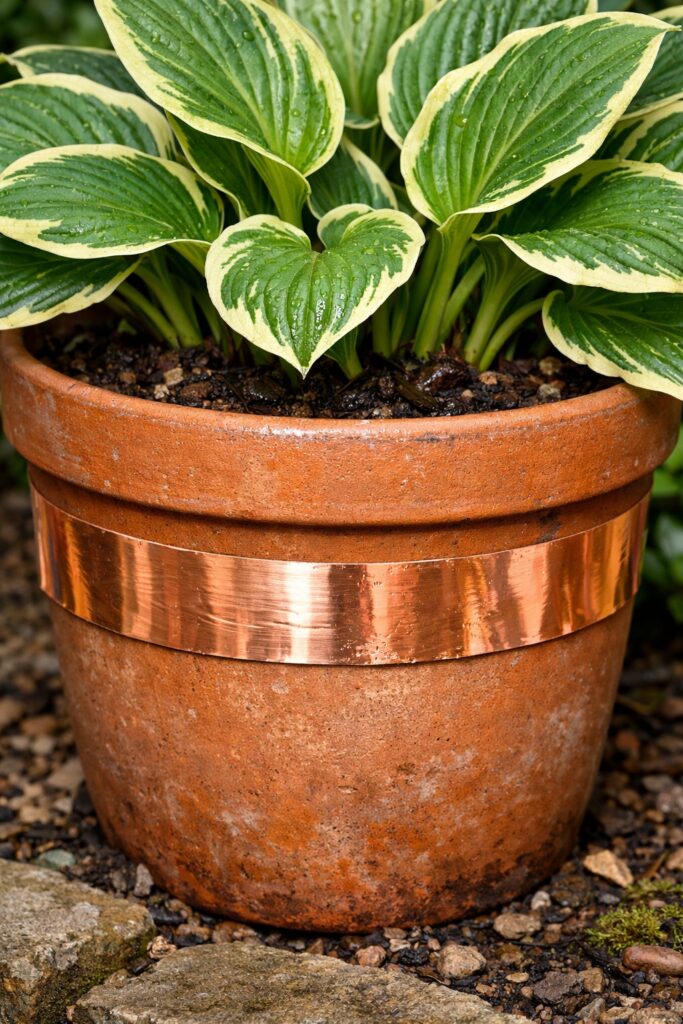
Copper Barriers
Copper tape or rings placed around pots or raised beds create a mild reaction when slugs cross them, discouraging movement without harming the animal.
Copper works best when kept clean and dry.
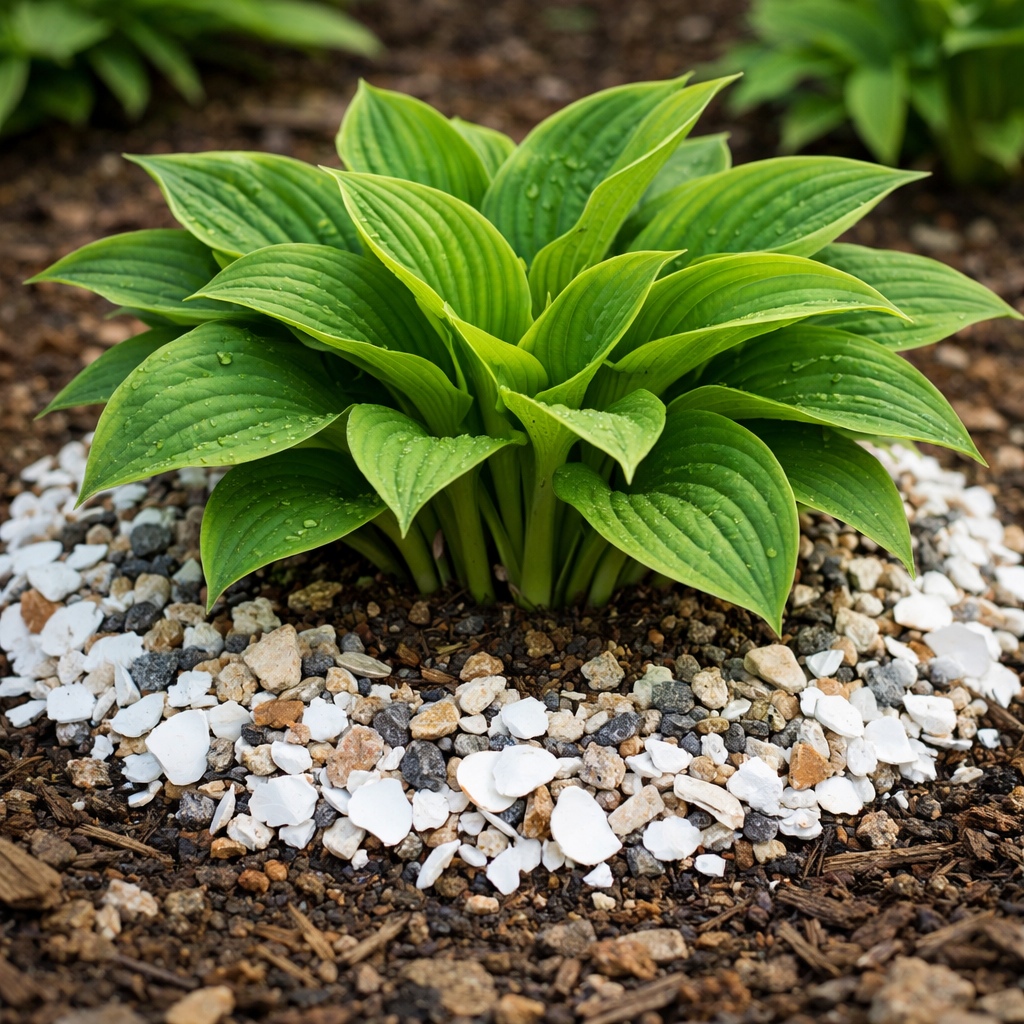
Sharp Mulches
Slugs avoid crossing uncomfortable surfaces. Mulches such as crushed eggshells, grit, coarse sand, or pine needles can slow them down.
For a biodegradable option, slug wool pellets are highly effective because the microscopic barbs irritate slugs.
These materials are not foolproof on their own but work well as part of a wider approach.
Raised Planting
Planting hostas in raised beds or containers makes access harder for slugs, especially when combined with barriers.
Hand Removal: Simple but Effective
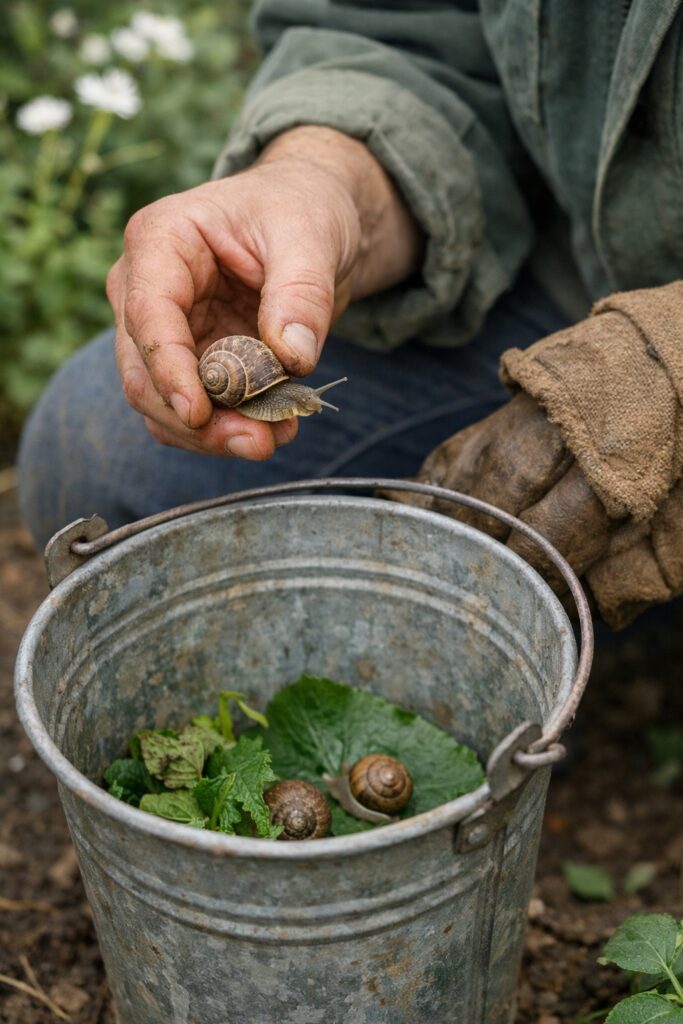
It may not be glamorous, but hand removal is one of the most targeted and wildlife friendly methods available.
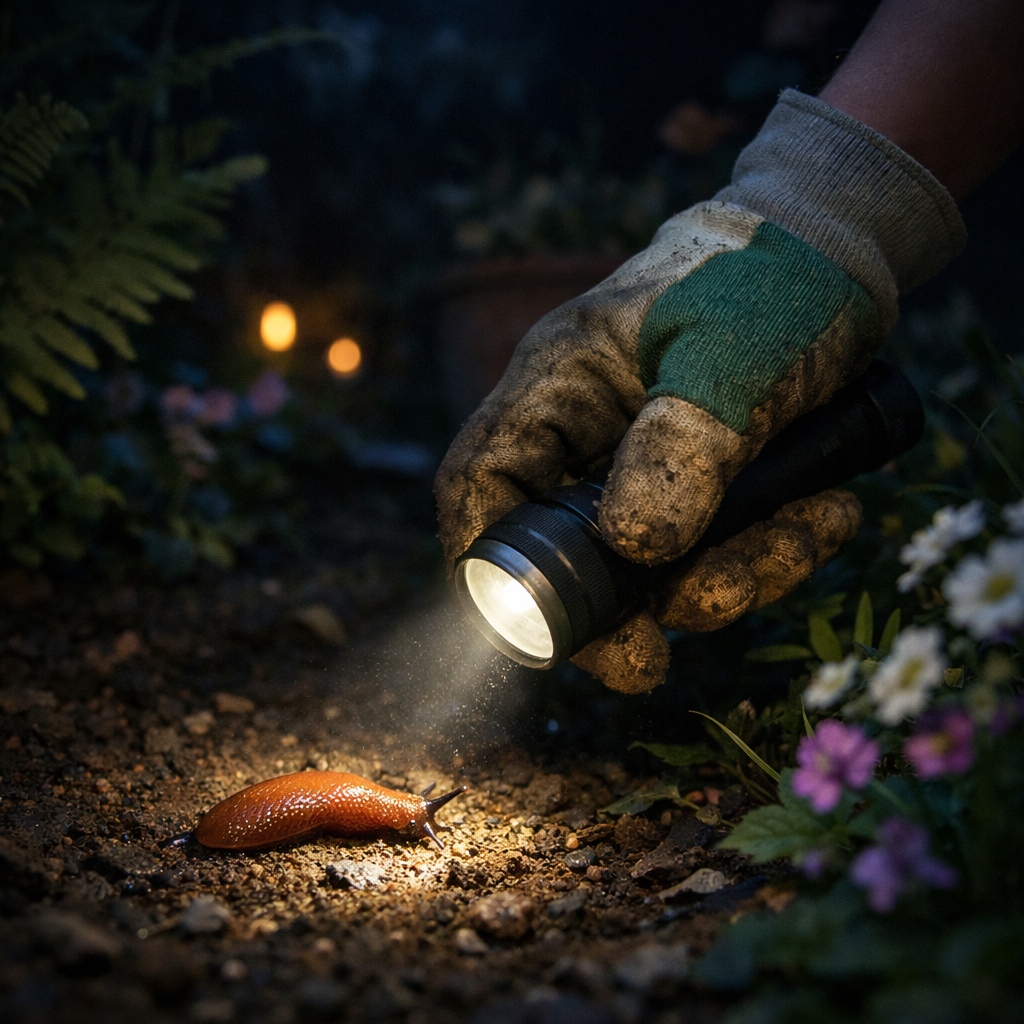
Slugs are most active in the evening or early morning. A torch and gloves are often all that is needed. Removing slugs regularly during peak seasons can significantly reduce damage over time.
Relocate slugs away from hosta beds, ideally to wilder areas of the garden where they can continue their role in breaking down organic matter.
Encourage Natural Predators
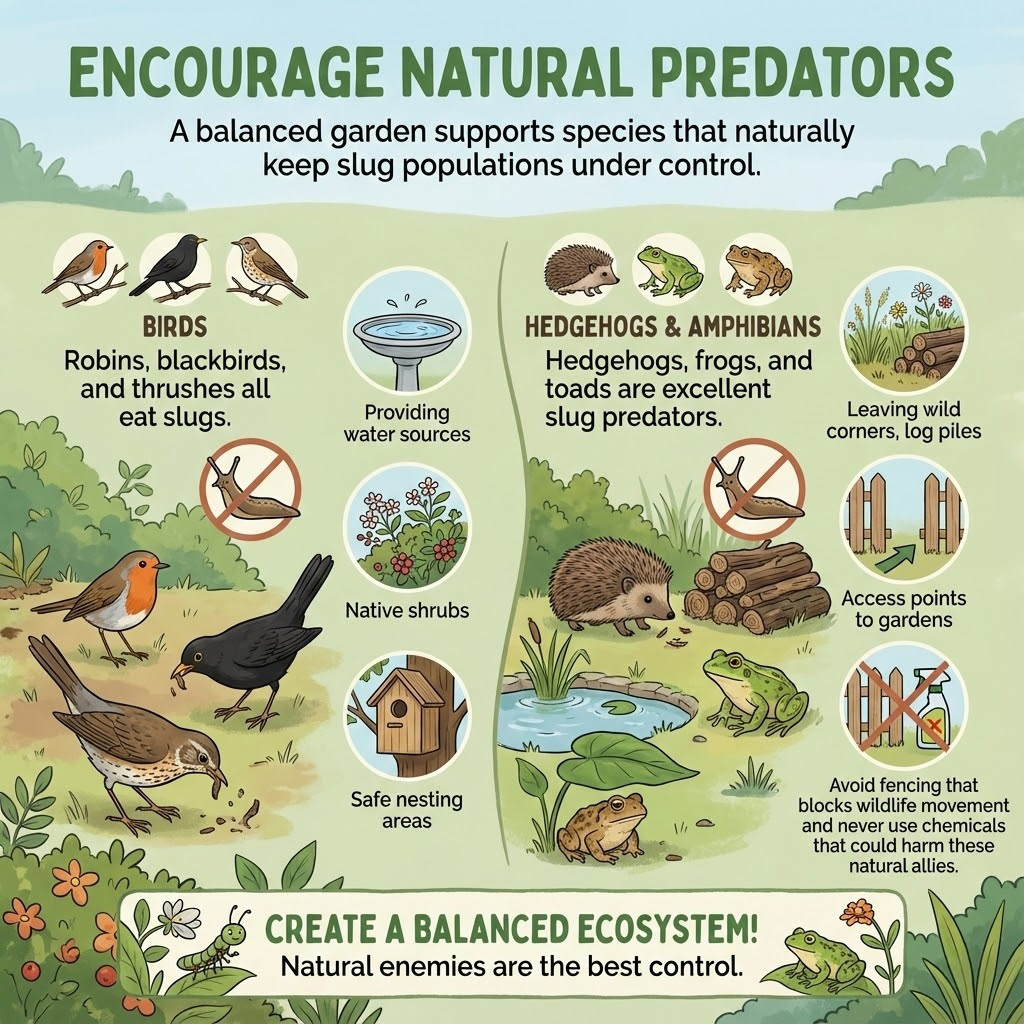
A balanced garden supports species that naturally keep slug populations under control.
If you have a severe infestation, applying beneficial nematodes is the most effective biological control available.
Birds
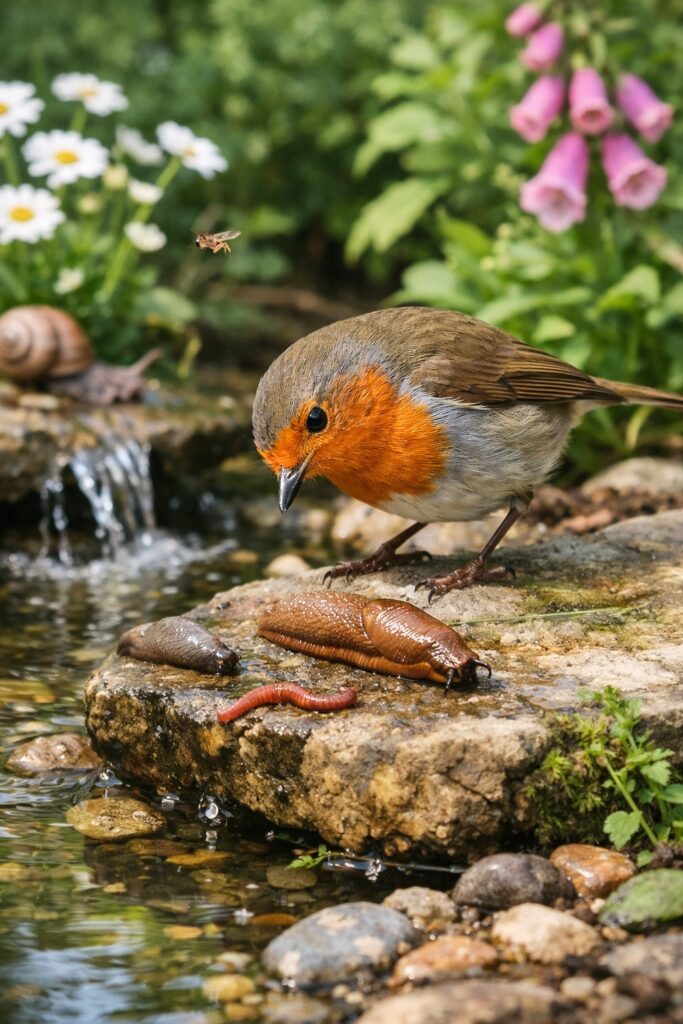
Robins, blackbirds, and thrushes all eat slugs. Providing water sources, native shrubs, and safe nesting areas encourages them to visit regularly.
Hedgehogs and Amphibians
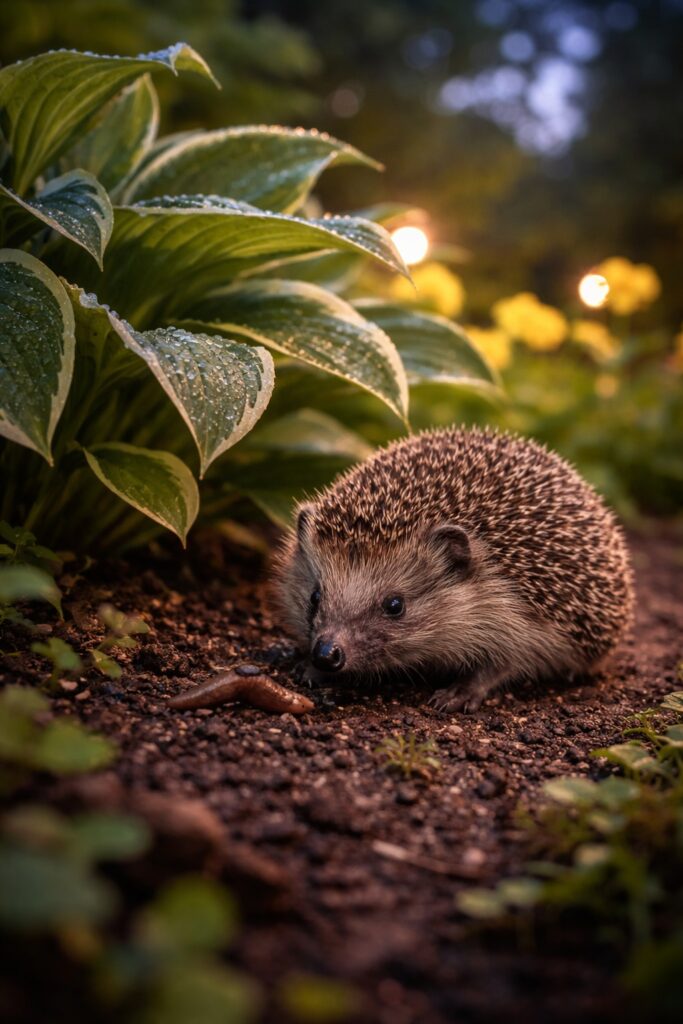
Hedgehogs, frogs, and toads are excellent slug natural predators. Leaving wild corners, log piles, and access points to gardens can help support them.
Avoid fencing that blocks wildlife movement and never use chemicals that could harm these natural allies.
Companion Planting to Deter Slugs
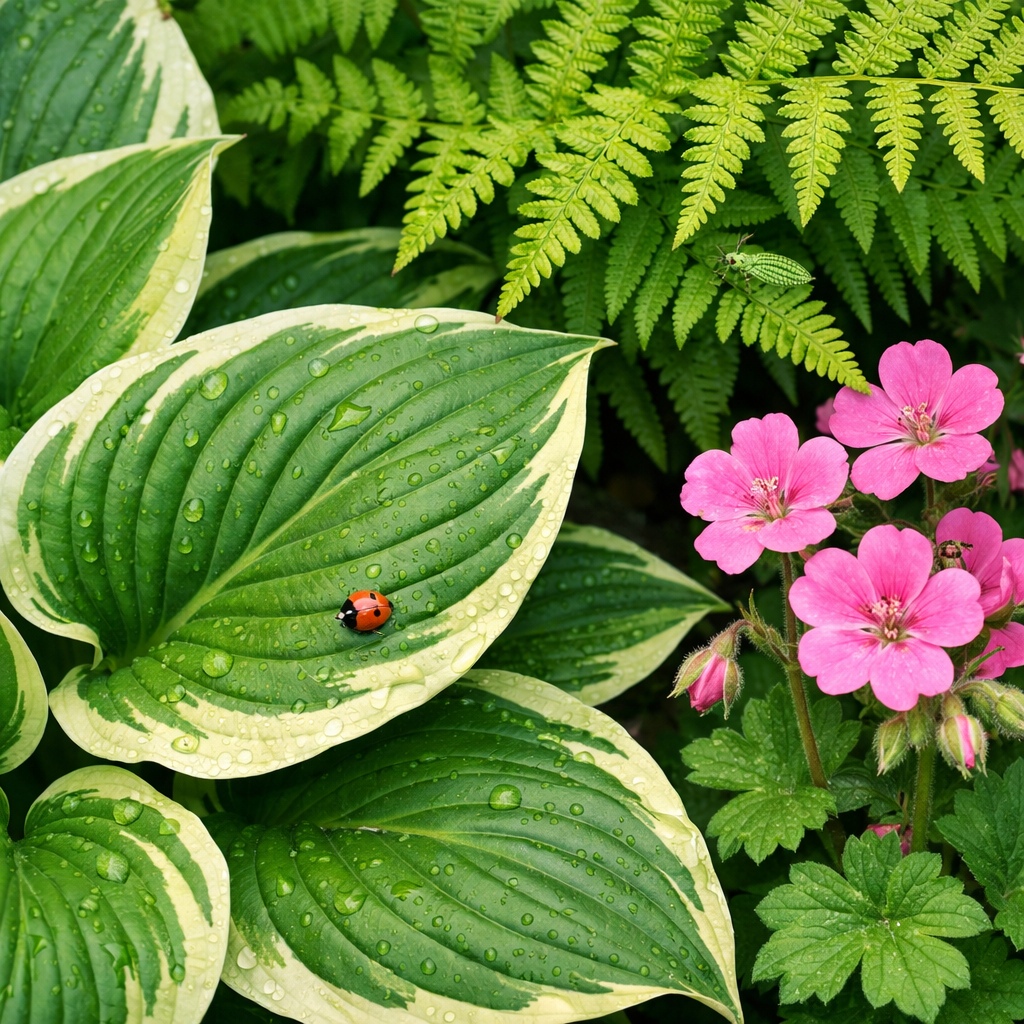
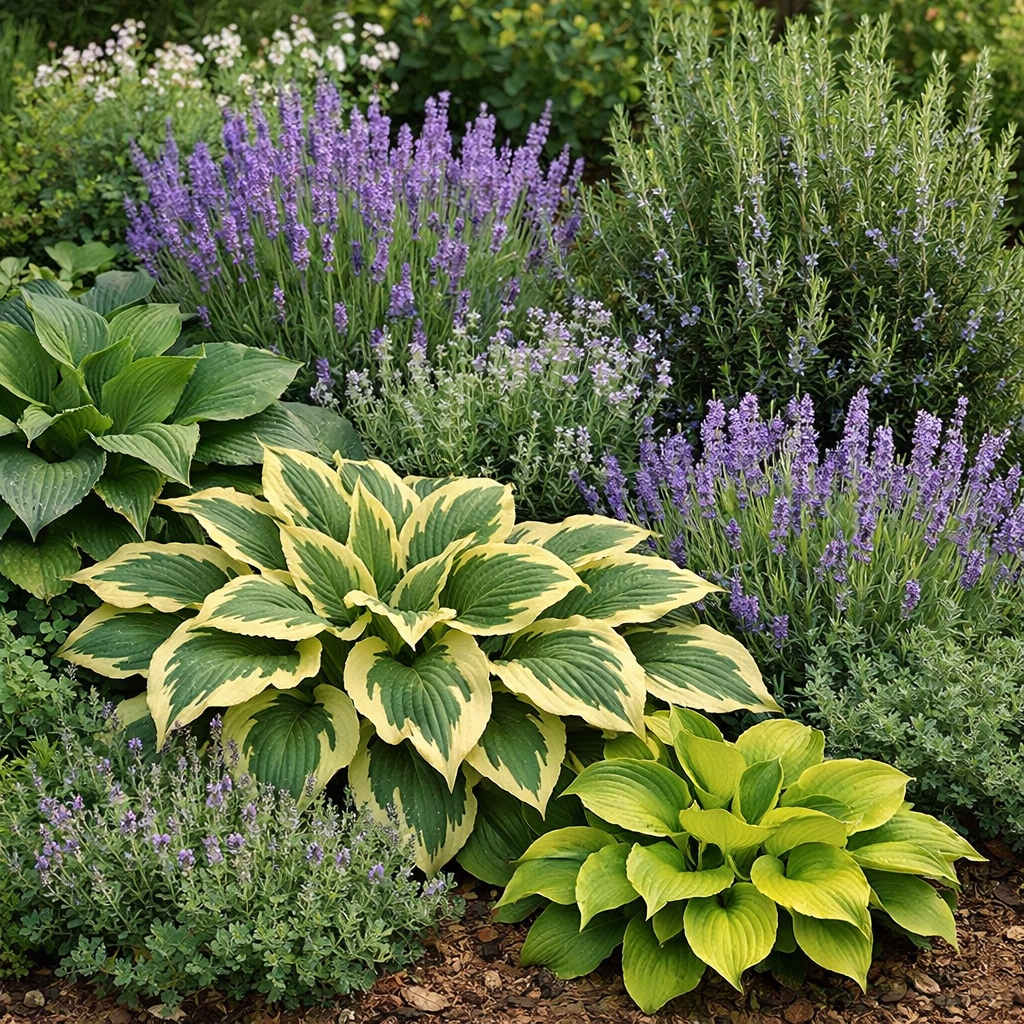
Some plants are less attractive to slugs and can help protect hostas when planted nearby.
Plants often reported to deter slugs include:
- Ferns
- Lavender
- Rosemary
- Sage
- Geraniums
While companion planting alone will not stop slug damage, it can reduce pressure when combined with other methods.
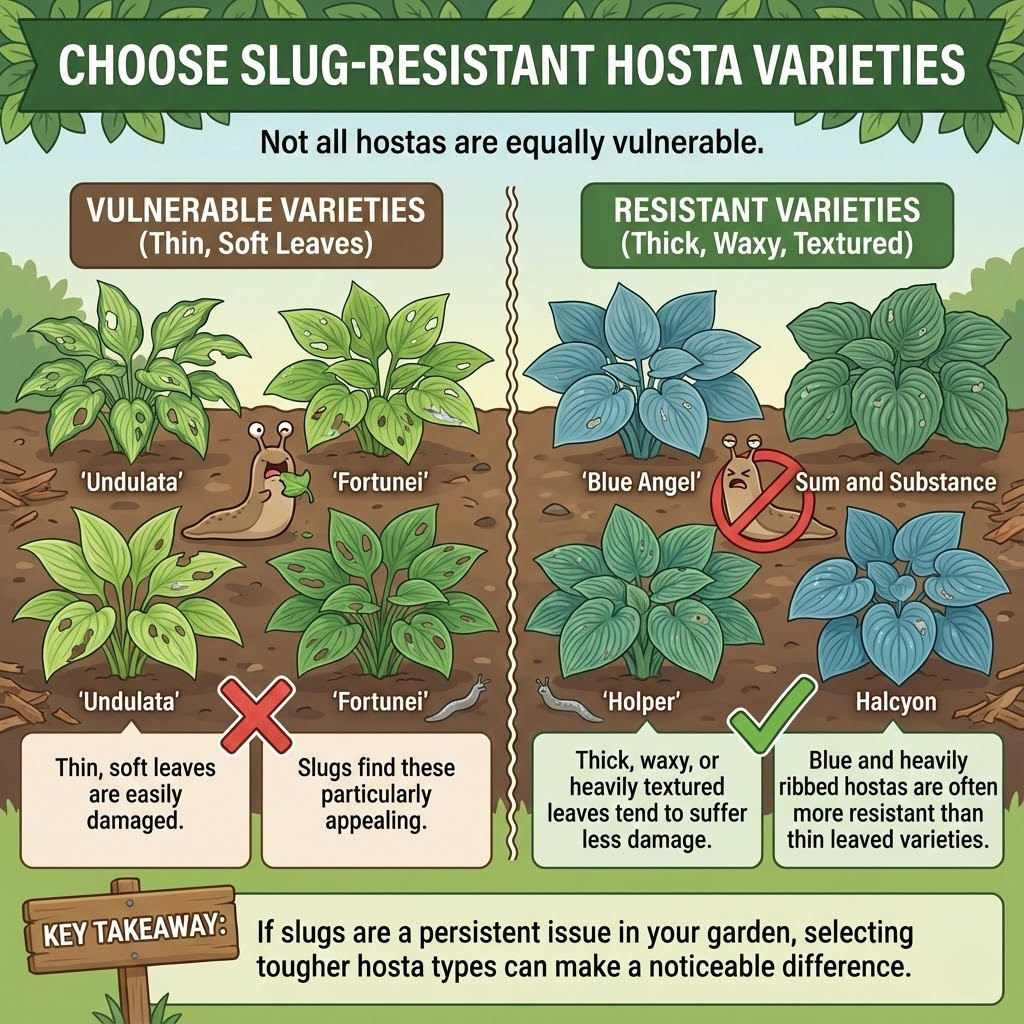
Choose More Slug-Resistant Hosta Varieties
Not all hostas are equally vulnerable.
Varieties with thick, waxy, or heavily textured leaves tend to suffer less damage. Blue and heavily ribbed hostas are often more resistant than thin leaved varieties.
If slugs are a persistent issue in your garden, selecting tougher hosta types can make a noticeable difference.
| Variety | Why It Works |
| Hosta ‘Sum and Substance’ | Giant, thick, waxy leaves that slugs hate chewing. |
| Hosta ‘Blue Mouse Ears’ | Small but tough; the rubbery texture is a deterrent. |
| Hosta ‘Halcyon’ | The classic blue hosta with a thick cuticle layer. |
Ethical Traps and Natural Shelters
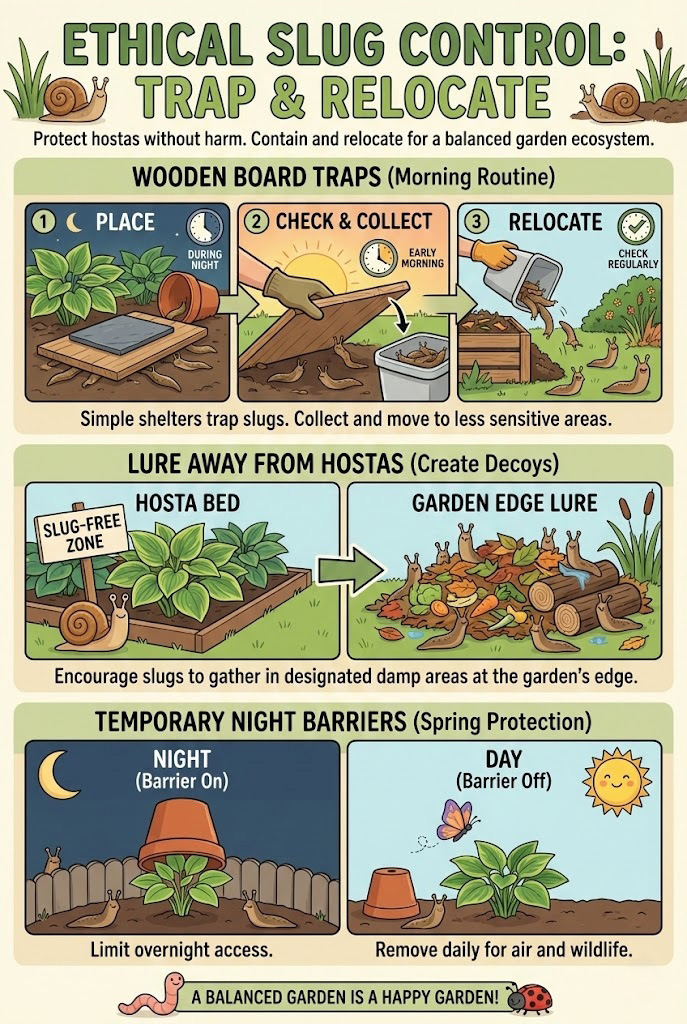
Ethical slug control focuses on containment and relocation, not killing. These methods reduce damage to hostas while allowing slugs and snails to remain part of the garden ecosystem.
Wooden Boards and Natural Shelters
Placing damp wooden boards, slate tiles, or upturned plant pots near hostas creates cool, shaded shelters that slugs naturally gather under during the day.
These shelters can be lifted in the morning, allowing slugs to be collected and relocated to less sensitive areas of the garden, such as compost heaps, wild borders, or leaf litter zones.
This approach is controlled, targeted, and causes minimal disruption to wildlife.
Moist Hiding Zones Away From Hostas
Rather than luring slugs to hostas, you can encourage them to gather elsewhere by creating damp hiding areas at the far edge of the garden.
A small pile of leaves, logs, or garden debris kept moist will often attract slugs away from ornamental plants. Checking these areas regularly allows for easy relocation without harming the animals.
Temporary Night Barriers
Placing removable barriers, such as inverted pots or low edging, around hostas in the evening can limit overnight access. These can be removed during the day to avoid trapping wildlife or affecting air circulation.
This method works best during early spring when hosta growth is most vulnerable.
Rethink Mulch Choices
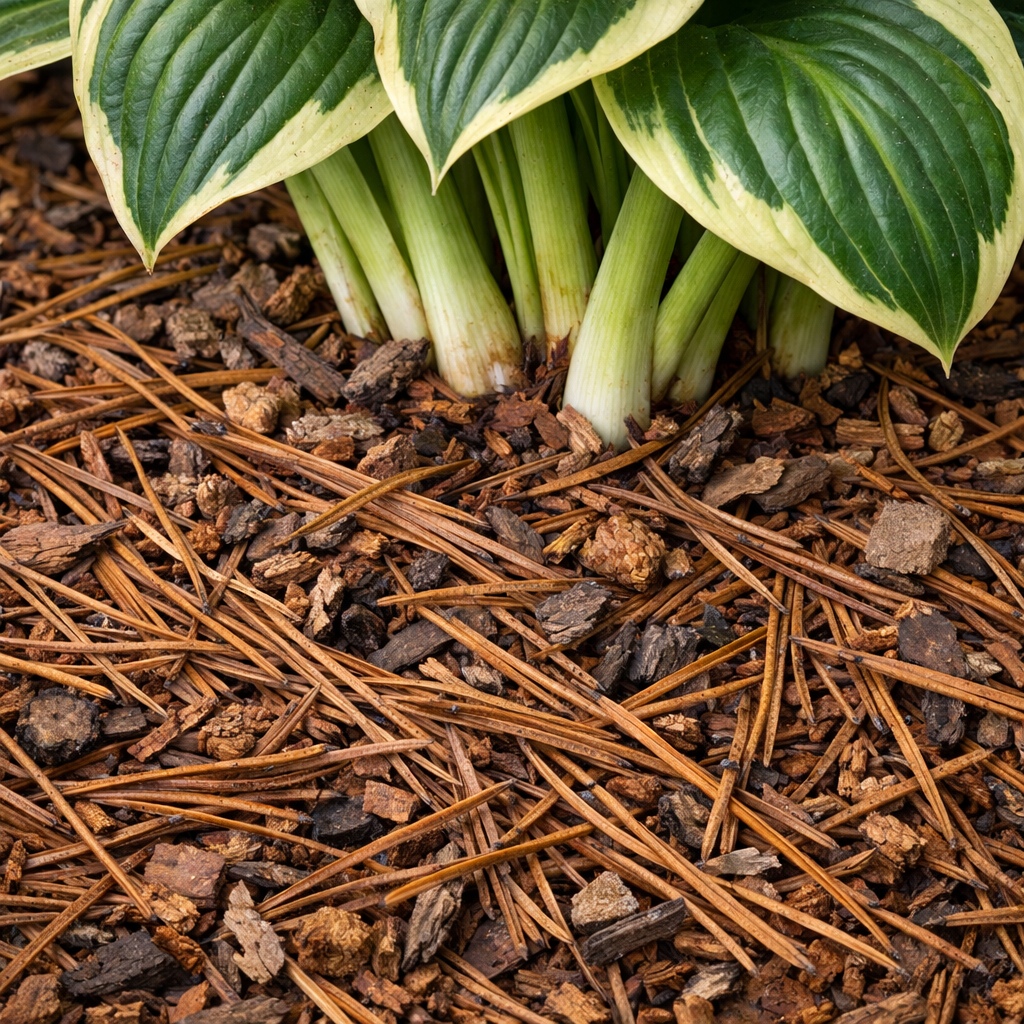
Mulch is valuable for soil health but can also provide shelter for slugs.
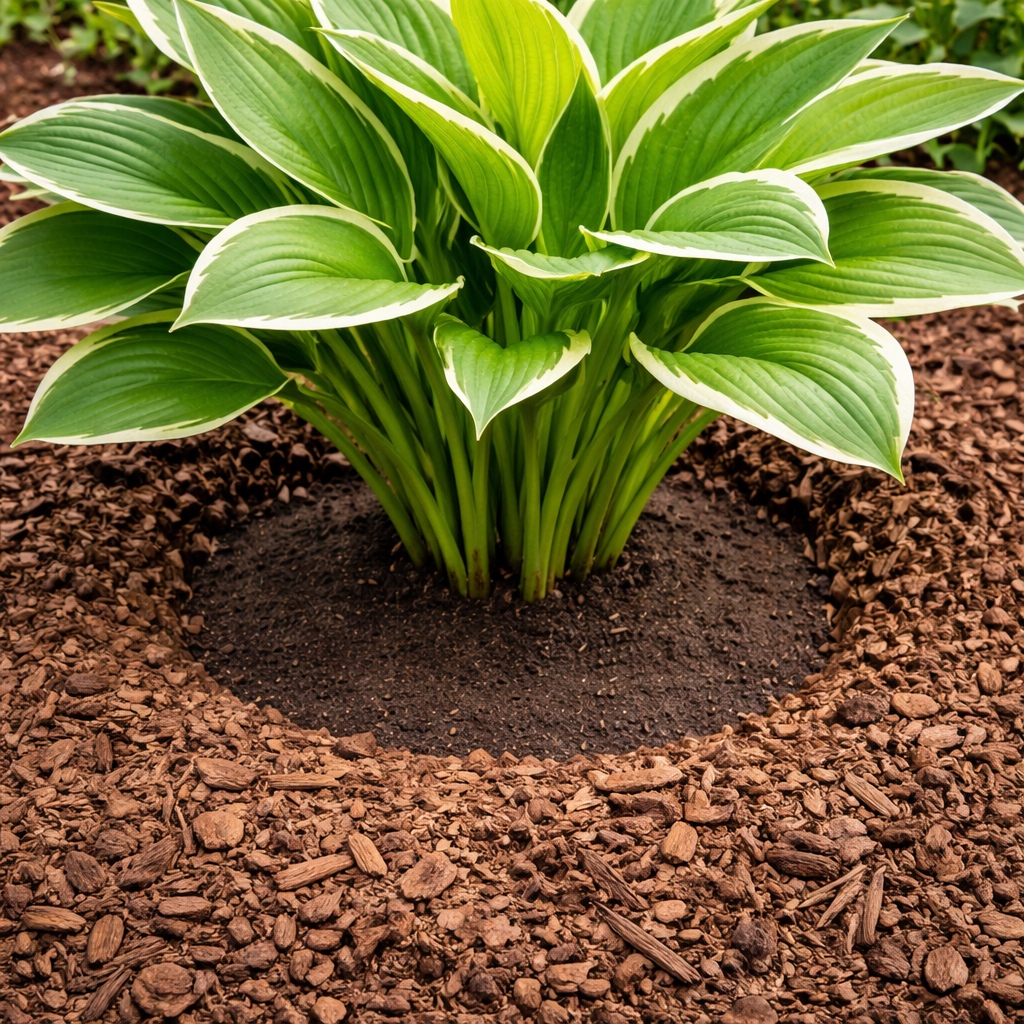
Fine compost and leaf mould retain moisture, which slugs love. Using drier, coarser mulches around hostas can help reduce slug activity.
Consider keeping mulch slightly away from the base of plants, creating a less inviting zone immediately around the stems.
Timing Is Everything
Young hosta shoots are most vulnerable in early spring.
Focus your efforts during this period, when protecting new growth has the greatest impact. As leaves mature and toughen, they become less attractive to slugs.
Consistent early season action often reduces problems later in the year.
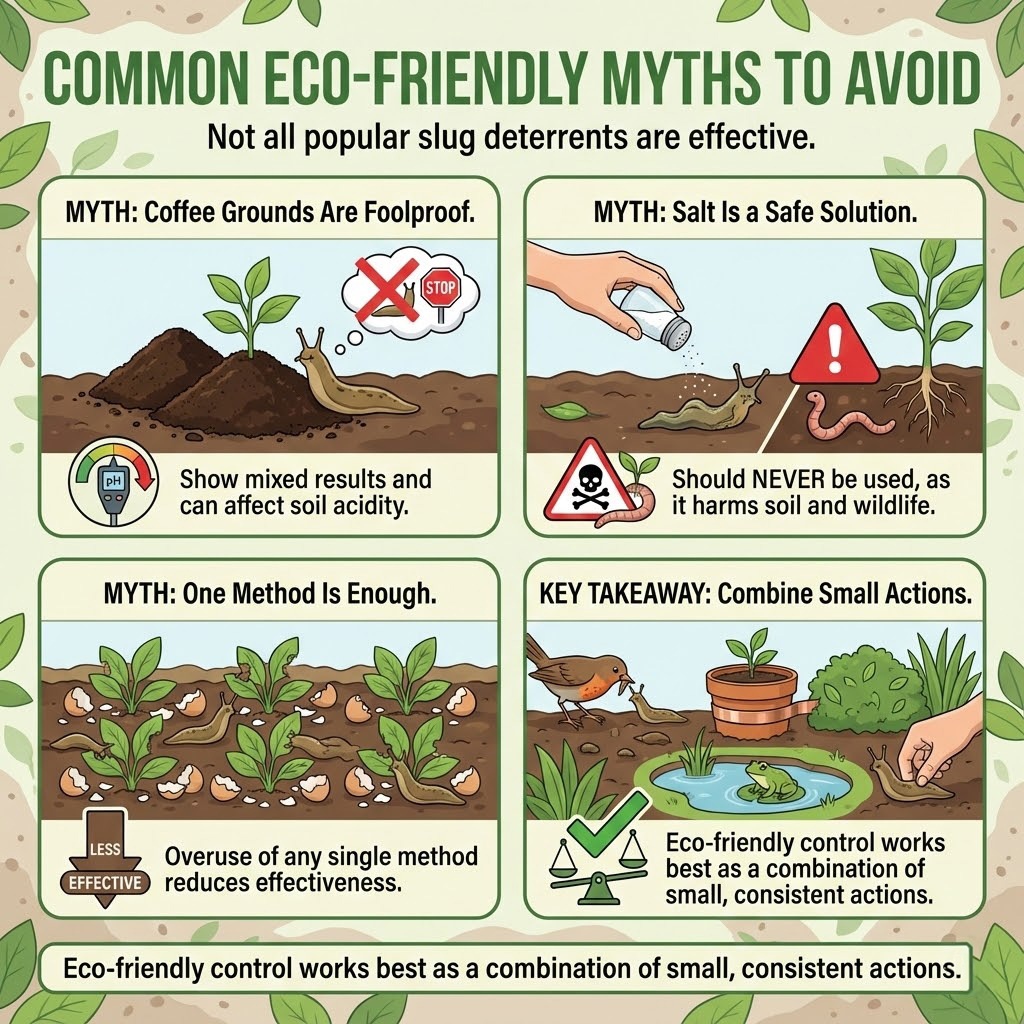
Common Eco-Friendly Myths to Avoid
Not all popular slug deterrents are effective.
- Coffee grounds show mixed results and can affect soil acidity
- Salt should never be used, as it harms soil and wildlife
- Overuse of any single method reduces effectiveness
Eco-friendly control works best as a combination of small, consistent actions.
Eco-Friendly Ways to Protect Hostas From Slugs
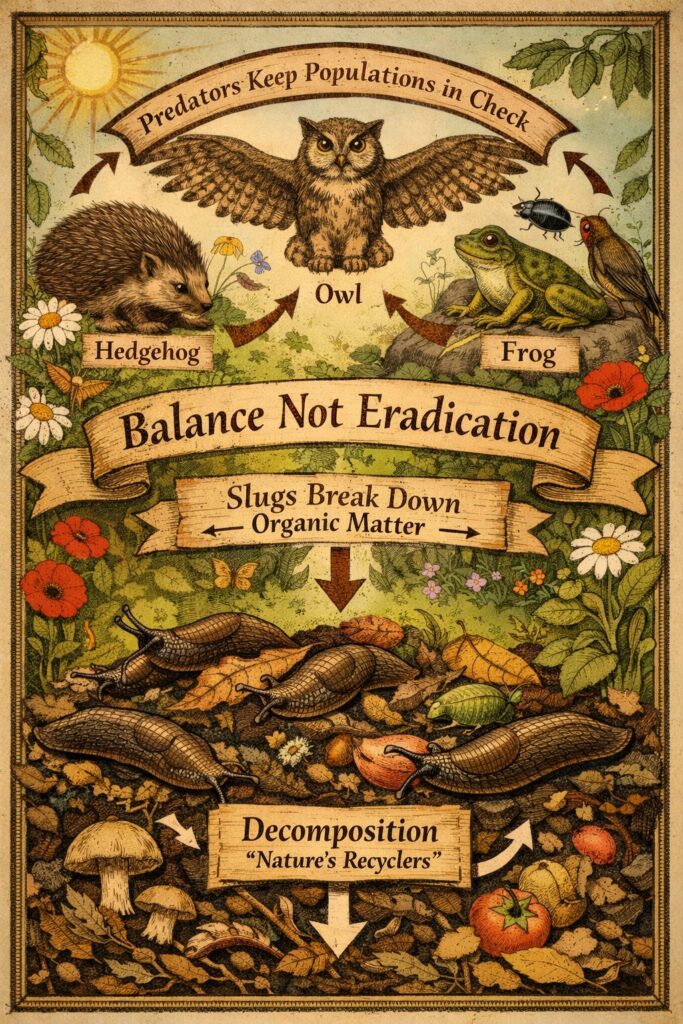
Slugs and snails play a role in breaking down organic matter and supporting soil health. The goal is not eradication, but balance.
By improving garden conditions, supporting predators, and using physical deterrents, it is possible to protect hostas while maintaining a healthy ecosystem.
Gardens that work with nature tend to experience fewer extreme pest problems over time.
Frequently Asked Questions
What is the most eco-friendly way to protect hostas from slugs?
The most eco-friendly approach combines physical barriers, good watering habits, and encouragement of natural predators rather than chemical pellets.
Do copper barriers really stop slugs?
Yes. Copper creates a mild reaction that slugs avoid, making it an effective and wildlife-safe deterrent when kept clean.
Are slug pellets bad for wildlife?
Many slug pellets can harm birds, hedgehogs, pets, and beneficial insects. Eco-friendly methods avoid these risks.
What time of day is best to remove slugs?
Early morning or evening is best, as slugs are most active during cool, damp conditions.
Do eggshells or grit actually work?
They can help by slowing slugs down, but they work best as part of a wider control strategy rather than on their own.
Are some hostas more resistant to slugs?
Yes. Hostas with thicker, waxy, or heavily textured leaves are generally less attractive to slugs.
Should I remove slugs completely from my garden?
No. Slugs play a role in soil health. The goal is balance, not total removal.
Final Thoughts: Protecting Hostas Without Harming Wildlife
Protecting hostas from slugs does not require harsh chemicals or constant frustration. Eco-friendly methods may take a little more patience, but they deliver longer lasting results and support a healthier garden overall.
With thoughtful planting, simple barriers, and encouragement of natural predators, hostas can thrive while wildlife continues to do what it does best.
A resilient garden is one where balance replaces battle.