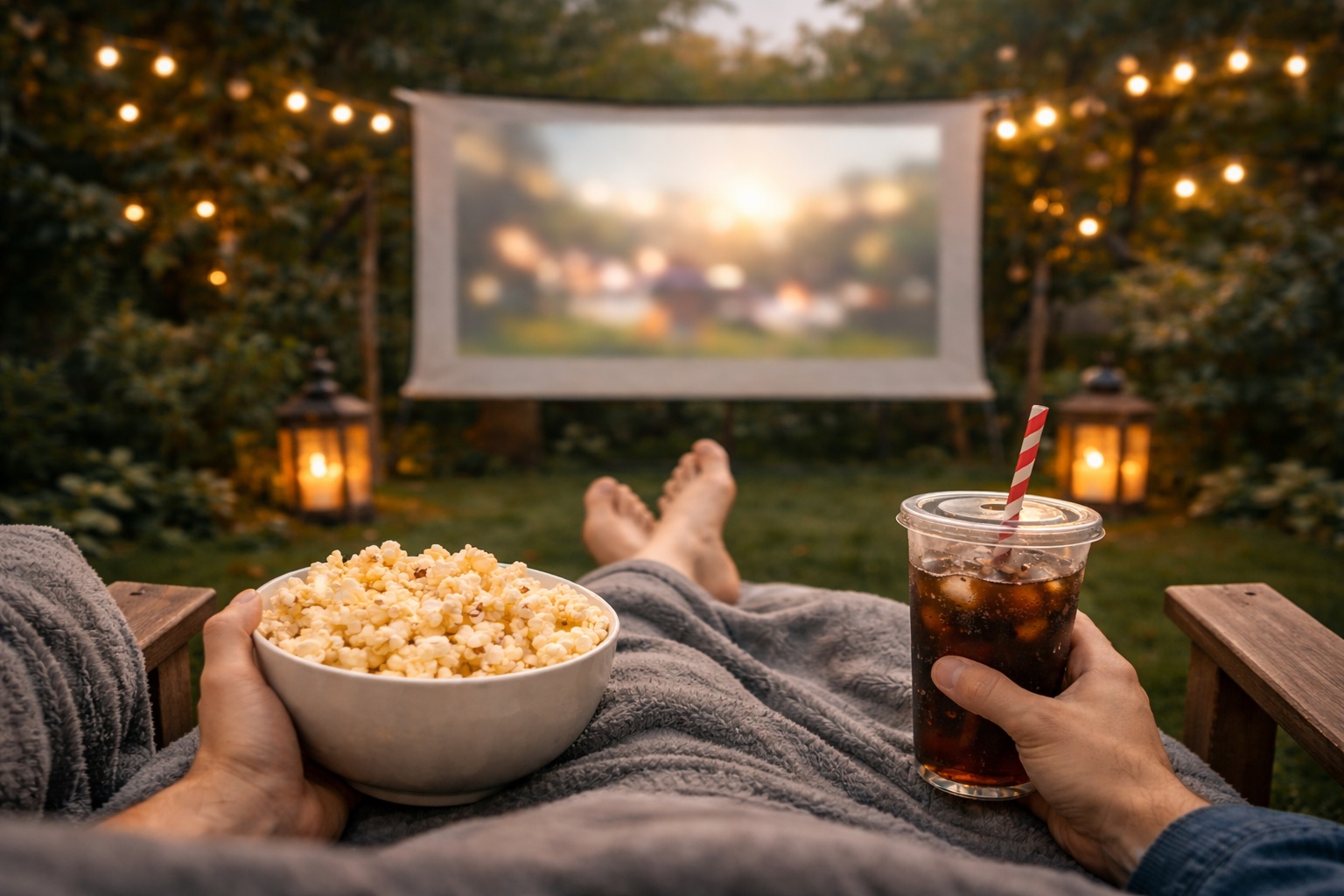
An outdoor cinema projector setup can transform your garden into a relaxed space for movie nights, bringing the big screen experience outdoors without permanent changes.
This guide walks through everything you need to consider when setting up an outdoor cinema at home, from choosing the right projector to dealing with light, sound, weather, and comfort.
Note: This guide contains affiliate links. If you click through and make a purchase, we may earn a small commission which helps run this site.
Table of Contents
Is an Outdoor Cinema Practical in the UK?
Outdoor cinema setups are entirely achievable in the UK, but they work best when approached with realistic expectations. Unlike warmer climates, UK weather and daylight hours need to be factored in carefully.
A well planned outdoor cinema projector setup balances brightness, sound, and comfort so films remain enjoyable even in less than perfect conditions.
Late spring through early autumn is the ideal season, with evenings that are mild enough to sit outside and dark enough to enjoy a projected image. Even then, flexibility is important. A good outdoor cinema setup should be easy to assemble, dismantle, and store rather than permanently installed.
Choosing the Right Projector for an Outdoor Cinema Setup
The projector is the heart of your outdoor cinema, and choosing the right one makes a significant difference.
Brightness matters more than resolution
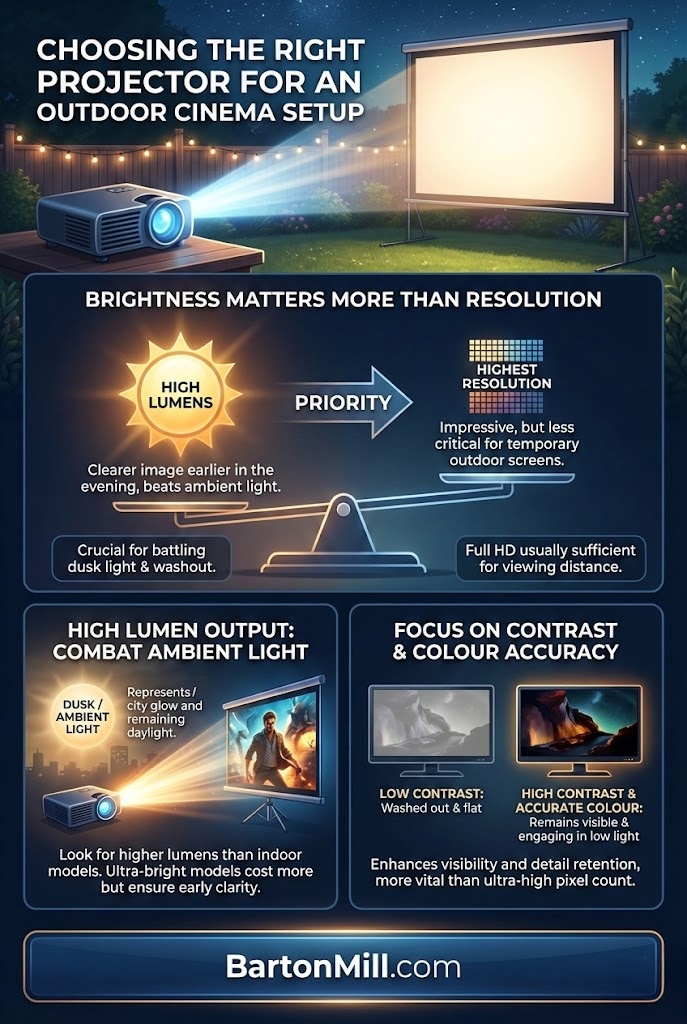
When watching outdoors, brightness is far more important than having the highest resolution. Even at dusk, ambient light can quickly wash out an image.
Look for a projector with higher lumen output than you would normally use indoors. While ultra high brightness models are more expensive, they produce a clearer image earlier in the evening.
Resolution and image quality
Full HD resolution is usually more than sufficient for outdoor viewing. Higher resolutions can look impressive, but they are not essential when projecting onto a temporary screen or wall.
Focus instead on contrast and colour accuracy, which help images remain visible in low light conditions.
For a great entry-level option that works well at dusk, we recommend the Anker Nebula Solar Portable for its built-in battery and Android TV. Otherwise, for the top-level option check our the Anker Nebula Cosmos Portable for 4K with super high brightness.
Independent advice on projector brightness and viewing conditions explains why higher lumen output matters far more outdoors than ultra high resolution.
Deciding Where to Place the Projector
Projector placement affects both image quality and practicality.
Distance and throw
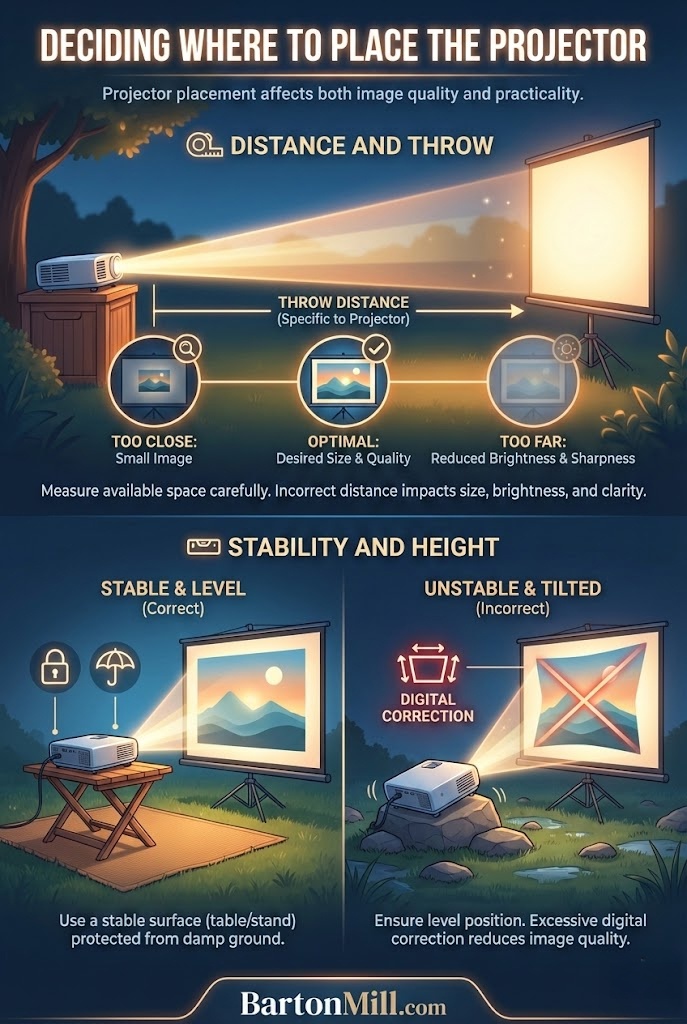
Every projector has a specific throw distance, which determines how far it needs to be from the screen to produce the desired image size. Measure your available space carefully before setting up.
Placing the projector too close can result in a small image, while placing it too far away may reduce brightness and sharpness.
Stability and height
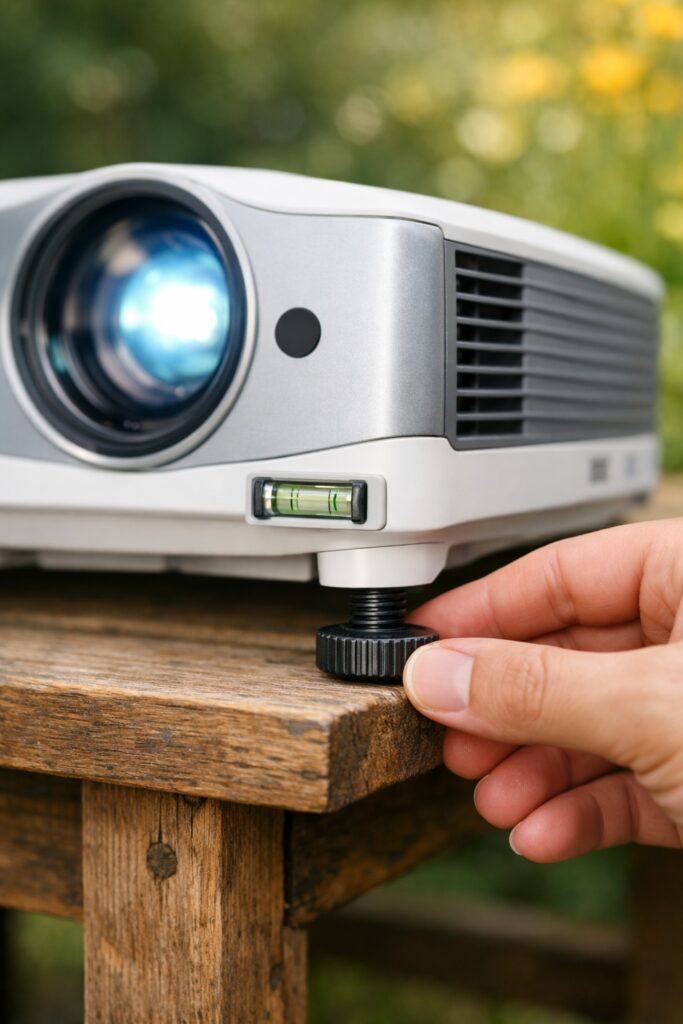
The projector should be placed on a stable surface, protected from damp ground. A small outdoor table or sturdy stand works well.
Ensure the projector is level and positioned so the image does not need excessive digital correction, which can reduce image quality.
Choosing a Screen or Projection Surface
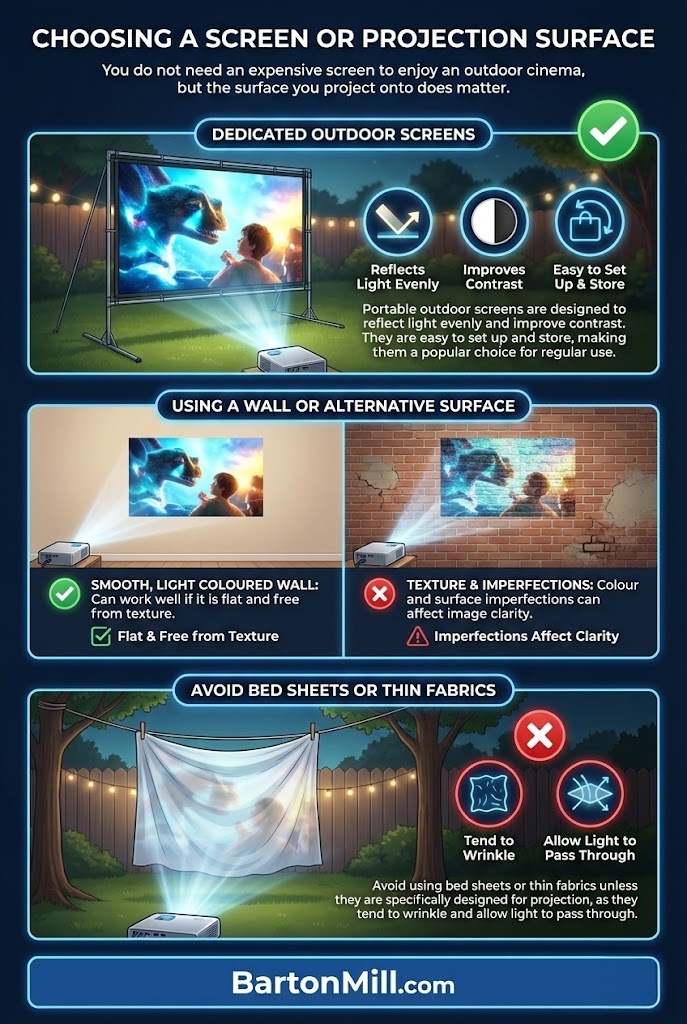
You do not need an expensive screen to enjoy an outdoor cinema, but the surface you project onto does matter.
Dedicated outdoor screens
Portable outdoor screens are designed to reflect light evenly and improve contrast. They are easy to set up and store, making them a popular choice for regular use.
Using a wall or alternative surface
A smooth, light coloured wall can work well if it is flat and free from texture. However, colour and surface imperfections can affect image clarity.
Avoid using bed sheets or thin fabrics unless they are specifically designed for projection, as they tend to wrinkle and allow light to pass through.
Avoid wrinkly bedsheets. A 100-inch Pop-Up Outdoor Screen sets up in 2 minutes and guarantees a flat image.
Managing Light Levels in the Garden
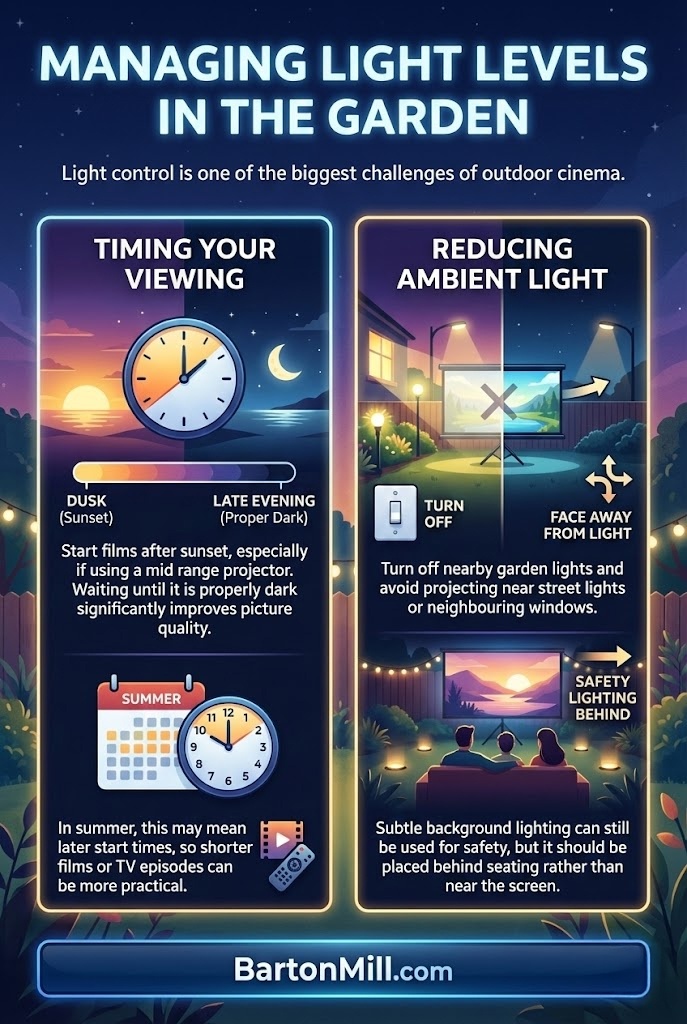
Light control is one of the biggest challenges of outdoor cinema. Careful placement of lights matters when using garden lighting without ruining the atmosphere, as brightness near the screen can quickly reduce image quality.
Timing your viewing
Start films after sunset, especially if using a mid range projector. Waiting until it is properly dark significantly improves picture quality.
In summer, this may mean later start times, so shorter films or TV episodes can be more practical.
Reducing ambient light
Turn off nearby garden lights and avoid projecting near street lights or neighbouring windows. If complete darkness is not possible, position the screen so it faces away from light sources.
Subtle background lighting can still be used for safety, but it should be placed behind seating rather than near the screen.
Sound: Built In Speakers vs External Audio
Sound is often overlooked but is just as important as the picture.
Built in projector speakers
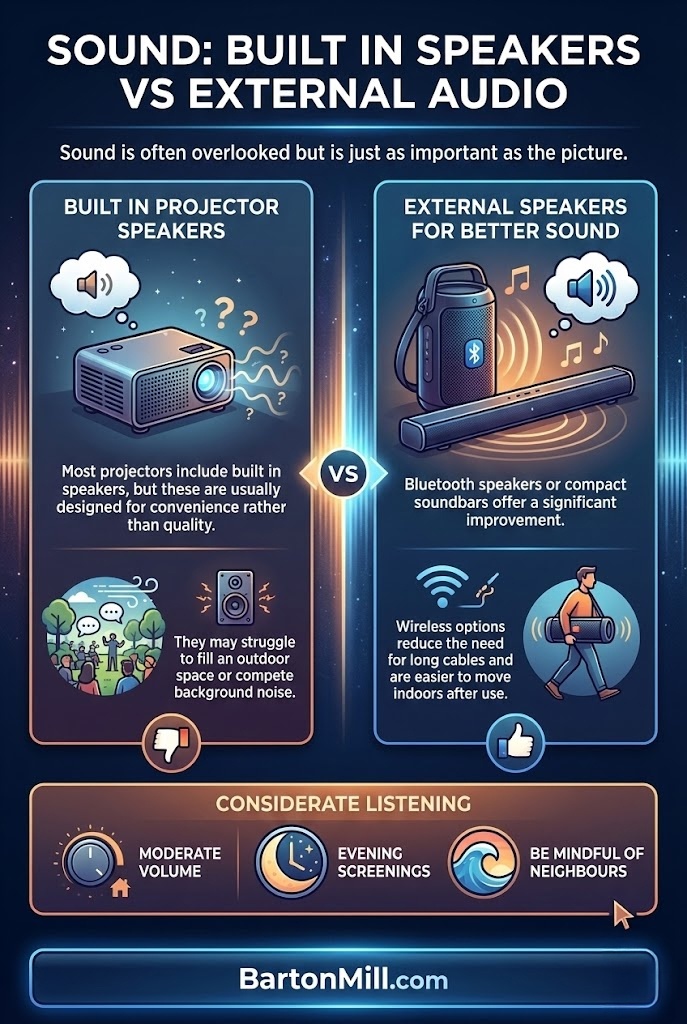
Most projectors include built in speakers, but these are usually designed for convenience rather than quality. They may struggle to fill an outdoor space or compete with background noise.
External speakers for better sound
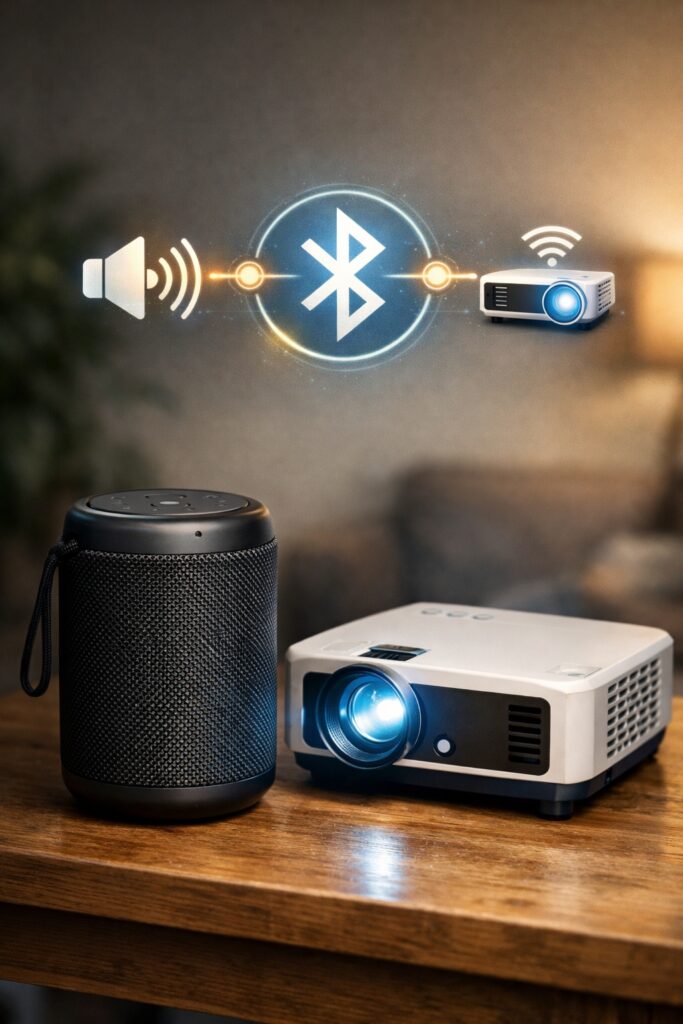
Bluetooth speakers or compact soundbars offer a significant improvement. Wireless options reduce the need for long cables and are easier to move indoors after use.
Keep volume levels considerate, especially in residential areas, and be mindful of neighbours during evening screenings.
Pair your projector with a rugged JBL Flip 6 Bluetooth Speaker to fill the garden with sound without running extra wires
Power and Cable Management
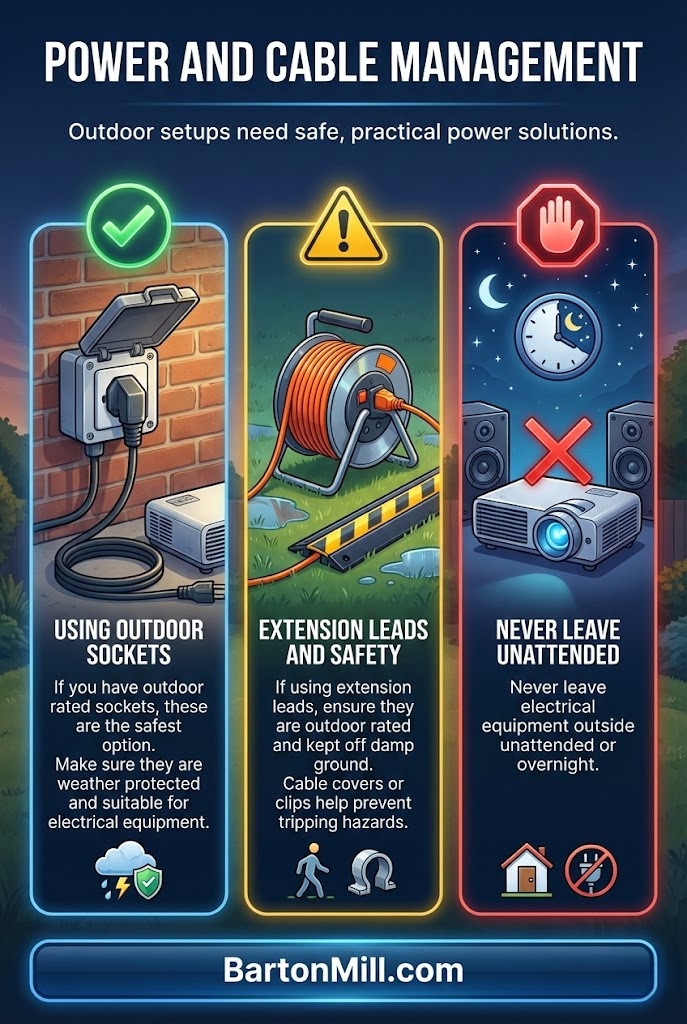
Outdoor setups need safe, practical power solutions.
Using outdoor sockets
If you have outdoor rated sockets, these are the safest option. Make sure they are weather protected and suitable for electrical equipment.
Extension leads and safety
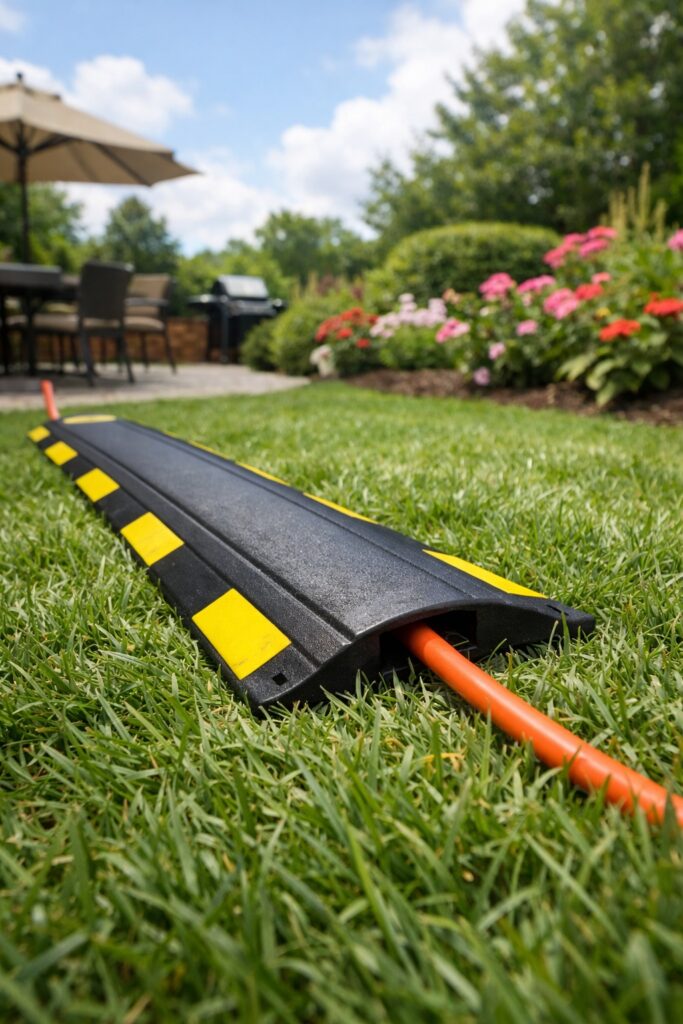
If using extension leads, ensure they are outdoor rated and kept off damp ground. Cable covers or clips help prevent tripping hazards.
Never leave electrical equipment outside unattended or overnight.
When running power outside, it is essential to follow guidance on using electrical equipment safely outdoors, particularly when extension leads and temporary setups are involved.
Weather Considerations and Protection
Weather is unpredictable, so your setup should be easy to adjust or pack away.
Wind and stability
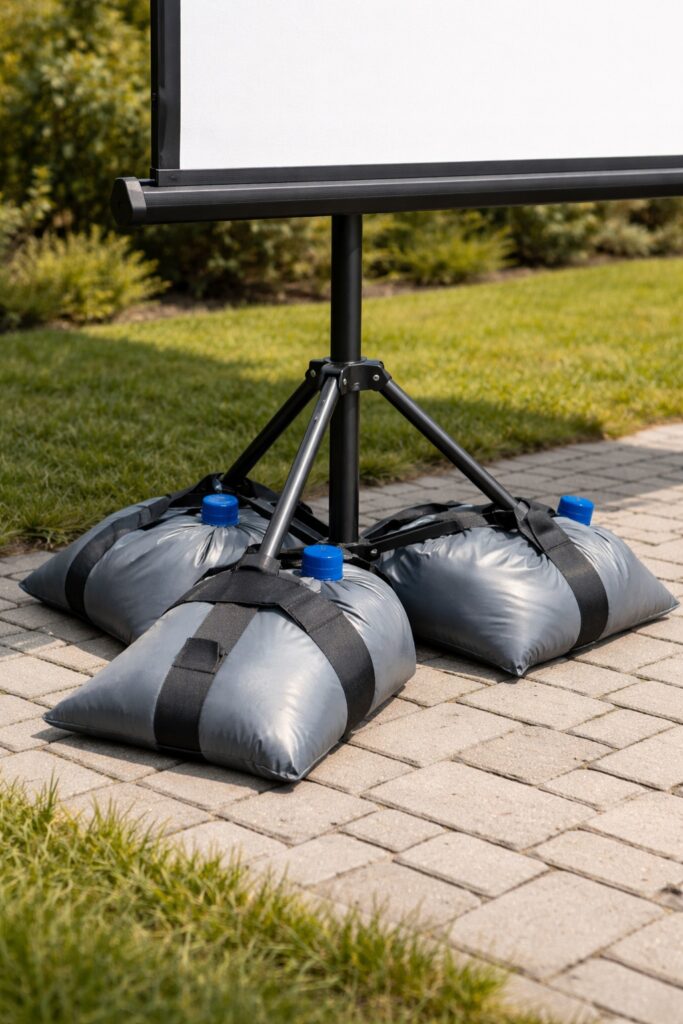
Screens and lightweight equipment can be affected by wind. Use weighted bases or anchors where possible and avoid setting up in exposed areas.
Moisture and temperature
Avoid using projectors in damp conditions. Even light moisture can damage electronics. Always bring equipment indoors immediately after use and allow it to return to room temperature before storing.
Seating and Comfort
Comfort plays a big role in how enjoyable your outdoor cinema experience feels.
Flexible seating options
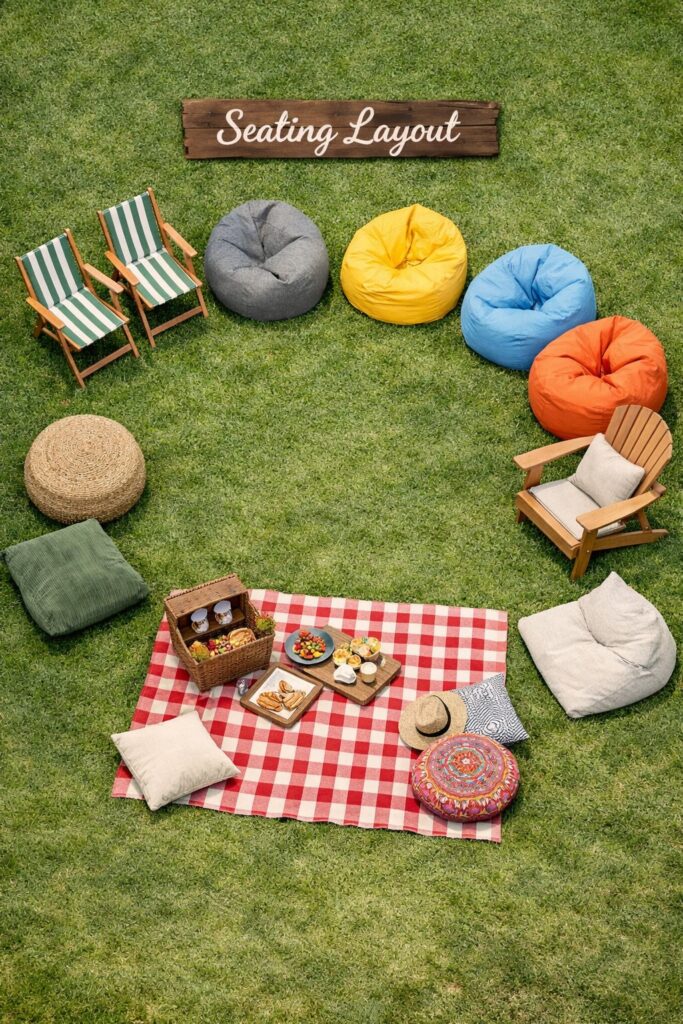
Garden chairs, benches, floor cushions, or picnic blankets all work well. The key is ensuring everyone has a clear view of the screen.
Layering blankets or throws adds warmth as temperatures drop in the evening.
Layout and spacing
Arrange seating so viewers are centred with the screen and avoid placing people too close, which can make viewing uncomfortable.
Leave clear walkways to avoid accidents in low light.

Creating the Right Atmosphere
An outdoor cinema is as much about atmosphere as it is about equipment.
Subtle lighting
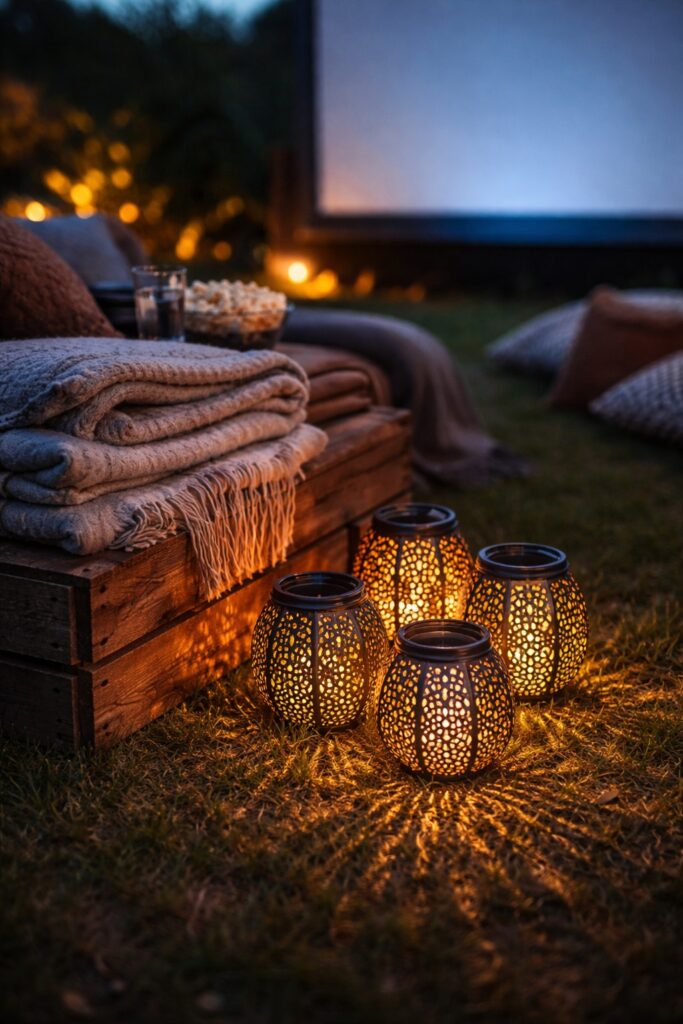
Low level lighting around seating areas helps with visibility without distracting from the screen. Solar lanterns or soft LED lights work well.
Snacks and refreshments
Simple snacks like popcorn, drinks, and easy to carry food add to the cinema feel. Avoid anything too noisy or bright that could distract from the film.

What to Watch Outdoors
Not every film works well outdoors.
Best content for outdoor viewing
Family films, comedies, and visually rich films with strong contrast tend to work best. Dialogue heavy dramas can be harder to follow if sound quality is limited.
Shorter content or episodic viewing can also suit outdoor settings, especially on weeknights.
Storage and Longevity
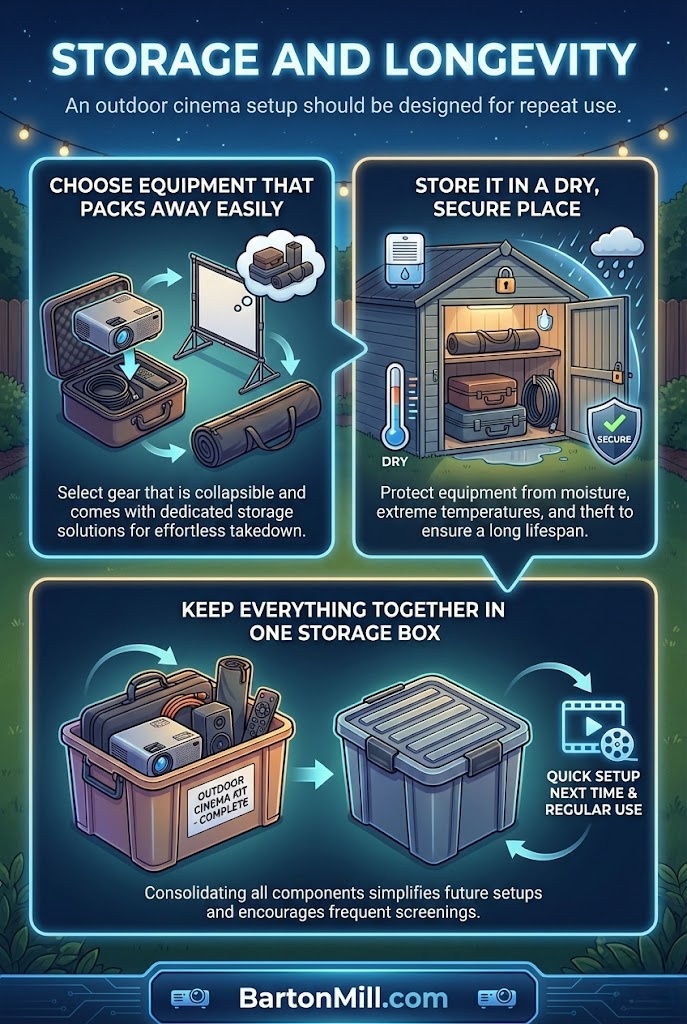
An outdoor cinema setup should be designed for repeat use.
Choose equipment that packs away easily and store it in a dry, secure place. Keeping everything together in one storage box makes setup quicker next time and encourages regular use.
Common Mistakes to Avoid
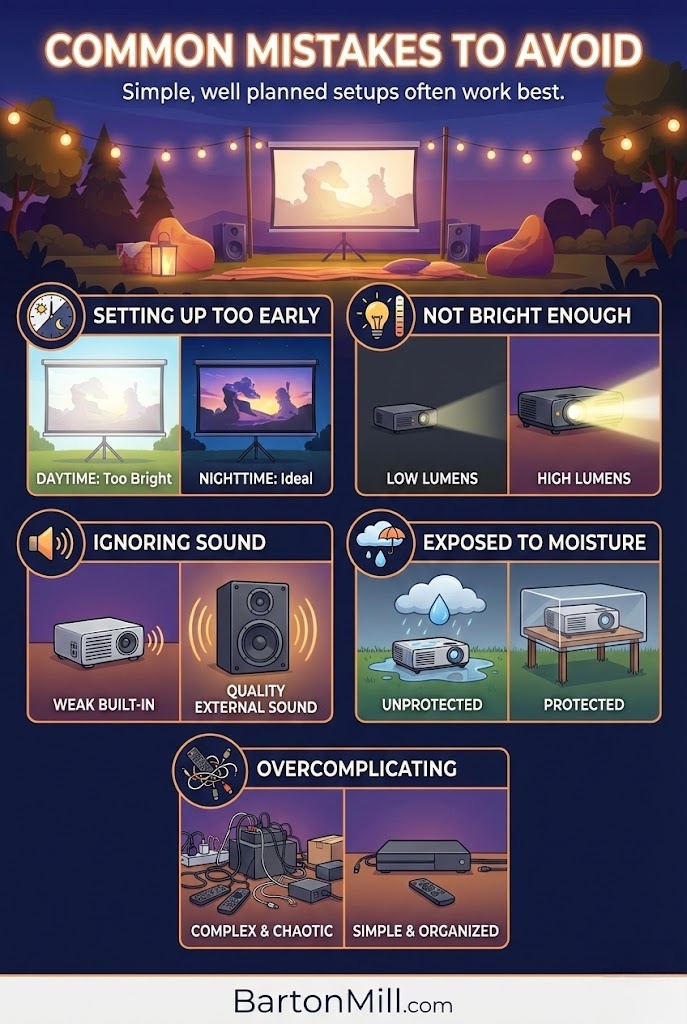
- Setting up too early before it gets dark
- Using a projector that is not bright enough
- Ignoring sound quality
- Leaving equipment exposed to moisture
- Overcomplicating the setup
Simple, well planned setups often work best.
Frequently Asked Questions
What brightness projector do I need for an outdoor cinema?
Higher brightness is more important than resolution outdoors. A brighter projector produces a clearer image earlier in the evening when there is still some ambient light.
Can I use a projector outside in the UK?
Yes, but outdoor use should be temporary. Always avoid moisture, pack equipment away after use, and only operate projectors in dry conditions.
Do I need a special screen for outdoor movies?
A dedicated outdoor screen improves image quality, but a smooth, light coloured wall can also work well if it is flat and evenly finished.
How do I power a projector safely in the garden?
Use outdoor rated sockets or extension leads designed for external use. Keep cables off damp ground and never leave equipment plugged in overnight.
Will neighbours hear my outdoor cinema?
Sound carries outdoors, so volume should be kept reasonable. Wireless speakers positioned near seating reduce the need for high volume.
Final Thoughts
Setting up an outdoor cinema in your garden does not need to be complicated or expensive. With thoughtful choices around projector brightness, screen placement, sound, and comfort, it is possible to create an experience that feels special without permanent changes.
An outdoor cinema works best when it is flexible, easy to assemble, and suited to the realities of your space and climate. When done well, it becomes something you return to again and again, making the most of warm evenings and shared time outdoors.