Not every nursery has the luxury of built-in storage. In flats, older homes, or multi-purpose rooms, it is common to create a nursery in a space with little or no closet at all. While this can feel limiting at first, it does not have to mean clutter or constant frustration.
Small nursery storage hacks are essential when you have no closet and need to keep a compact space organised, calm, and functional.
With thoughtful planning and smart use of space, a nursery without a closet can be just as organised, calm, and functional as one with built-in storage. The key is choosing storage solutions that work vertically, multitask, and adapt as your child grows.
This guide shares practical storage hacks for small nurseries with no closet, focusing on real-life solutions that are safe, flexible, and easy to maintain.
Transparency: Some of the links in this post are affiliate links. If you click through and make a purchase, we may earn a small commission at no extra cost to you. We only recommend products we naturally use and love.
Table of Contents
Start With What You Actually Need to Store
Before buying storage, take time to understand what the nursery truly needs to hold.
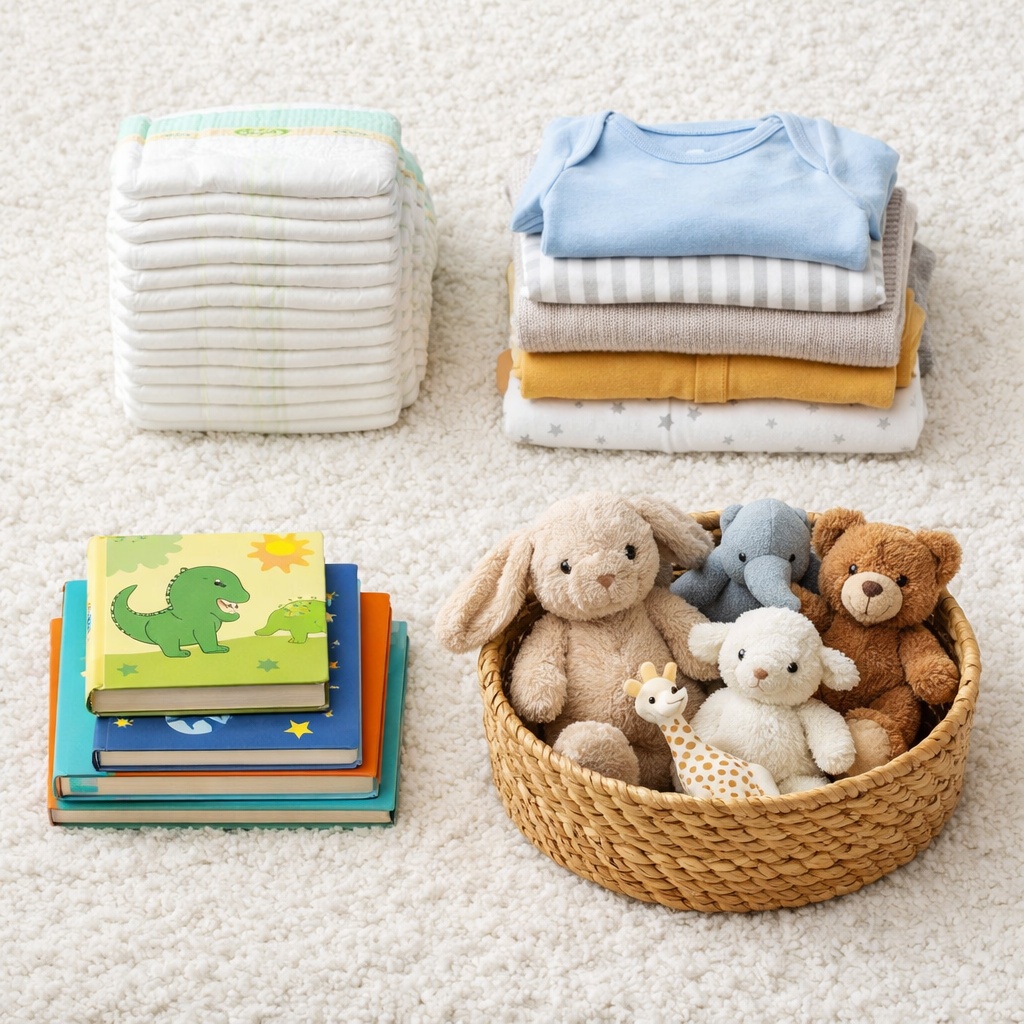
Most nursery storage falls into a few categories:
- Everyday clothing
- Bedding and blankets
- Nappies and changing supplies
- Toys and books
- Seasonal or spare items
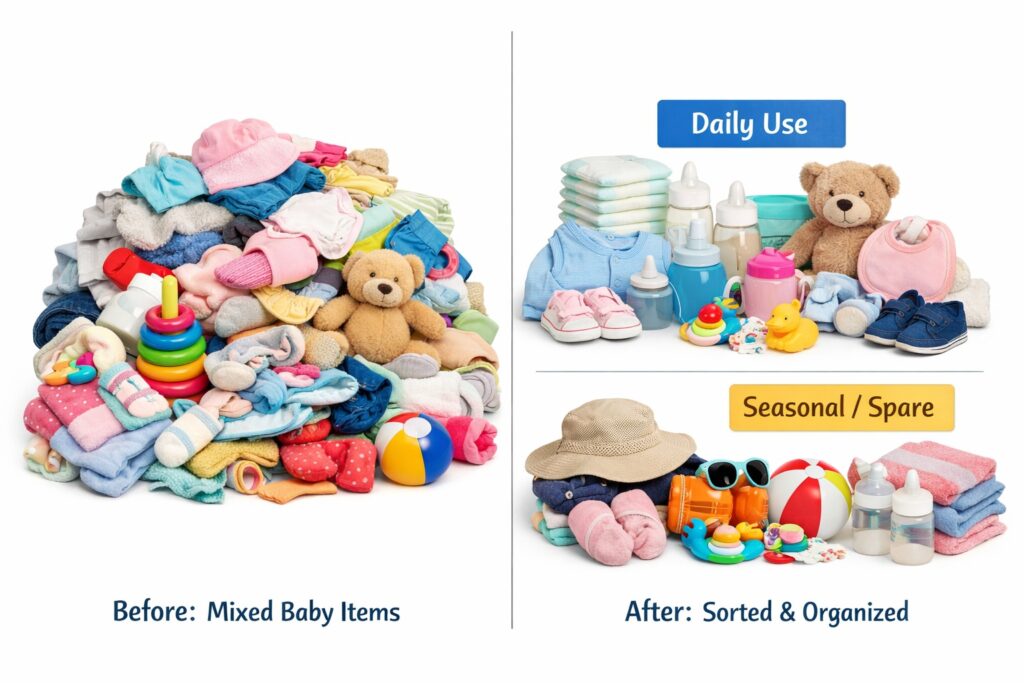
Separating essentials from occasional items helps prevent overfilling the room. Items used daily should be accessible, while less-used items can be stored higher or further away.
Clarity at this stage prevents unnecessary purchases later.
Small Nursery Storage Hacks Using Vertical Space
When floor space is limited, vertical storage becomes essential.
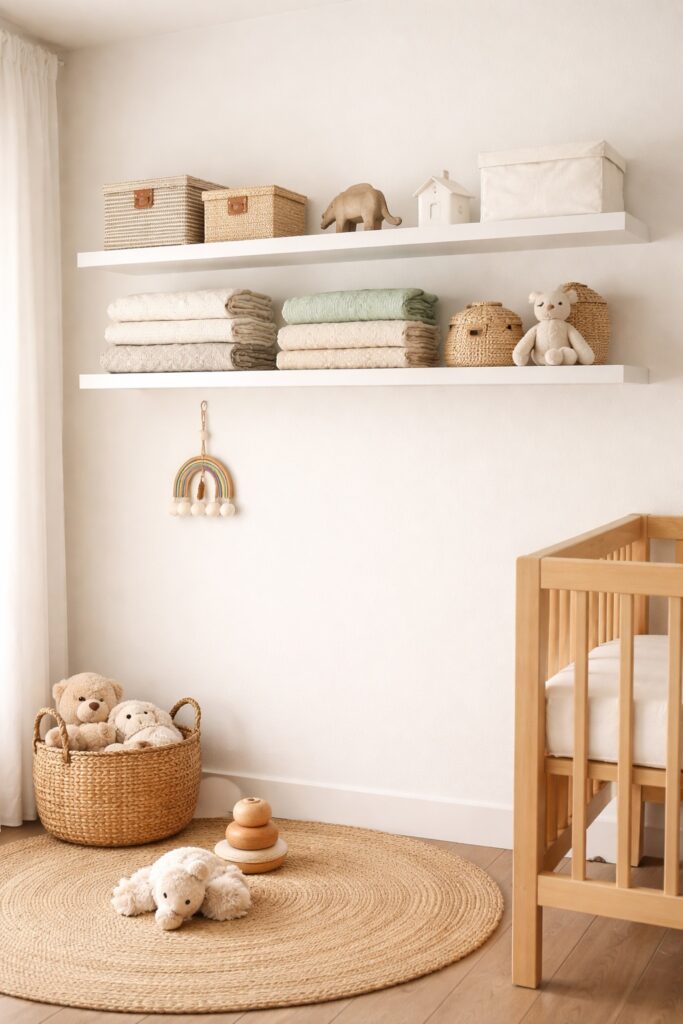
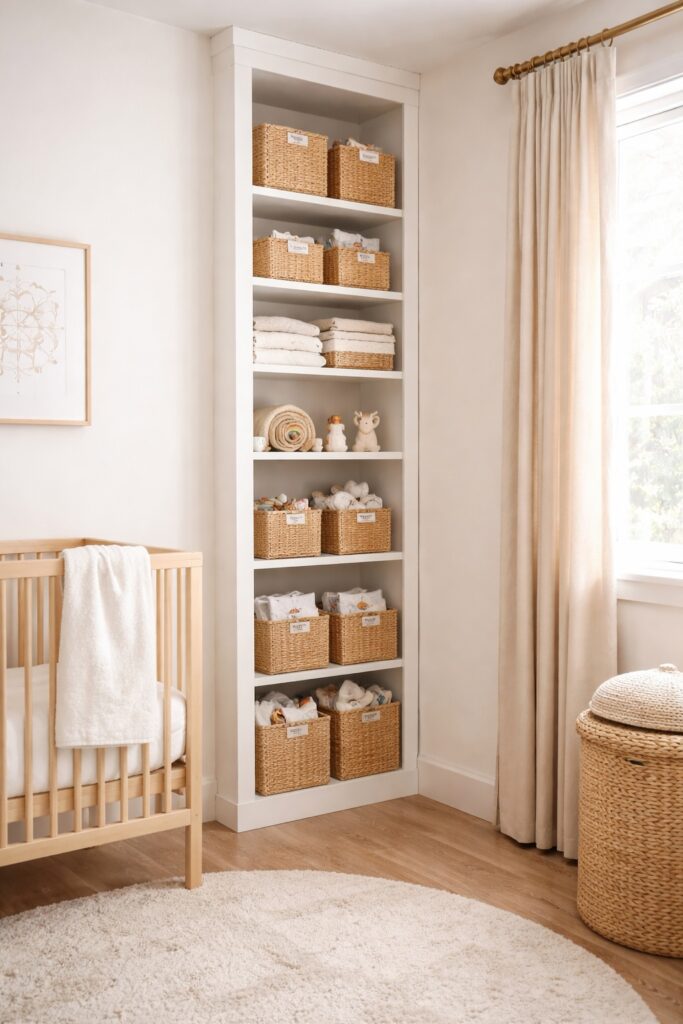
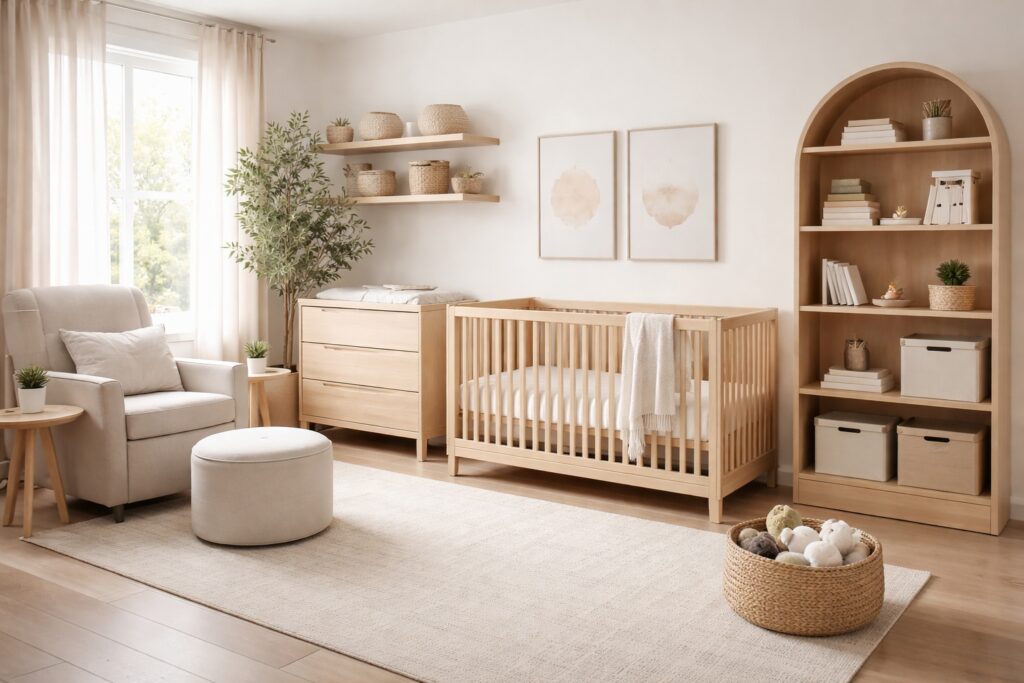
Wall-mounted shelves can hold baskets, folded clothes, or decorative storage boxes. Keeping shelves above eye level helps free up valuable floor area while still making use of unused wall space.
Tall, narrow storage units often work better than wide furniture in small nurseries. They provide storage similar to a wardrobe footprint without overwhelming the room.
Always ensure wall-mounted storage is securely fixed and positioned safely away from cots and sleeping areas.
Open Wardrobes and Hanging Rails
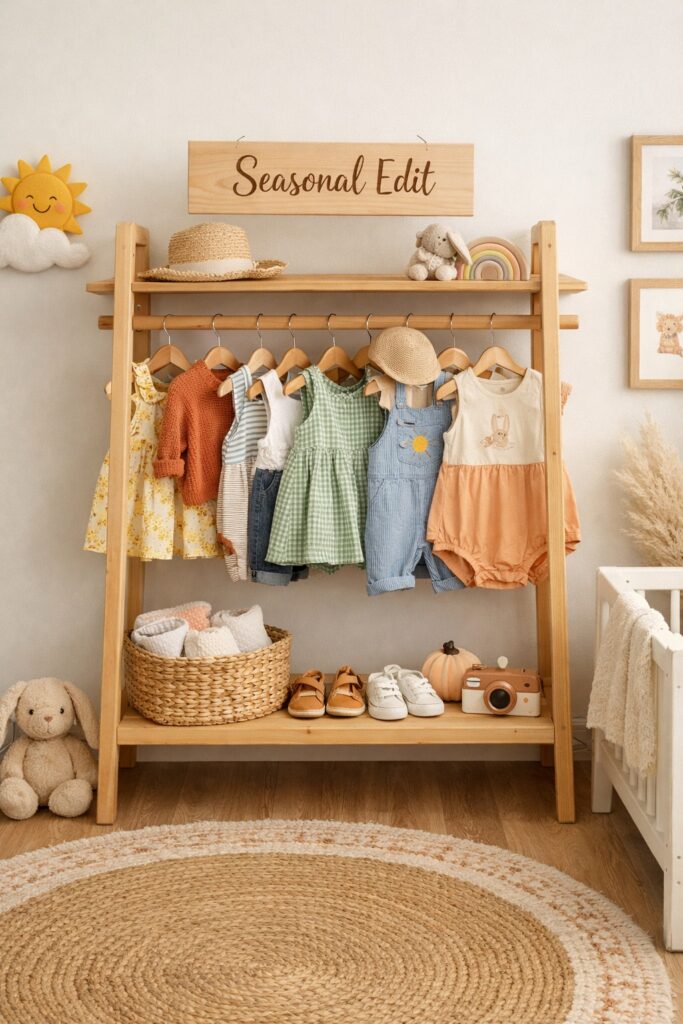
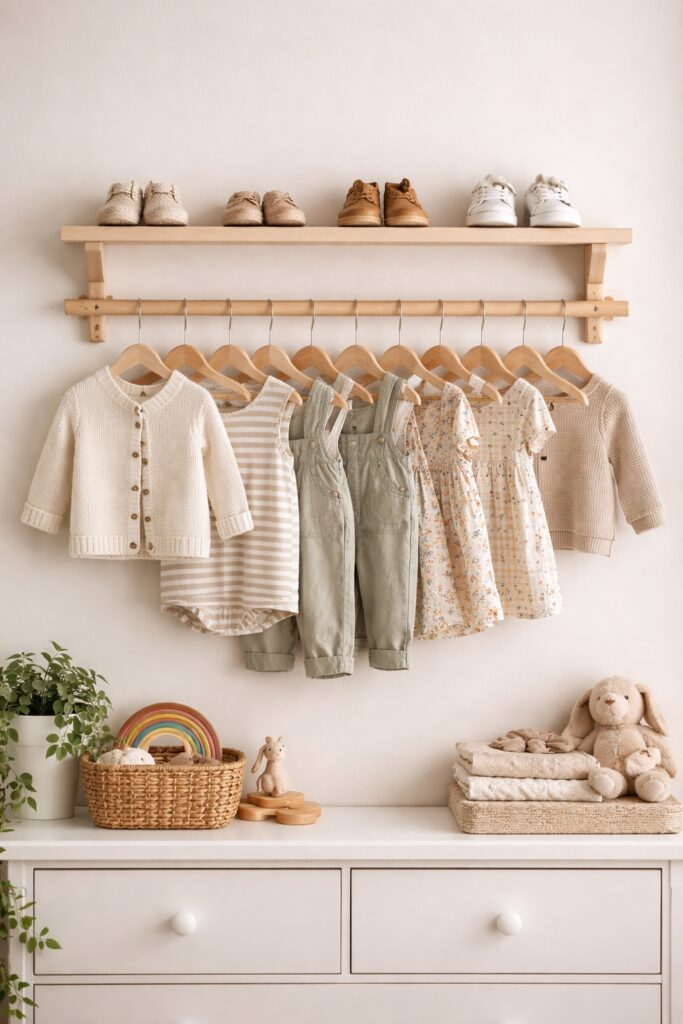
An open hanging rail can replace a traditional closet surprisingly well.
Wall-mounted rails or freestanding garment racks allow you to hang baby clothes where they are easy to see and access. Because baby clothes are small, even a short rail can hold a large number of items.
Open storage encourages you to keep clothing edited and seasonal. It also makes dressing and laundry routines quicker, especially during night changes.
Using matching velvet hangers and limiting visible items helps keep the space feeling calm rather than cluttered.
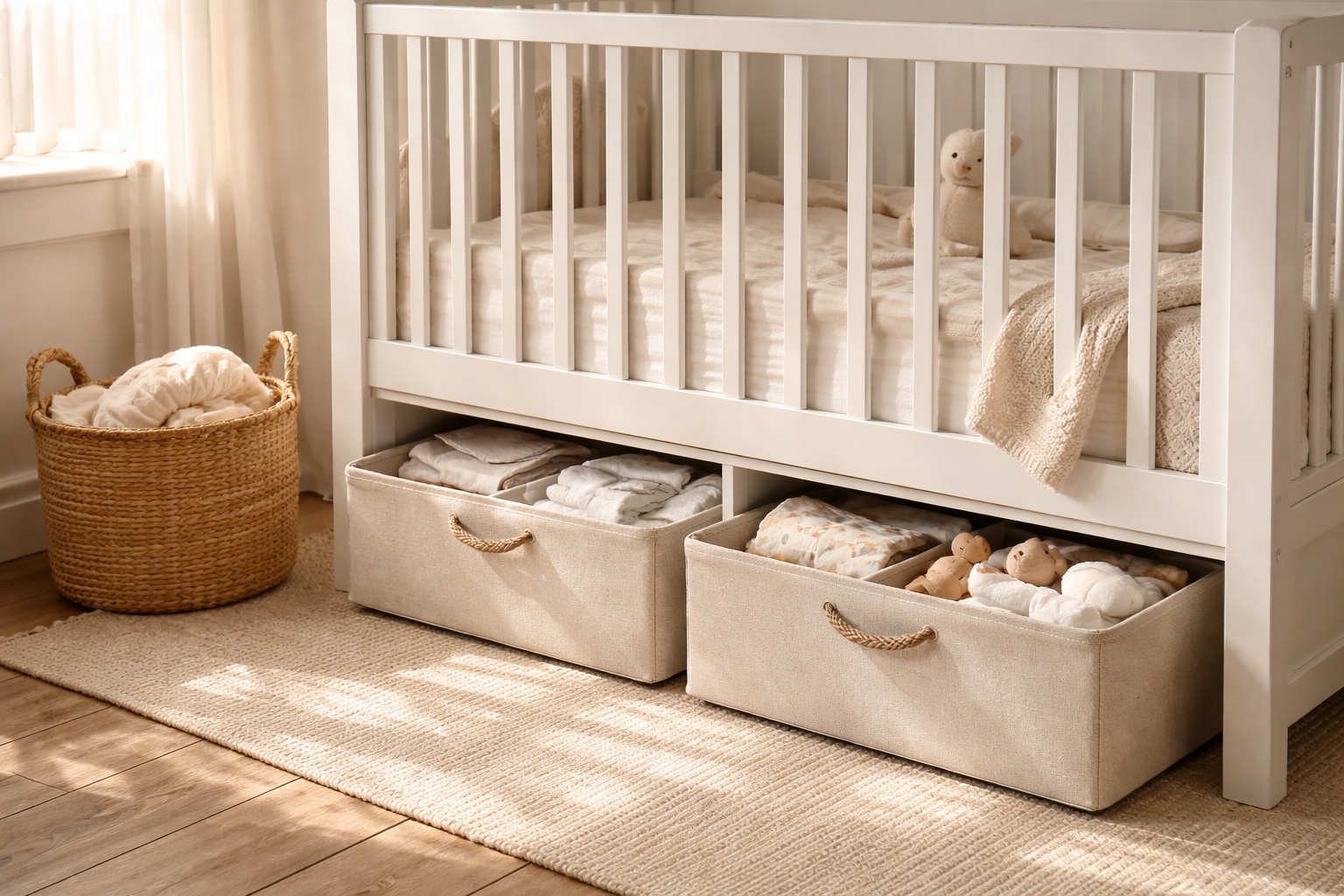
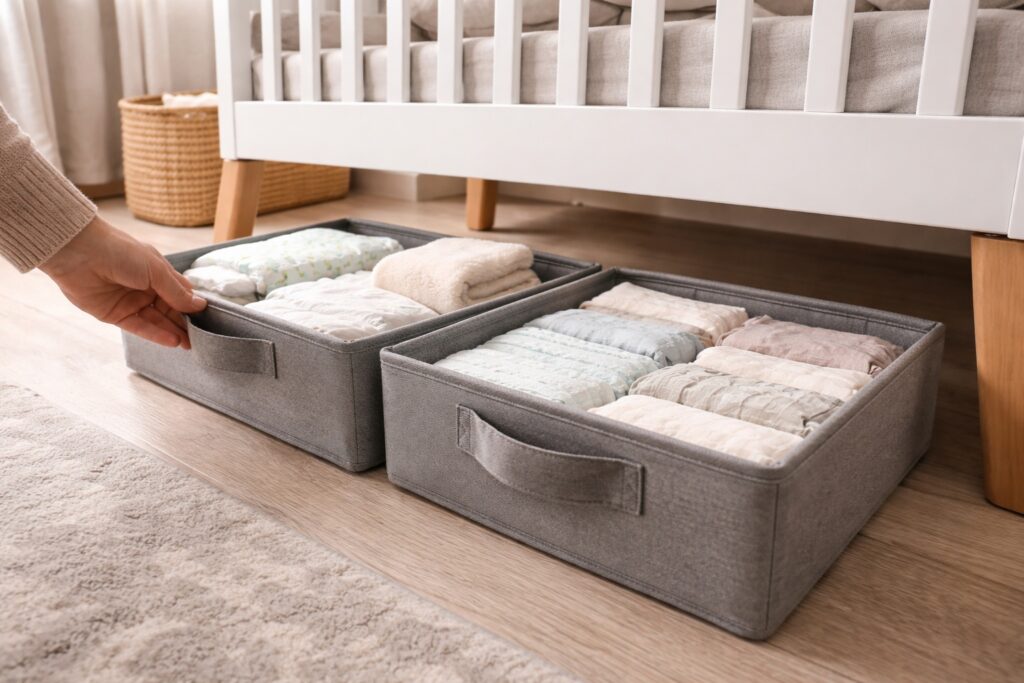
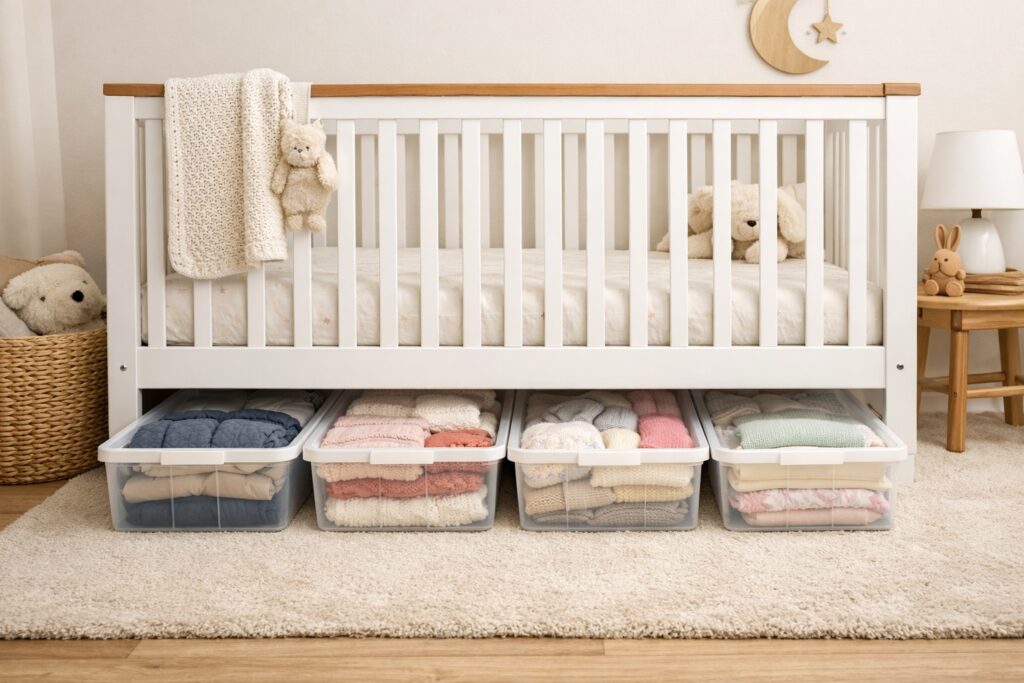
Make the Most of Under-Cot Storage
The space beneath a cot is often overlooked.
Under-cot drawers or low-profile storage boxes are ideal for:
- Extra bedding
- Out-of-season clothing
- Spare nappies and wipes
Choose containers that slide easily and are shallow enough to access without effort. Soft-sided fabric boxes are often quieter and easier to manoeuvre than rigid plastic ones.
Keeping under-cot storage organised prevents it from becoming a forgotten dumping ground.
Turn the Changing Table Into a Storage Hub
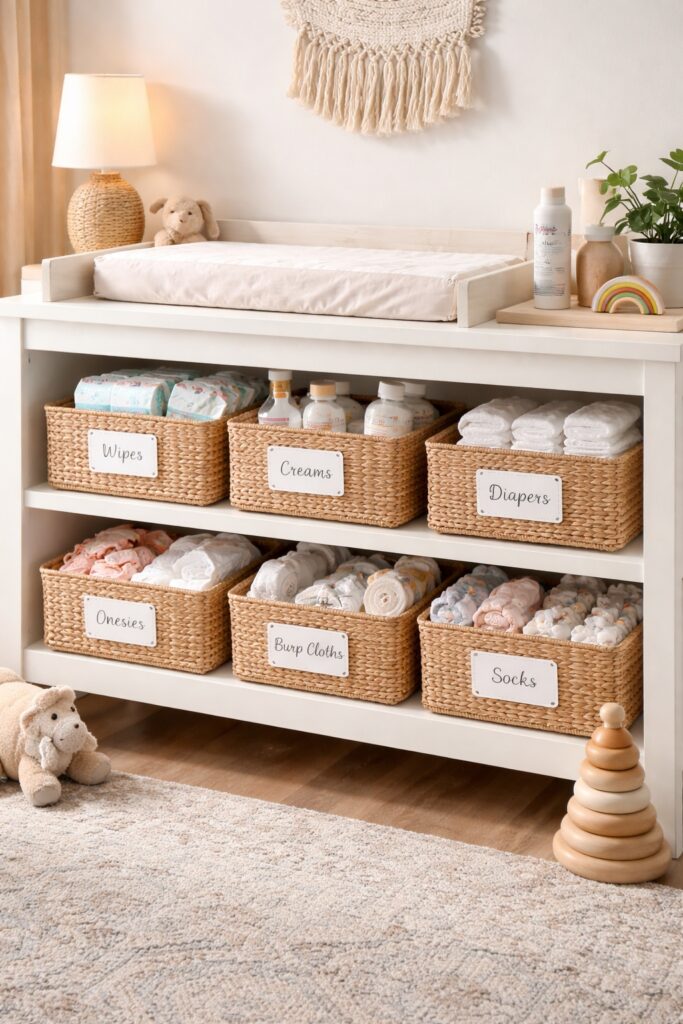
In nurseries without closets, the changing area often becomes the main storage zone.
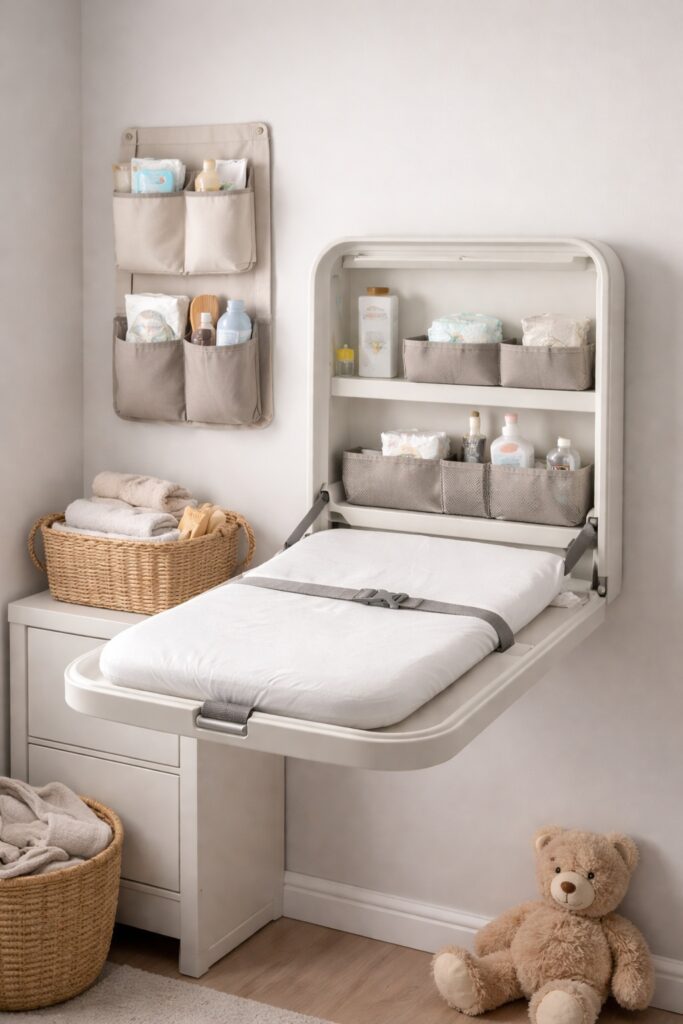
Changing tables with drawers or shelves can store nappies, wipes, creams, and spare outfits. If your changing table is simple or wall-mounted, adding baskets or organisers underneath can dramatically increase storage.
Keeping changing supplies grouped together reduces the need for extra furniture and keeps essentials within reach.
As your child grows, this storage can transition to toy or book storage.
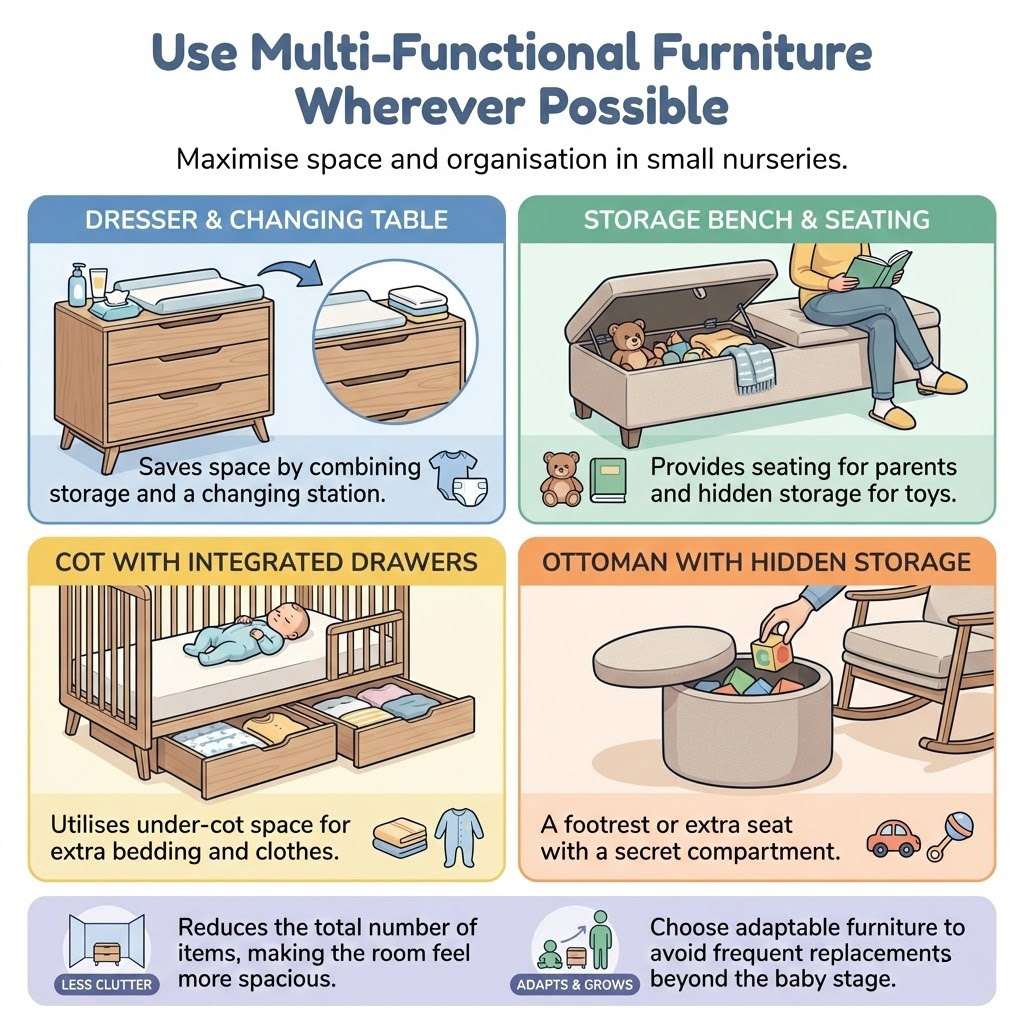
Use Multi-Functional Furniture Wherever Possible
Multi-purpose furniture is essential in small nurseries.
Examples include:
- Dressers that double as changing tables
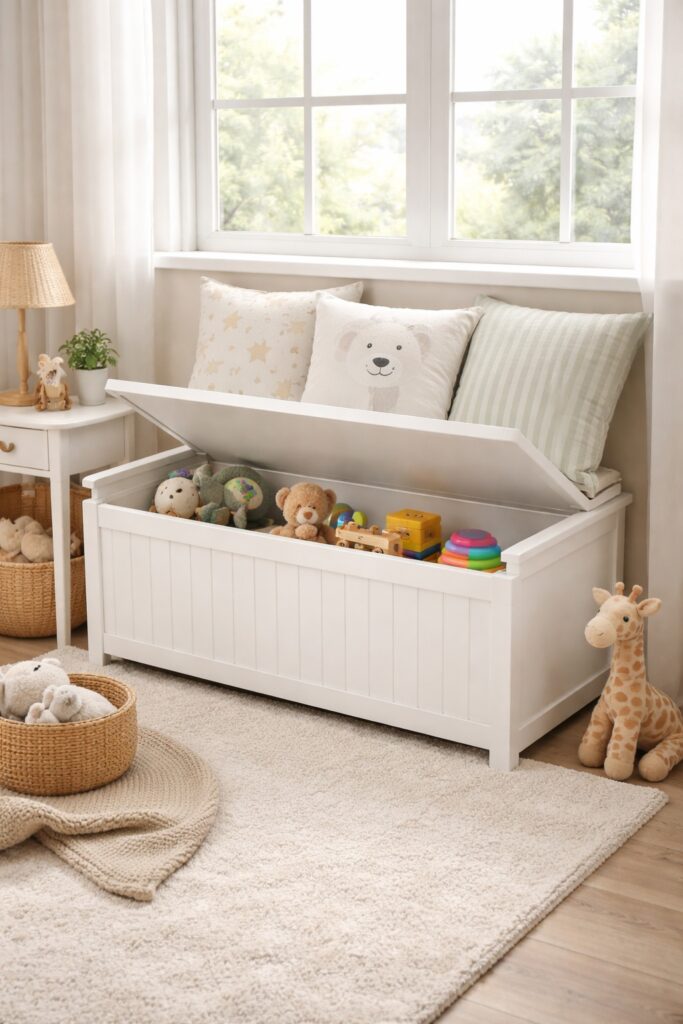
- Storage benches that provide seating
- Cots with integrated drawers
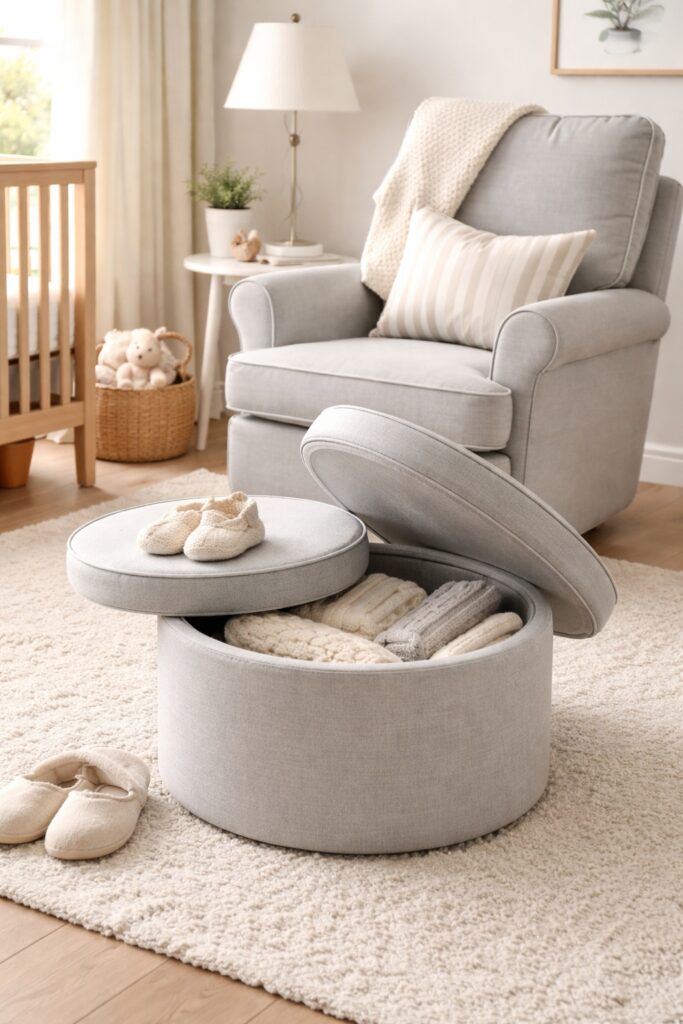
- Ottomans with hidden storage
Each piece should ideally serve more than one function. This reduces the total number of items in the room, helping it feel more spacious and organised.
Choose furniture that can adapt beyond the baby stage to avoid frequent replacements.
Baskets Are Your Best Friend
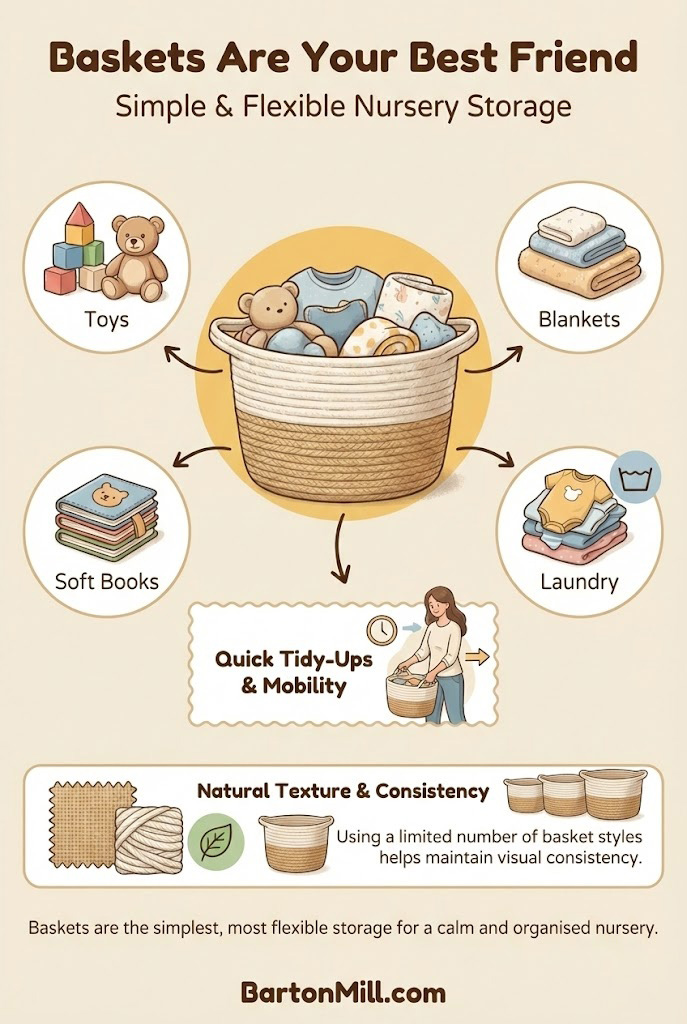
Baskets are one of the simplest and most flexible storage tools for nurseries.
They work well for:
- Toys
- Blankets
- Soft books
- Laundry
Open baskets encourage quick tidy-ups and are easy to move around the room. Natural materials such as cotton rope or woven fibres add texture without visual heaviness.
Using a limited number of basket styles helps maintain visual consistency in a small space.
Door and Wall Storage Solutions
Unused door and wall areas offer valuable storage opportunities.
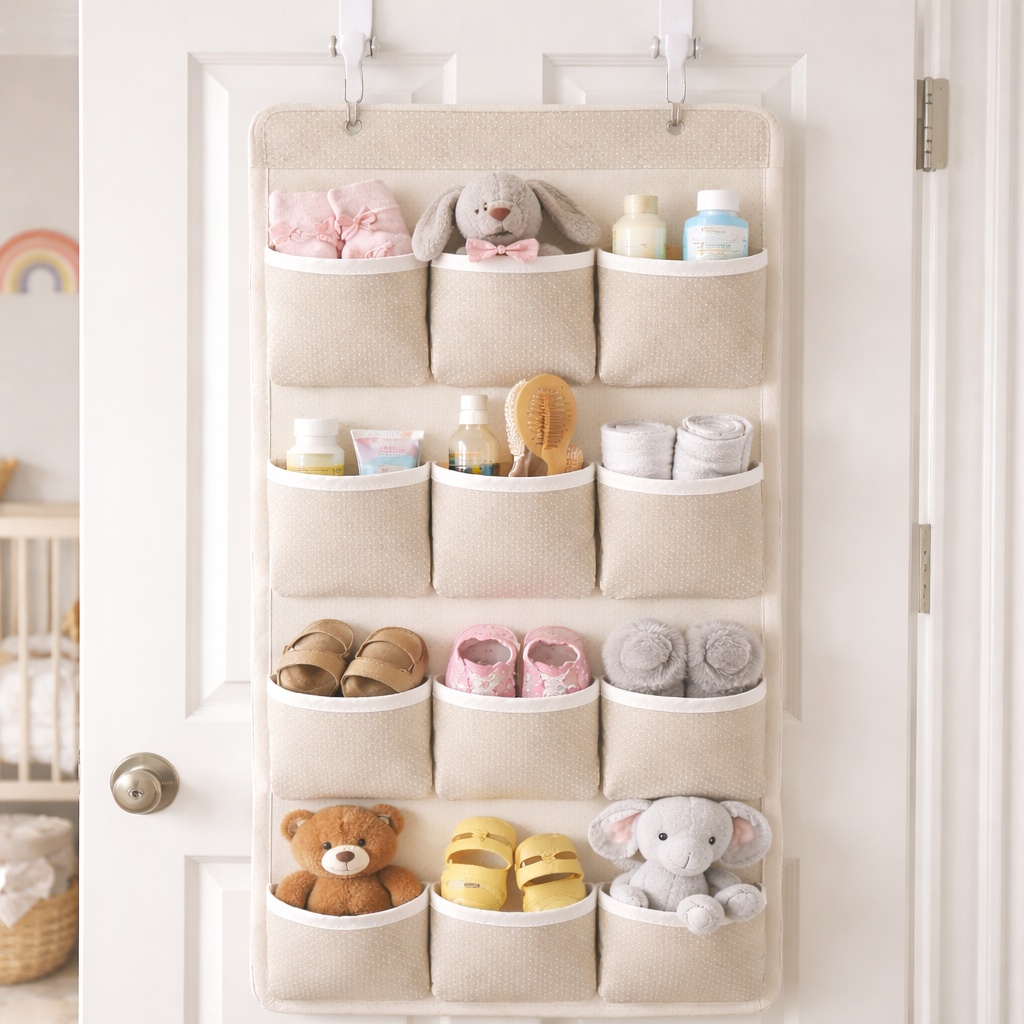
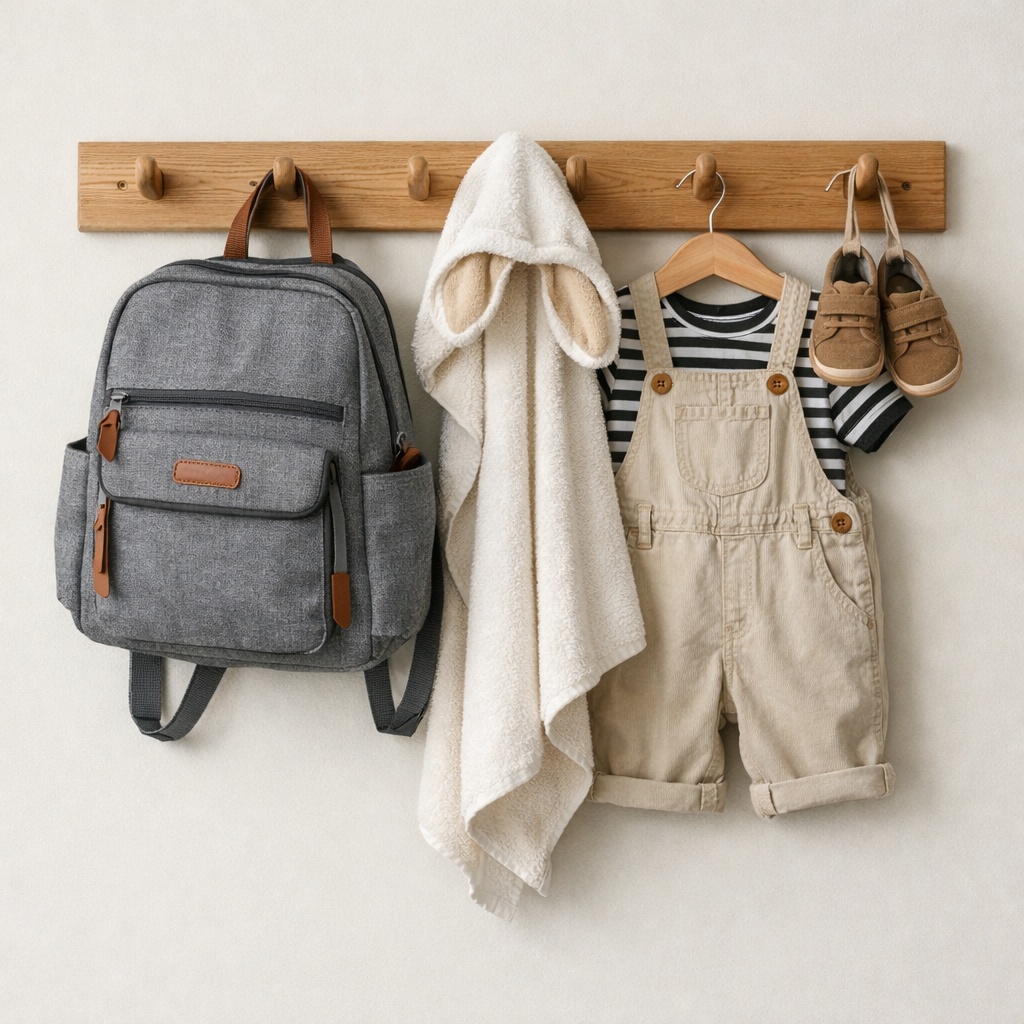
Over-the-door organisers can hold shoes, accessories, toys, or nappy supplies without taking up floor space. Wall-mounted pockets or peg rails can store everyday items while keeping them visible and accessible.
These solutions are particularly helpful in rented homes, as many can be installed without permanent alterations.
Always check weight limits and secure items properly for safety.
Rotate Rather Than Store Everything at Once
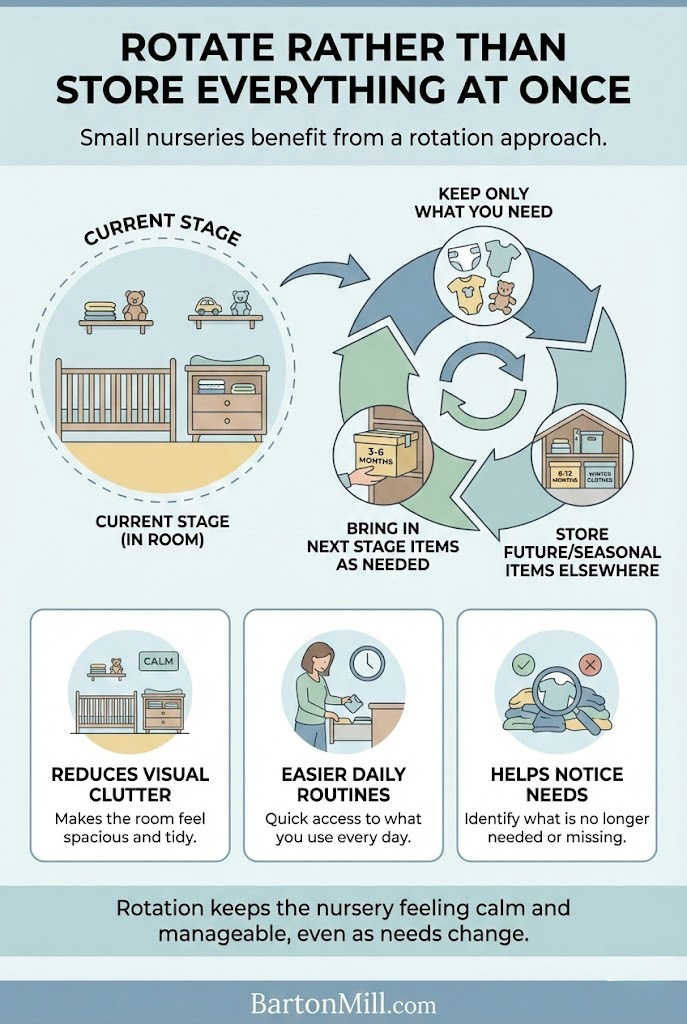
Small nurseries benefit from a rotation approach.
Keep only what you need for the current stage in the room. Store larger sizes, seasonal clothing, or future items elsewhere if possible.
This reduces visual clutter and makes daily routines easier. It also helps you notice when items are no longer needed.
Rotation keeps the nursery feeling calm and manageable, even as needs change.
Keep Storage Calm and Cohesive
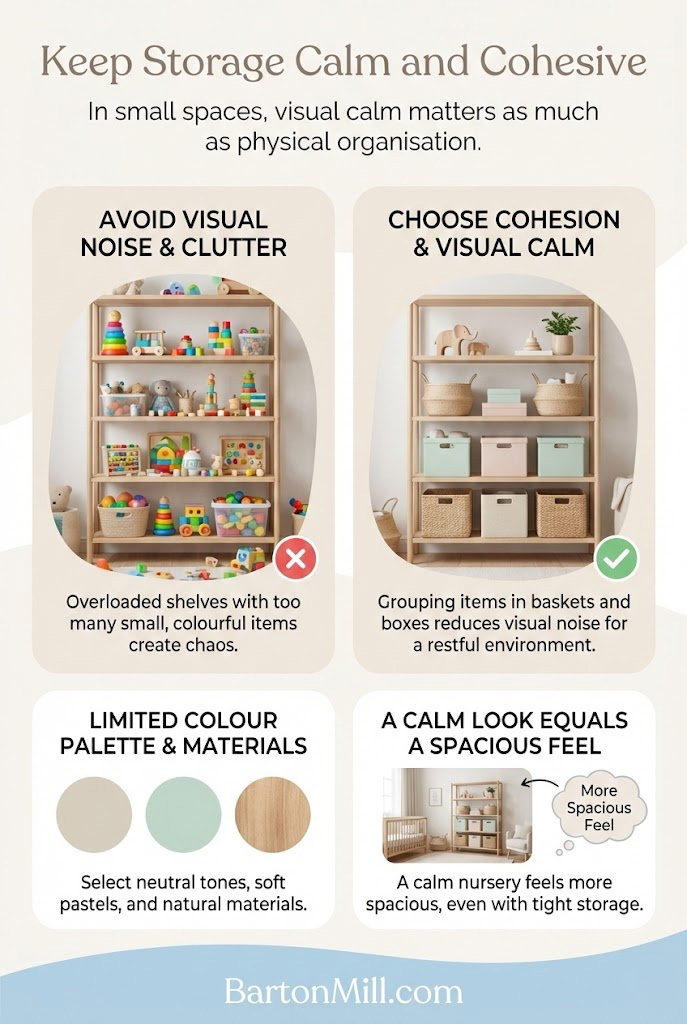
In small spaces, visual calm matters as much as physical organisation.
Choose storage in a limited colour palette. Neutral tones, soft pastels, or natural materials help the room feel cohesive.
Avoid overloading open shelves with too many small items. Grouping items in baskets or boxes reduces visual noise and creates a more restful environment.
A calm looking nursery often feels more spacious, even when storage is tight.
Think Ahead as Your Child Grows
Nursery storage needs change quickly.
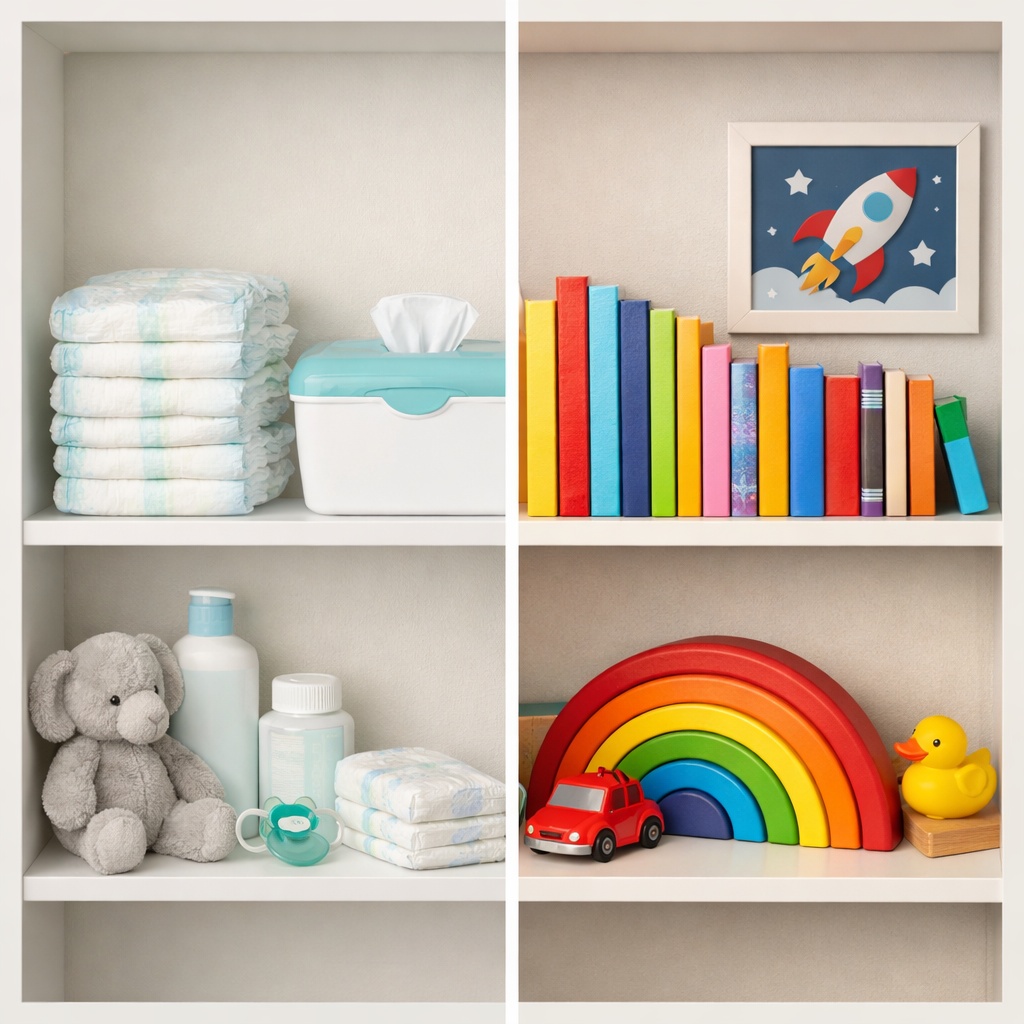
Design storage with flexibility in mind. Shelves that hold nappies now can hold books later. Baskets used for baby toys can later store art supplies or soft toys.
Avoid overly themed or age-specific storage where possible. Neutral, adaptable pieces will serve your family longer and reduce the need for frequent updates.
Safety Considerations in Storage Design
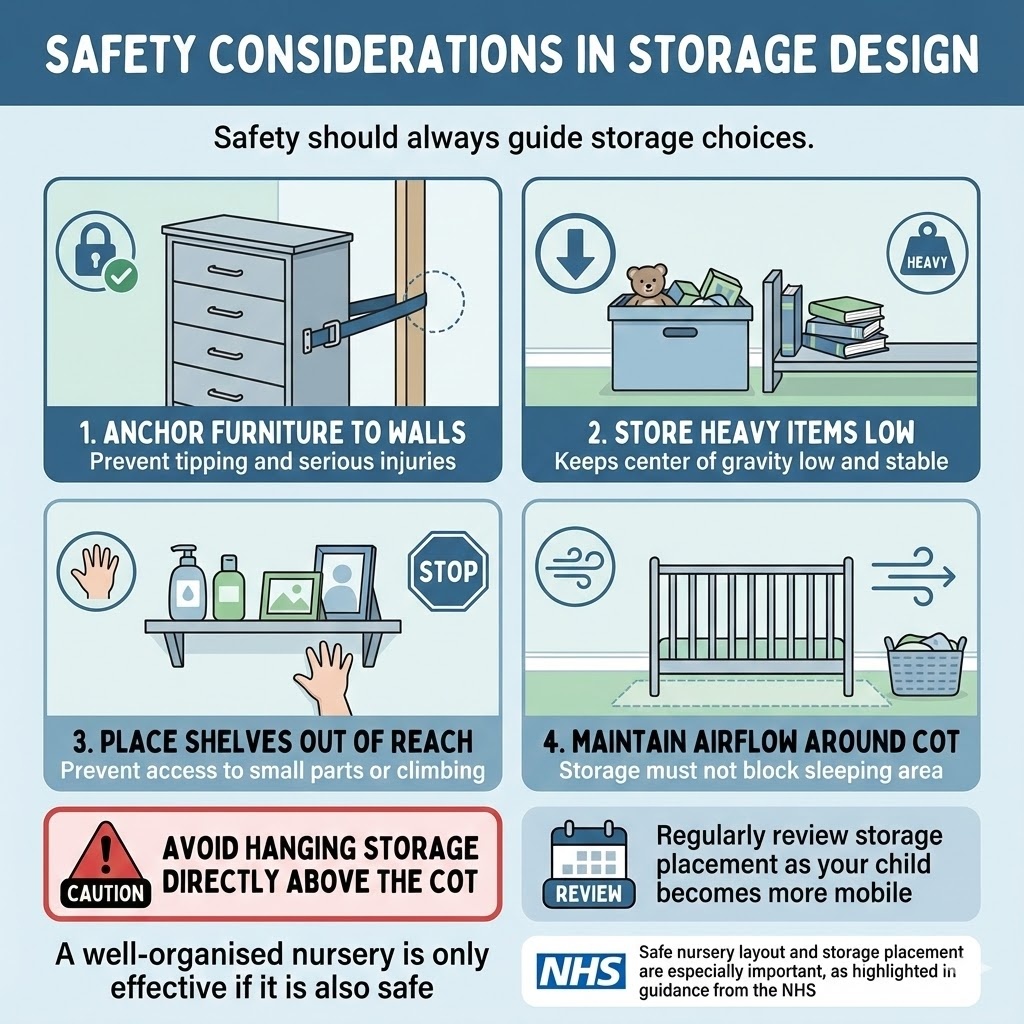
Safety should always guide storage choices.
Ensure:
- Furniture is anchored to walls (see the Anchor It! guide)
- Heavy items are stored low
- Shelves are placed out of reach
- Storage does not block airflow around sleeping areas
Avoid hanging storage directly above the cot. Regularly review storage placement as your child becomes more mobile.
A well-organised nursery is only effective if it is also safe.
Safe nursery layout and storage placement are especially important, as highlighted in guidance from the NHS (UK) and the American Academy of Pediatrics (US).
Common Mistakes to Avoid
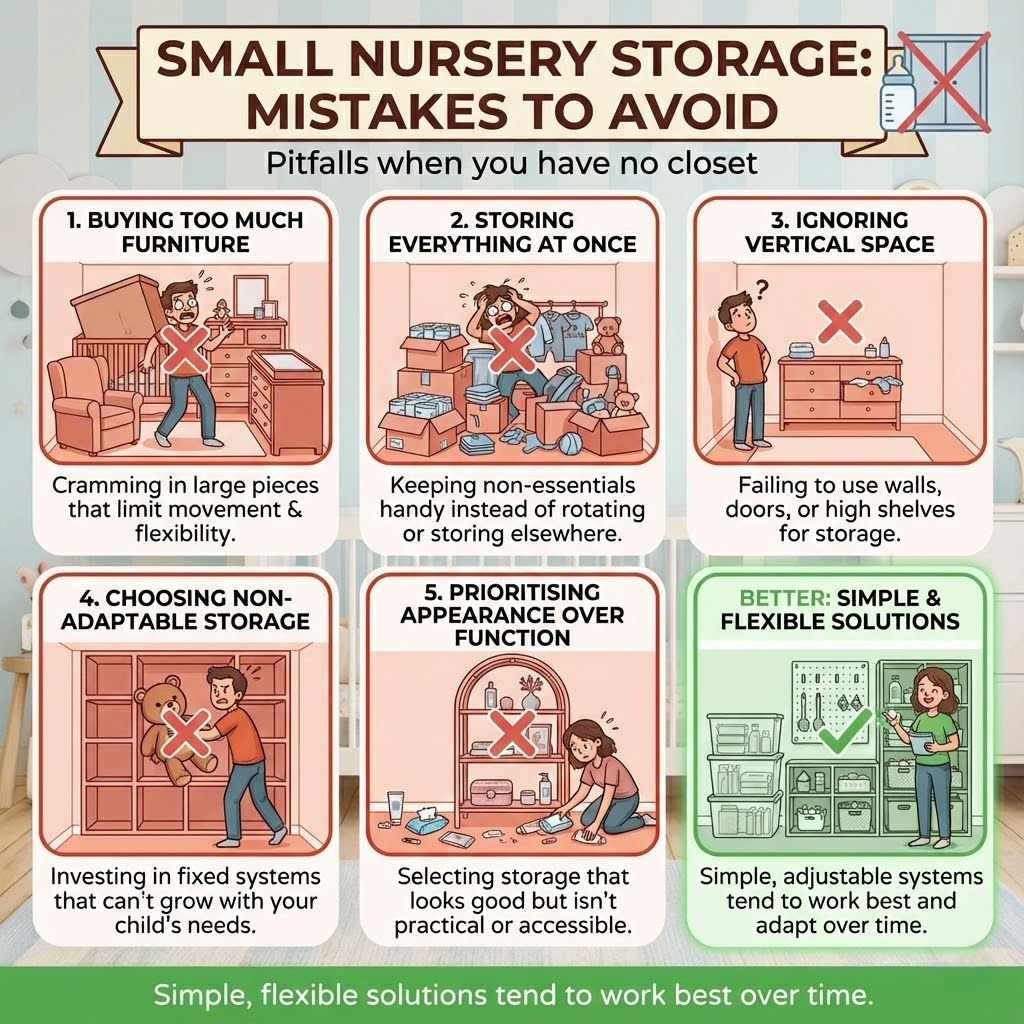
Some common storage mistakes in small nurseries include:
- Buying too much furniture
- Storing everything in the nursery at once
- Ignoring vertical space
- Choosing storage that cannot adapt
- Prioritising appearance over function
Simple, flexible solutions tend to work best over time.
How do you organise a nursery with no closet?
Use vertical storage, open hanging rails, under-cot drawers, and multi-functional furniture to replace traditional closet space.
What furniture works best in a small nursery?
Furniture that serves more than one purpose, such as dressers with changing tops or cots with storage drawers, works best.
Is open storage safe in a nursery?
Yes, when furniture is secured to walls and heavy items are stored low and out of reach.
Can a nursery without a closet still look tidy?
Yes. Using baskets, limited colour palettes, and rotating items helps keep the space visually calm.
How much storage does a baby really need?
Less than most parents expect. Focus on everyday essentials and store future items elsewhere if possible.
Should nursery storage change as the child grows?
Yes. Flexible storage that adapts over time reduces clutter and avoids constant furniture changes.
Final Thoughts: Small Nurseries Can Still Be Functional
A nursery without a closet is not a disadvantage, it is simply a design challenge.
With thoughtful storage choices, smart use of vertical space, and a focus on flexibility, even the smallest nursery can feel organised and calm.
By choosing storage that grows with your child and supports daily routines, you create a space that works for your family now and adapts easily for the future.