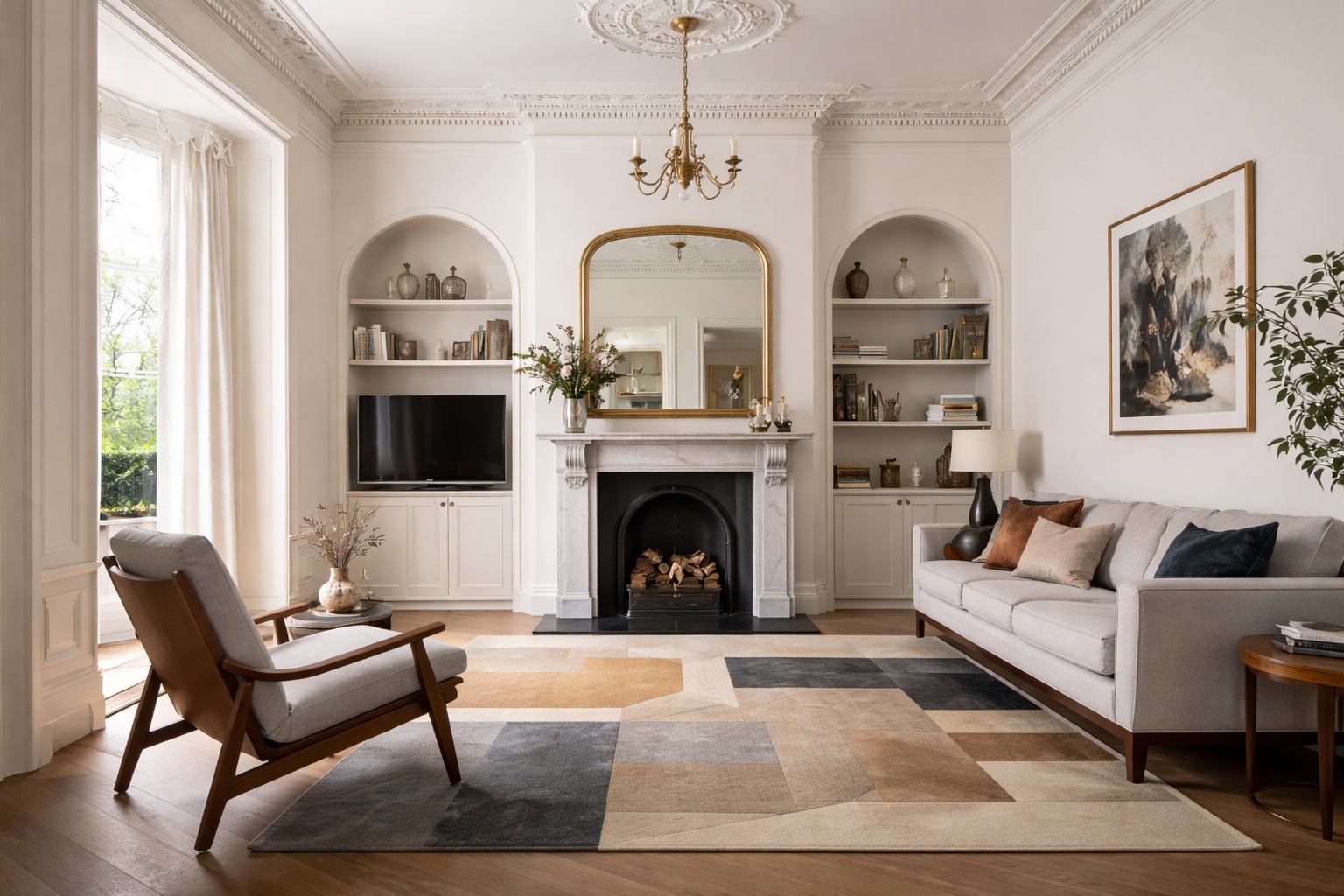
Victorian terrace living rooms have a quiet confidence. Their proportions, ceiling heights, and original details create spaces that feel elegant even before furniture is added. However, getting the Victorian terrace living room layout right can be challenging, especially when the room is long, narrow, and expected to support modern life.
Today’s living rooms are asked to do far more than they were originally designed for. Television viewing, flexible seating, working from home, storage, and relaxed family living all need to fit within a room that was once formal and structured. Getting the layout right is what allows modern comfort to sit comfortably within a traditional shell.
This guide focuses on practical layout ideas for long narrow Victorian terrace living rooms, showing how to balance period architecture with modern living needs. If you are exploring the broader question of style blending, you may also want to read our main guide on mixing modern and traditional styles in a period property, which looks at finishes, furniture styles, and decorative choices in more depth.
Understanding the Victorian Terrace Living Room
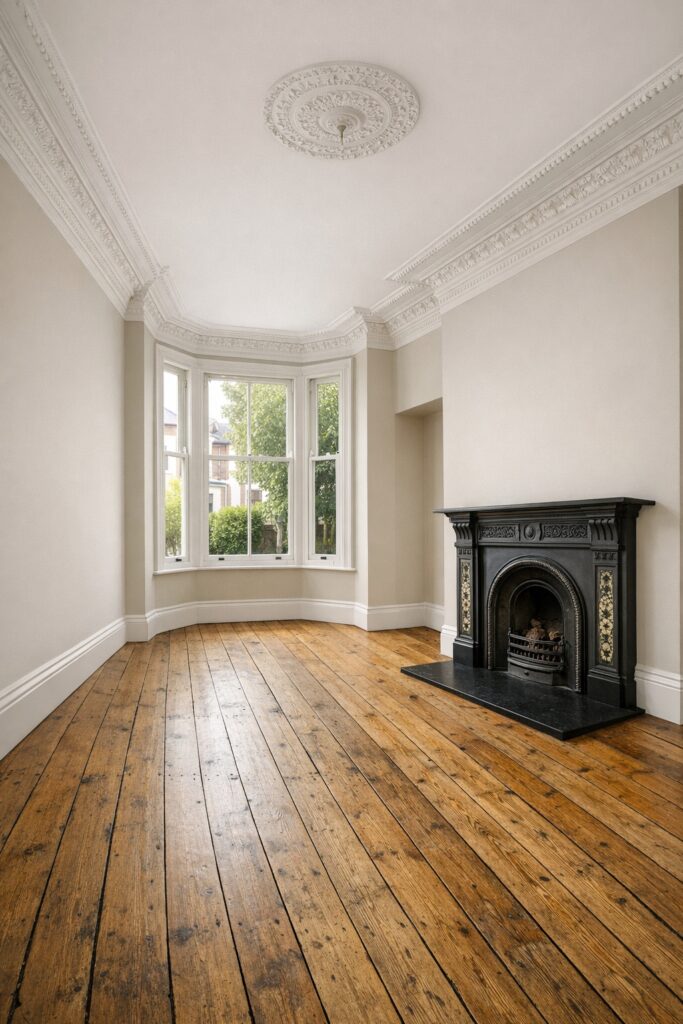
Victorian terrace living rooms follow a recognisable pattern. They are typically longer than they are wide, with high ceilings and a clear sense of direction from front to back. Architectural features often include a bay window at the front, a central fireplace along the main wall, and alcoves on either side of the chimney breast.
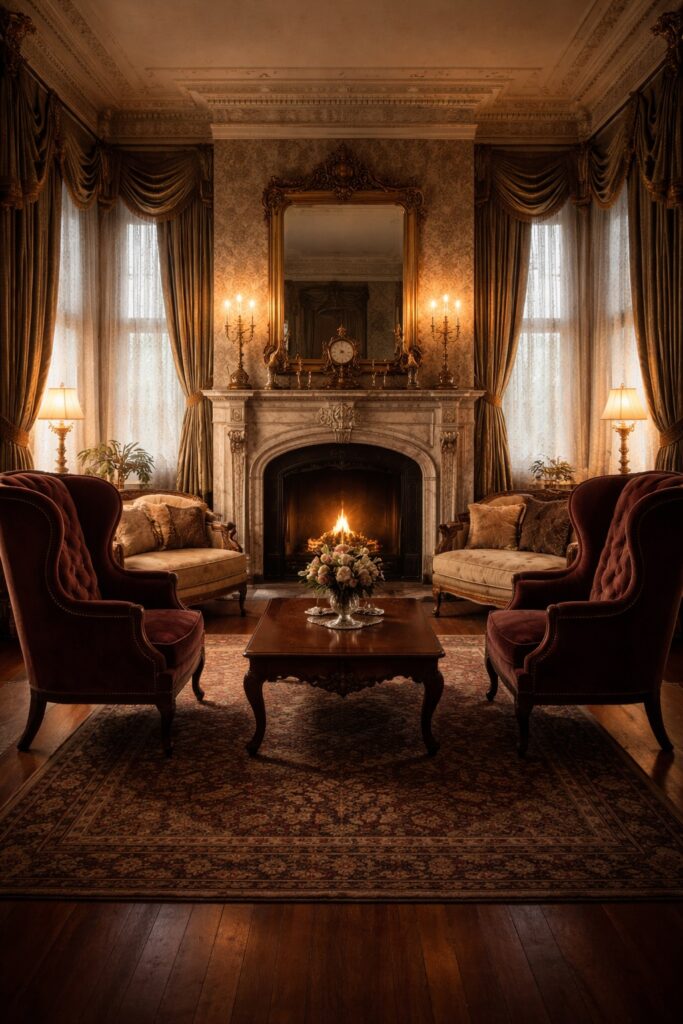
Originally, these rooms were designed for formal entertaining rather than everyday living. Furniture would have been arranged symmetrically, often focused on the fireplace, with little concern for technology or flexible use. While these proportions can feel restrictive today, they also provide strong visual anchors that help guide modern layout decisions.
Rather than fighting these features, the most successful layouts allow them to lead. Fireplaces, bays, and alcoves offer natural focal points that prevent a long room from feeling shapeless or corridor like. Understanding this traditional framework is the first step in creating a layout that feels both functional and respectful.
Victorian terrace houses were originally designed with formal front rooms intended for entertaining, a layout shaped by social customs of the time, as documented by Historic England.
Why Modern Living Often Clashes With Traditional Layouts
The tension between old and new usually appears at layout stage. Modern living rooms prioritise comfort, informality, and adaptability, while Victorian rooms were designed with structure and hierarchy in mind.
Common challenges include television placement without overwhelming period features, creating enough seating without blocking walkways, and adding storage without making the room feel cluttered. Open plan expectations can also feel at odds with a room that has a defined beginning and end.
These clashes do not mean compromise is inevitable. They simply require a more thoughtful approach. When layout decisions are made carefully, modern requirements can be met without erasing the character that makes Victorian homes so appealing.
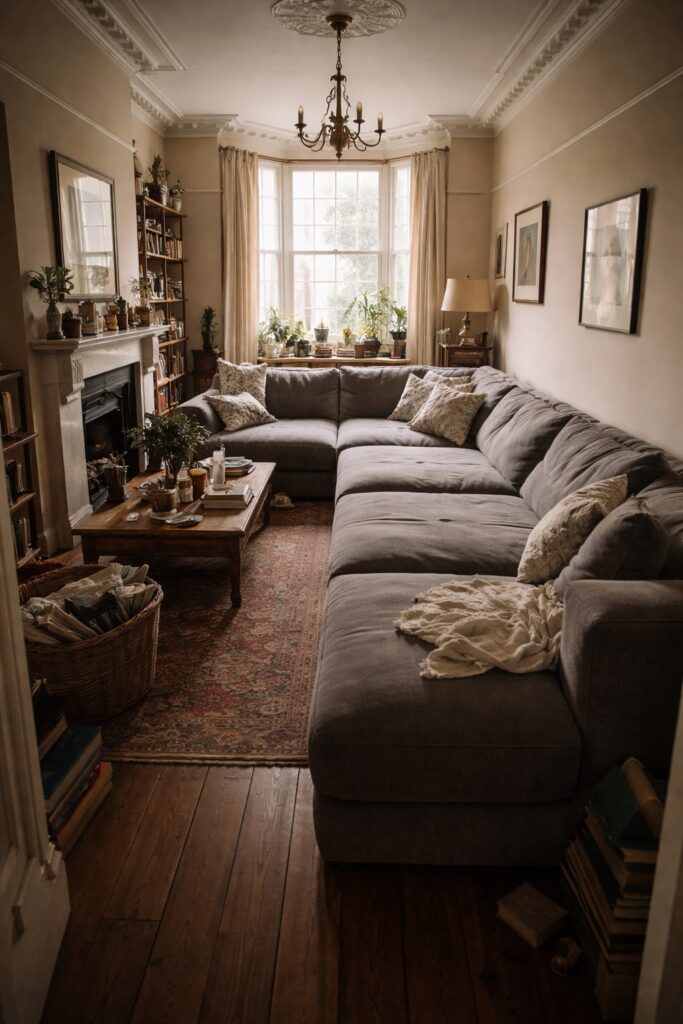
Let the Architecture Lead and Let the Furniture Adapt
One of the most effective principles when mixing modern living into a period space is allowing the architecture to dictate the layout, while furniture adapts to modern needs.
In a Victorian terrace living room, the fireplace almost always works best as the main visual anchor, even if it is no longer used regularly. Bay windows naturally suggest seating or reading areas, while alcoves offer opportunities for storage or display.
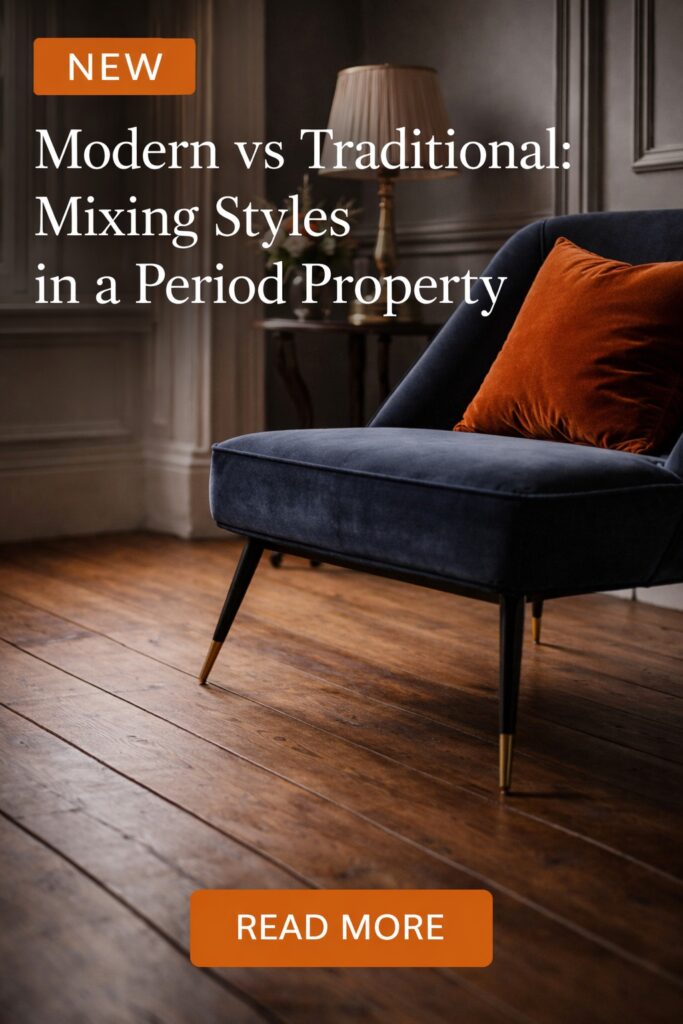
Modern furniture choices should work within this structure rather than attempting to override it. Clean lined sofas, lighter visual forms, and flexible pieces help introduce contemporary comfort without disrupting the room’s balance. This approach aligns closely with the ideas explored in Modern vs Traditional: Mixing Styles in a Period Property, where harmony is prioritised over contrast.
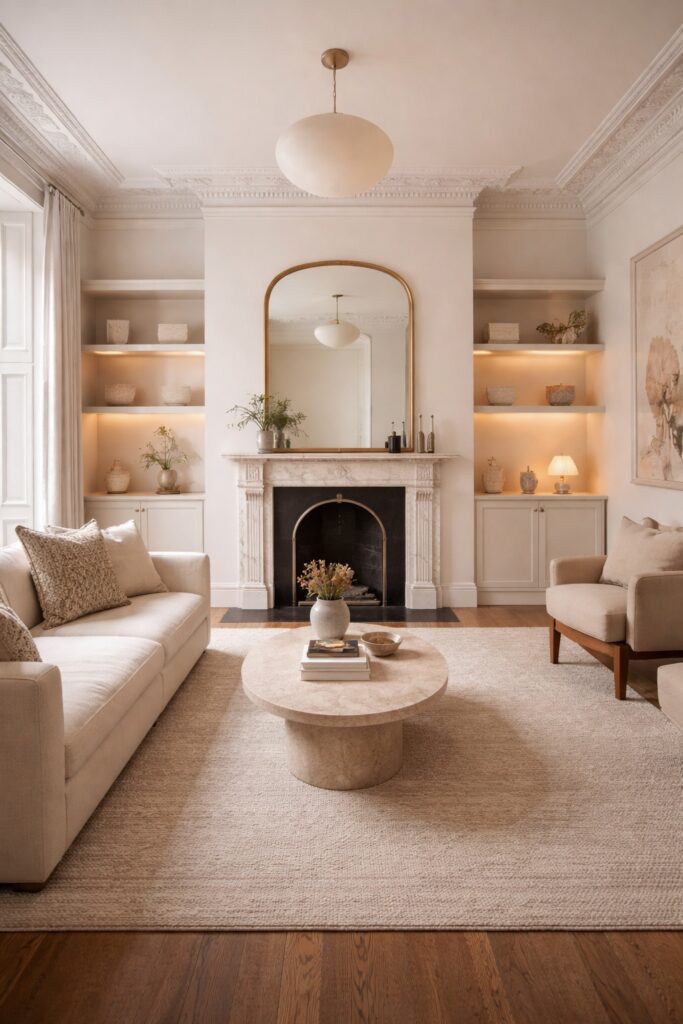
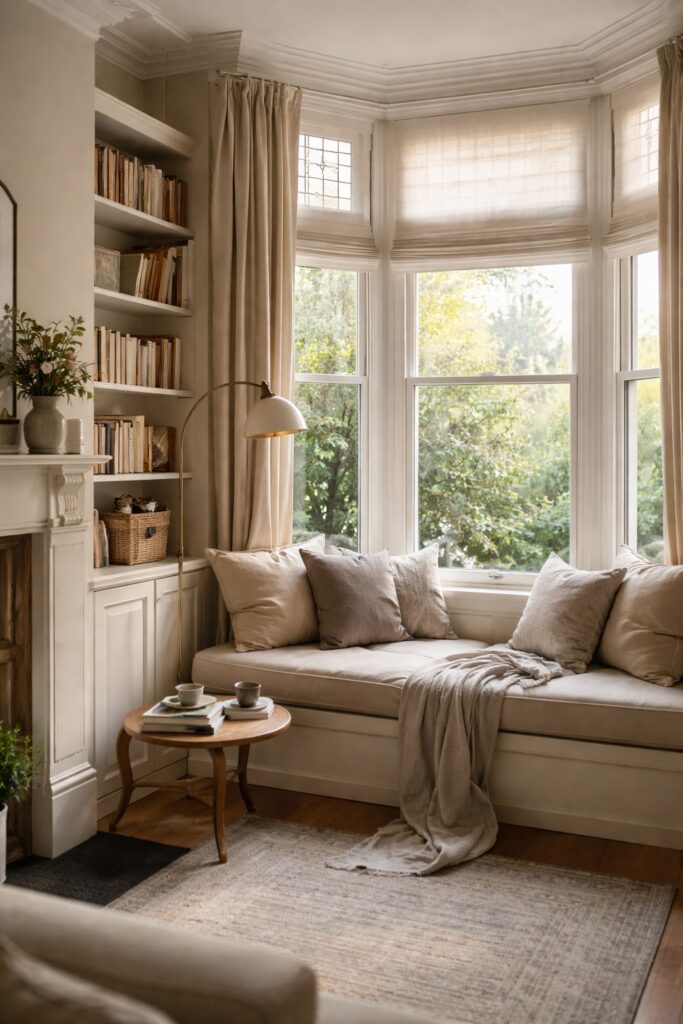
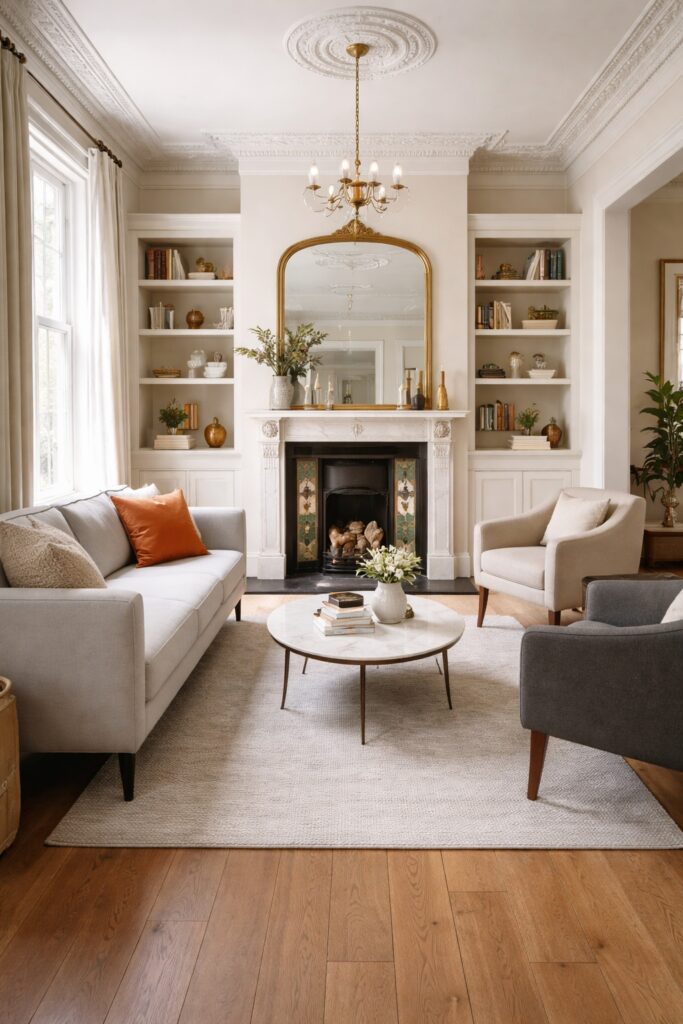
Layout Strategy One: A Traditional Focal Point With Modern Seating
The most timeless layout option keeps the fireplace as the focal point while introducing modern furniture shapes and proportions. This strategy works particularly well in living rooms that still retain original features and benefit from symmetry.
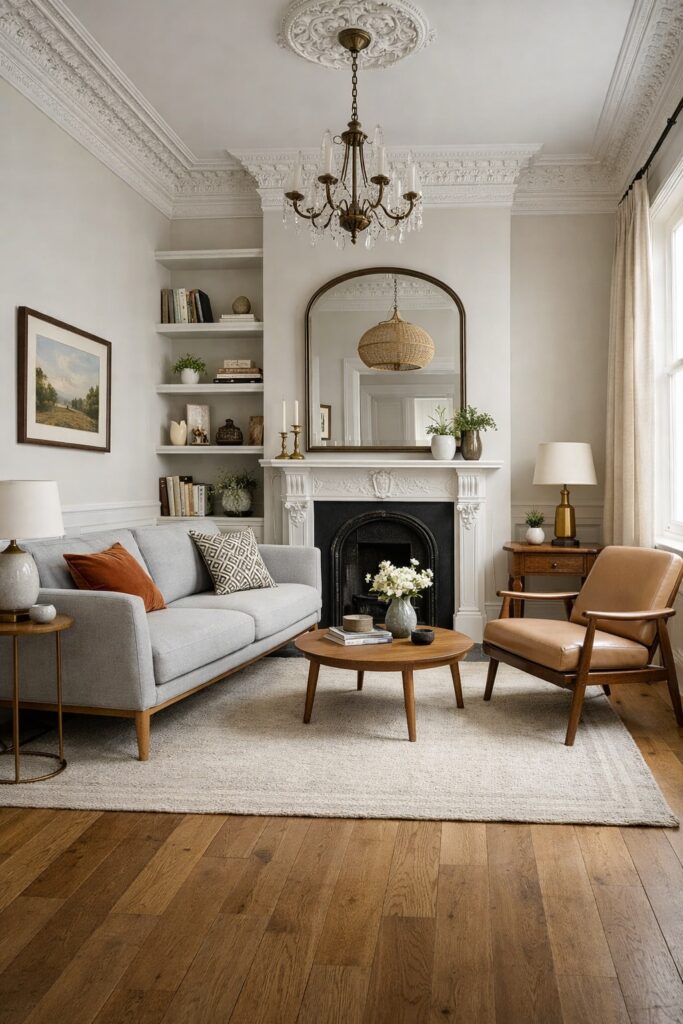
A sofa placed facing the fireplace creates a strong central zone, with armchairs positioned opposite or angled slightly to soften the formality. Choosing seating with slim arms and raised legs helps maintain a sense of openness, preventing the room from feeling crowded.
Rugs are especially useful in long narrow spaces. A single, well sized rug defines the seating area and visually shortens the room, while leaving clear walkways around the edges.
This layout is ideal for homeowners who appreciate the room’s original purpose but want a lighter, more relaxed feel.
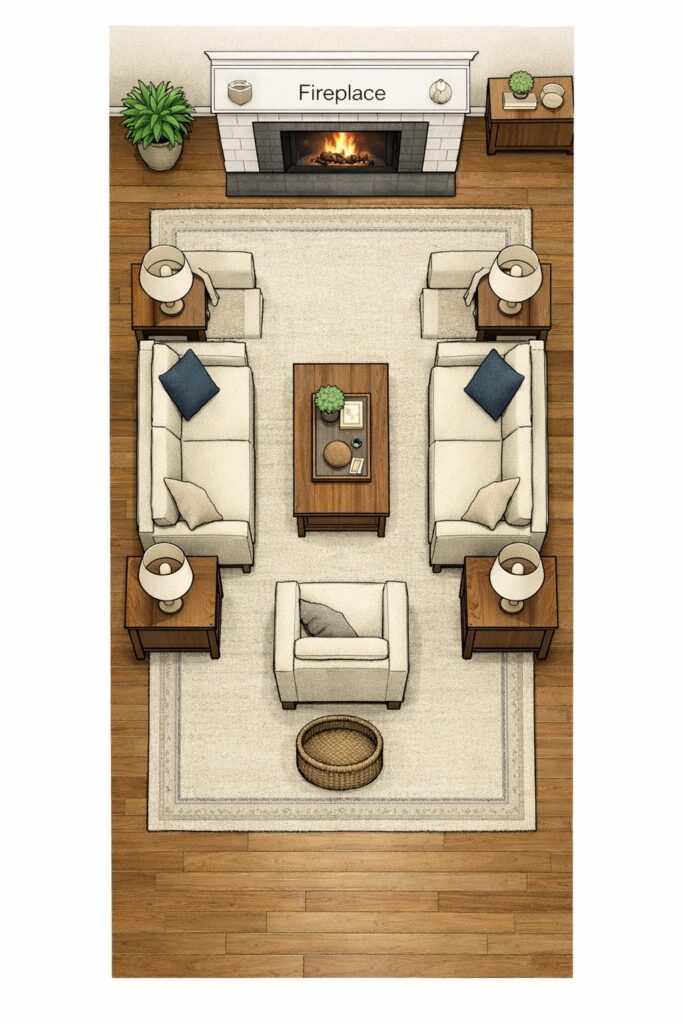
Layout Strategy Two: Zoning a Long Living Room for Modern Life
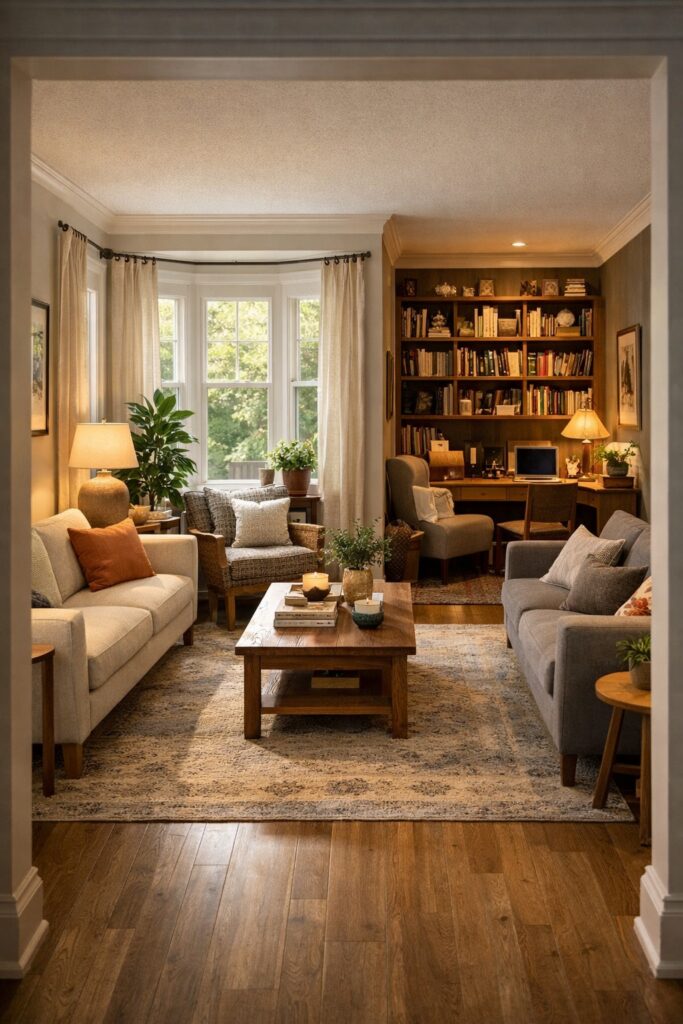
For households that need more flexibility, zoning a long living room into two distinct areas can transform how the space is used. This approach respects the room’s proportions while allowing multiple functions to coexist.
Typically, the front of the room works well as a main seating area, making the most of natural light from the bay window. The rear portion can then become a reading nook, workspace, or secondary seating zone.
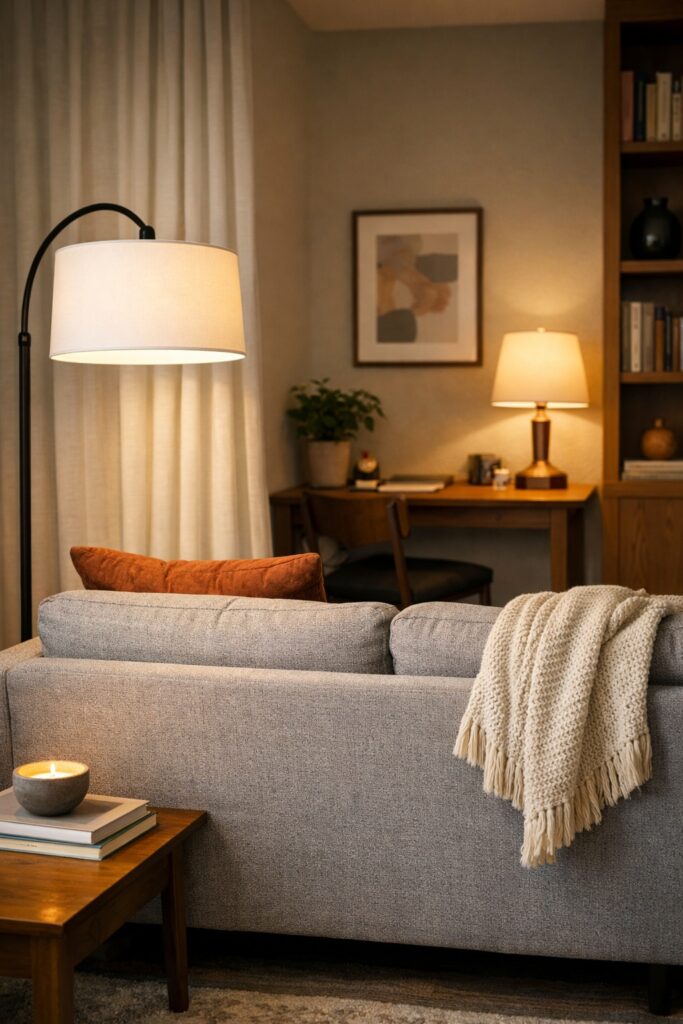
The key is to create separation without introducing physical barriers. Rugs, lighting, and furniture orientation are often enough to signal different zones. A sofa positioned slightly away from the wall, for example, can subtly divide the room while maintaining flow.
Zoning works particularly well when paired with the principles discussed in our guide to mixing modern and traditional interiors, as it allows modern living patterns to sit comfortably within a traditional layout.
Layout Strategy Three: Integrating a TV Without Dominating the Room
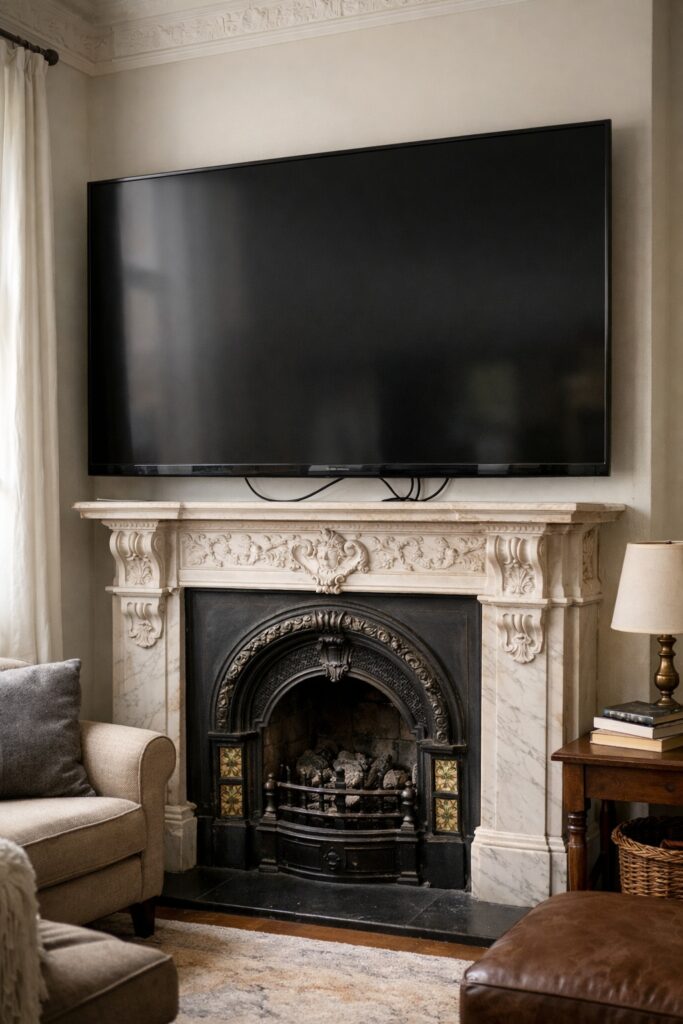
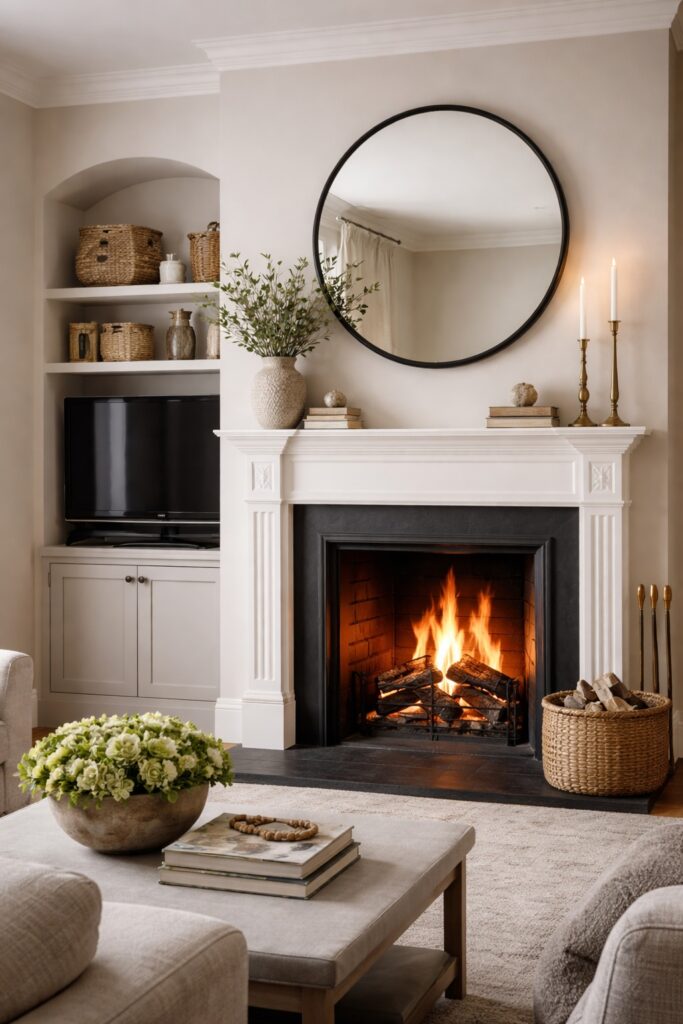
Television placement is one of the most common concerns in Victorian living rooms. When handled poorly, it can overpower period features or disrupt the room’s symmetry.
Alcoves are often the most discreet solution, allowing the TV to sit naturally within the architecture. Alternatively, a low profile media unit placed slightly off centre can reduce visual dominance while maintaining comfortable viewing angles.
Wall mounting can work in some cases, but it is important to keep screens at an appropriate height and avoid placing them above fireplaces unless the proportions truly allow for it. Keeping technology visually quiet helps preserve the room’s traditional feel while supporting modern use.
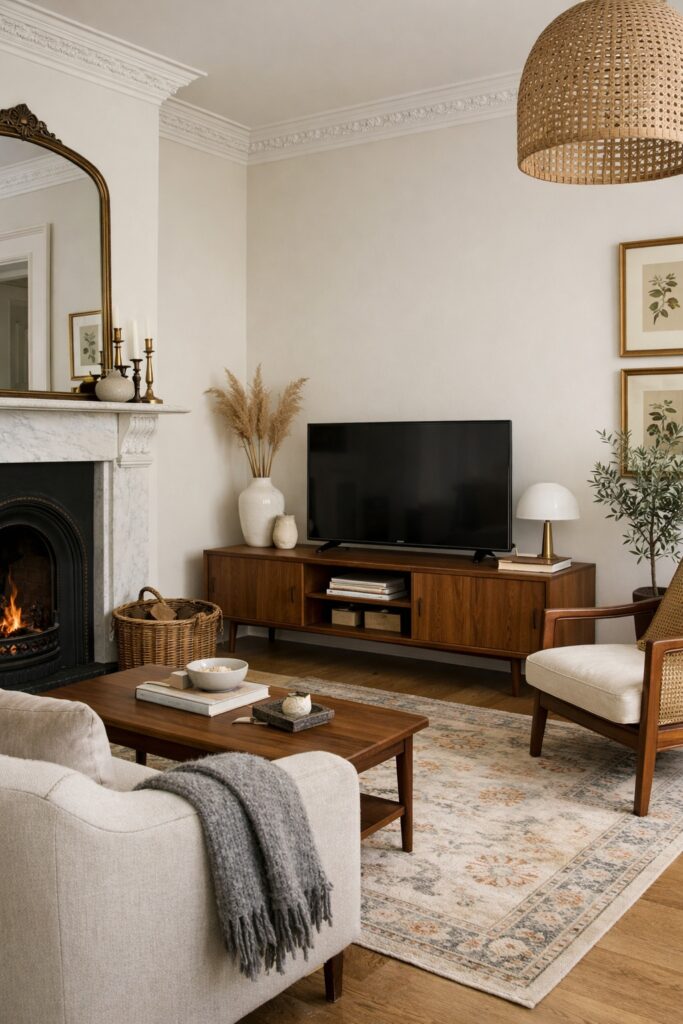
Furniture Choices That Bridge Modern and Traditional Styles
Furniture selection plays a significant role in how successful the layout feels. In long narrow Victorian living rooms, scale matters more than style labels.
Slimline sofas, open leg designs, and low profile silhouettes prevent the room from feeling heavy. Avoiding oversized corner sofas or bulky recliners helps maintain circulation and visual balance.
Mid century influenced pieces often work particularly well, as they sit comfortably between eras. Their clean lines complement traditional architecture without feeling stark or overly modern.
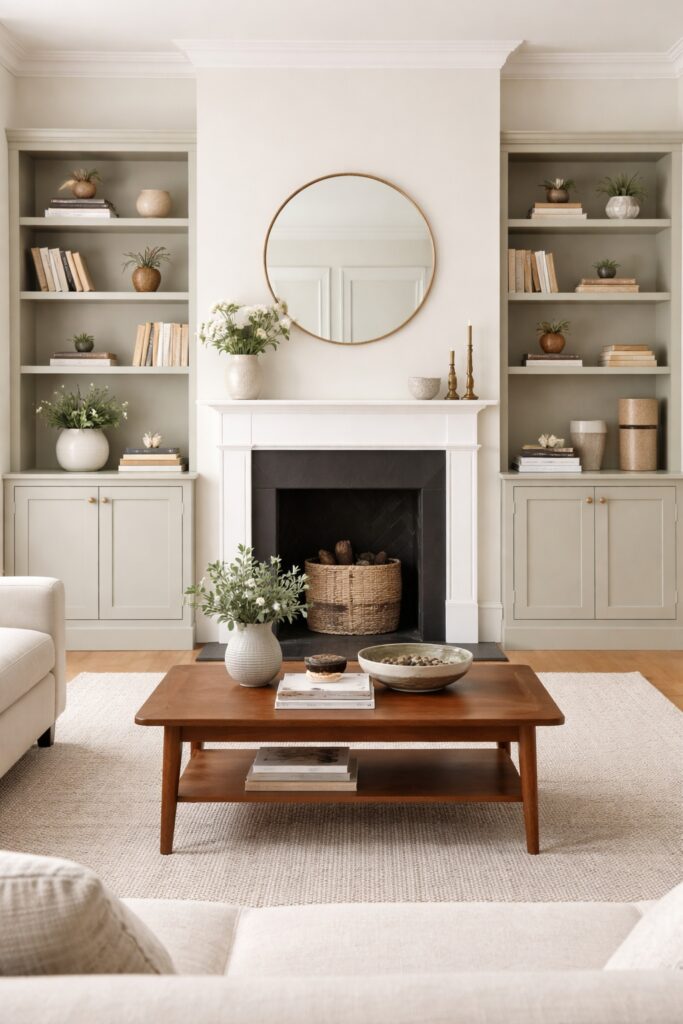
Storage furniture should be carefully considered too. Built in solutions within alcoves often feel more natural than freestanding units and help keep the room organised without visual clutter.
Choosing furniture that suits the proportions of a room is widely recommended by the Royal Institute of British Architects, particularly in narrower spaces.
Using Colour, Light, and Materials to Support the Layout
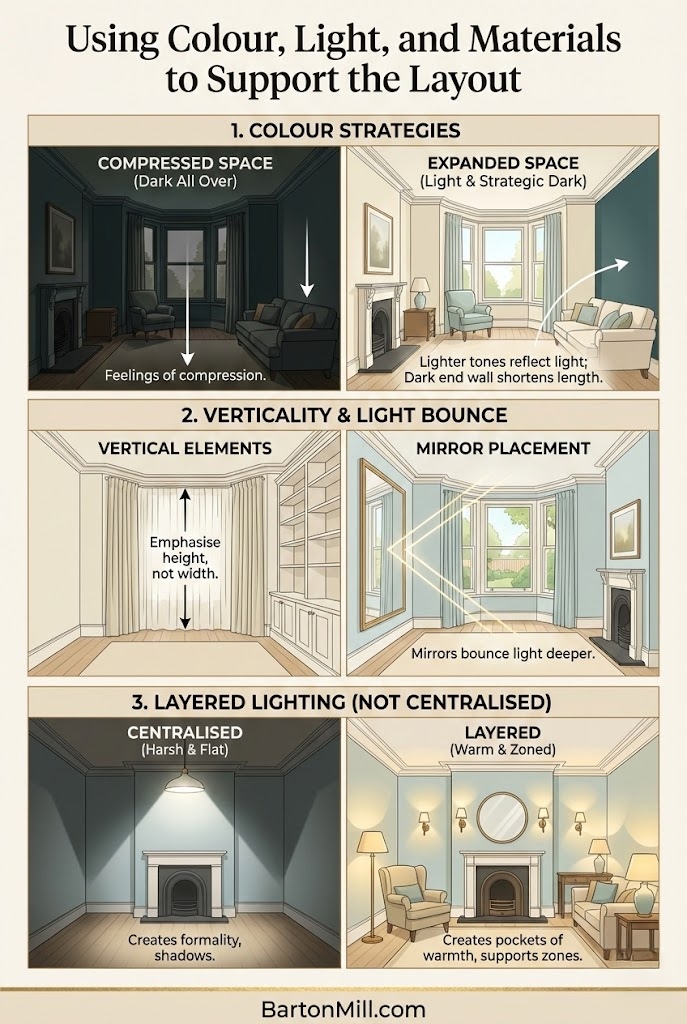
Layout is reinforced by colour and lighting choices. In narrow spaces, lighter wall colours help reflect light and prevent the room from feeling compressed. That said, darker tones can work beautifully when used strategically, particularly at the far end of the room to visually shorten its length.
Vertical elements such as tall shelving or floor to ceiling curtains emphasise height rather than width, enhancing the room’s proportions. Mirrors placed near bay windows or along side walls help bounce light deeper into the space.
Lighting should be layered rather than centralised. Table lamps, floor lamps, and wall lights create pockets of warmth that support zoned layouts and soften the room’s formality.
Making the Most of Bay Windows and Alcoves
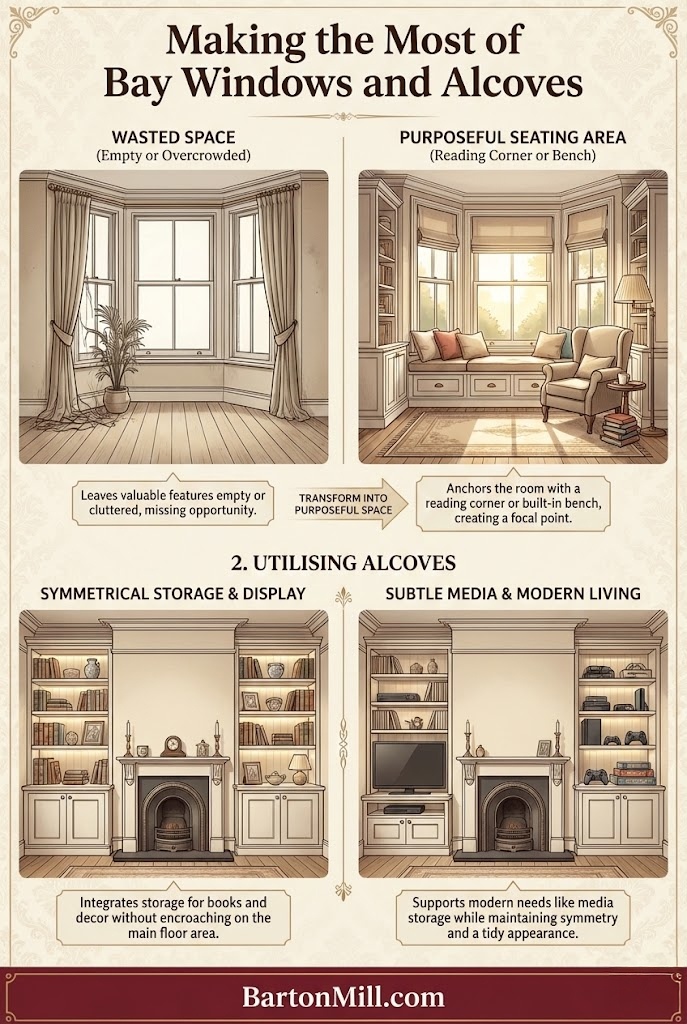
Bay windows are one of the most valuable features in a Victorian terrace living room. Rather than leaving them empty or overcrowded, consider turning them into purposeful seating areas or reading corners. A simple armchair or built in bench can anchor the front of the room beautifully.
Alcoves offer an opportunity to integrate storage or display without encroaching on the main floor area. Whether used for books, cabinetry, or subtle media storage, they help maintain symmetry while supporting modern living needs.
Common Layout Mistakes to Avoid
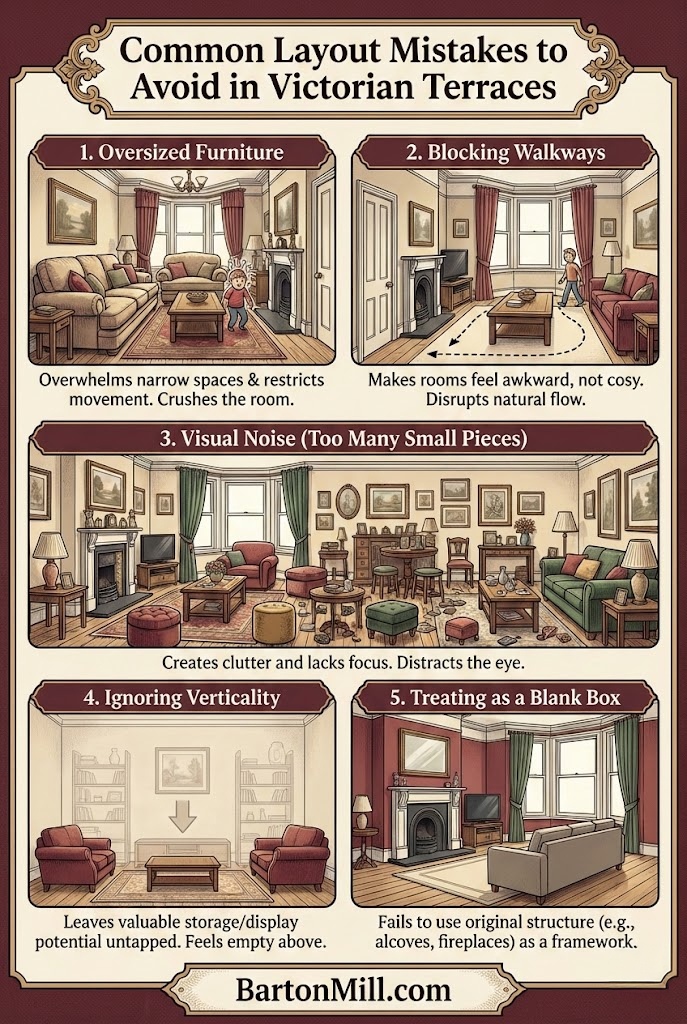
Even well intentioned layouts can fall short if a few common mistakes creep in.
Oversized furniture quickly overwhelms narrow spaces and restricts movement. Blocking natural walkways makes rooms feel awkward rather than cosy. Too many small furniture pieces can create visual noise, while ignoring vertical space leaves valuable potential untapped.
Avoid treating the room as a blank box. Victorian living rooms benefit most when their original structure is acknowledged and used as a framework rather than something to disguise.
How do you arrange furniture in a long narrow Victorian living room?
The best approach is to keep a clear walkway along one side of the room and group furniture around a central focal point, usually the fireplace. Avoid pushing all furniture against the walls, as this can exaggerate the corridor effect. Instead, float key pieces slightly inward and use rugs to define seating areas.
Should the sofa face the fireplace or the TV in a Victorian living room?
In most Victorian living rooms, the fireplace works best as the main visual anchor. The sofa can still face the fireplace while allowing for comfortable TV viewing by placing the television within an alcove or on a low profile unit nearby. This maintains balance between traditional features and modern living needs.
How do you stop a long living room from feeling like a corridor?
Breaking the room into visual zones is one of the most effective solutions. Rugs, lighting, and furniture orientation can create distinct areas without physical dividers. Using colour and texture to subtly change the mood between zones also helps the space feel more intentional and less linear.
What furniture works best in narrow Victorian living rooms?
Slimline sofas, armless chairs, and furniture with visible legs tend to work best. These pieces take up less visual space and allow light to flow around them. Choosing furniture that is proportionate to the room’s width is more important than following any specific style.
Can you mix modern furniture with traditional Victorian features?
Yes, and it often works best when done carefully. Keeping the layout sympathetic to original features while introducing modern furniture shapes creates balance. This approach is explored further in our guide to Modern vs Traditional: Mixing Styles in a Period Property, which looks at how to blend eras without the space feeling disjointed.
Where should the TV go in a Victorian terrace living room?
Alcoves are usually the most discreet option, allowing the TV to sit naturally within the room’s architecture. If this is not possible, a low profile media unit positioned away from the main focal point can work well. The goal is to integrate technology without letting it dominate the room.
Creating a Living Room That Feels Balanced and Timeless
A successful Victorian terrace living room layout is not about choosing between modern and traditional. It is about allowing both to coexist naturally.
By letting architectural features guide the layout and choosing furniture that adapts to modern life, long narrow spaces can feel inviting, functional, and visually balanced. Thoughtful zoning, careful furniture selection, and subtle use of colour and light all play a role in creating a room that feels comfortable today while respecting its past.
For a deeper exploration of how layout fits into the wider design conversation, our pillar guide on Modern vs Traditional: Mixing Styles in a Period Property offers further insight into creating homes that feel timeless rather than torn between eras.