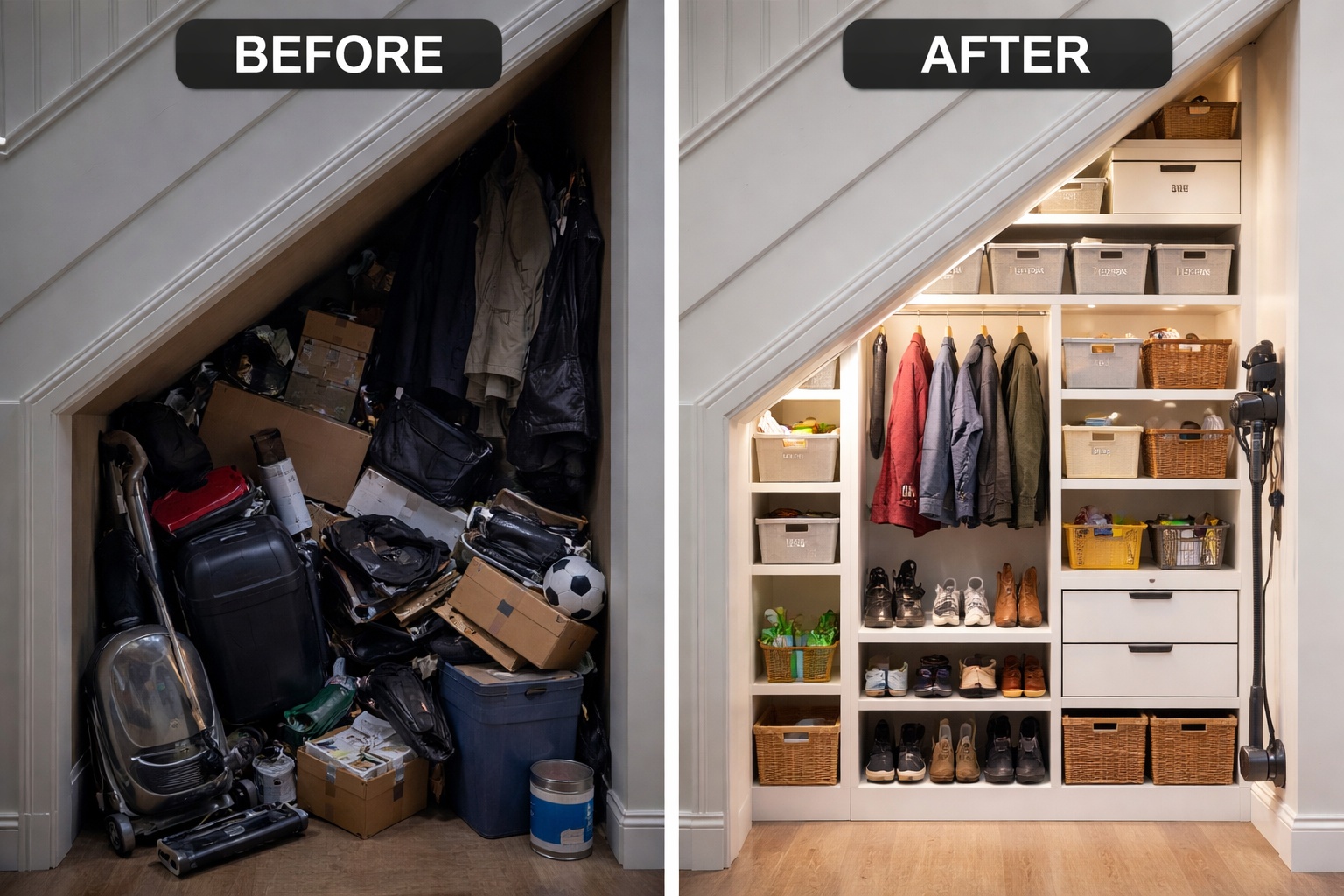
Under stairs storage ideas focus on turning the cupboard under the stairs into practical, accessible space without clutter or wasted room.
With thoughtful planning, under-stairs storage can be transformed into one of the most useful spaces in the home. Whether you need everyday storage, a hidden utility zone, or a smart organisational solution, this area offers far more potential than it first appears.
This guide explores innovative, practical ideas for making the most of your cupboard under the stairs, focusing on solutions that work in real homes without major renovation.
Table of Contents
Understanding the Shape of Under-Stairs Spaces
Before choosing storage solutions, it is important to understand the limitations and opportunities of the space.
Under-stairs cupboards typically have:
- Sloping ceilings
- Uneven depths
- Limited natural light
- Narrow access points
Rather than fighting these constraints, successful storage solutions work with the shape, using custom or adaptable storage that follows the line of the stairs.
Accepting the geometry of the space leads to more efficient and visually tidy results.
Decide the Primary Purpose First
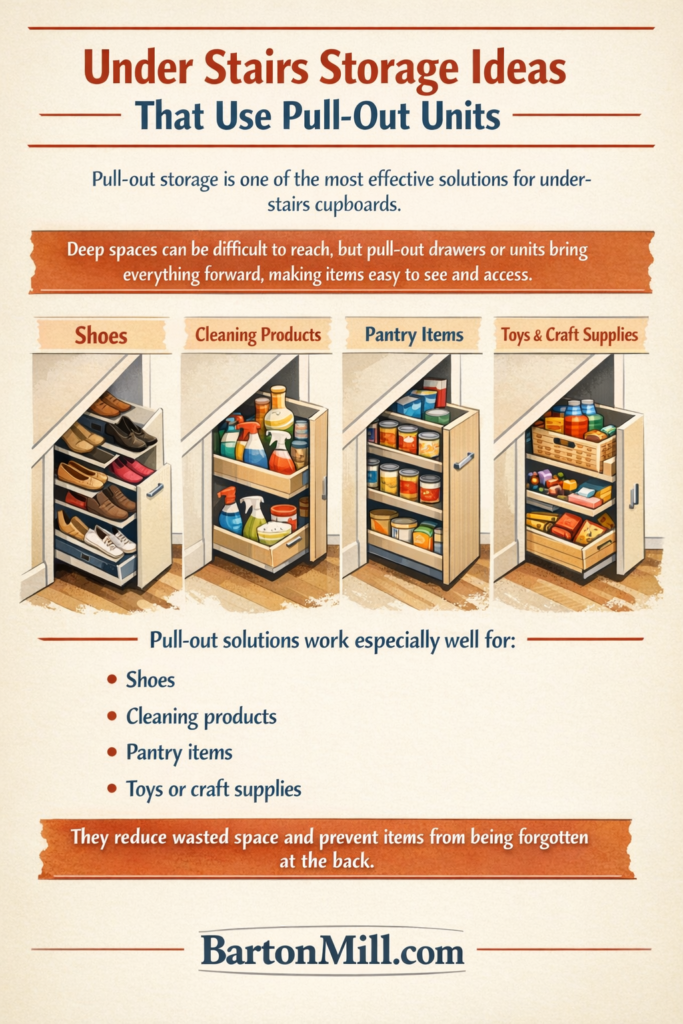
The biggest mistake with under-stairs storage is trying to store everything.
Start by deciding what the space should primarily be used for:
- Coats and shoes
- Cleaning supplies
- Pantry or food storage
- Household overflow
- Office or utility functions
Once the main purpose is clear, storage choices become much easier and clutter is easier to avoid.
A focused function always works better than a general dumping zone.
Under Stairs Storage Ideas That Use Pull-Out Units
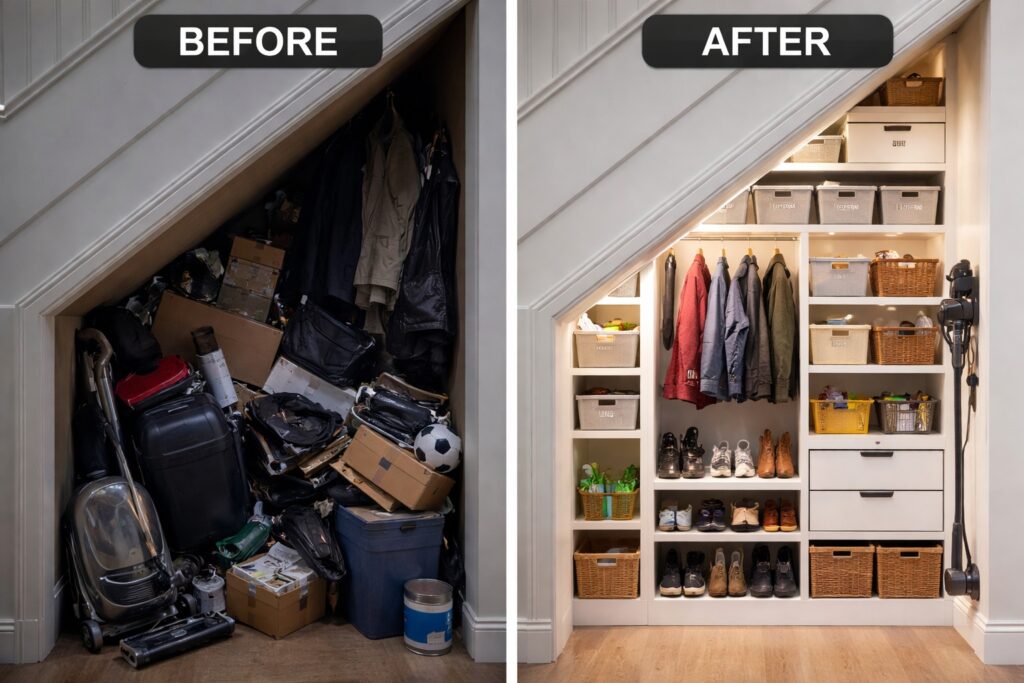
Pull-out storage is one of the most effective solutions for under-stairs cupboards.
Deep spaces can be difficult to reach, but pull-out drawers or units bring everything forward, making items easy to see and access.
Pull-out solutions work especially well for:
- Shoes
- Cleaning products
- Pantry items
- Toys or craft supplies
They reduce wasted space and prevent items from being forgotten at the back.
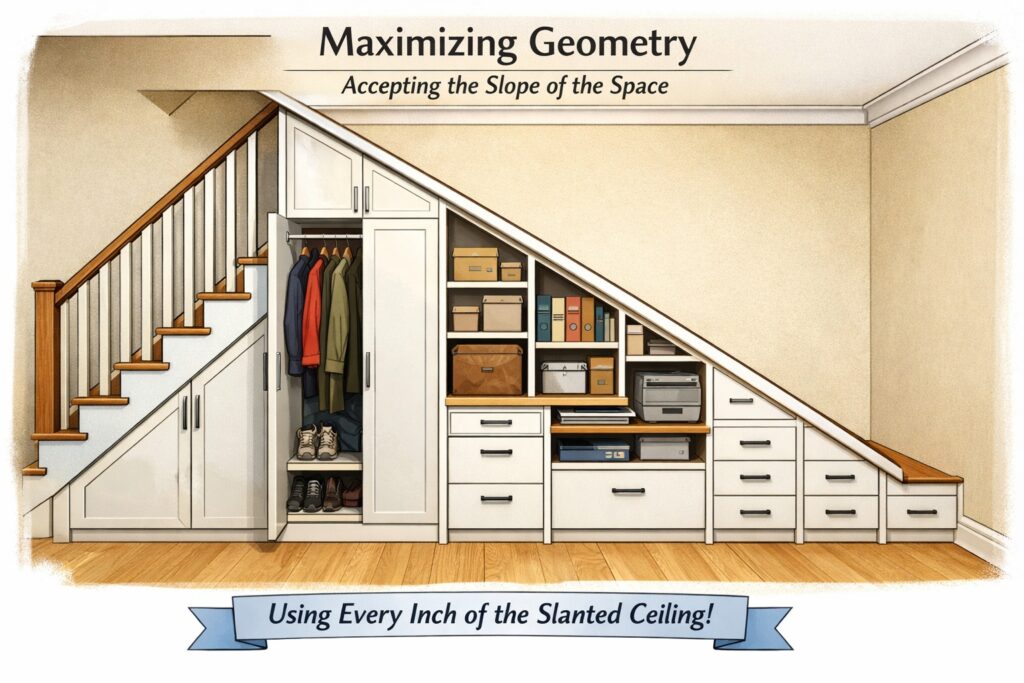
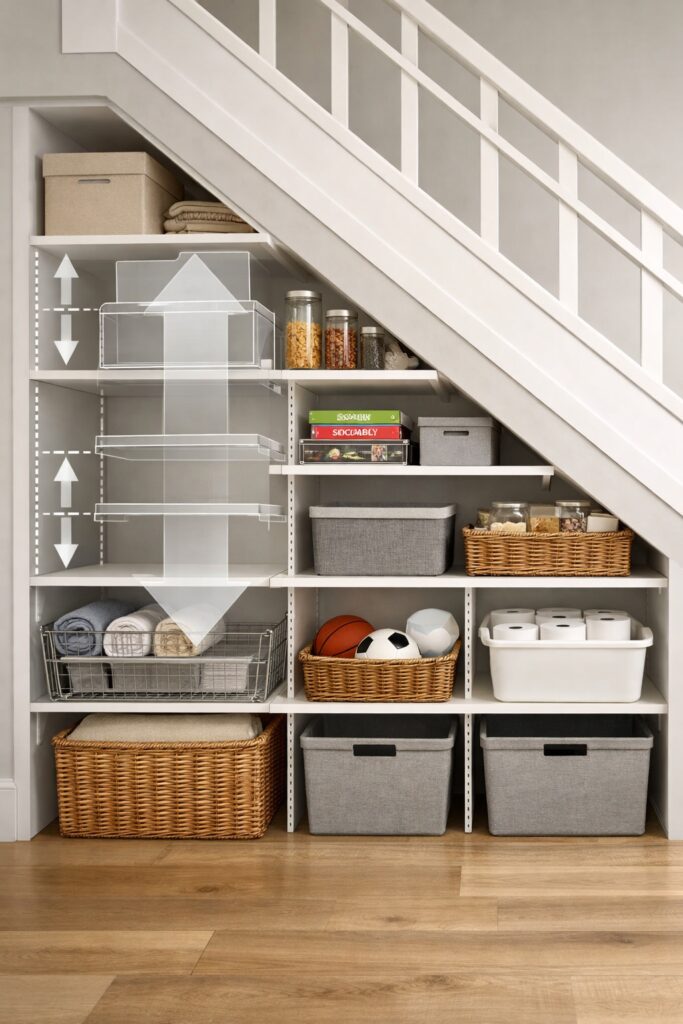
Shelving That Follows the Stair Line
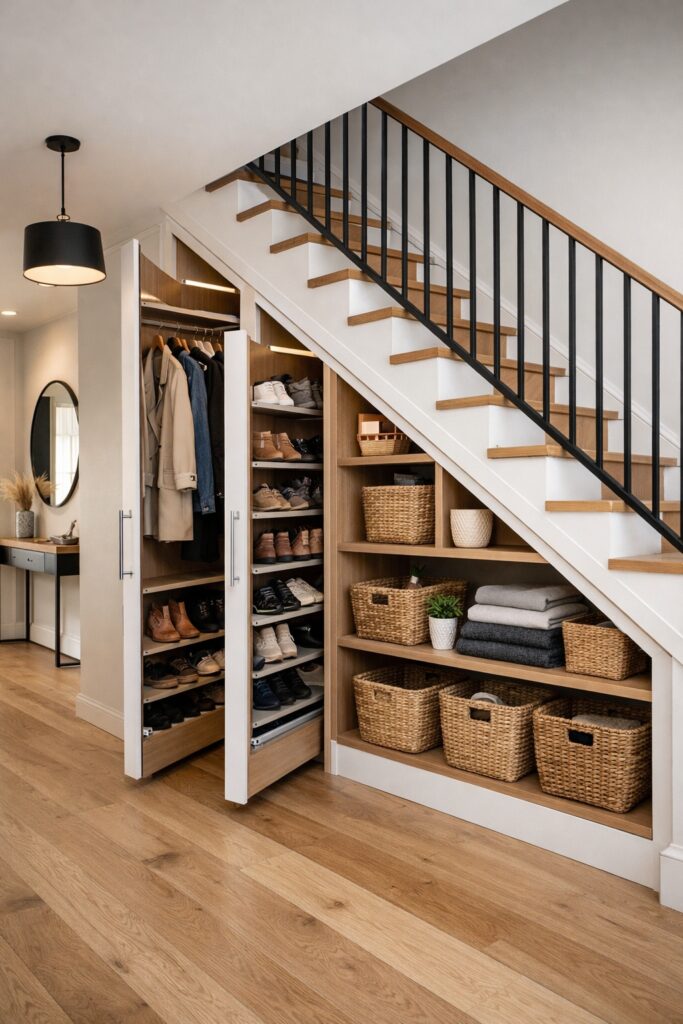
Standard shelving often wastes space under stairs.
Custom or adjustable shelves that follow the slope of the staircase make better use of vertical height and avoid awkward gaps.
Staggered shelving allows taller items to sit where head height permits, while smaller items fit neatly into lower areas.
This approach works well for books, storage boxes, and household supplies.
Closed Storage for Visual Calm
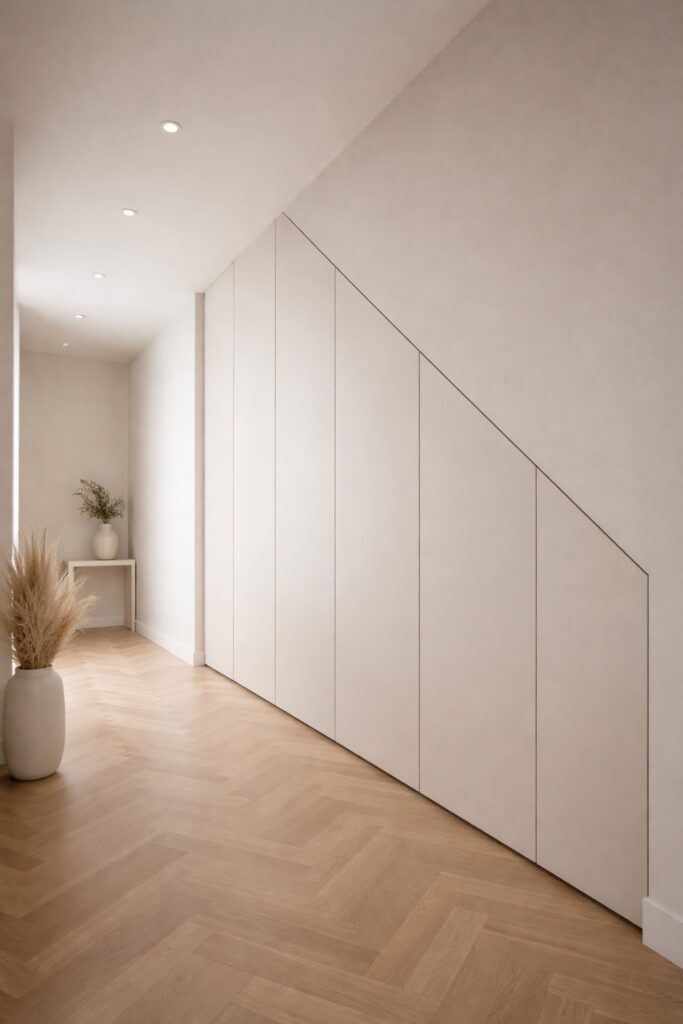
Because under-stairs areas are often located in hallways or living spaces, visual clutter can quickly become noticeable.
Closed storage helps maintain a calm, tidy appearance. Cupboard doors, drawer fronts, or simple panels keep stored items out of sight while still accessible.
Neutral finishes help the storage blend into surrounding walls, making the space feel intentional rather than added on.
Creating a Coat and Shoe Zone
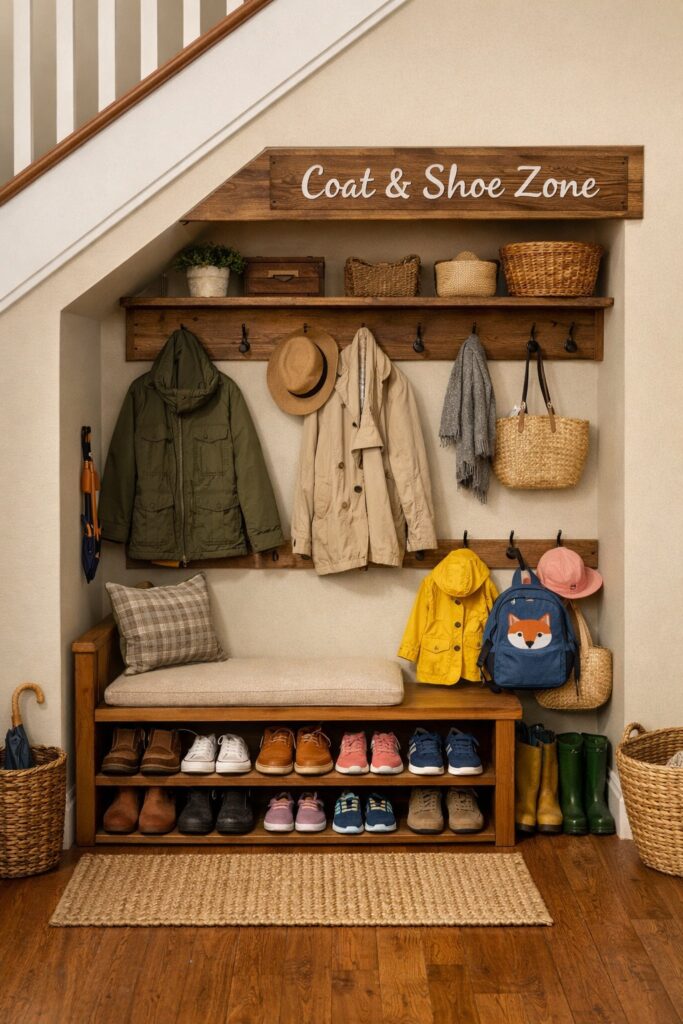
Under-stairs cupboards are ideal for coats and shoes, especially near the front door.
A combination of:
- Hanging rails
- Shoe racks
- Shelves or baskets
can create a compact, functional entry storage zone.
Hooks mounted at different heights make the space usable for all family members, while trays or boot mats help manage dirt and moisture.
Pantry and Kitchen Overflow Storage
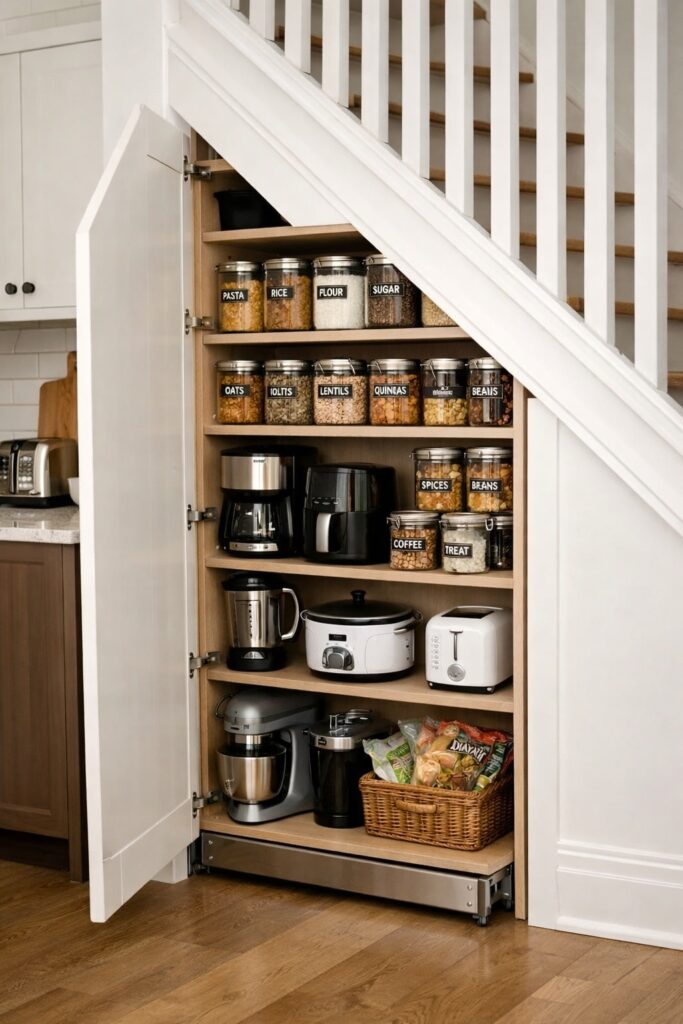
In homes where kitchen space is limited, the cupboard under the stairs can work well as a pantry or food storage area.
Use shelves or pull-out units to store:
- Dry goods
- Small appliances
- Bulk items
Good ventilation and clear organisation are key.
Clear containers and labels help maintain order and prevent food waste.
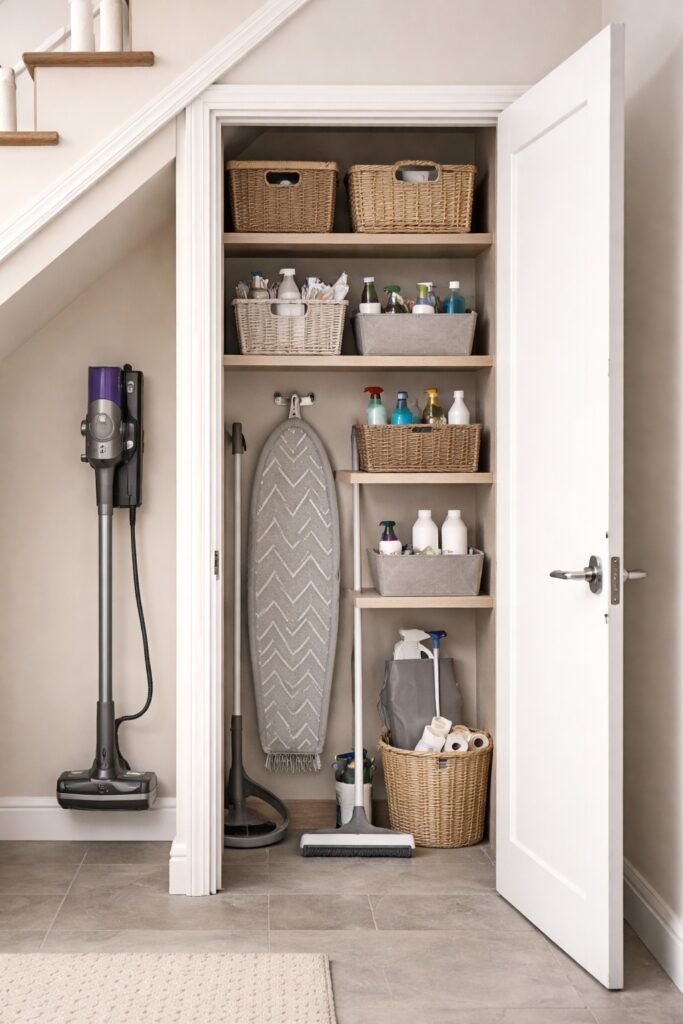
Utility Storage Without the Mess
Under-stairs cupboards are often used to store cleaning supplies, vacuums, and household equipment.
Installing vertical storage for mops and brooms, along with shelves for cleaning products, keeps everything organised and easy to access.
Using contained storage prevents this practical area from becoming visually chaotic.
Turning Under-Stairs Storage Into a Functional Zone
Some under-stairs spaces can support more than simple storage.
Depending on size and layout, they can become:
- Compact home offices
- Pet zones
- Laundry storage areas
- Recycling stations
The key is realistic planning. These spaces work best when designed for specific, contained tasks rather than multiple competing functions.
Lighting Makes a Big Difference
Poor lighting makes under-stairs storage frustrating to use.
Simple solutions such as:
- Battery powered LED lights
- Motion sensor strip lighting
- Low profile spotlights
can dramatically improve usability.
Good lighting helps you see what you have, reducing clutter and unnecessary duplication.
Making Storage Adaptable Over Time
Storage needs change as households evolve.
Using adjustable shelving, removable baskets, and modular units allows under-stairs storage to adapt without full redesign.
Avoid overly fixed solutions unless you are confident the use will remain the same long term.
Flexibility adds longevity and value.
Consumer advice from Which? highlights the importance of flexible storage solutions in small homes.
Common Under-Stairs Storage Mistakes to Avoid
Some common pitfalls include:
- Storing too many unrelated items
- Ignoring accessibility
- Using deep fixed shelves only
- Leaving items on the floor
- Failing to plan lighting
If a space feels difficult to use, it will quickly become cluttered again.
Under-Stairs Storage and Whole-Home Organisation
Well designed under-stairs storage supports organisation throughout the home.
By giving overflow items a defined place, it reduces pressure on other rooms and storage areas.
This is especially important in smaller homes, where every square metre matters.
What can you store under the stairs?
Under the stairs is ideal for shoes, coats, cleaning supplies, pantry items, or household overflow storage.
Are pull-out units good for under-stairs cupboards?
Yes. Pull-out storage improves access and prevents items being lost at the back of deep spaces.
Can under-stairs storage be added without renovation?
Yes. Freestanding units, shelving, and modular systems can be installed without major structural work.
Is closed storage better under the stairs?
Closed storage usually works best as it keeps visual clutter out of sight, especially in hallways.
How do you light a cupboard under the stairs?
Motion-sensor LED lighting or battery powered lights are simple, effective options.
Final Thoughts: Hidden Storage With Real Impact
The cupboard under the stairs is not an afterthought. It is an opportunity.
With innovative storage ideas and thoughtful planning, it can become one of the most efficient and useful spaces in your home.
The most successful solutions prioritise accessibility, clarity, and calm, turning an awkward area into purposeful storage that genuinely supports daily life.