A stone coffee table is not an impulse purchase. These tables are heavy, often expensive, and once one is in your living room, it tends to stay there.
That permanence is part of the appeal. Unlike furniture that wears out or gets replaced every few years, a well-chosen stone coffee table can anchor a room for decades. Natural veining, a cool surface, satisfying weight. These qualities give stone a presence that other materials cannot match.
But choosing the right one takes thought. Not all stone behaves the same way. Marble stains differently to granite. Travertine has a warmth that concrete lacks. Some designs suit small rooms while others demand space.
This guide covers what you need to know before buying: how different stones compare, what maintenance actually involves, which shapes and sizes work in which rooms, and how to choose a table that suits both your home and how you live.
Table of Contents
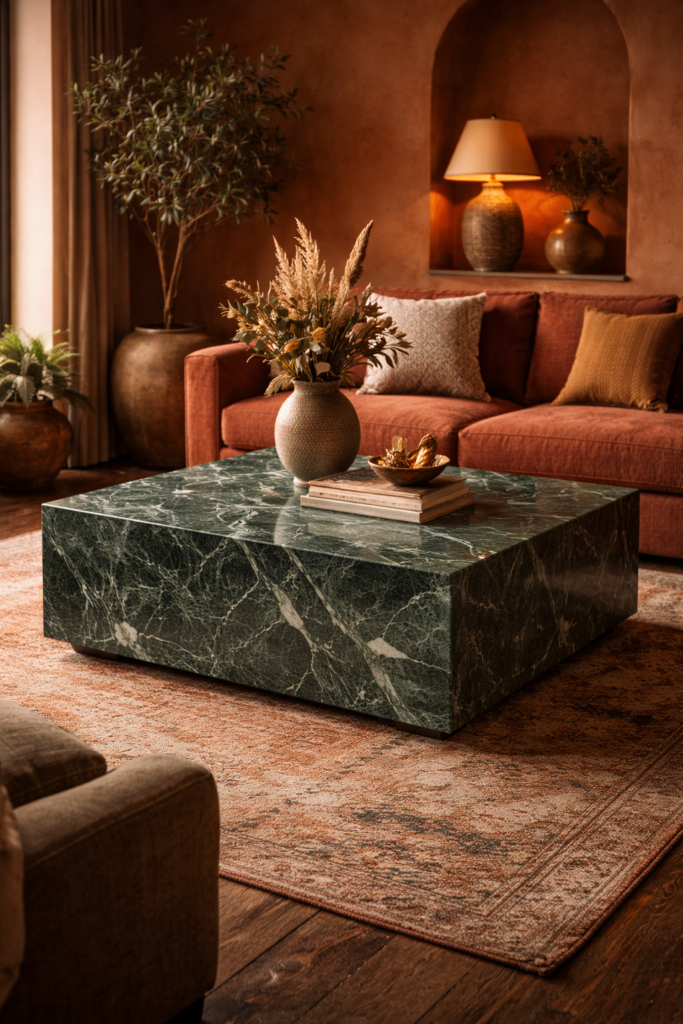
Stone Coffee Table Materials Compared
The term “stone coffee table” covers a wide range of materials. Knowing the differences helps you choose one that matches your expectations.
Marble
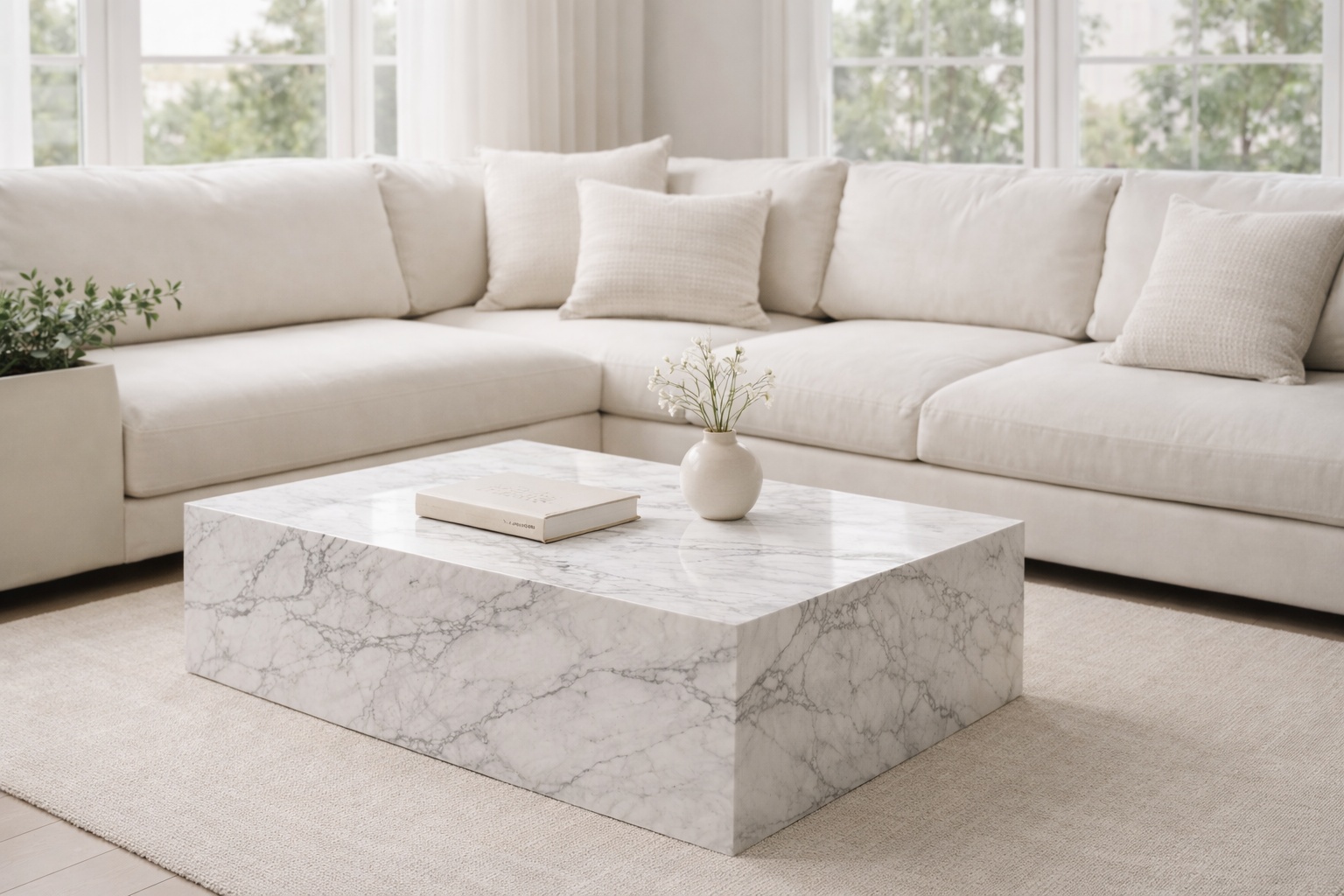
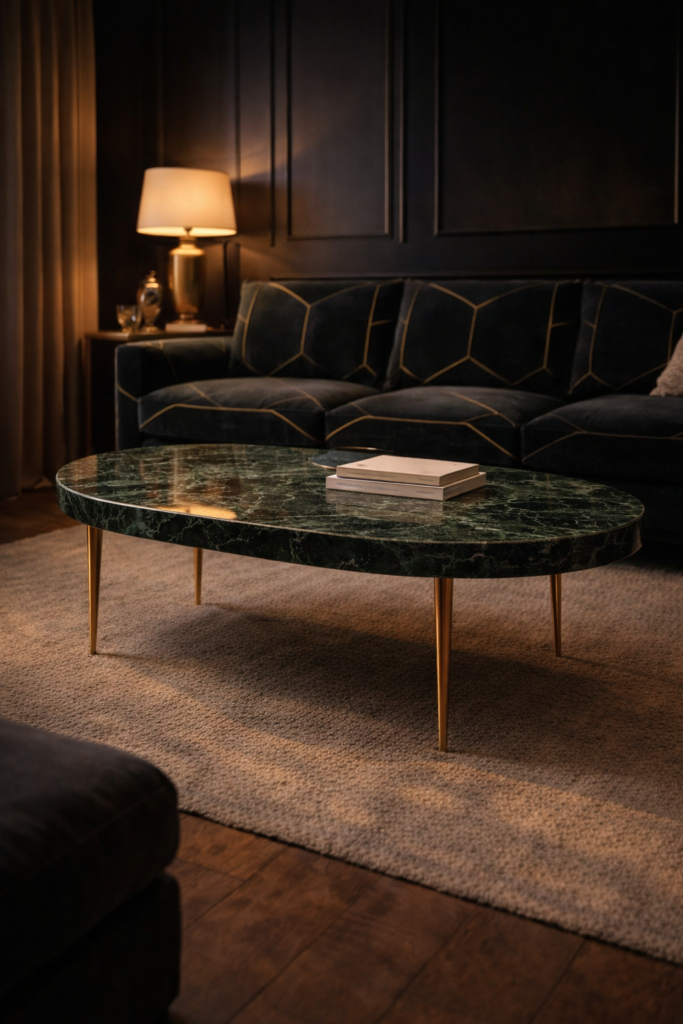
Marble is the classic choice. Its distinctive veining and polished finish have associations with luxury that go back centuries.
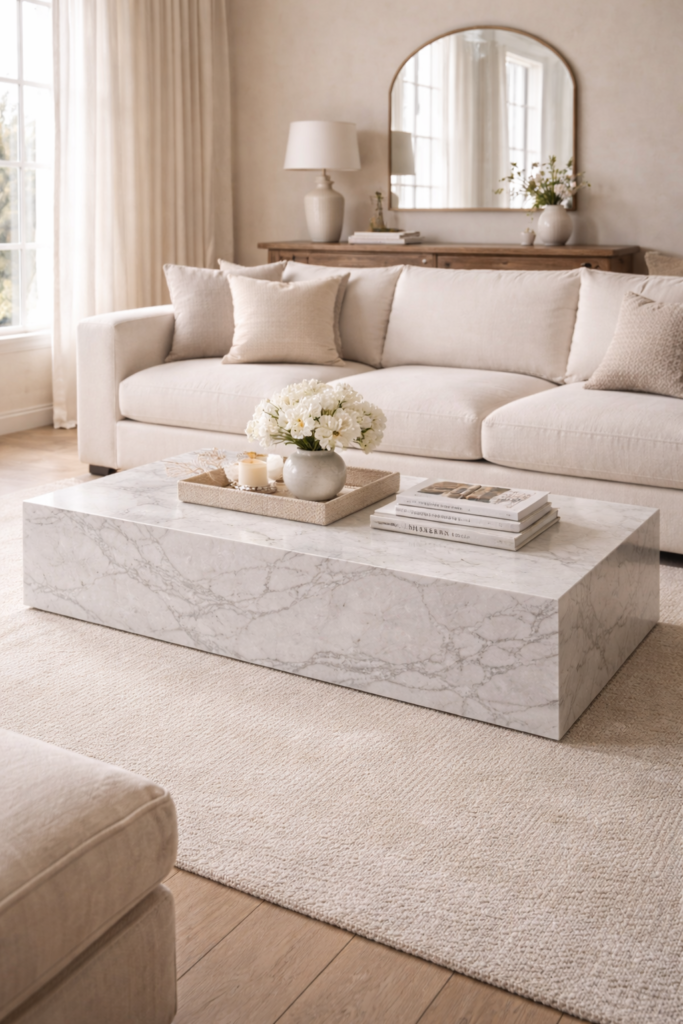
Common varieties include Carrara (white with soft grey veining), Calacatta (bolder veining, often with gold tones), and Nero Marquina (black with striking white veining). Marble can be polished for a glossy surface or honed for a softer matte finish. Polished shows veining more dramatically but also shows scratches and etching more easily.
The practical reality: marble is porous and relatively soft. It stains from spilled liquids, especially wine, coffee, and citrus. It also etches, developing dull spots where acids react with the stone. Regular sealing helps but does not eliminate these risks entirely.
Marble suits homes where beauty comes first and owners accept some maintenance.
Travertine
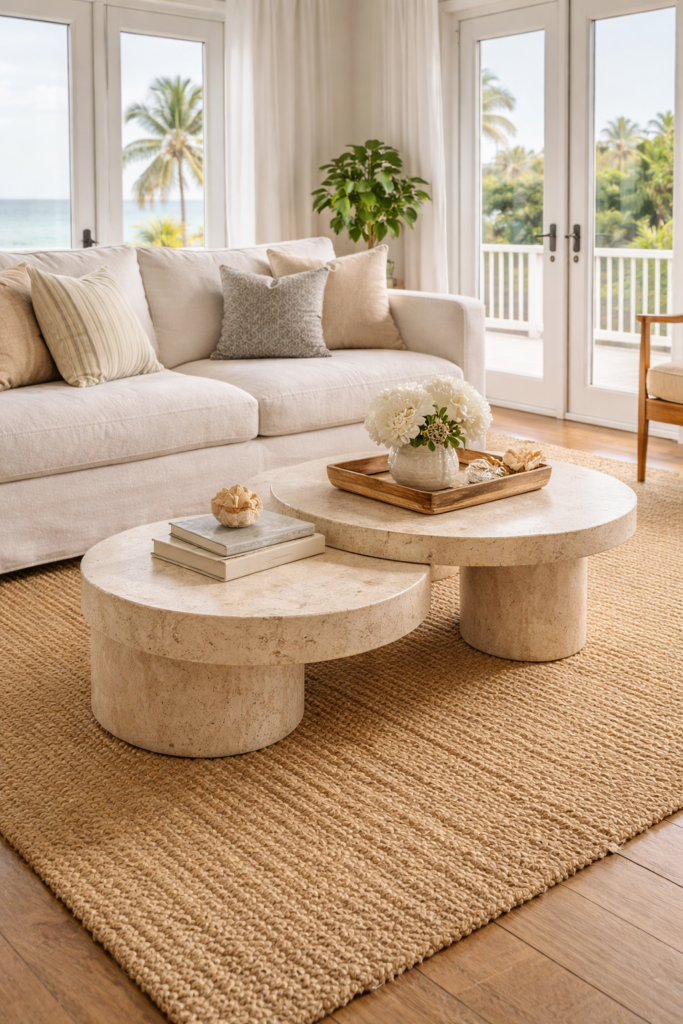
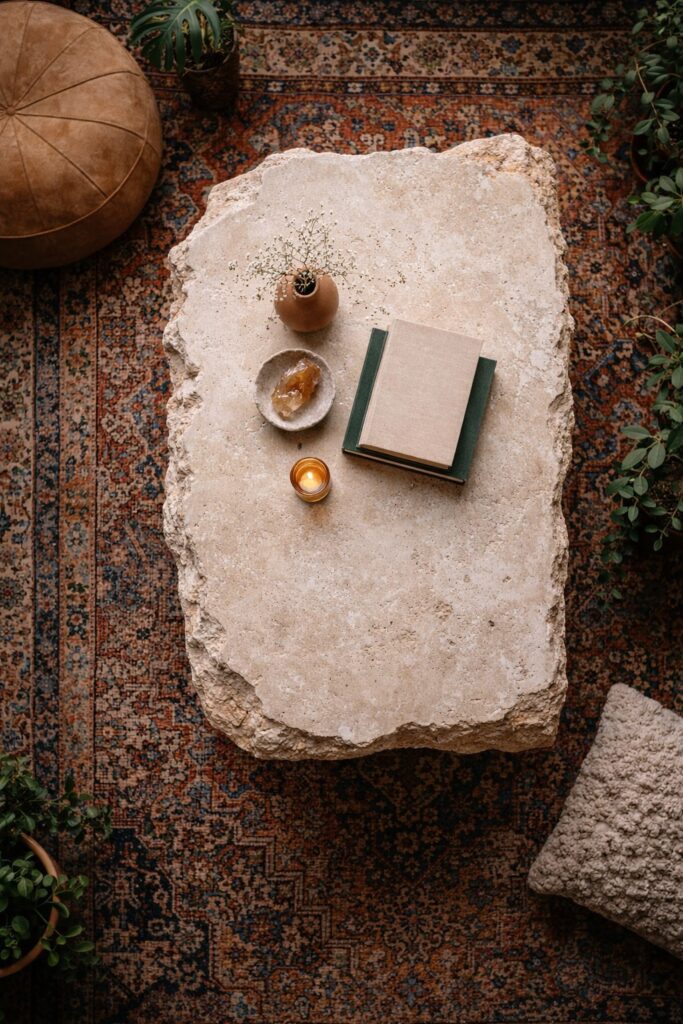
Travertine has warmth that marble lacks. Its colours run from creamy ivory through honey and walnut tones, with a natural texture created by small pits in the stone.
These holes can be left open for a rustic look or filled for a smoother surface. Unfilled travertine has more character but collects dust. Filled travertine is easier to clean but loses some of that raw appeal.
The stone suits Mediterranean, organic modern, and warm contemporary interiors. It pairs well with linen, warm woods, and earthy colours. Like marble, it needs sealing, but its natural colour variations hide minor marks better than white marble does.
Travertine is popular right now, which means cheaper, lower-quality pieces have flooded the market. Look for solid stone rather than thin veneers.
Concrete
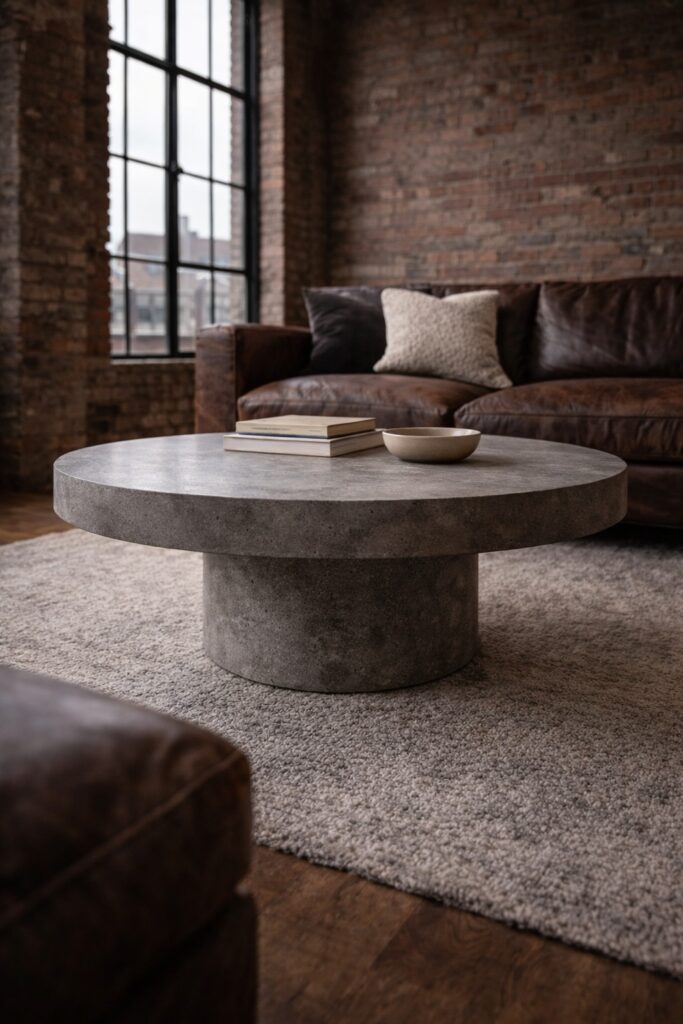
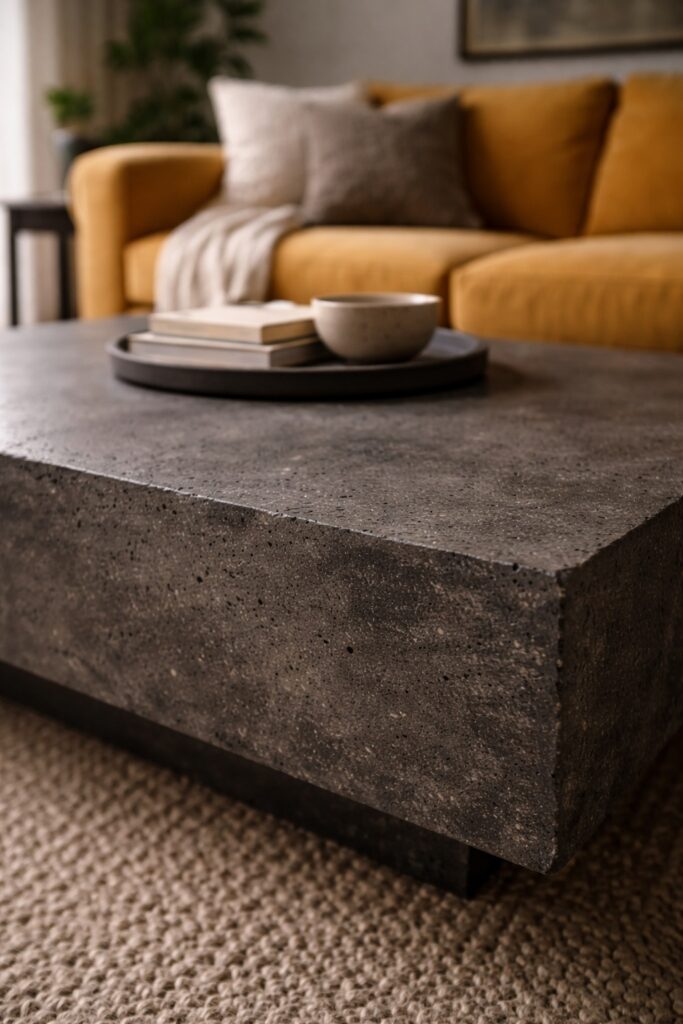
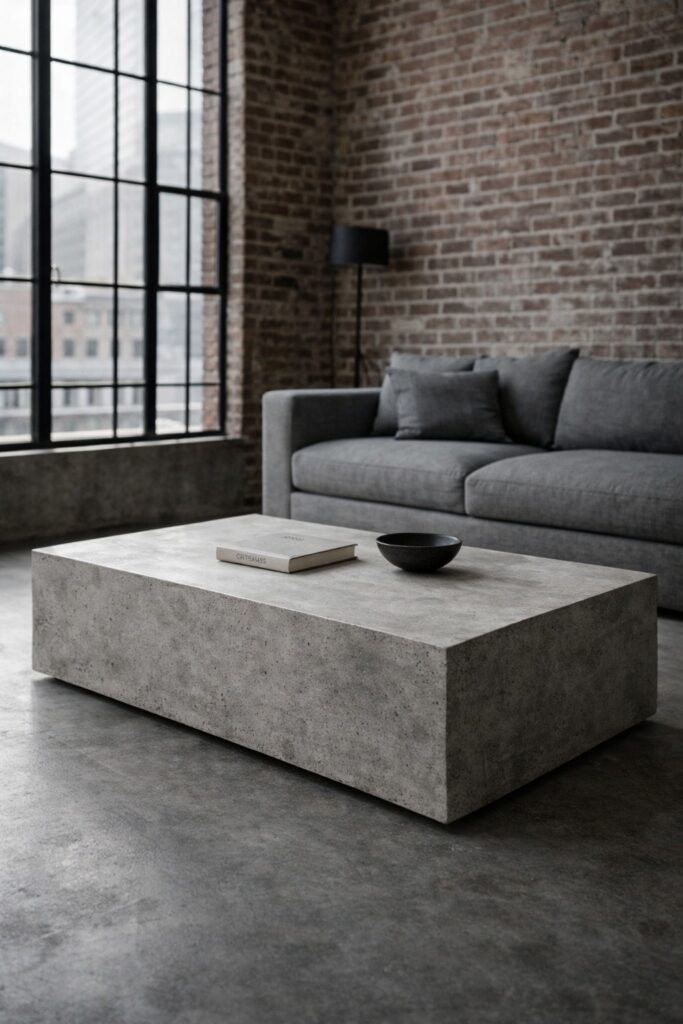
Concrete offers an industrial aesthetic for modern and minimal spaces. Its grey tones and raw texture contrast with the luxury feel of marble.
These tables tend to be the heaviest option. A large concrete table can weigh over 100kg, affecting delivery and whether you can reposition it later.
Concrete can be sealed to resist staining but may develop hairline cracks over time, especially at edges. Some owners see this as character. Others find it frustrating. The material suits loft apartments, industrial conversions, and contemporary spaces where rawness is an asset.
Limestone
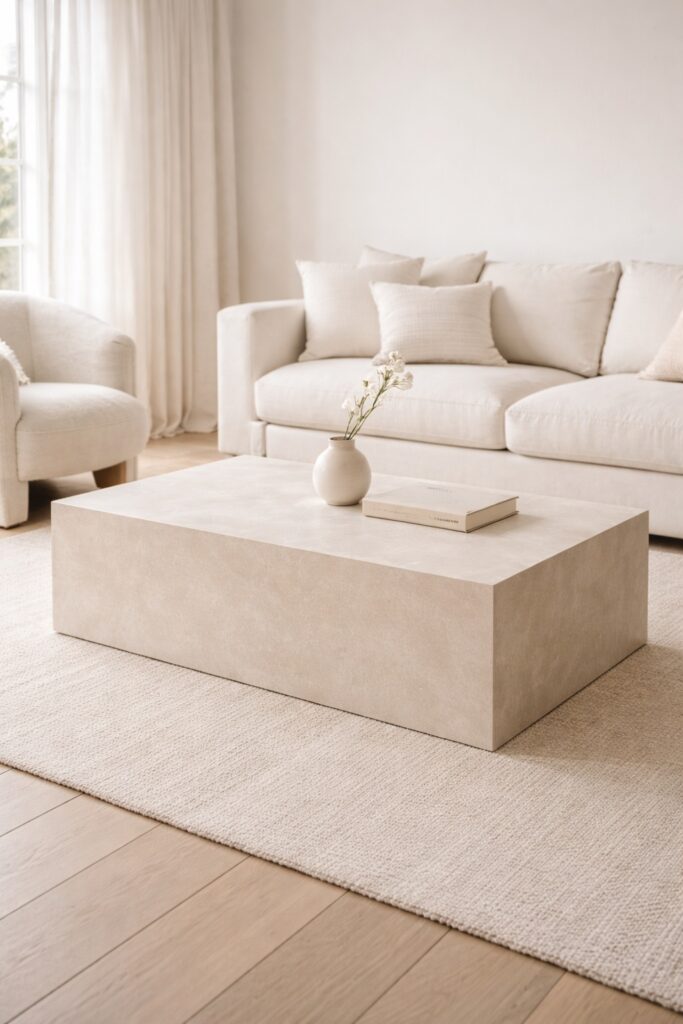
Limestone offers a softer, more muted alternative. Its colours tend toward pale creams and soft greys, often with subtle fossil patterns in the surface.
The stone has a naturally matte appearance that suits understated interiors, quiet luxury spaces, and Japandi-influenced rooms. It is softer than marble and more prone to scratching, so it needs careful handling. The trade-off is a surface that feels warmer and less formal.
Granite
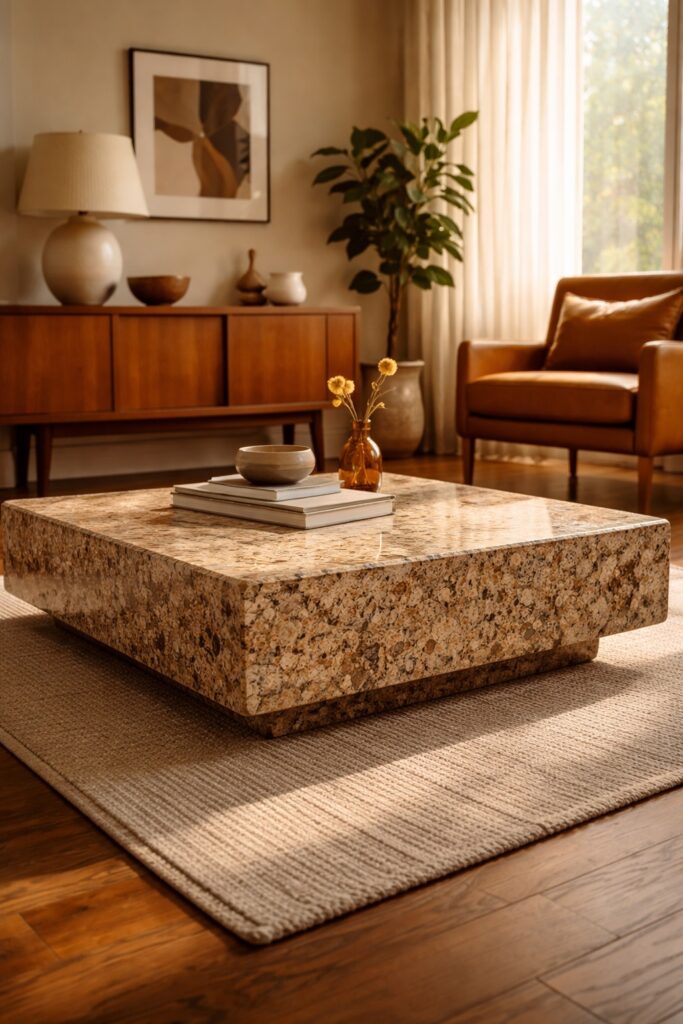
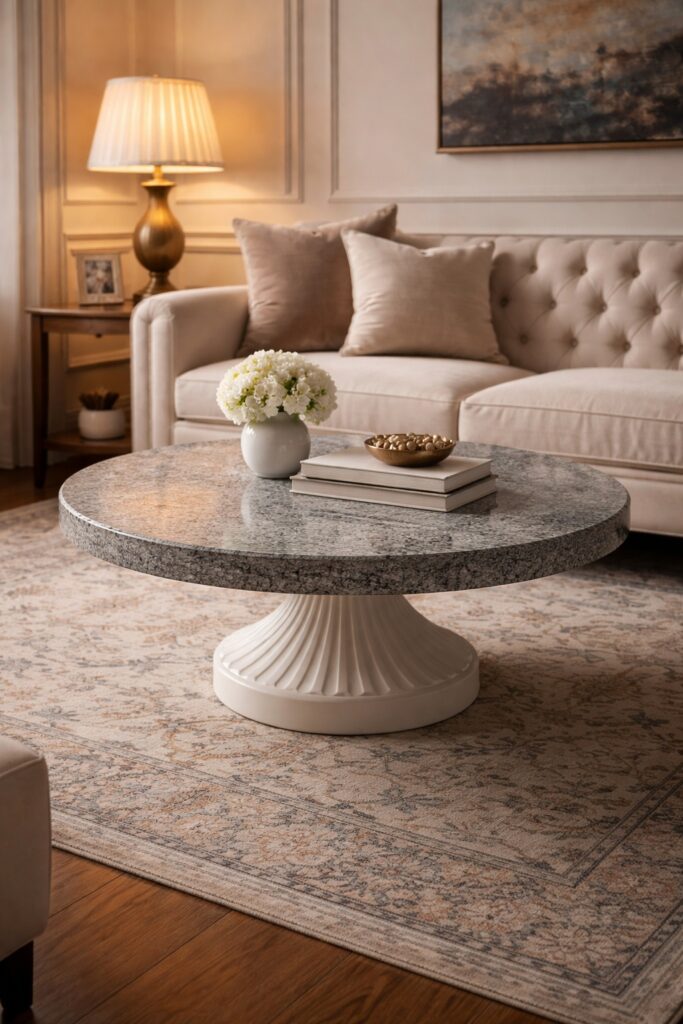
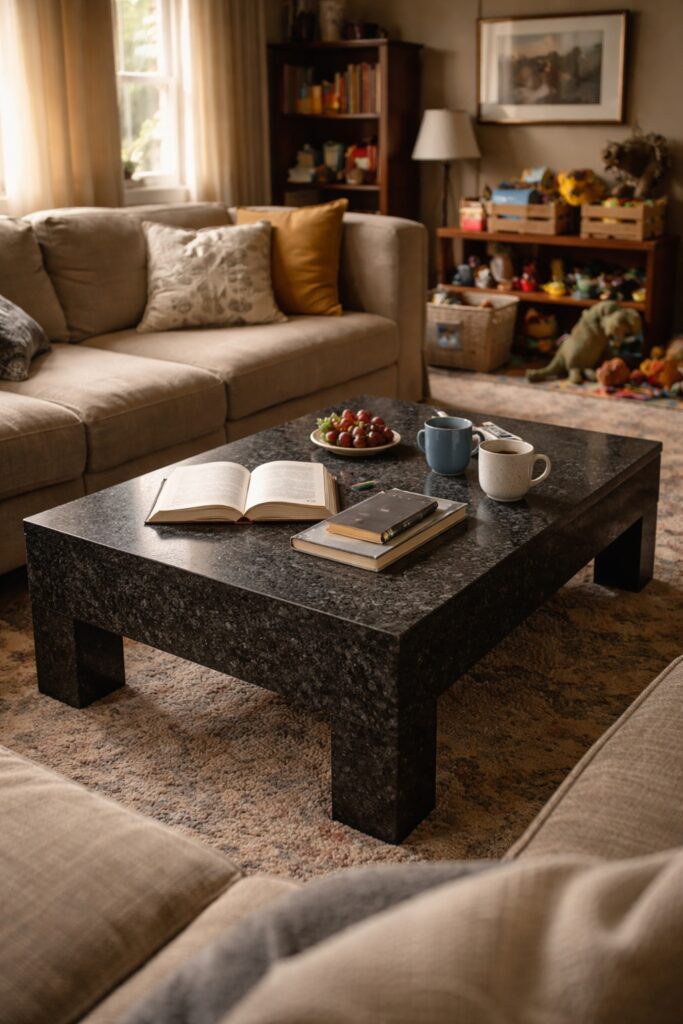
Granite is the practical choice. It is harder than marble, travertine, or limestone, making it resistant to scratching, staining, and heat.
The downside is aesthetic. Granite’s speckled look feels less fashionable than veined marble or warm travertine. Most people associate it with kitchen countertops. But for households putting function first, especially those with children, granite offers peace of mind that softer stones cannot.
Stone Colours Beyond White and Grey
Stone goes well beyond neutrals.
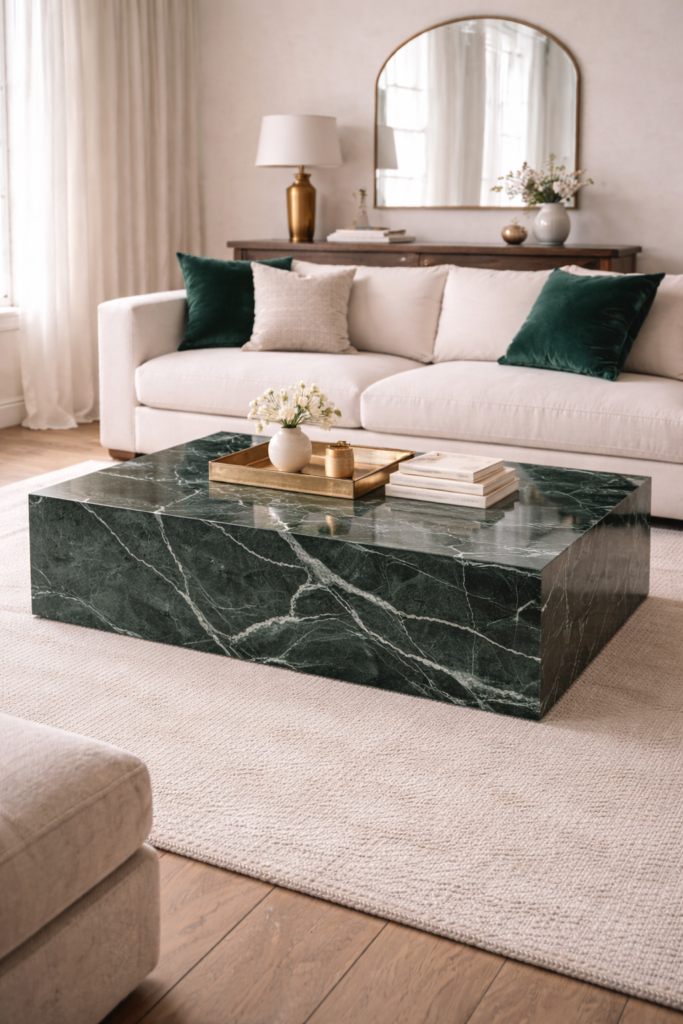
Green marble (Verde Alpi, Verde Guatemala) offers rich colour with white or gold veining. It pairs well with brass and warm woods.
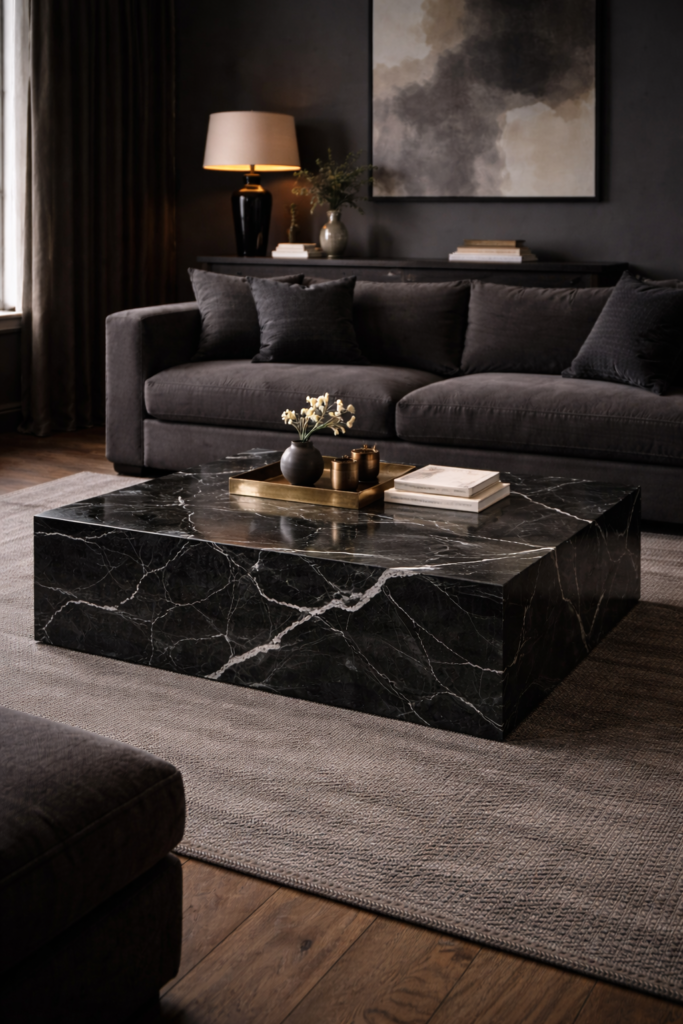
Black marble (Nero Marquina) creates bold contrast for moody interiors. It shows dust more easily but hides certain stains better.
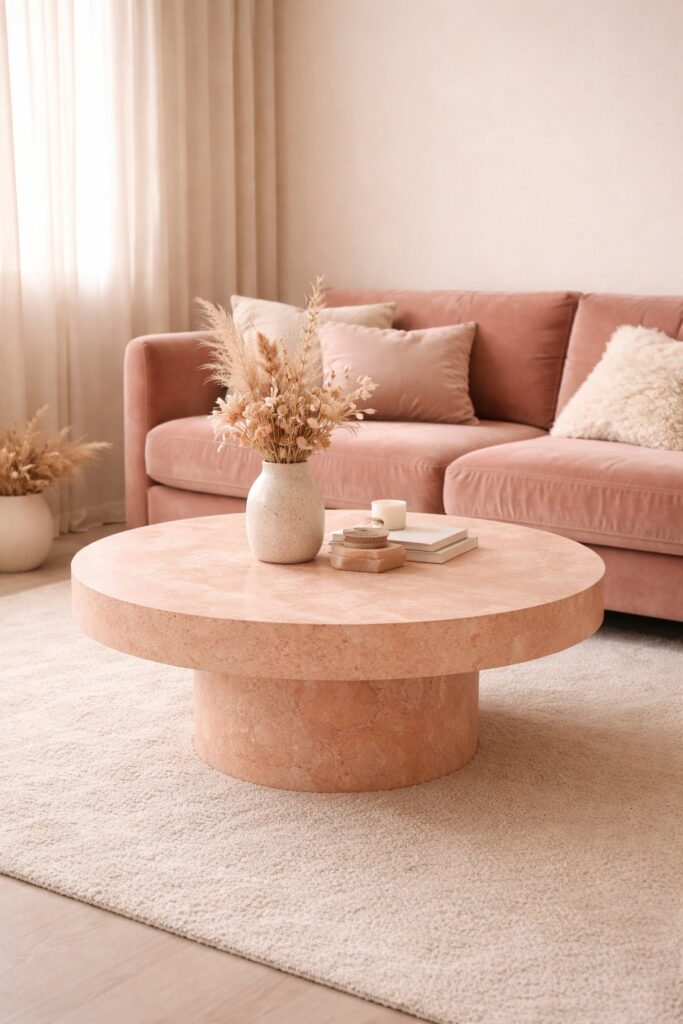
Pink and blush tones appear in some travertine varieties and work in warm or feminine colour schemes.
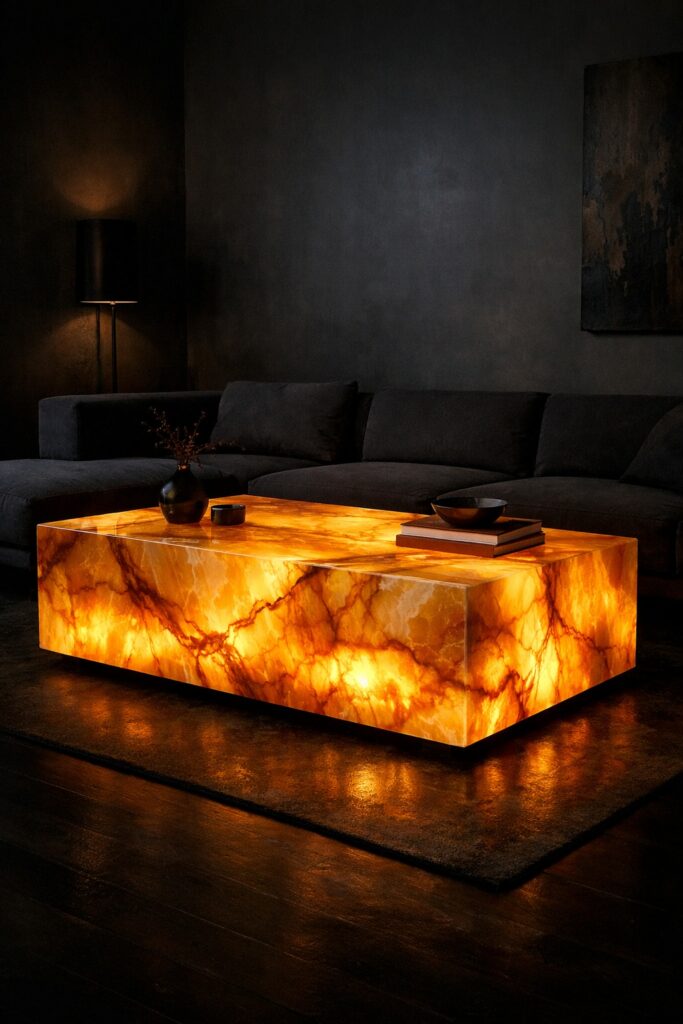
Onyx is translucent with dramatic veining, sometimes backlit for statement effect. More fragile and expensive, but striking in the right setting.
When choosing colour, think about your room. Lighter stones show well against dark walls but reveal stains easily. Darker stones hide wear but show dust.
Stone Coffee Table Pros and Cons
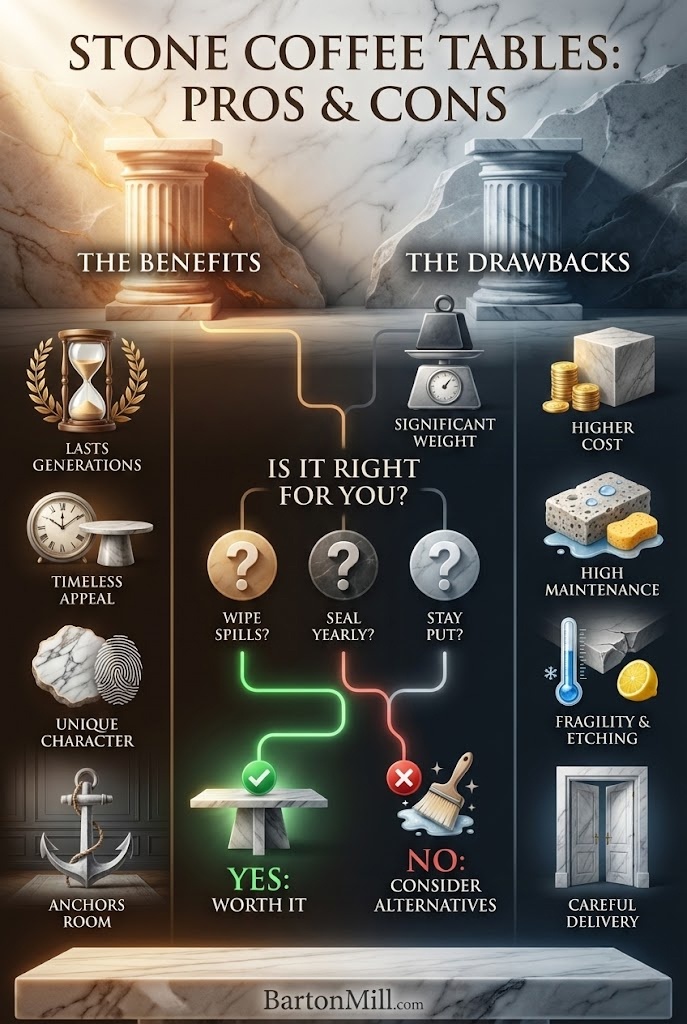
The Benefits
A stone table that has been properly cared for can last generations. The material does not warp or degrade like wood or upholstery.
Stone does not date. A marble table from the 1970s looks as good today as it did then.
Every piece has individual veining and character. You cannot get that from a factory.
Stone anchors a room and provides a focal point that lighter furniture cannot achieve.
The Drawbacks
Weight is the big one. Expect 50 to 100kg or more for larger pieces. Moving one usually takes two people.
Quality stone furniture costs more than most alternatives.
Porous stones need regular sealing and quick attention to spills. This is not furniture you can ignore.
Stone can chip at edges. Marble and limestone can etch from acidic substances.
Stone feels cool to touch, which bothers some people in colder months.
Heavy pieces need careful delivery through doorways and staircases. Check your access before ordering.
Is a Stone Coffee Table Right for You?
Ask yourself: Will I wipe up spills straight away? Can I seal it once a year? Will this table stay here for years?
If yes, stone is worth considering. If you want low maintenance furniture you can ignore, other materials probably suit you better.
Caring for a Stone Coffee Table
Sealing
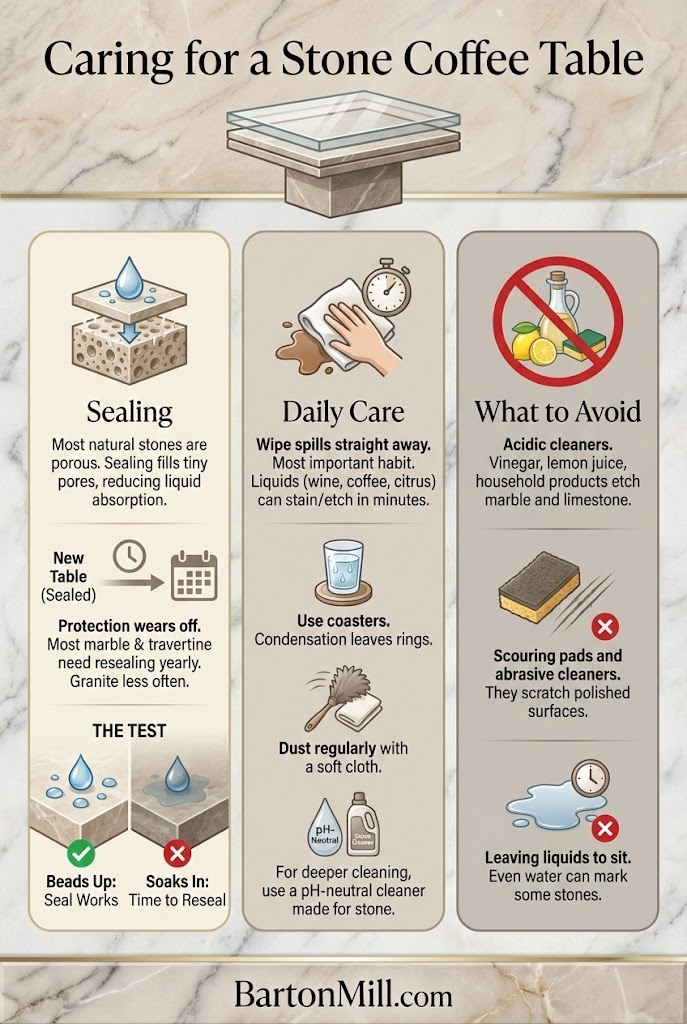
Most natural stones are porous. Sealing fills tiny pores, reducing how much liquid the stone absorbs.
New tables should arrive sealed, but protection wears off over time. Most marble and travertine tables need resealing once a year. Granite needs it less often.
To test, put a few drops of water on the surface. If it beads up, the seal works. If it soaks in, time to reseal.
Daily Care
Wipe spills straight away. This is the most important habit. Liquids left sitting, especially wine, coffee, or citrus, can stain or etch within minutes.
Use coasters. Condensation from cold glasses leaves rings.
Dust regularly with a soft cloth. For deeper cleaning, use a pH-neutral cleaner made for stone.
What to Avoid
Acidic cleaners. Vinegar, lemon juice, and many household products etch marble and limestone.
Scouring pads and abrasive cleaners. They scratch polished surfaces.
Leaving liquids to sit. Even water can mark some stones.
Shapes, Sizes and Designs
Round Tables
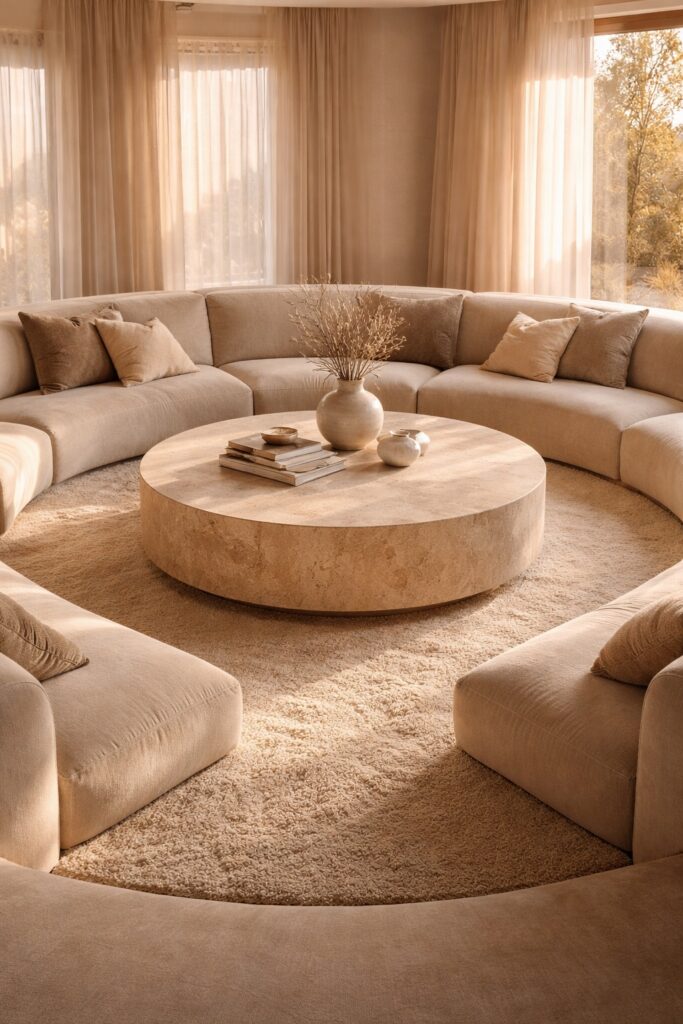
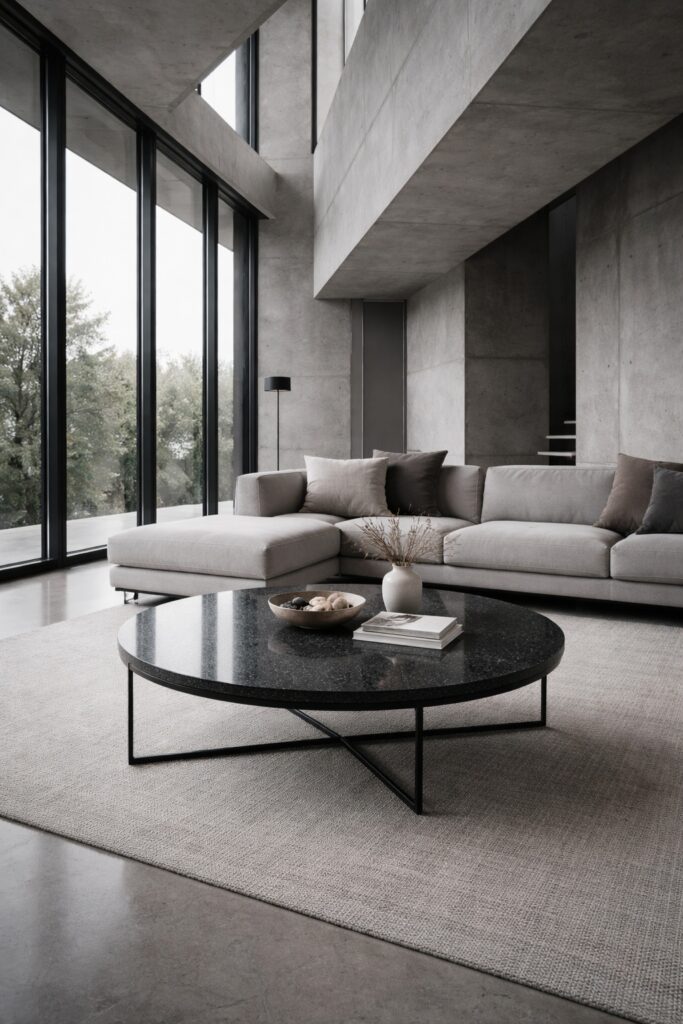
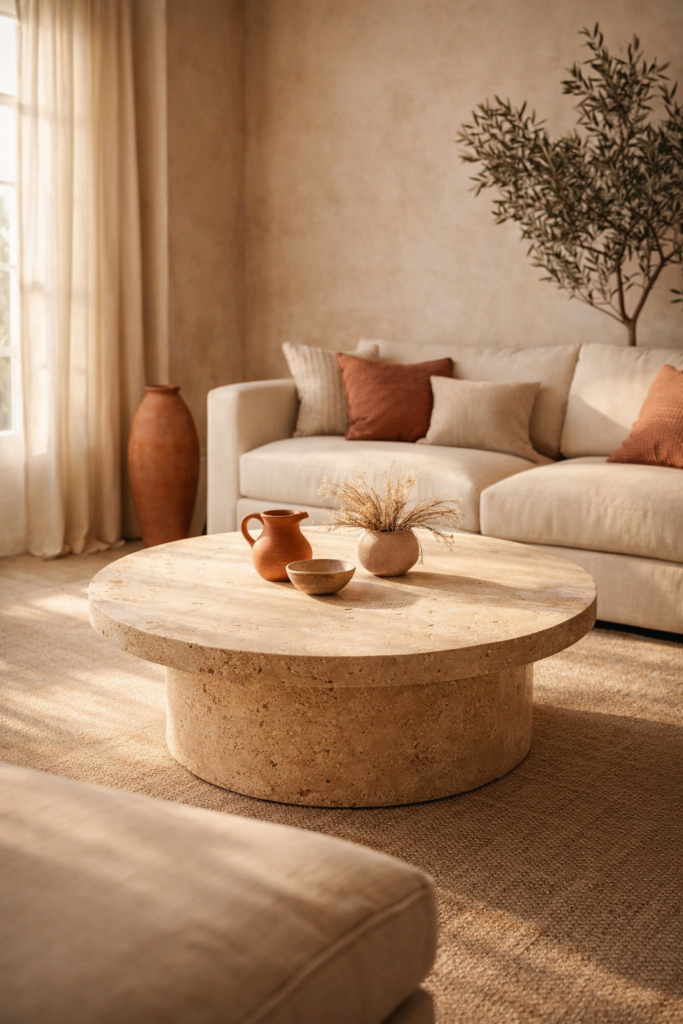
Round shapes create flow and soften a room. Without corners, they suit spaces where people walk around often and work well in smaller rooms.
Round stone tables look substantial. A round marble table feels heavier than a wooden one of the same size. Consider whether that weight suits your space.
Oval and Pill Shapes
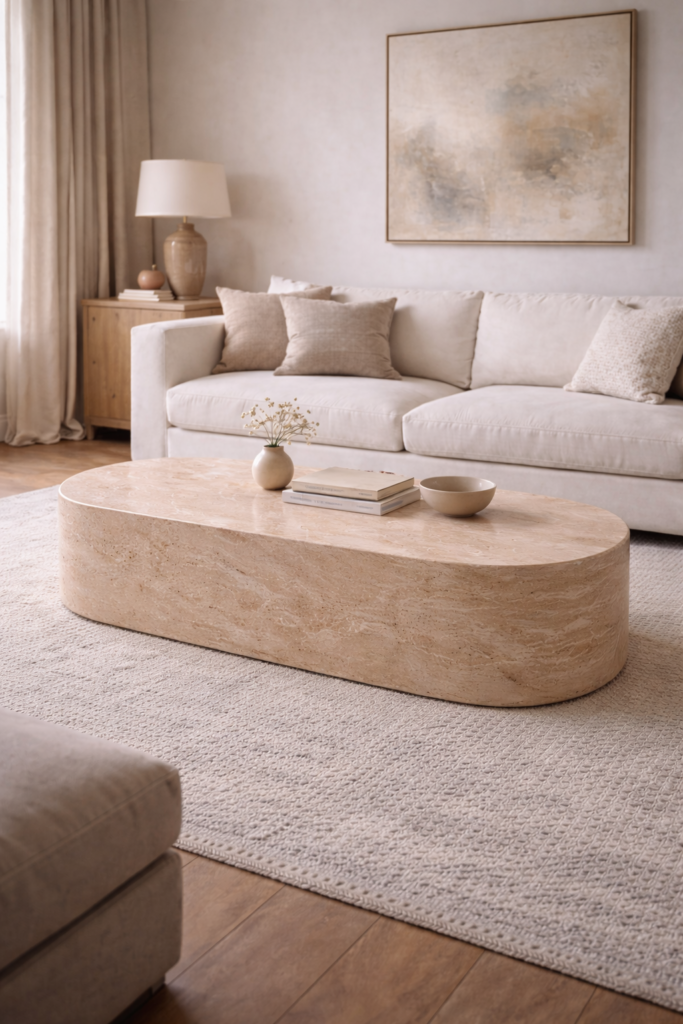
Ovals offer more surface area than rounds while keeping soft edges. They suit longer sofas and rectangular rooms where a round might look too small.
Pill-shaped travertine tables are popular now, balancing current trends with timelessness.
Rectangular Tables
The traditional choice. Rectangular shapes suit most sofa setups and provide plenty of surface area.
Proportion matters. A coffee table usually works best at roughly two-thirds the length of the sofa. Too small looks lost. Too large takes over.
Organic and Sculptural Shapes
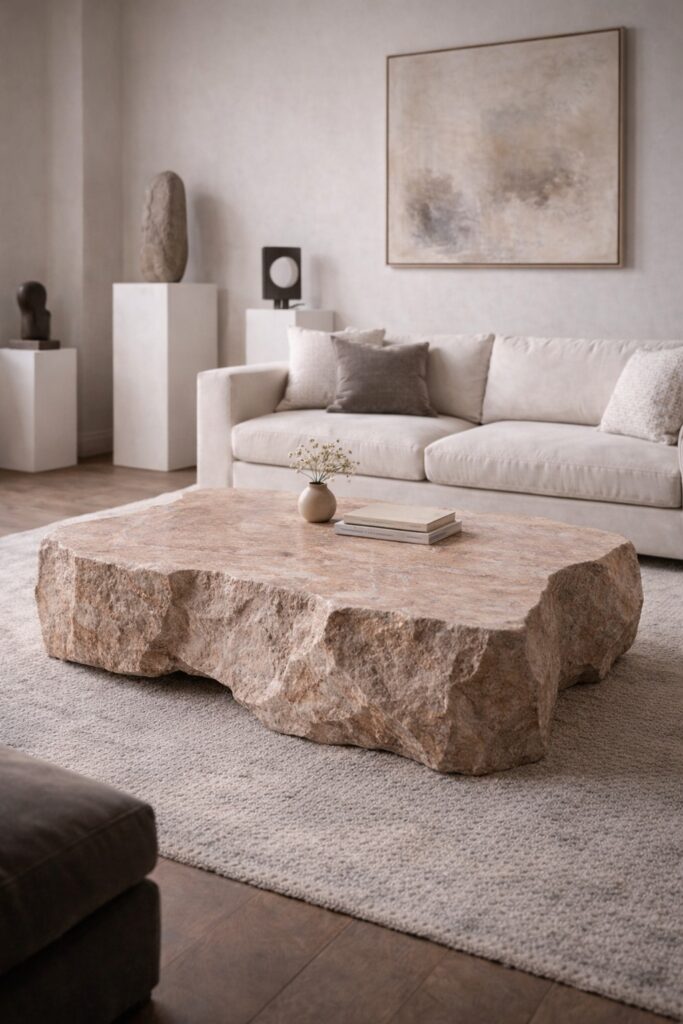
Freeform and kidney shapes bring an artistic quality. The stone becomes sculpture rather than pure function.
These need confident placement. They suit contemporary and eclectic interiors where conventional furniture might feel too safe.
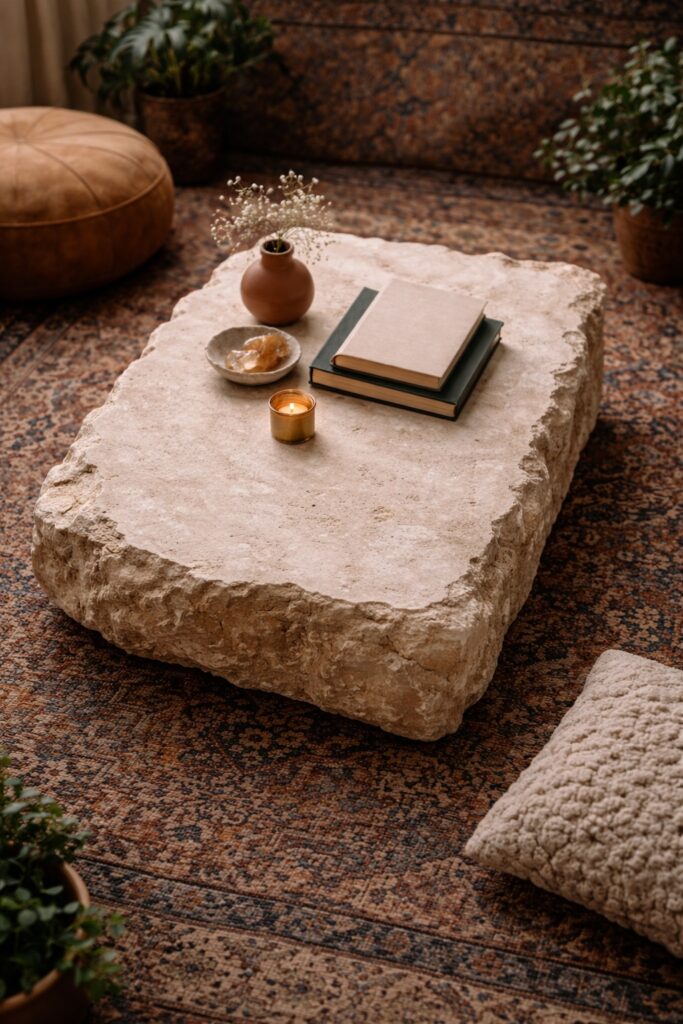
Low Profile Tables
Tables under 35cm create a more grounded feel. They suit floor-level living and Japanese-influenced interiors.
The trade-off is practicality. Lower means more bending to reach things.
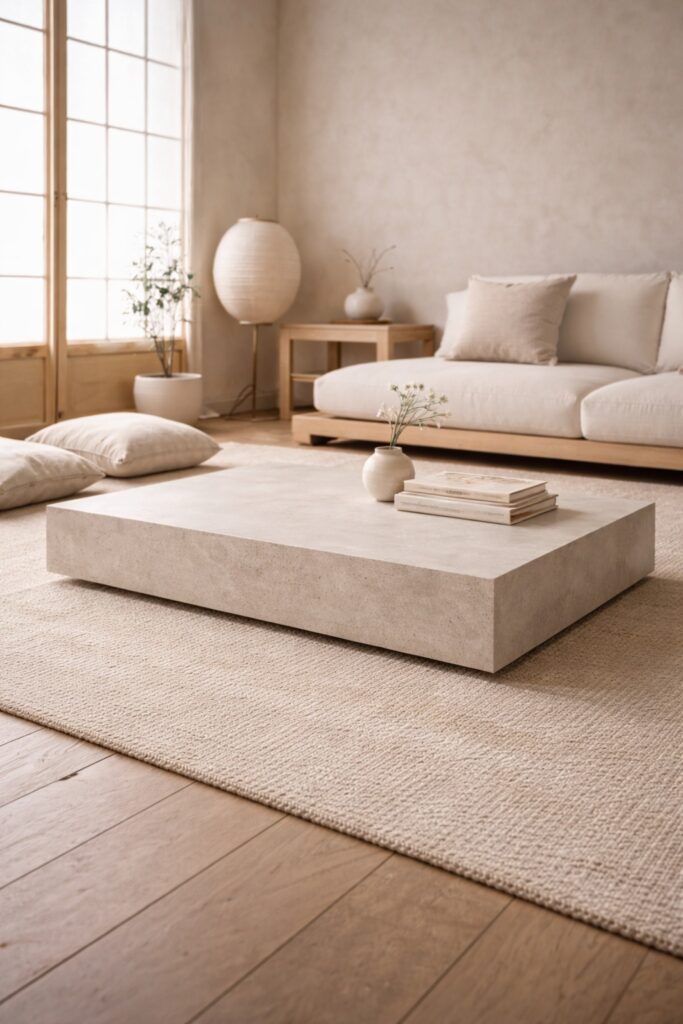
Base Designs
Not all stone tables are solid blocks.
Solid plinth bases create the chunky, monolithic look. Maximum presence, maximum weight.
Pedestal bases use a single central support, creating openness underneath and a lighter feel.
Stone tops on wooden legs combine stone’s surface appeal with reduced visual weight. Oak and walnut soften the stone.
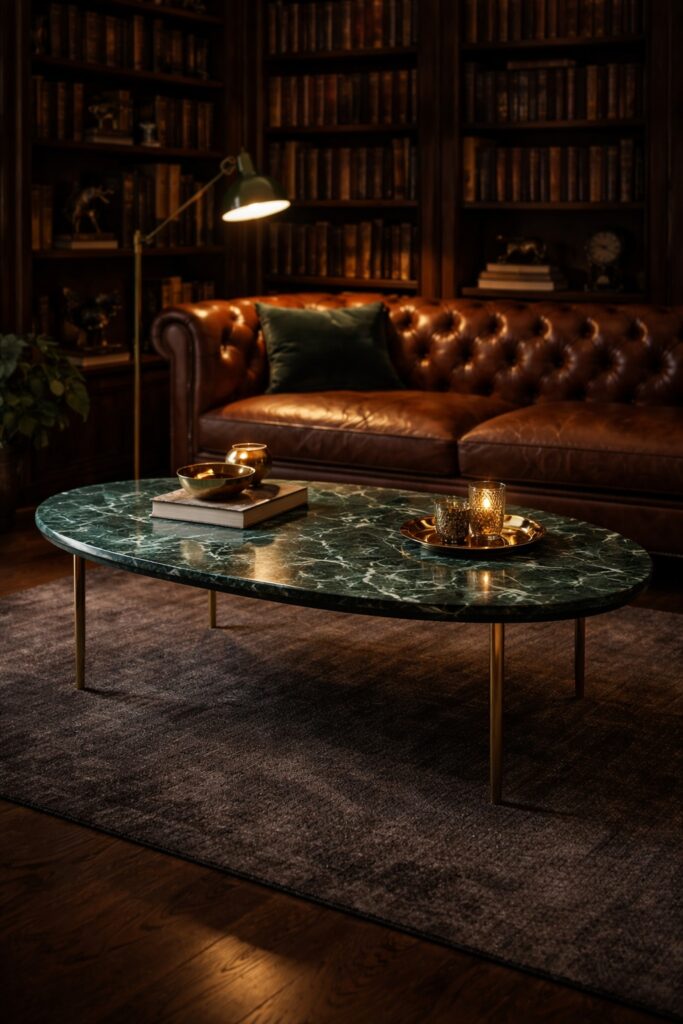
Stone tops on metal legs (brass, black steel, chrome) create a lighter, more refined look than solid plinths.
Waterfall designs wrap stone continuously over edges and down the sides for seamless transitions.
Base choice affects practical weight too. A stone top on slim metal legs weighs less and moves more easily than a solid plinth.
Edge Treatments
Square edges give a clean, architectural look but can be sharp for homes with young children.
Bullnose or rounded edges soften the profile and reduce injury risk.
Live edge or chipped finishes show natural stone character with rough, organic borders.
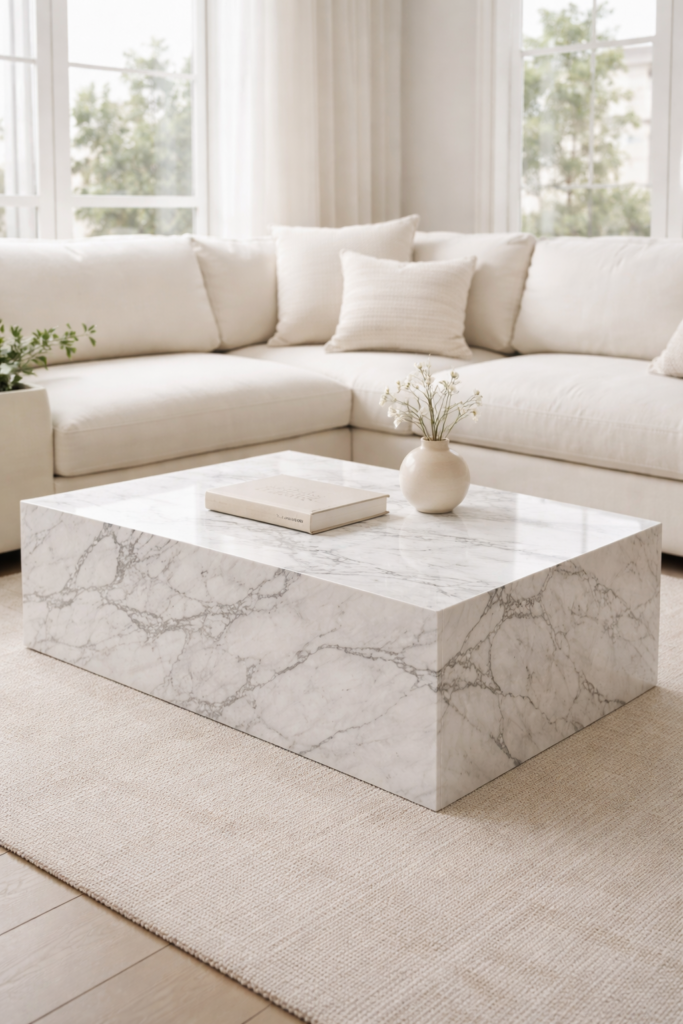
Small Living Rooms
Stone can work in small spaces with the right choices.
Choose lighter colours. Pale marble or cream travertine feels less heavy than dark stones.
Consider round or oval shapes. No corners makes the room feel more open.
Pick slim legs over solid plinths. The same surface area looks lighter.
Scale down. A smaller table in proportion to seating feels balanced rather than overpowering.
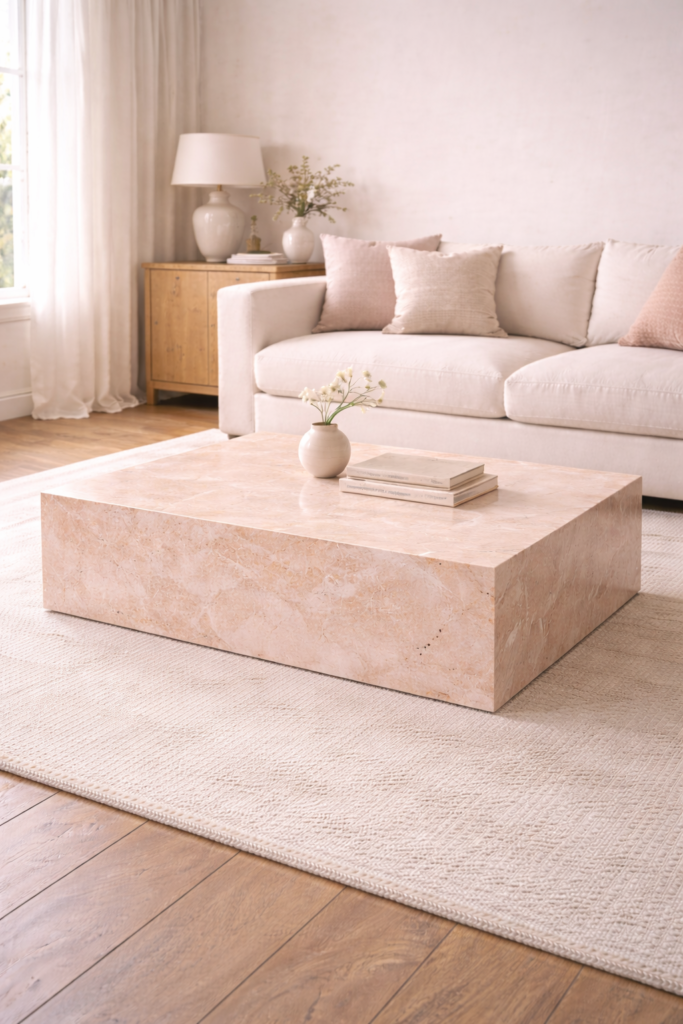
What Interior Styles Suit Stone?
Stone works across more styles than its minimal-modern reputation suggests.
Modern, Minimal and Industrial
Clean-lined marble or concrete in white, grey, or black suits pared-back spaces. Concrete works especially well in lofts and conversions. Let the material do the work.
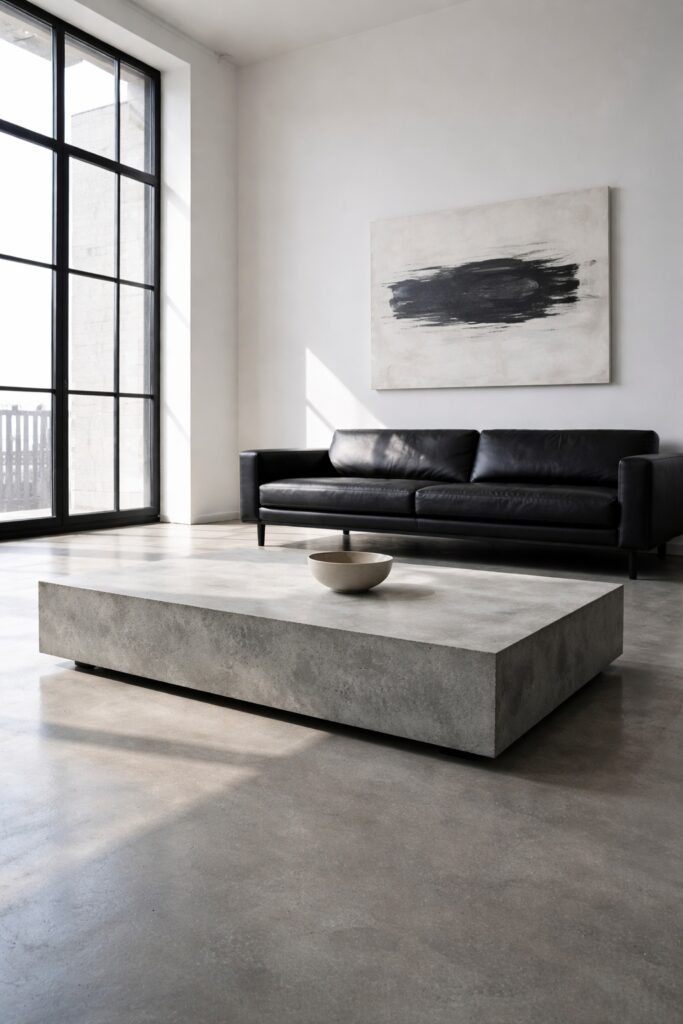
Warm, Cozy and Layered
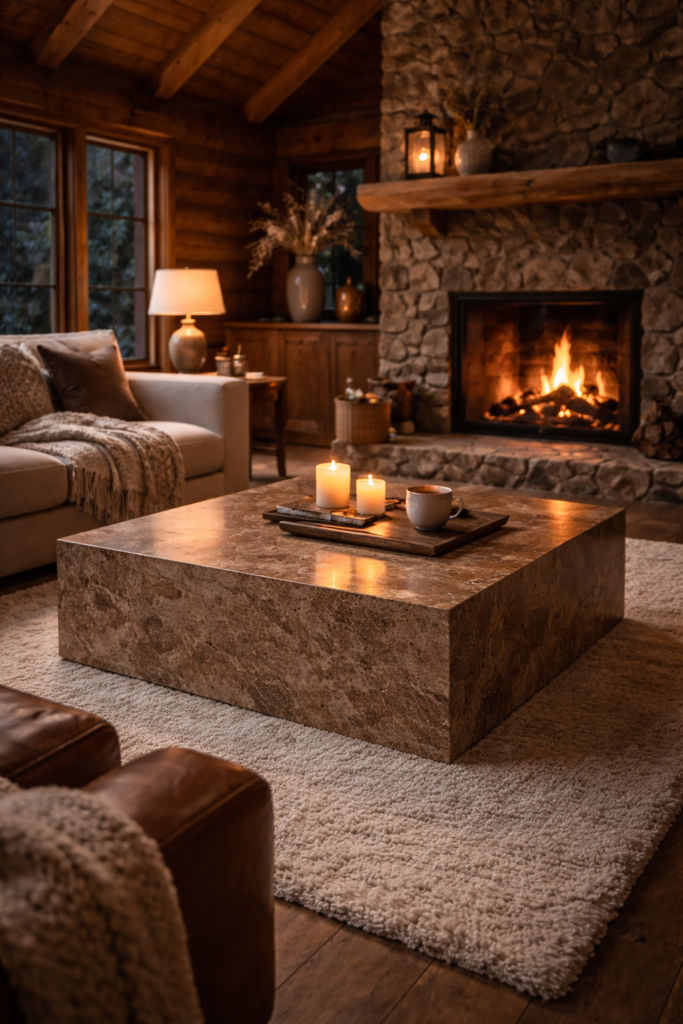
Travertine and limestone suit rooms built around comfort, with layered textiles, warm lighting, and soft furnishings. Stone adds permanence without coldness. Choose warmer tones that complement rather than contrast.
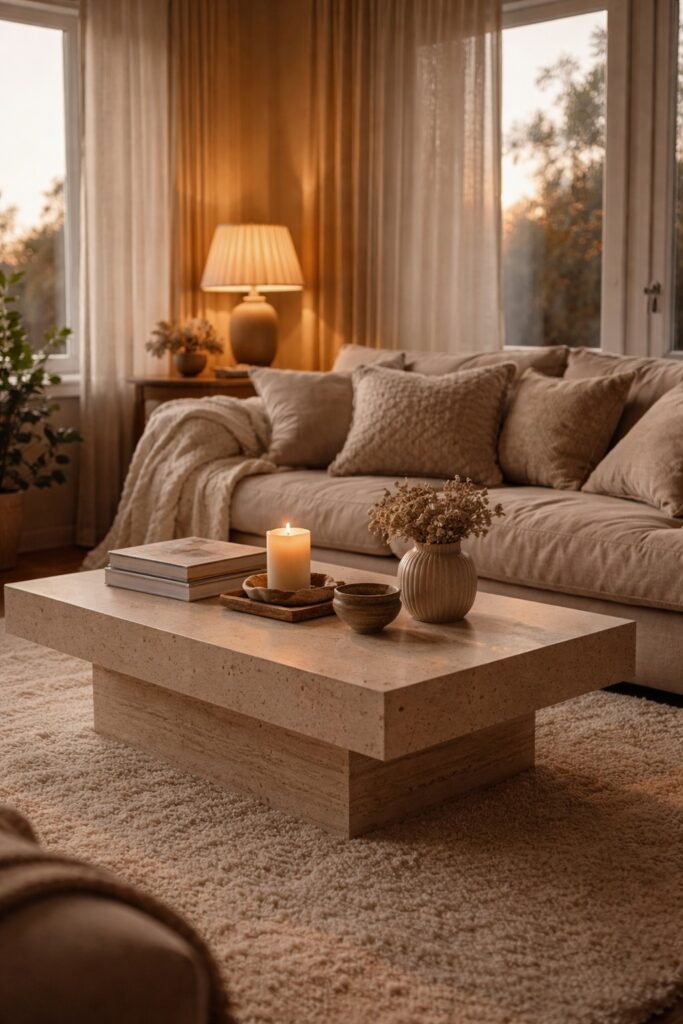
Traditional and Classic
Marble has been used in formal rooms for centuries. A marble table with brass or ornate base suits traditional interiors with antiques and rich fabrics. Green marble has strong history in English and European rooms.
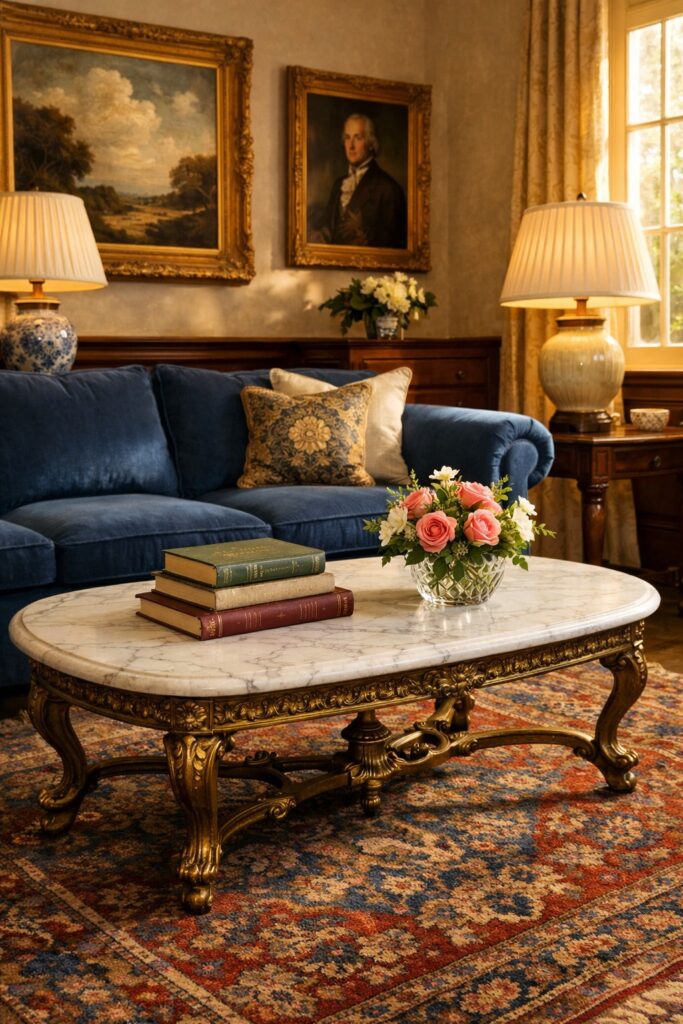
Bohemian and Eclectic
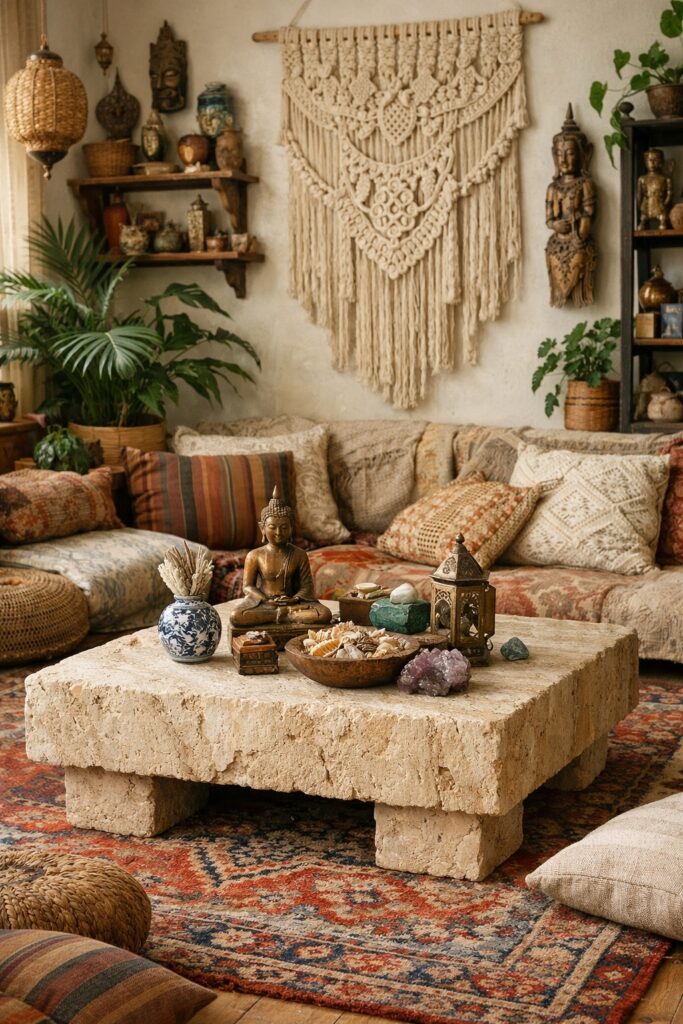
Chunky travertine or raw concrete grounds collected, layered spaces. Stone’s weight balances rooms full of pattern and objects. The table becomes the calm centre.
Bold and Colourful
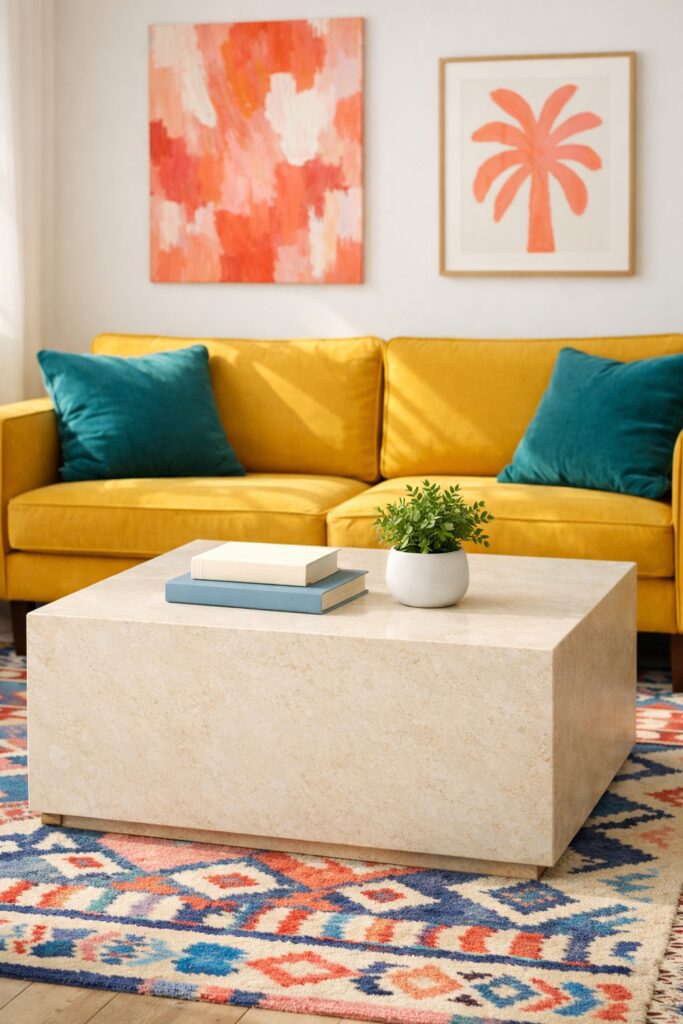
Neutral stone (white marble, cream travertine) provides visual rest in colourful rooms. Or coloured stone like green marble or pink travertine can be the bold element itself.
What to Look for When Buying
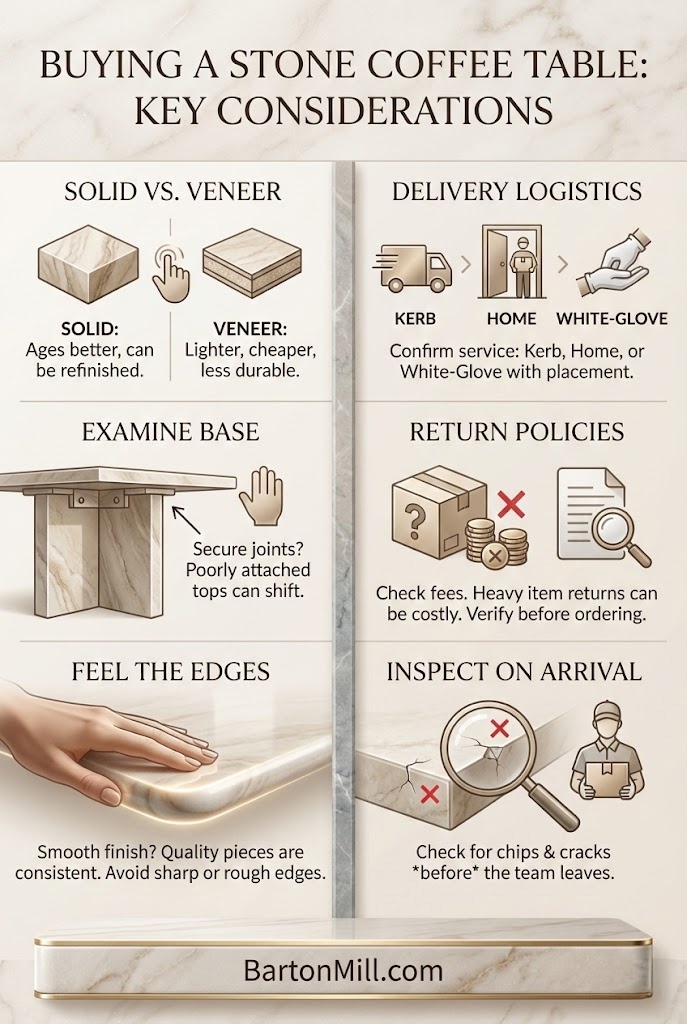
Check whether you are buying solid stone or veneer. Solid ages better and can be refinished. Veneer is lighter and cheaper but less durable.
Examine base construction. Poorly attached tops can shift over time.
Feel the edges. Quality pieces have smooth, consistent finishing.
Sort delivery logistics. Confirm whether it is kerb delivery, into your home, or white-glove with placement.
Understand return policies. Some retailers charge big fees for heavy item returns. Check before ordering.
Inspect before accepting. Check for chips and cracks before the delivery team leaves.
Final Thoughts
A stone coffee table asks you to think about materials, maintenance, and longevity in ways that disposable furniture does not. That consideration is part of the point.
The right table becomes a permanent part of your home. Something that develops character over years. Something that anchors your room rather than just filling space.
Choose the stone that suits your taste and your honesty about maintenance. Choose the shape that fits your room. Accept the weight of bringing natural stone into your home.
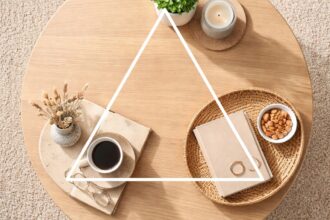
Once your table is in place, styling comes next. For guidance on arranging objects, see our guide to how to style a coffee table using the rule of three.
Frequently Asked Questions
What is the best stone for a coffee table?
There is no single best. It depends on what matters to you. Marble offers classic beauty but needs maintenance. Travertine provides warmth with slightly better stain forgiveness. Granite is most durable but less fashionable. Choose based on your priorities and how you actually live.
Are stone coffee tables hard to maintain?
They need more care than wood or metal tables. Porous stones require annual sealing and quick attention to spills. If you can follow these routines, maintenance is not difficult. If wiping up spills immediately sounds annoying, stone may not be for you.
How heavy is a stone coffee table?
Most full-size tables weigh between 50 and 100kg, sometimes more. Smaller tables and those with slim legs weigh less. Always check the weight before ordering and plan how you will get it into your home.
Will a stone coffee table damage my floor?
The weight can dent soft flooring or compress rugs over time. Use felt pads under solid bases and consider how your specific floor type handles heavy loads.
Can stone coffee tables chip or crack?
Yes. Edges can chip if hit by hard objects. Cracks can develop from impacts or, rarely, thermal shock. Handle with care during delivery and use. Damage happens but is not inevitable with reasonable care.
Is a stone coffee table worth the money?
If you value longevity, natural materials, and furniture with presence, yes. If you prefer low maintenance, flexibility, and lower cost, other materials probably suit you better. It comes down to what you want from your furniture.