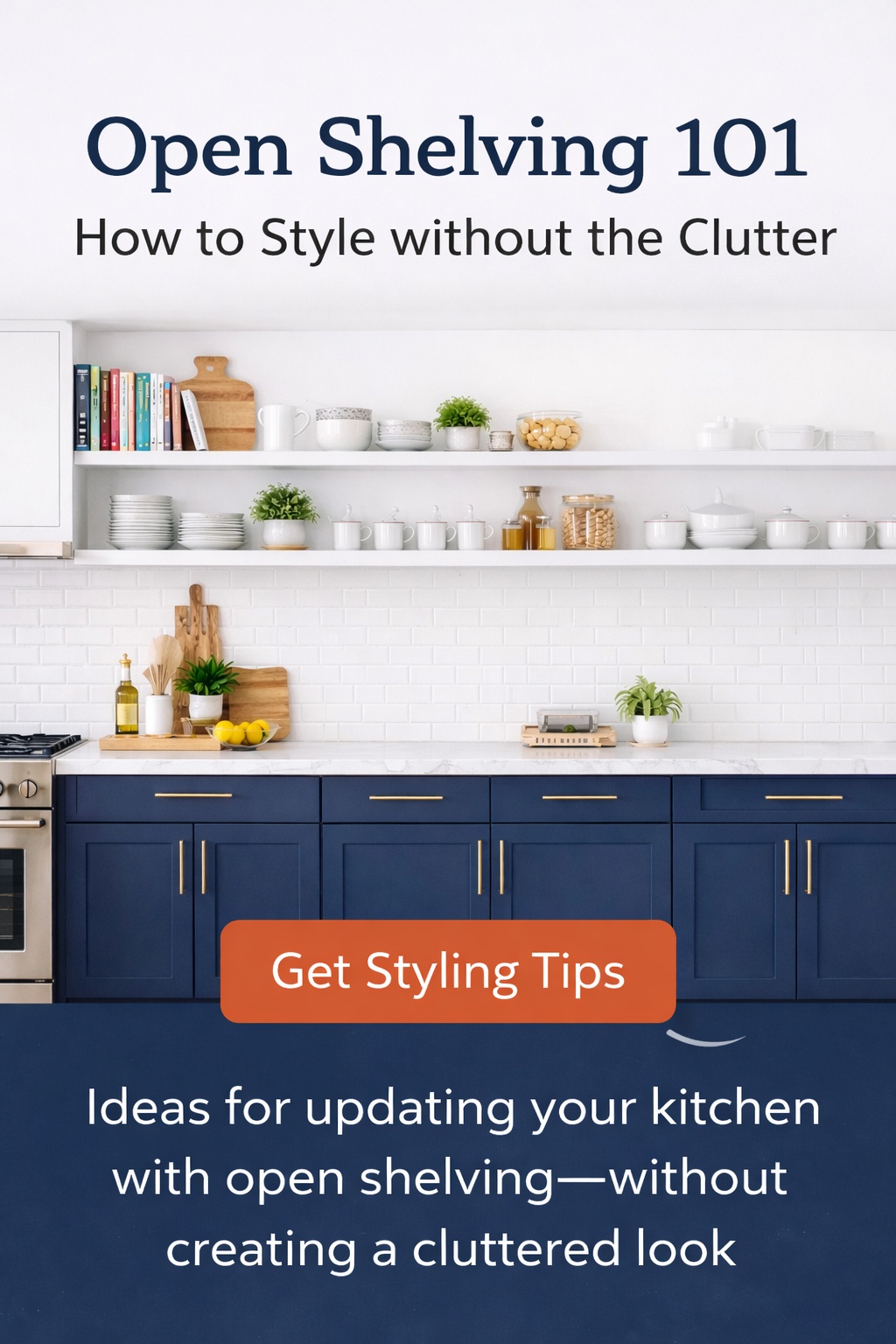
Open shelving kitchen design focuses on creating accessible storage that feels balanced, intentional, and free from visual clutter.
The key to successful open shelving is not filling space, but editing with intention. Open shelves should balance function with visual calm, especially in kitchens and dining areas where everyday use meets design.
This guide explains how to approach open shelving thoughtfully, how to style it without clutter, and how to make it work as part of a cohesive kitchen and dining design.
Table of Contents
What Is Open Shelving in Kitchens and Dining Areas?
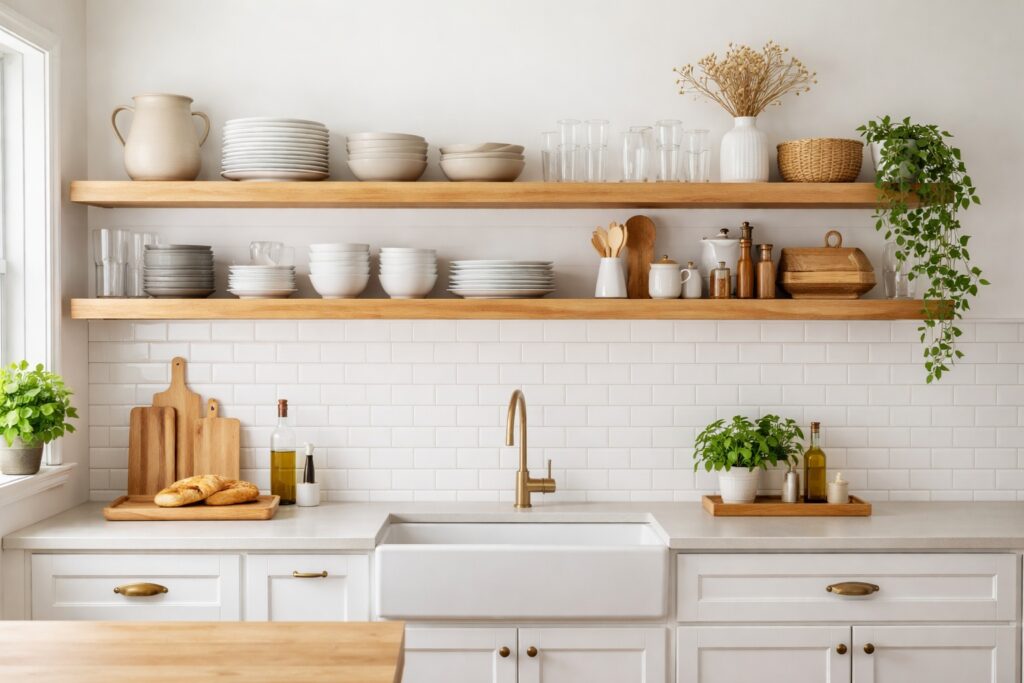
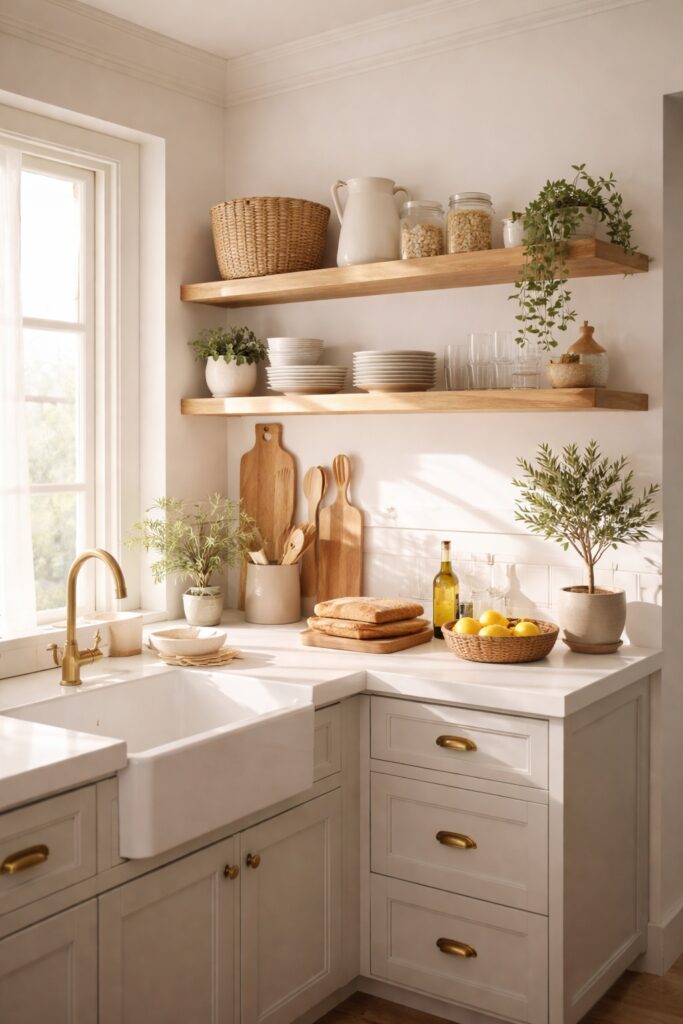
Open shelving refers to shelves without cabinet doors, typically installed on walls in kitchens, pantries, or dining spaces. They may replace upper cabinets entirely or be used alongside them.
Unlike closed storage, open shelves put everything on display. This makes styling more important, but it also encourages simplicity and organisation.
In kitchens and dining rooms, open shelving works best when it:
- Supports daily routines
- Reduces visual heaviness
- Highlights carefully chosen items
- Feels intentional rather than overfilled
Open shelving is not about storage volume. It is about accessible, visible storage.
Why Open Shelving Works So Well in Kitchens
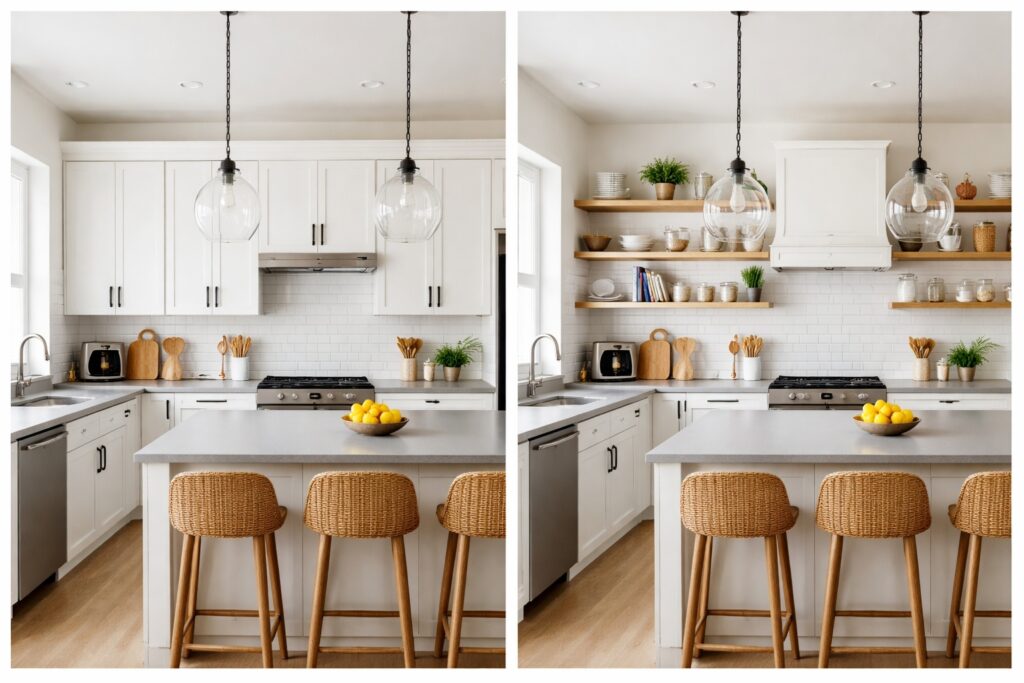
Kitchens are busy, functional spaces. Heavy upper cabinets can sometimes make them feel closed in, especially in smaller rooms or older homes.
Open shelving helps by:
- Allowing light to move freely
- Breaking up solid wall runs
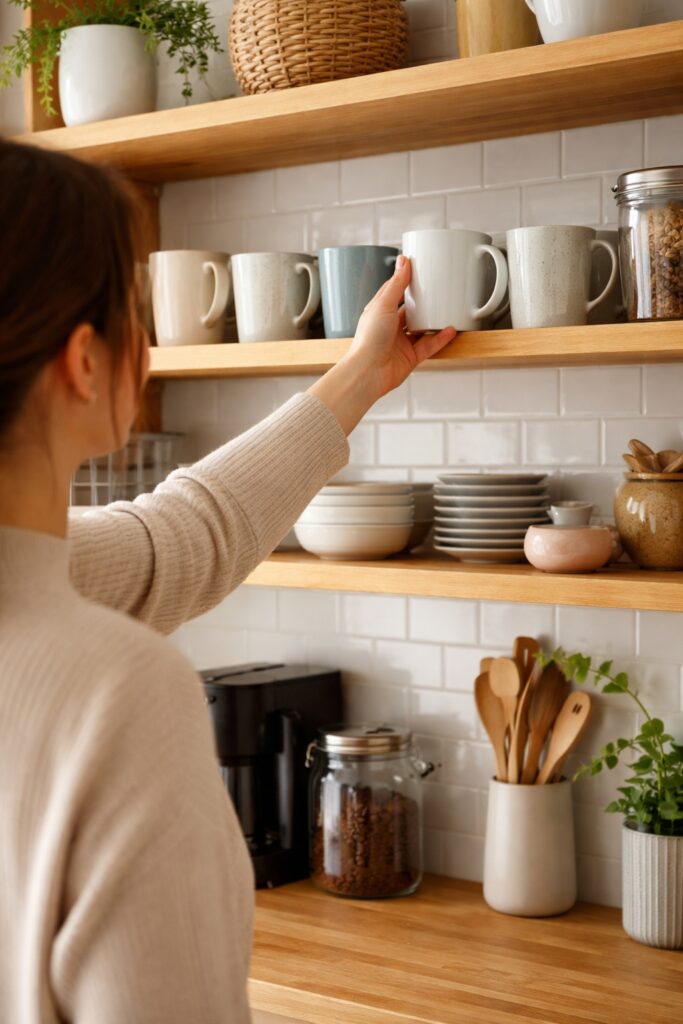
- Making frequently used items easier to access
- Creating opportunities for personal style
In dining areas, open shelves can soften the transition between kitchen and living spaces, especially in open-plan layouts.
Setting Realistic Expectations Before You Start
Open shelving is not for everything.
Items stored on open shelves will:
- Be visible at all times
- Require regular tidying
- Need thoughtful grouping
If you prefer to store large quantities of mismatched items or rarely used kitchenware, open shelving should be limited to specific zones rather than replacing all cabinets.
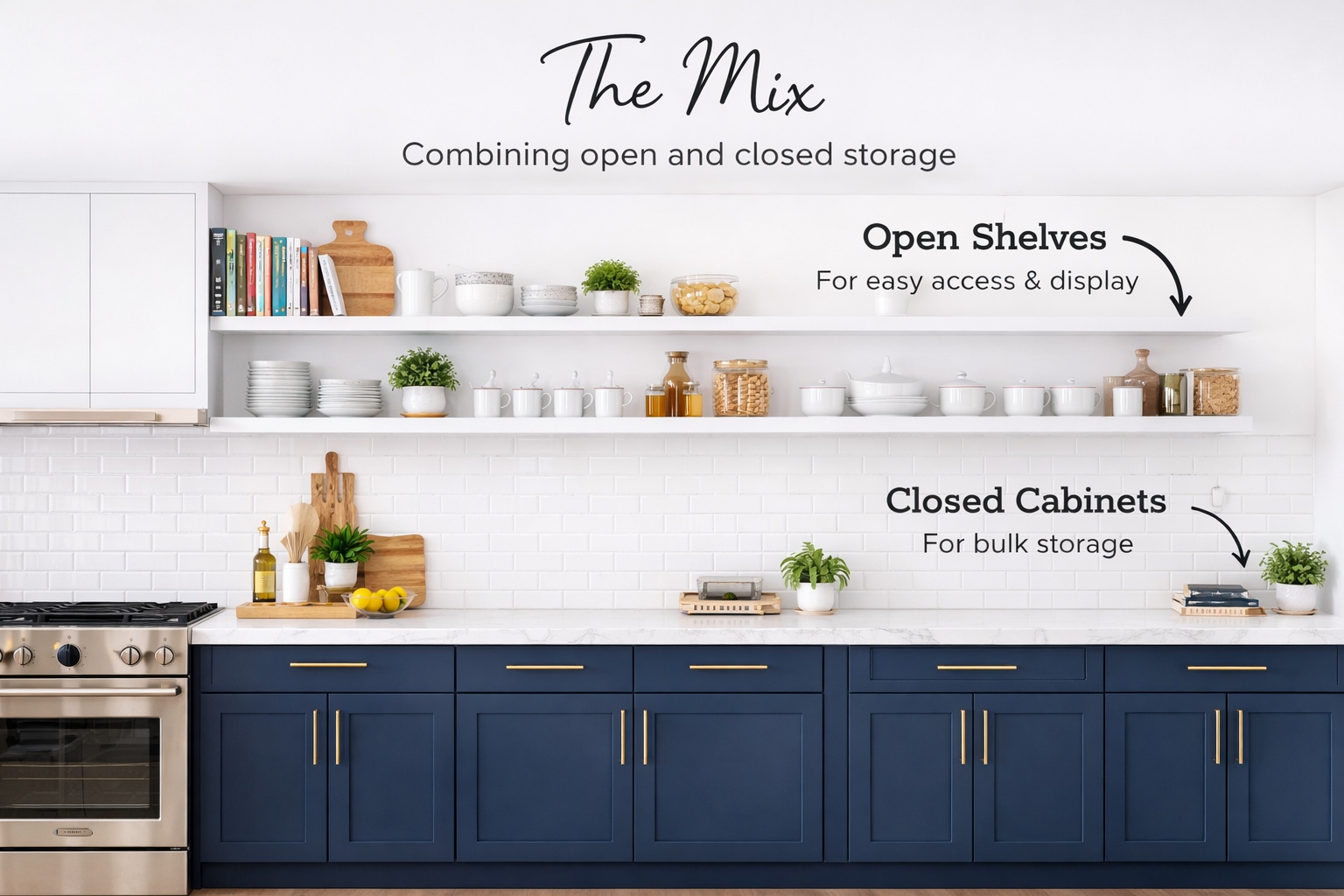
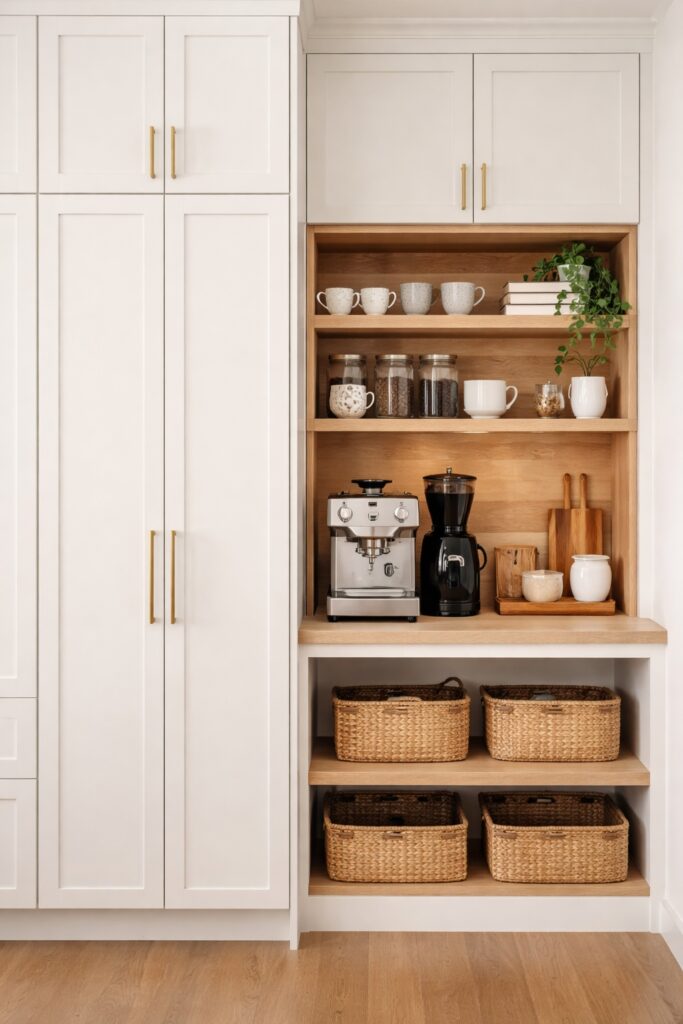
The most successful kitchens combine open and closed storage, using each where it works best.
Decide What Belongs on Open Shelves
The most important step is deciding what earns a place on display.
Good candidates for open shelving include:
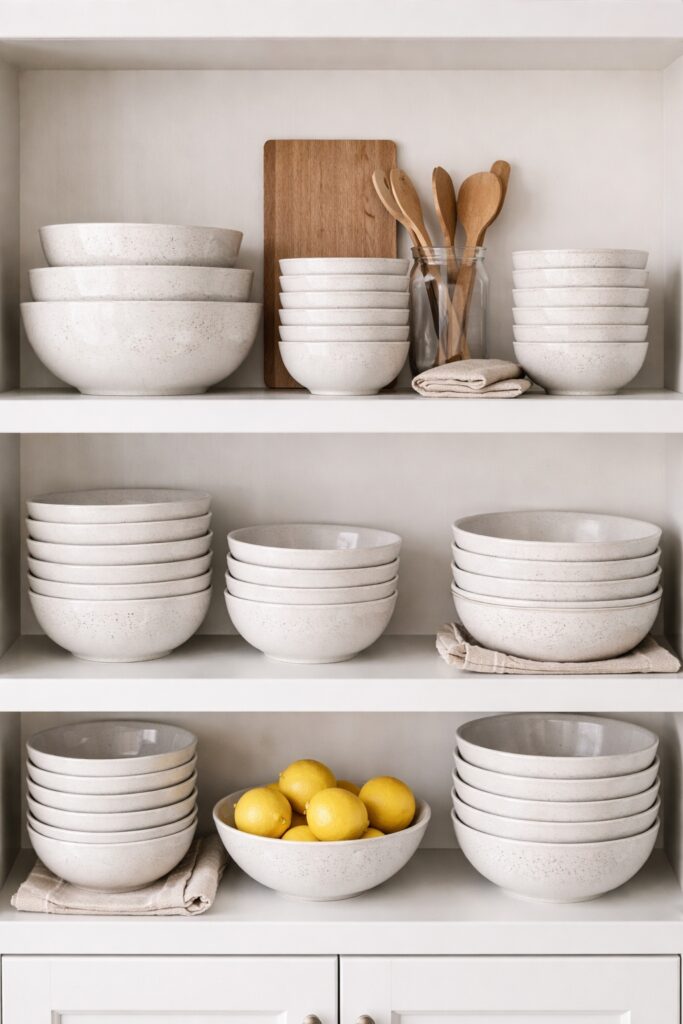
- Everyday plates and bowls
- Glassware
- Mugs
- Cookbooks
- Simple serving pieces
Items best kept behind closed doors include:
- Bulk food packaging
- Small appliances
- Cleaning supplies
- Mismatched or rarely used items
Open shelves work best when they hold items you use often and enjoy seeing.
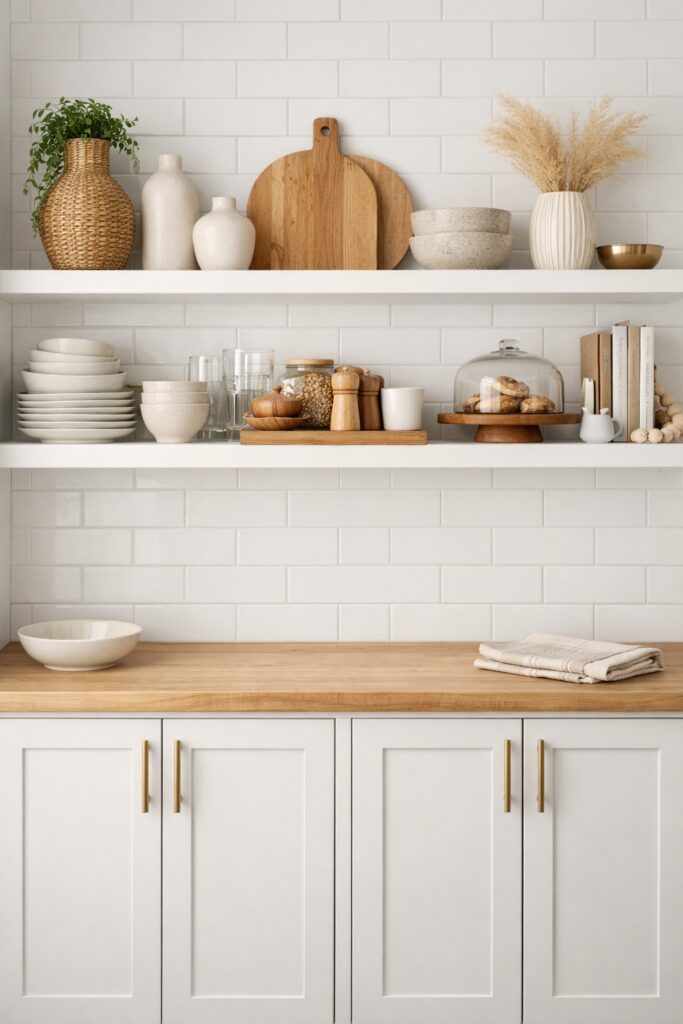
How to Style Open Shelving in the Kitchen Without Clutter
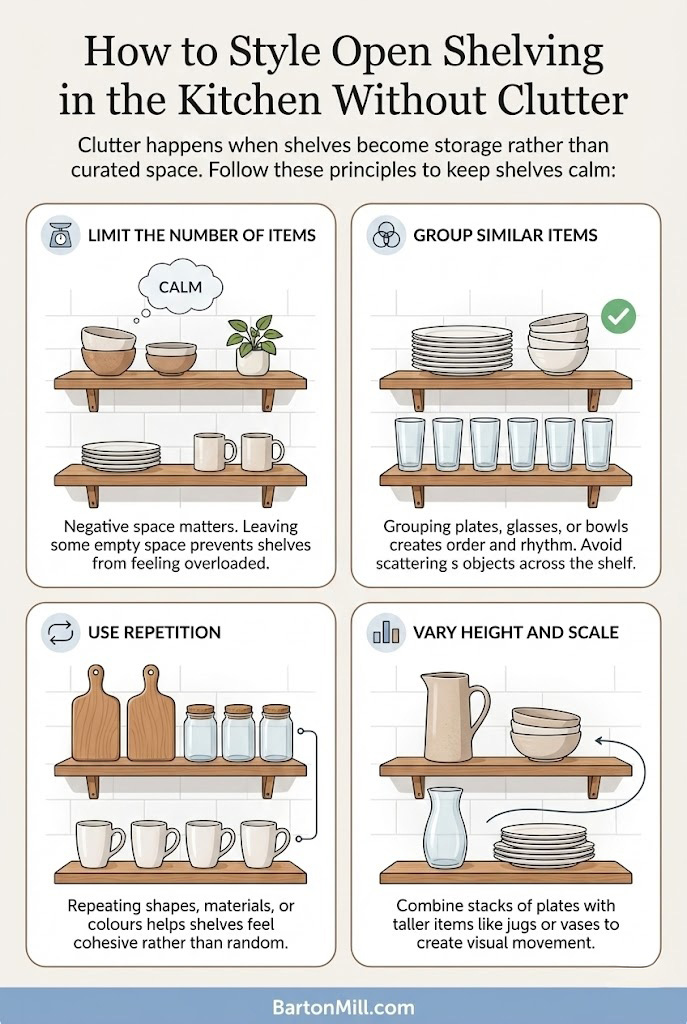
Clutter happens when shelves become storage rather than curated space.
Follow these principles to keep shelves calm:
Limit the Number of Items
Negative space matters. Leaving some empty space prevents shelves from feeling overloaded.
Group Similar Items
Grouping plates, glasses, or bowls creates order and rhythm. Avoid scattering unrelated objects across the shelf.
Use Repetition
Repeating shapes, materials, or colours helps shelves feel cohesive rather than random.
Vary Height and Scale
Combine stacks of plates with taller items like jugs or vases to create visual movement.
The Role of Colour and Material
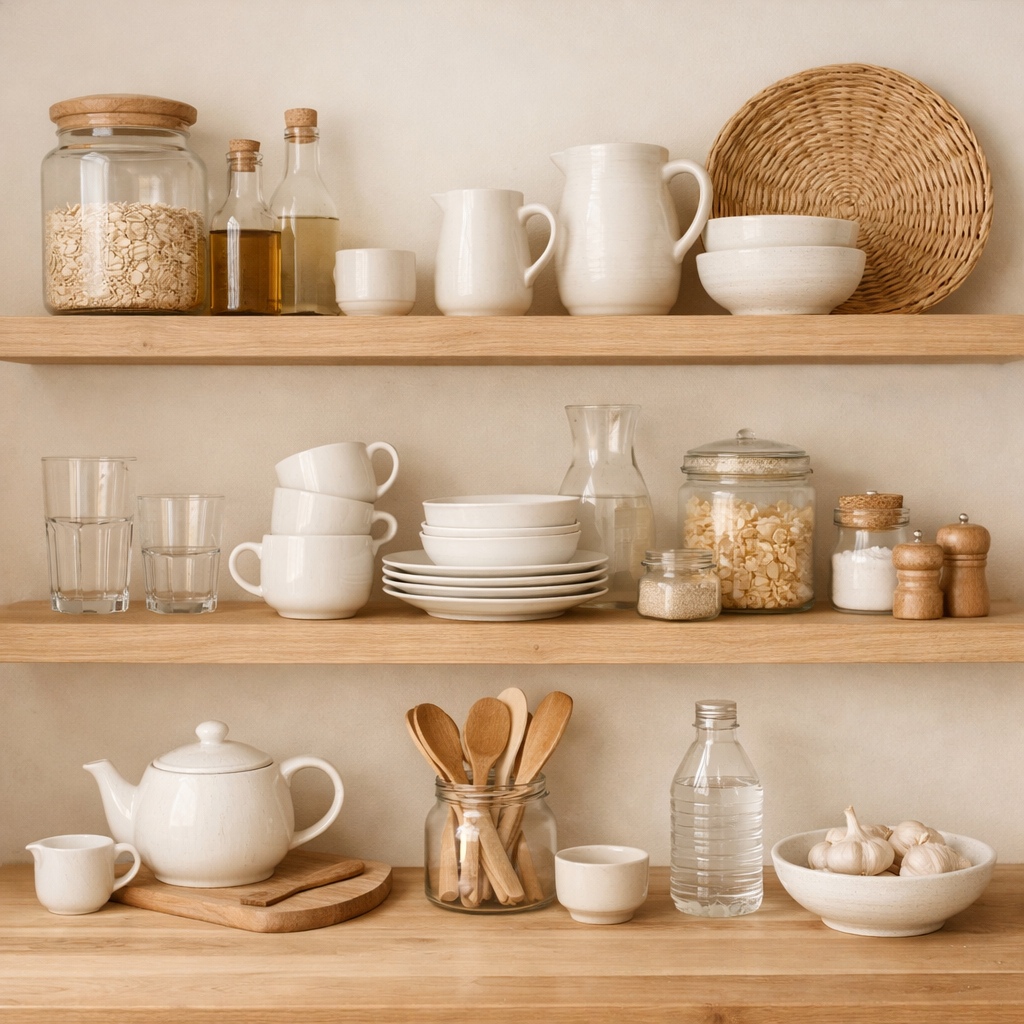
Open shelving highlights colour and texture more than closed cabinets.
Neutral palettes tend to work best, especially in kitchens where visual calm matters. White, cream, soft grey, stoneware, wood, and glass are all reliable choices.
If you introduce colour, do it intentionally:
- One or two accent tones
- Repeated subtly
- Balanced with neutrals
Natural materials such as wood, ceramic, and glass help shelves feel warm rather than stark.
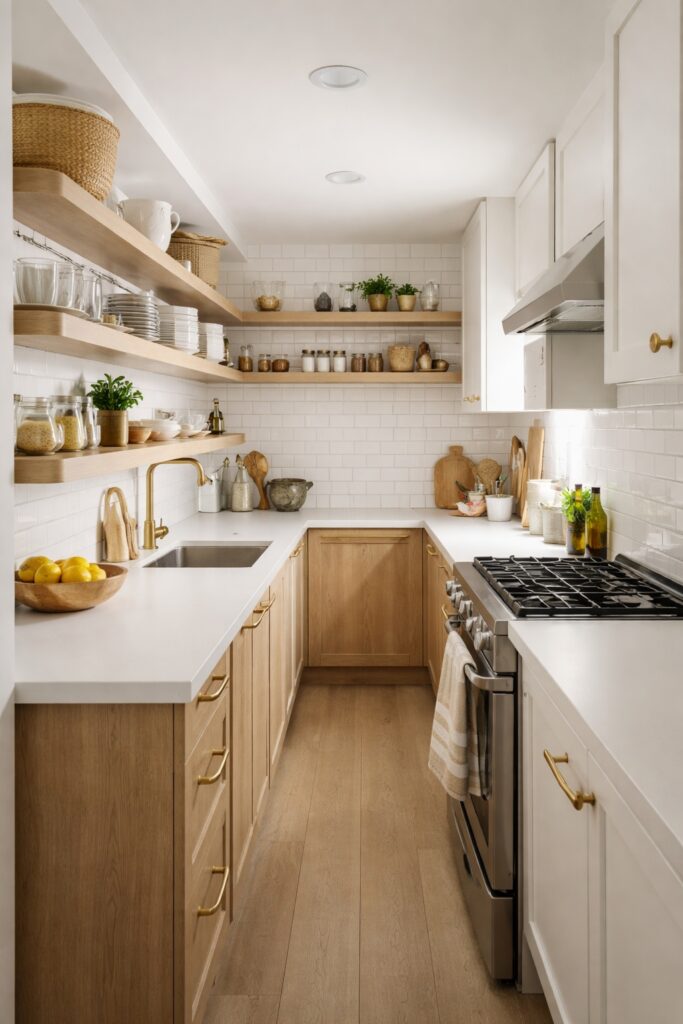
Using Open Shelving in Small Kitchens
In small kitchens, open shelving can make a space feel larger, but only if styled carefully.
Keep shelves shallow to avoid crowding. Limit the number of shelves per wall. Use lighter finishes to reflect light.
Avoid filling every available wall with shelves. One or two well-styled runs often look better than complete coverage.
Open shelving should relieve visual pressure, not add to it.
Styling Open Shelving in Dining Spaces
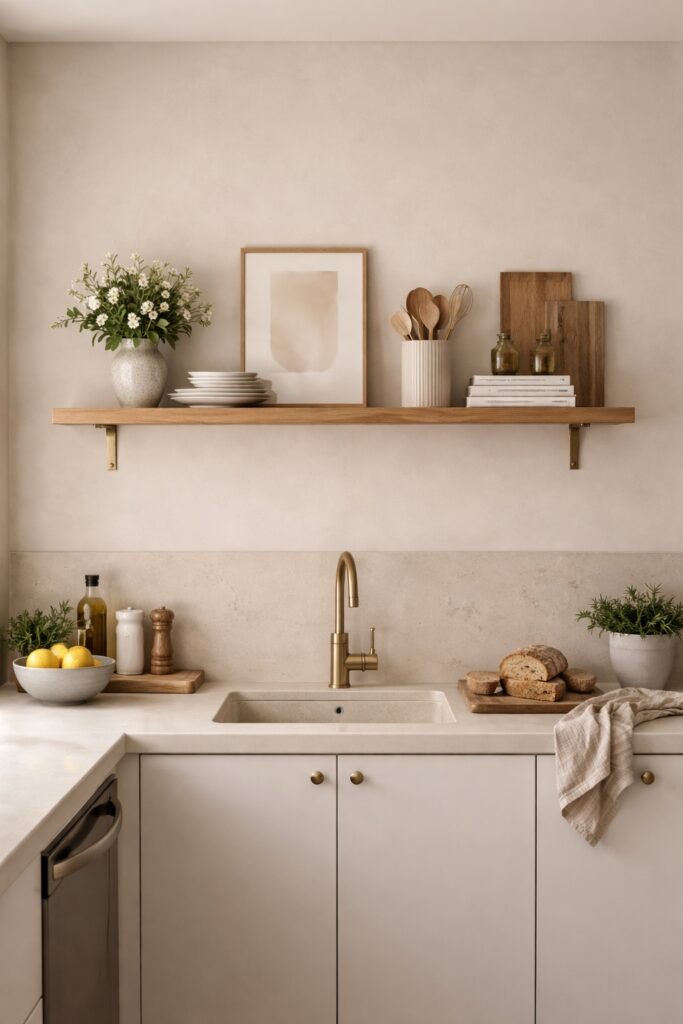
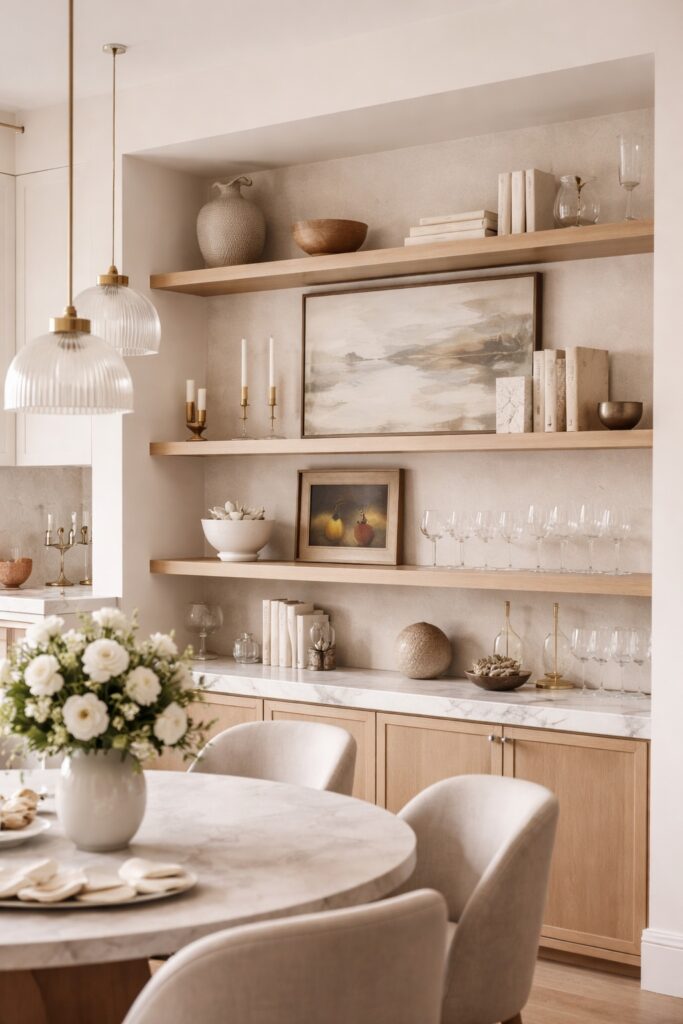
In dining rooms or dining areas, open shelving can feel more decorative than practical.
Good items to display include:
- Serving dishes
- Glassware
- Decorative bowls
- Cookbooks
- Simple art or framed prints
Here, shelves can lean more towards styling than storage, helping the dining area feel connected to the kitchen without becoming utilitarian.
Mixing Open Shelving With Cabinets
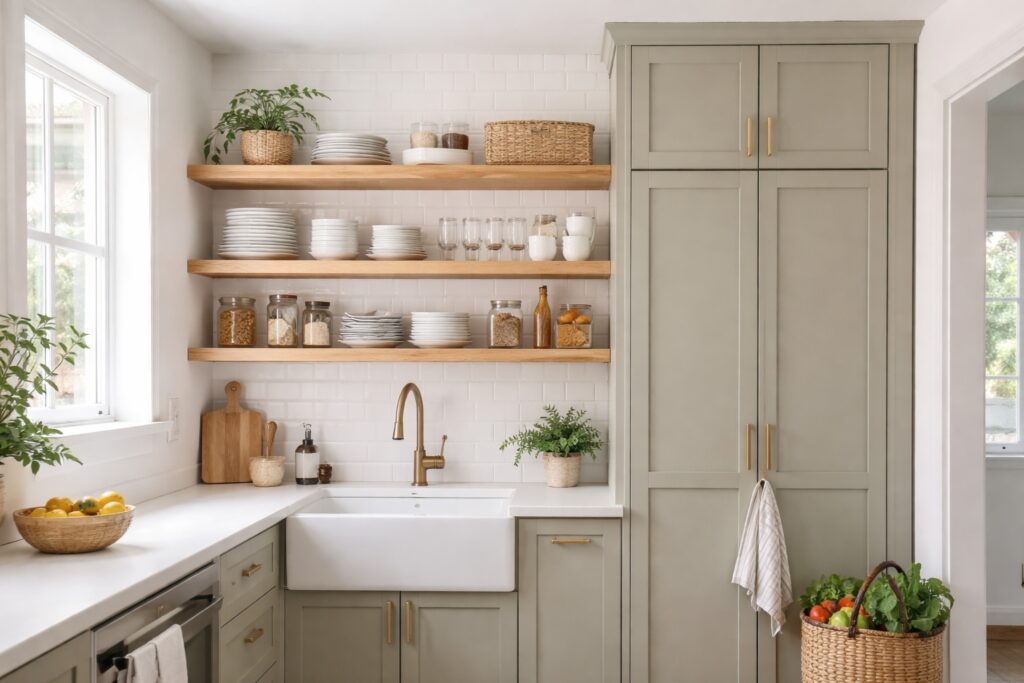
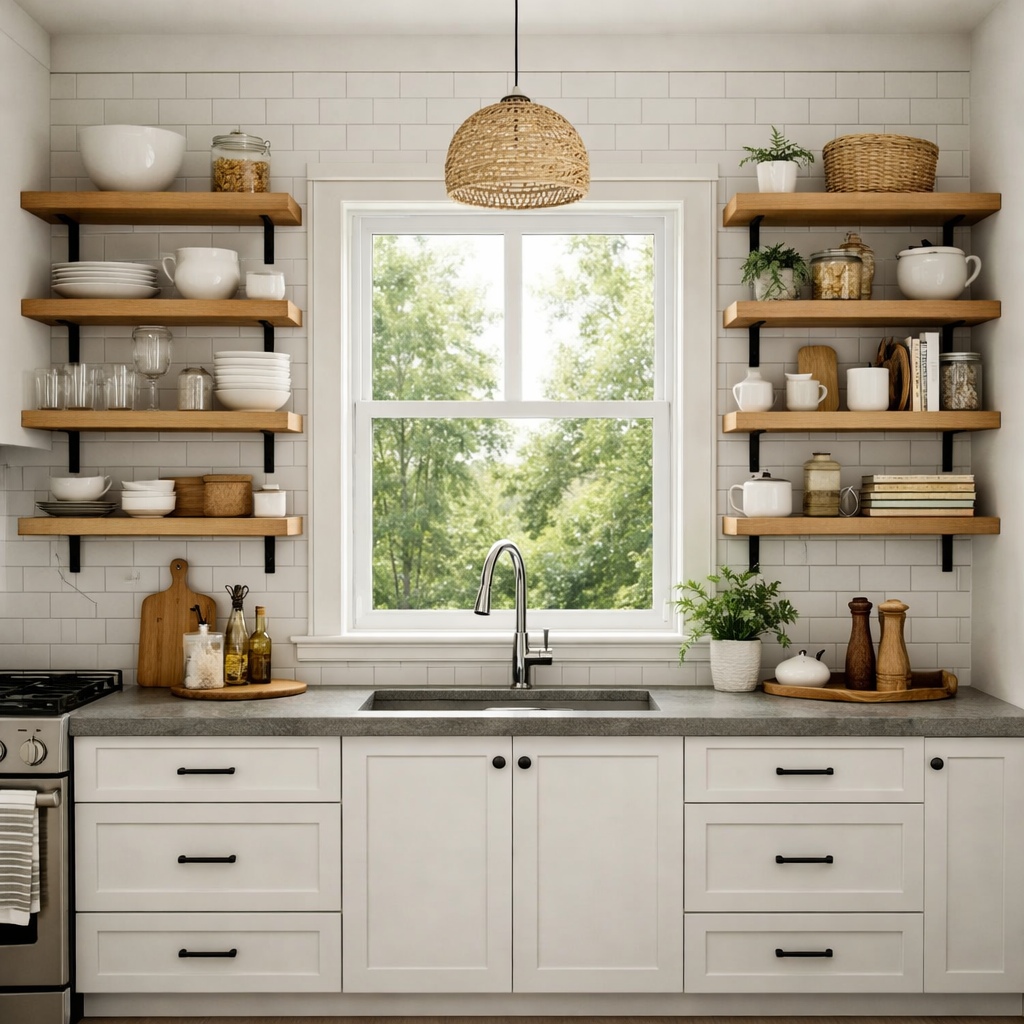
The most practical kitchens use a mix of storage types.
Open shelving works well:
- Above sinks
- Around windows
- In small runs between cabinets
Closed cabinets work better for:
- Bulk storage
- Tall items
- Visual containment
This balance keeps kitchens functional while still benefiting from the openness shelves provide.
Common Open Shelving Mistakes to Avoid
Some mistakes can quickly undermine the look.
Common issues include:
- Overloading shelves
- Using too many small items
- Mixing too many colours or materials
- Treating shelves as overflow storage
- Ignoring practicality
If shelves start to feel busy, remove items before adding anything new.
Maintenance: Keeping Open Shelves Looking Good
Open shelving requires light, regular maintenance.
A quick weekly reset is often enough. Return items to their designated places and remove anything that no longer belongs.
Dusting is minimal in kitchens where shelves are used frequently, but dining room shelves may need occasional attention.
The more intentional the styling, the easier maintenance becomes.
Open Shelving and Kitchen Design Principles
Open shelving works best when aligned with wider kitchen design principles:
- Balance
- Proportion
- Function
- Restraint
These same principles are central to well-designed kitchens and dining spaces overall. Shelves should support the room, not dominate it.
Kitchen design guidance from the National Kitchen & Bath Association emphasises balance between open and closed storage.
What is open shelving in a kitchen?
Open shelving in a kitchen uses shelves instead of closed cabinets to store and display everyday items.
Is open shelving practical for kitchens?
Yes, when used for frequently used items and combined with closed storage for bulkier items.
Does open shelving make kitchens look messy?
It can if overfilled. Limiting items and using repetition helps keep shelves looking organised.
Should open shelves match kitchen cabinets?
They do not need to match exactly, but they should complement the overall colour and material palette.
Is open shelving good for small kitchens?
Yes, when used sparingly. It can make small kitchens feel more open and less visually heavy.
Final Thoughts: Less Really Is More
Open shelving is not about showing everything you own. It is about editing down to what matters most.
When shelves are styled with intention, they bring openness, warmth, and personality to kitchens and dining spaces. When they are overfilled, they create stress and visual noise.
Approached thoughtfully, open shelving becomes a design feature that supports both function and calm.