How to style a coffee table is a common question when creating a balanced, comfortable living room, and the rule of three provides a simple, reliable framework.
The key to styling a coffee table well is not filling space, but creating balance. One of the simplest and most effective principles for achieving this is the rule of three. Used by interior designers across styles and eras, this approach helps surfaces feel intentional, calm, and visually pleasing.
In living rooms, where balance, proportion, and comfort matter most, coffee table styling plays a key role in how modern and traditional elements work together.
This guide explains what the rule of three is, why it works, and how to apply it to your coffee table in a way that feels natural rather than staged.
What Is the Rule of Three in Interior Styling?
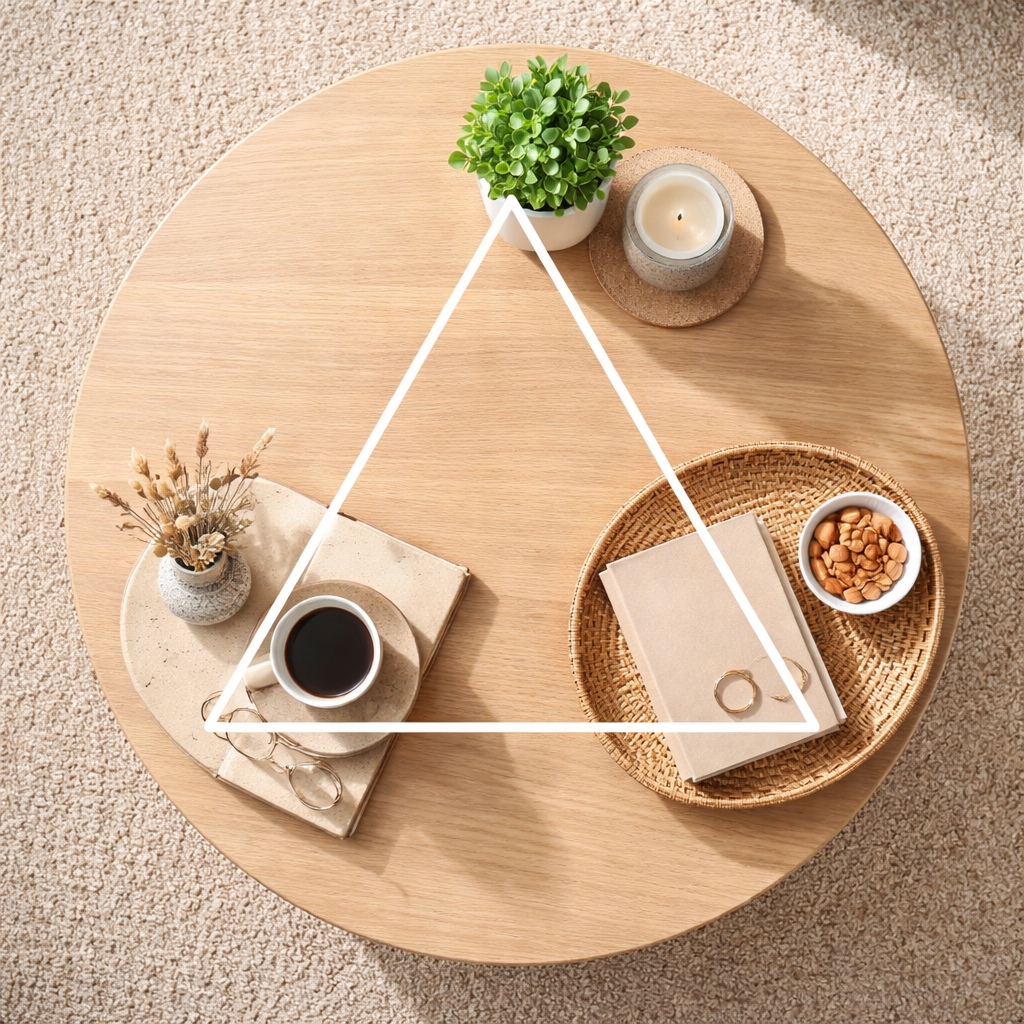
The rule of three is a design principle based on how the human eye processes visual information. Groups of three tend to feel more balanced and engaging than even numbered arrangements.
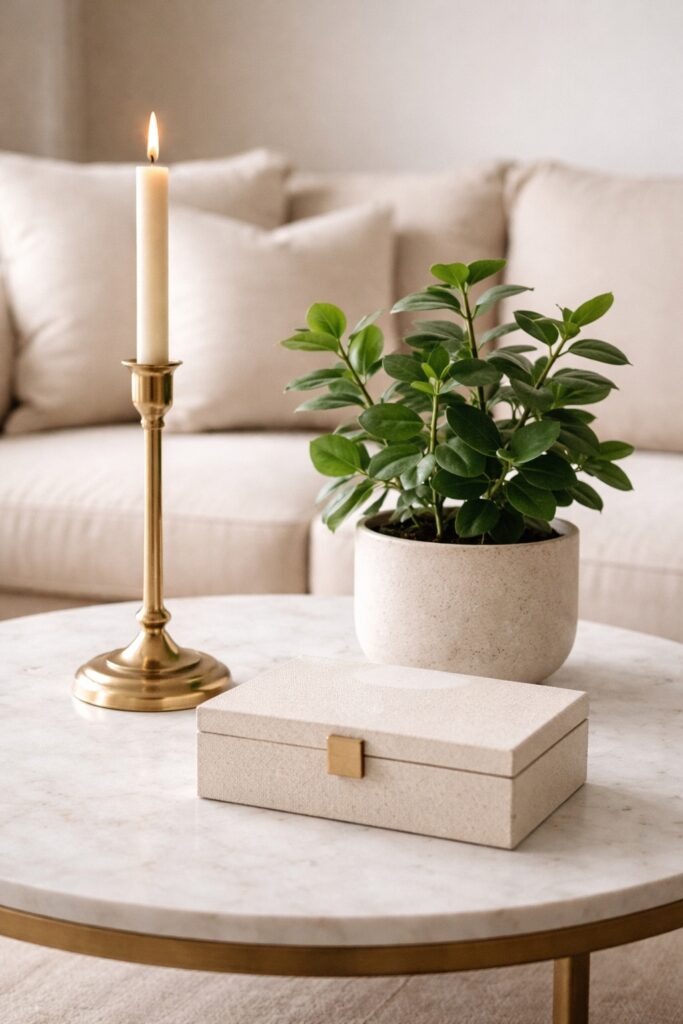
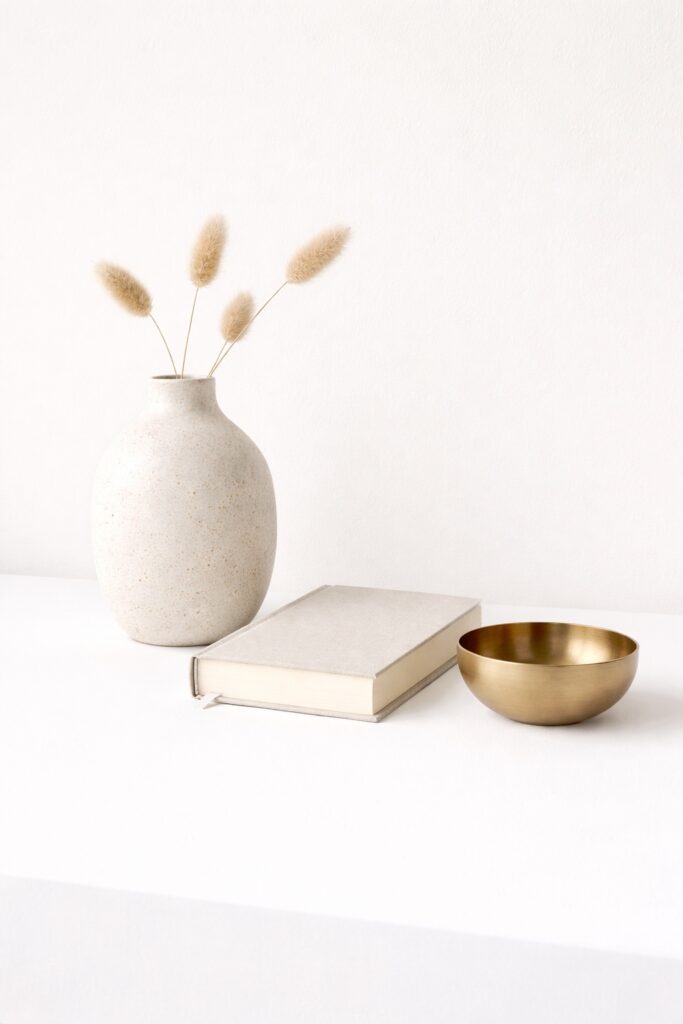
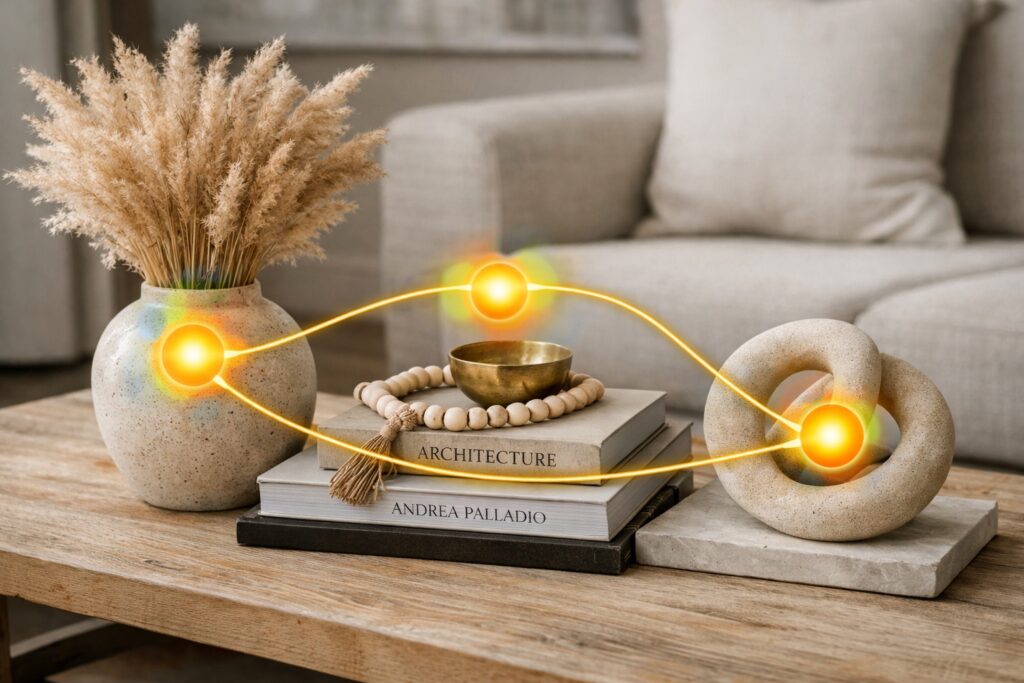
In interiors, this usually means styling a surface with three key elements, rather than two or four. The objects do not need to match, but they should relate to each other through size, texture, or purpose.
On a coffee table, the rule of three creates:
- Visual interest without clutter
- A sense of rhythm and flow
- Clear focal points
- Space for the eye to rest
It is not a strict rule, but a guideline that works remarkably well in most homes.
Why the Rule of Three Works So Well on Coffee Tables
Coffee tables are viewed from multiple angles and distances. They sit low, are often central, and are used daily. Because of this, styling needs to be simple, flexible, and functional.
Understanding how to style a coffee table using simple principles helps living rooms feel intentional rather than cluttered.
The rule of three works well here because it:
- Prevents overcrowding
- Keeps items easy to move when the table is in use
- Allows contrast without chaos
- Creates structure without symmetry
Three items give enough variety to feel styled, while still leaving negative space.
Choosing the Right Three Items
The success of the rule of three depends less on the number and more on what those three items are.
A well balanced trio usually includes:
- Something tall
- Something medium height
- Something low or flat
This variation creates movement and avoids a flat, static look.
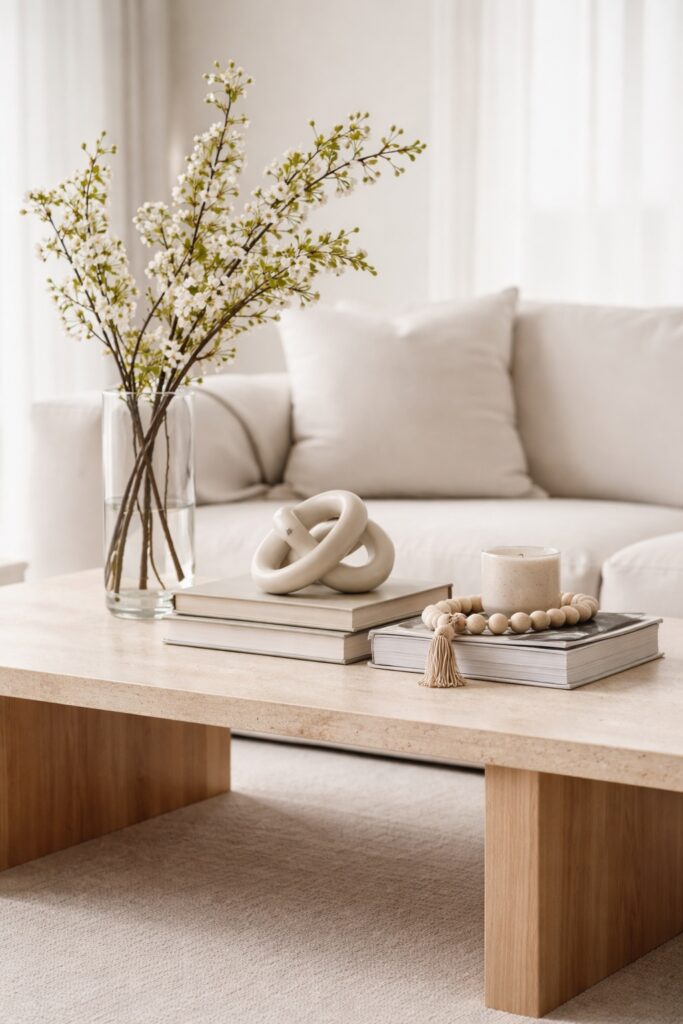
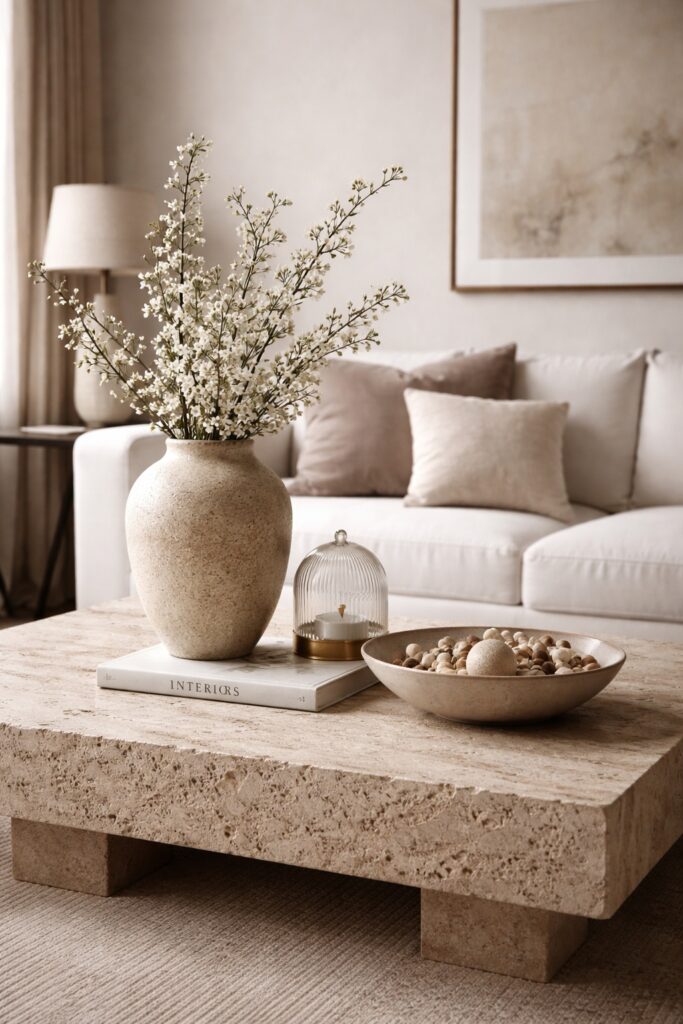
Common coffee table combinations include:
- A book or small stack of books (low)
- A decorative object or bowl (medium)
- A vase, plant, or candle (tall)
The objects do not need to be decorative only. Practical items can be part of the arrangement as long as they are chosen thoughtfully.
Mixing Shapes for Visual Balance
Shape matters just as much as size.
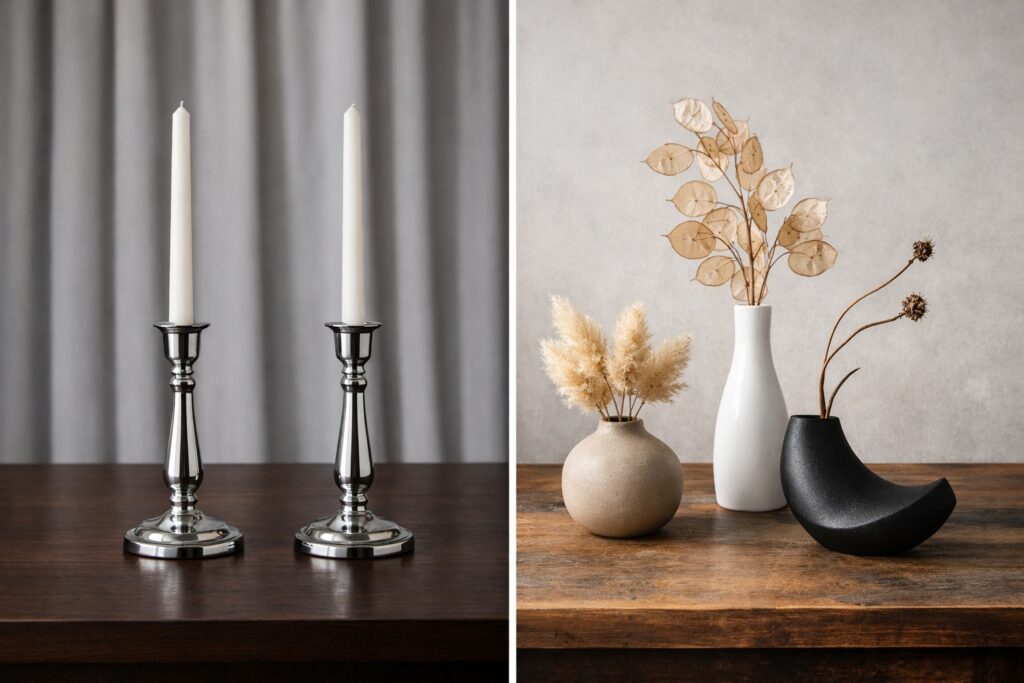
If all three items are round, the arrangement can feel soft but undefined. If they are all angular, it may feel rigid. Mixing shapes adds quiet interest.
A strong trio often includes:
- One rounded shape
- One angular or linear shape
- One organic or irregular shape
For example, a round bowl, a rectangular book, and a softly shaped ceramic vase work well together because each brings a different visual quality.
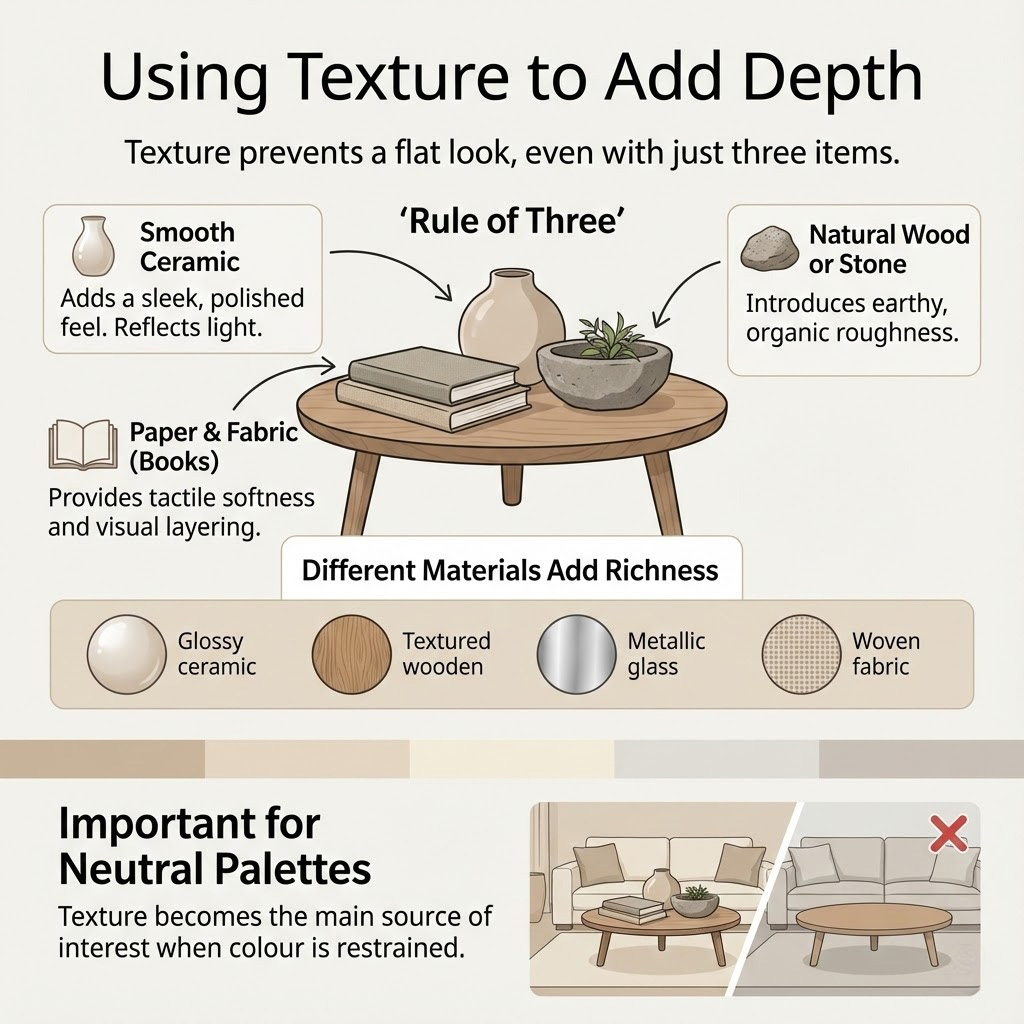
Using Texture to Add Depth
Texture prevents a coffee table from feeling flat or overly styled.
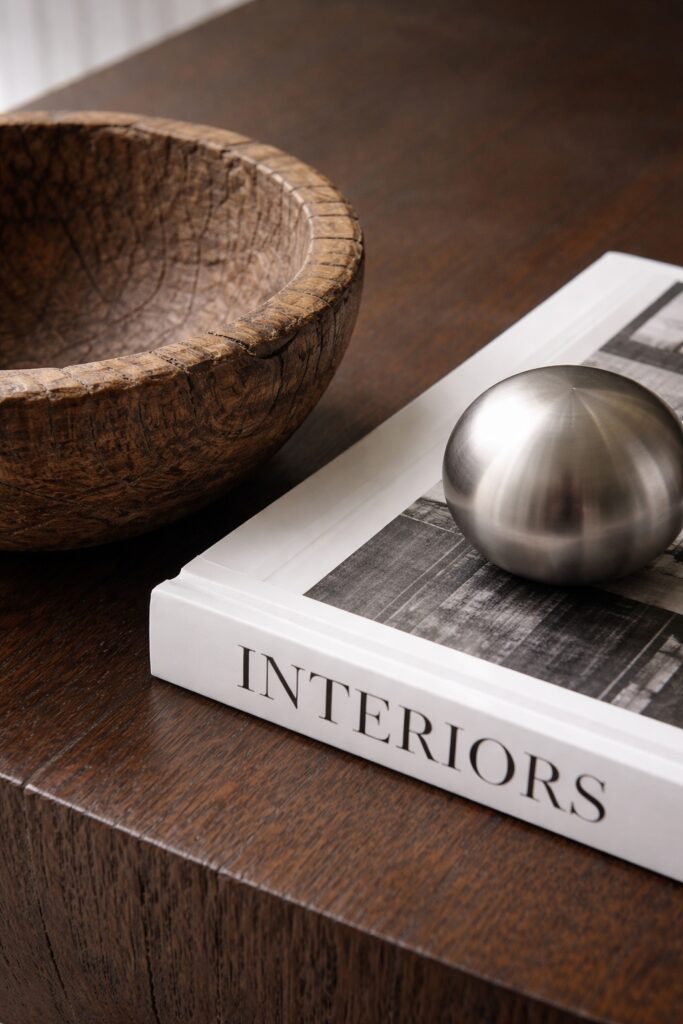
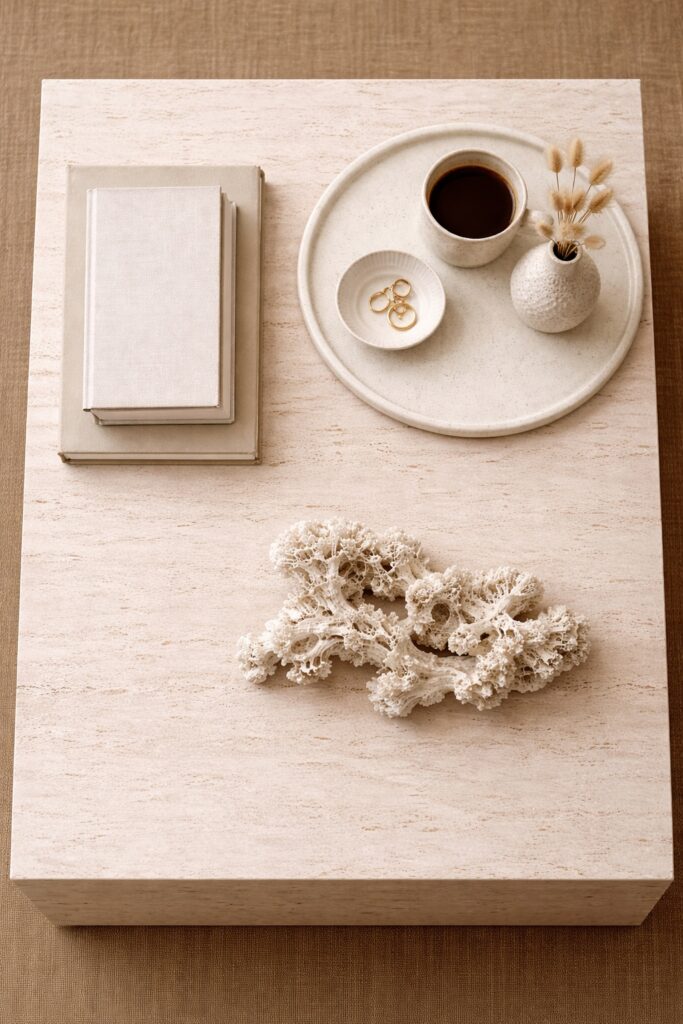
Even with just three items, using different materials adds richness:
- Smooth ceramic
- Natural wood or stone
- Glass or metal
- Paper or fabric from books
This is especially important if your colour palette is neutral. Texture becomes the main source of interest when colour is restrained.
Colour Coordination Without Matching
The goal is harmony, not matching.
Your three items should feel connected, but not identical. This can be achieved by:
- Keeping them within the same colour family
- Using one accent colour repeated subtly
- Balancing warm and cool tones
Avoid using three objects that all demand attention. Let one item lead visually, with the others supporting it.
The Role of Coffee Table Books
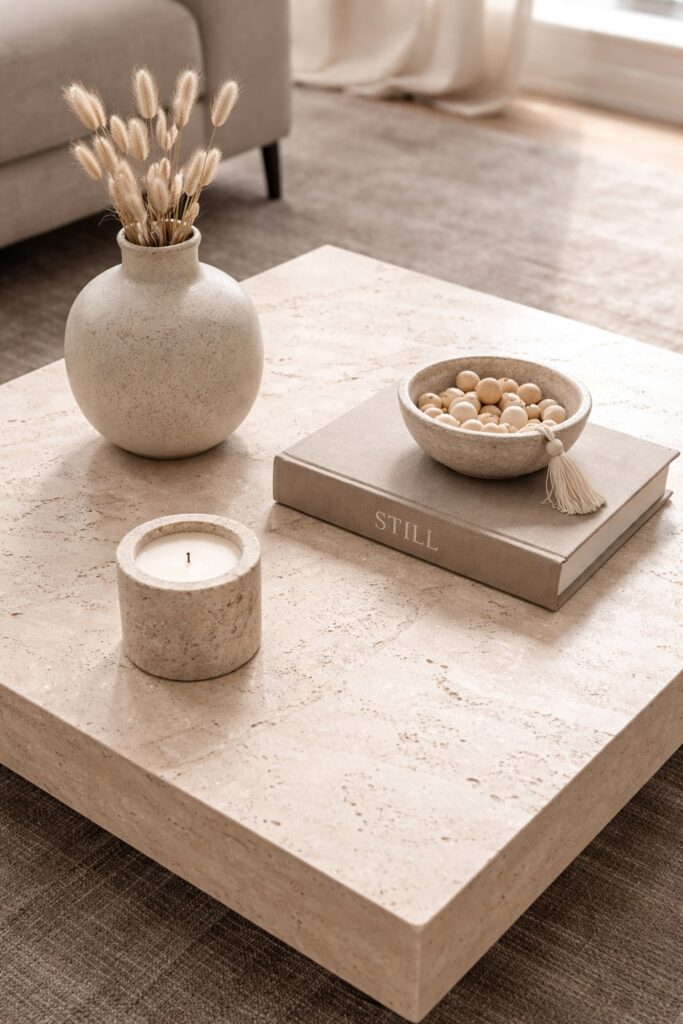
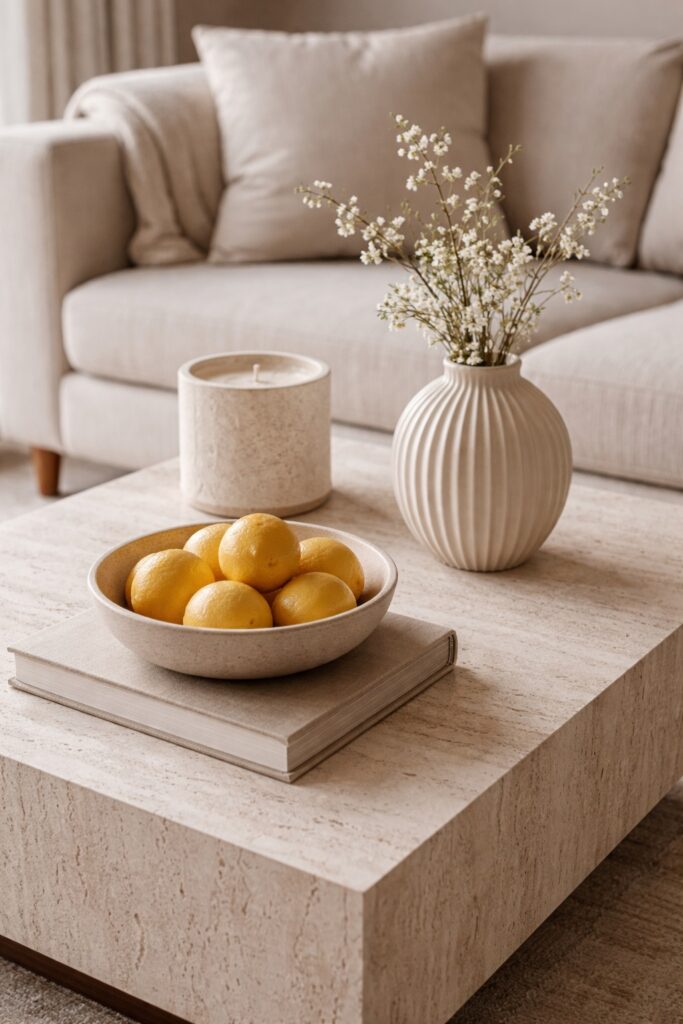
Books are one of the most versatile coffee table styling tools.
They:
- Add height and structure
- Introduce colour and texture
- Feel intentional and personal
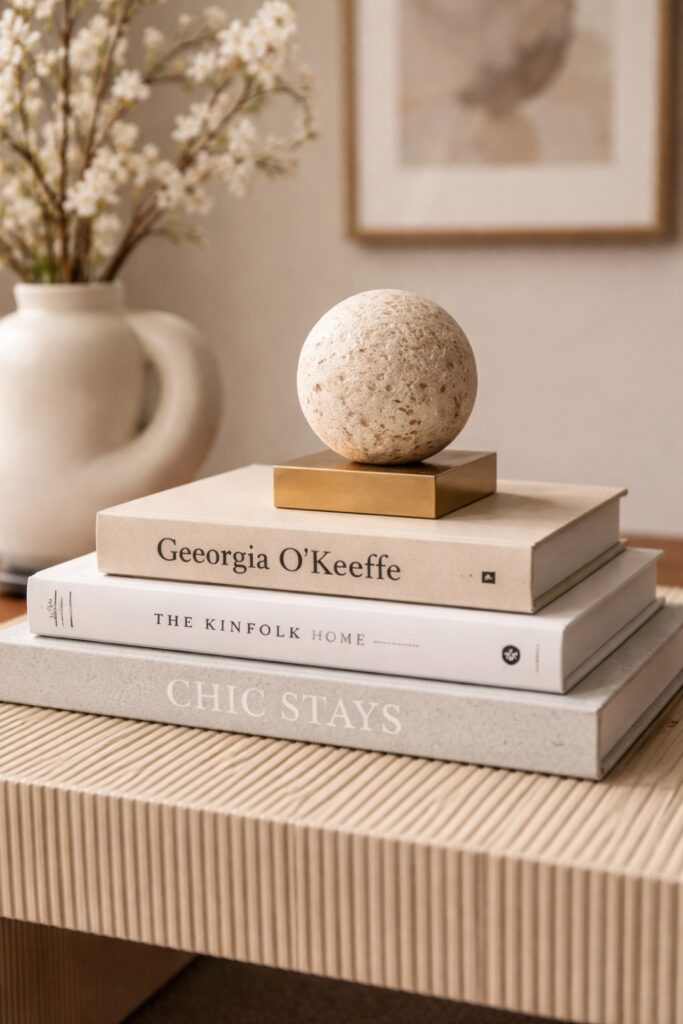
A single large book or a small stack can act as the base of your arrangement. Place smaller objects on top to create layers and prevent everything sitting flat on the table surface.
Choose books you genuinely enjoy. Authenticity always looks better than styling purely for appearance.
Adding Life With Plants or Natural Elements
A living element brings softness and movement to a coffee table.
This might be:
- A small potted plant
- A vase with fresh or dried stems
- A natural object like stone or wood
Plants work particularly well because they contrast with hard surfaces and bring a sense of ease. If you prefer low maintenance, dried arrangements or sculptural branches work just as well.
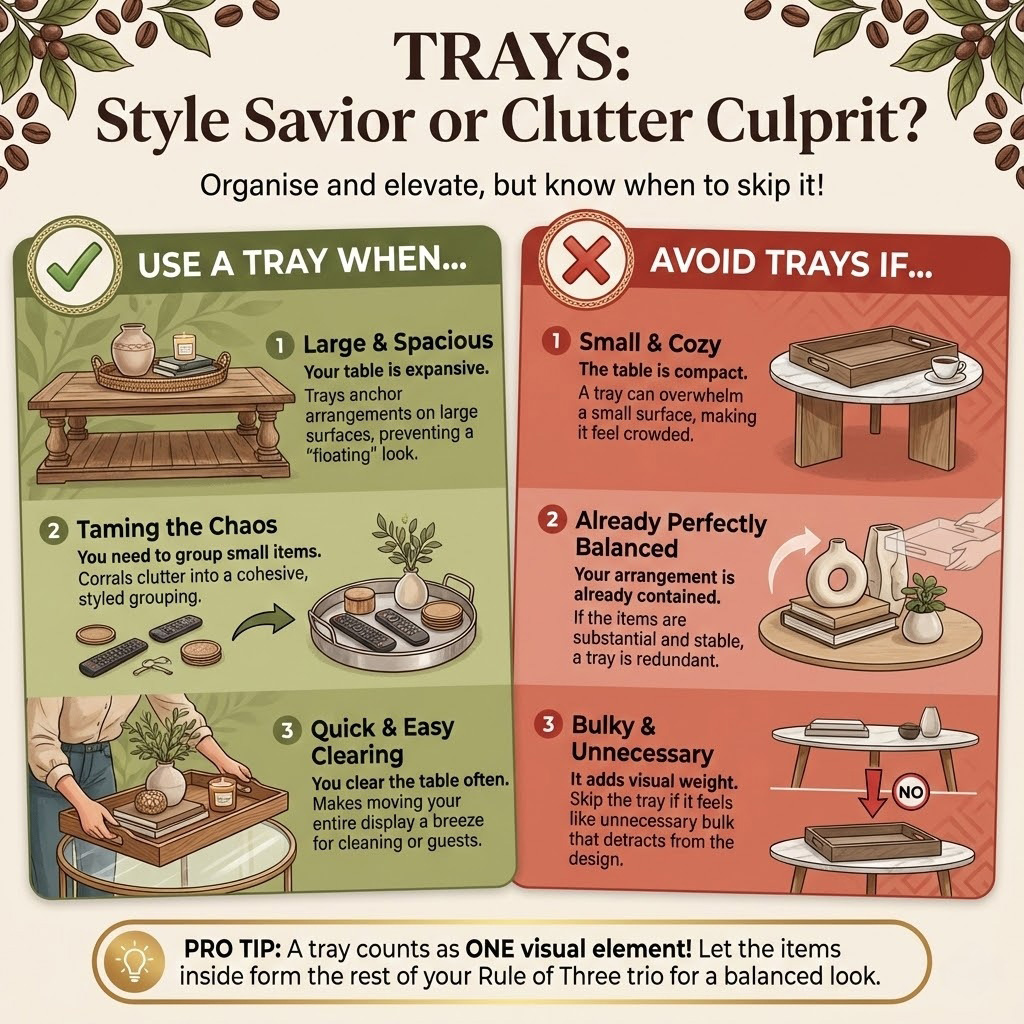
Trays: When to Use Them and When Not To
Trays can help organise items and make arrangements easier to move, but they are not always necessary.
Use a tray when:
- Your coffee table is large
- You want to group smaller items
- You need to clear the table regularly
Avoid trays if:
- The table is small
- The arrangement already feels contained
- The tray adds unnecessary bulk
A tray can count as one visual element, with the items inside it forming the rest of the trio.
Styling Different Coffee Table Shapes
Styling a coffee table is especially important in a modern and traditional living room, where balance and proportion help different design elements work together.
Rectangular Coffee Tables
These benefit from asymmetrical arrangements. Place your trio slightly off centre to create movement and avoid rigidity.
Round Coffee Tables
Curved tables suit softer, more organic groupings. Vary height carefully so the arrangement feels balanced from all sides.
Square Coffee Tables
These work well with central groupings. Consider breaking the space into quadrants visually, but keep the main trio cohesive.
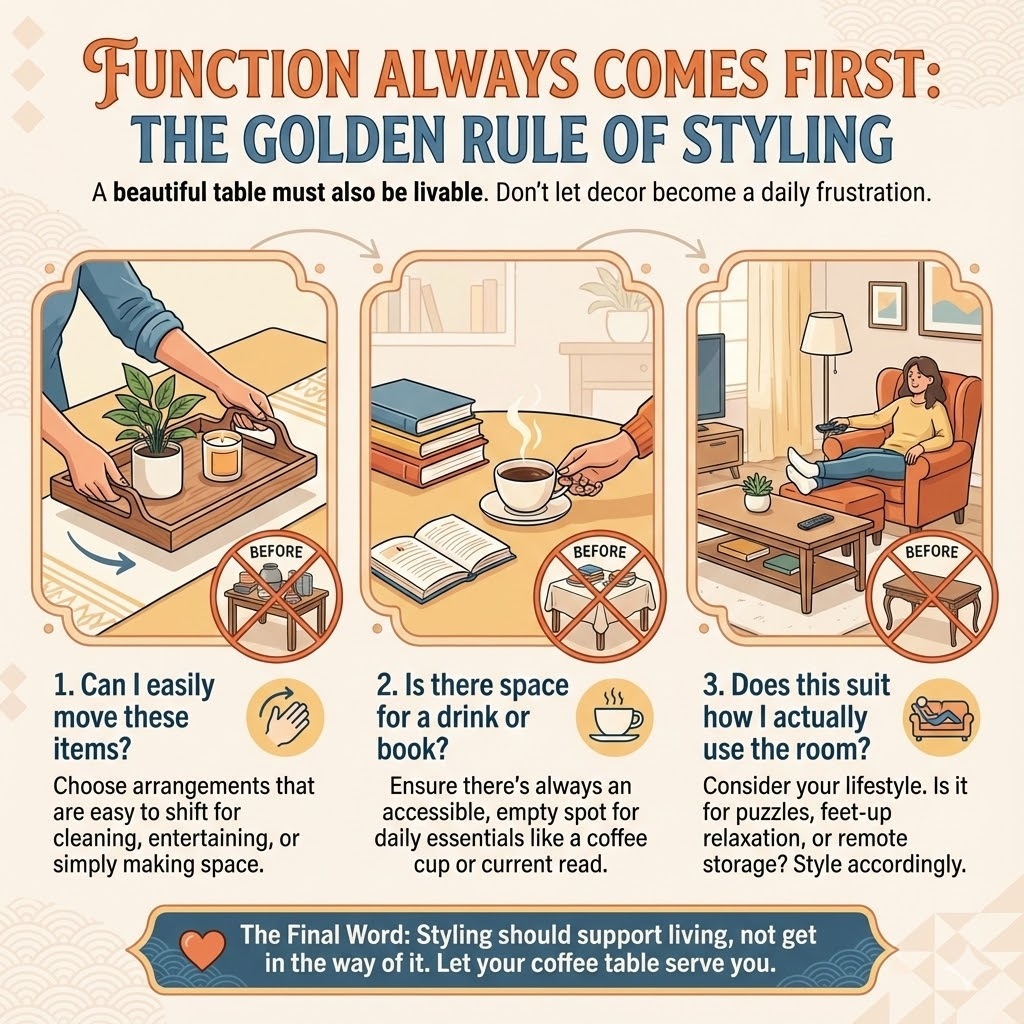
Function Always Comes First
A beautifully styled coffee table that cannot be used quickly becomes frustrating.
Before finalising your arrangement, ask:
- Can I easily move these items?
- Is there space for a drink or book?
- Does this suit how I actually use the room?
Styling should support living, not get in the way of it.
Common Coffee Table Styling Mistakes
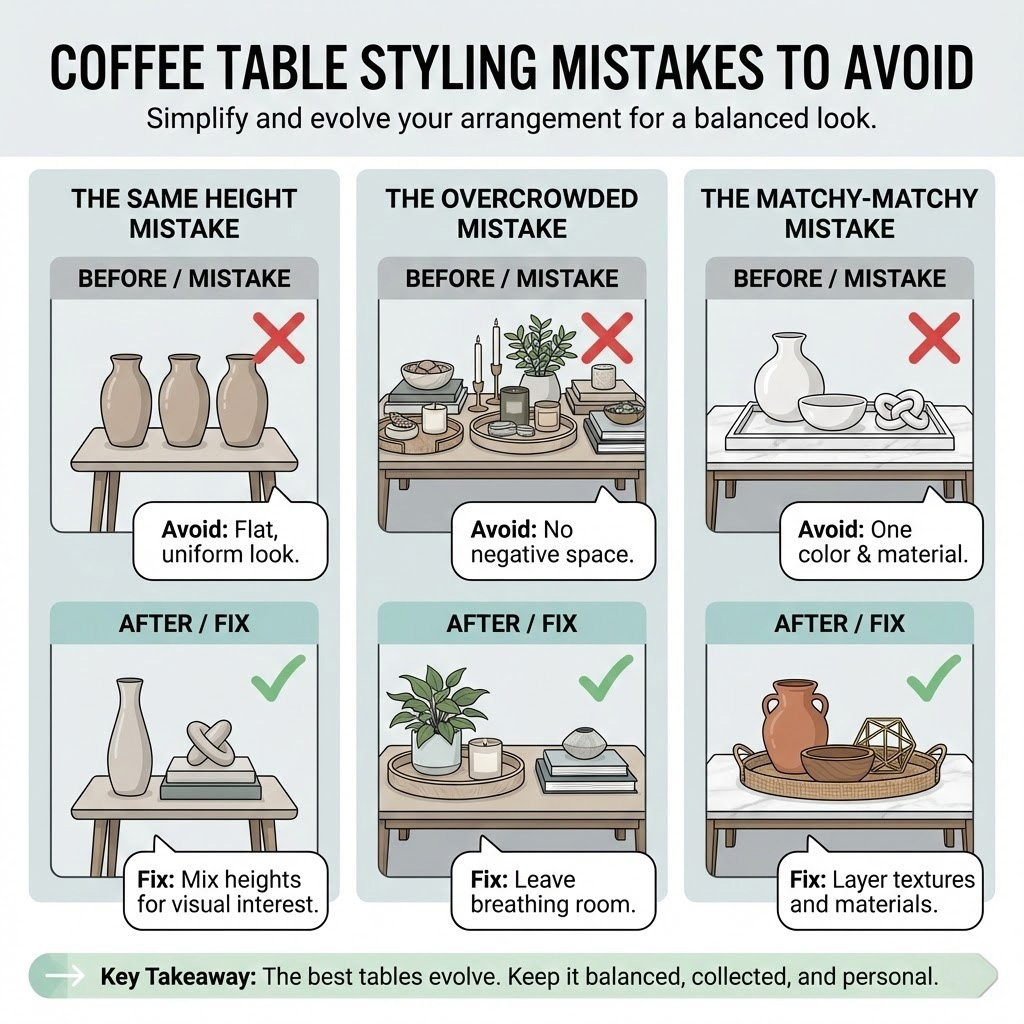
Some frequent issues include:
- Using too many small items
- Choosing objects all the same height
- Over matching colours and materials
- Filling every inch of space
- Styling once and never adjusting
The best coffee tables evolve over time. They feel collected, not fixed.
How to Adapt the Rule of Three Over Time
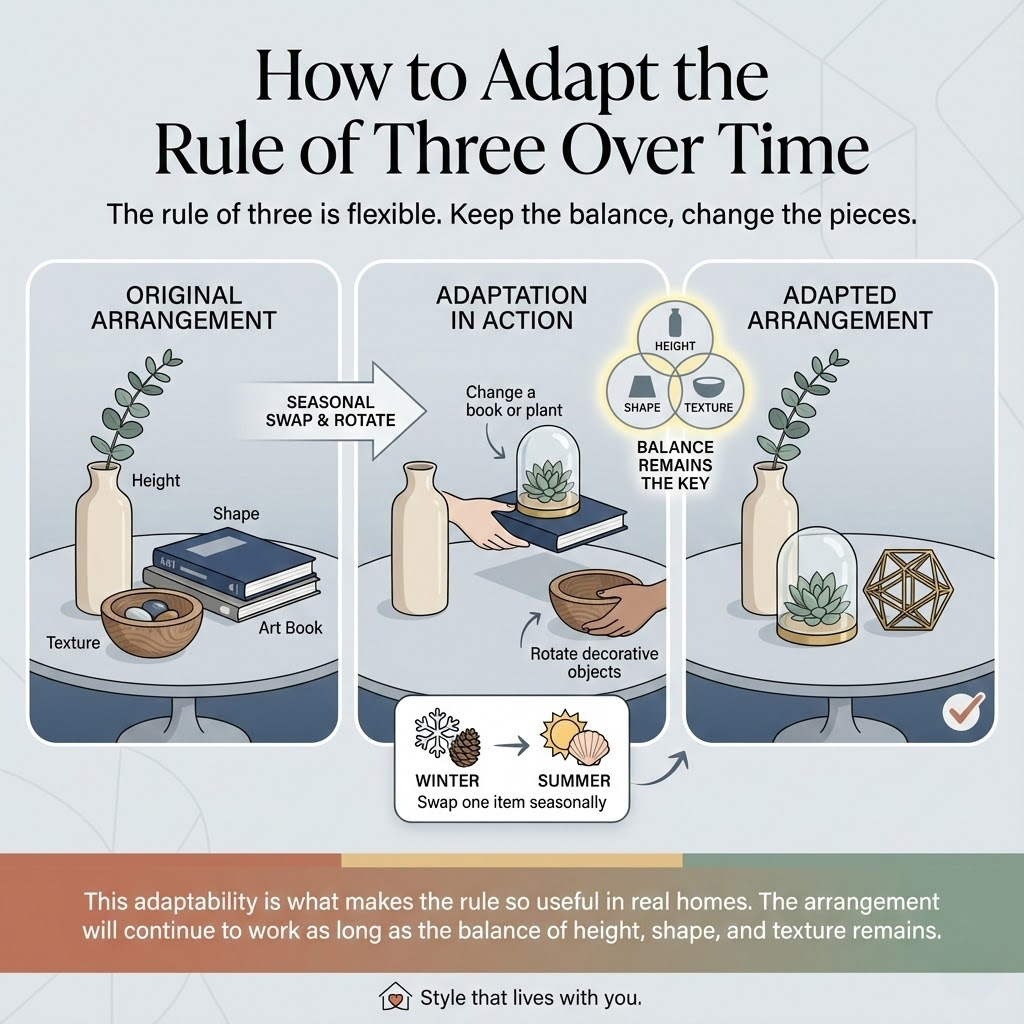
The rule of three is flexible.
You might:
- Swap one item seasonally
- Change a book or plant
- Rotate decorative objects
As long as the balance of height, shape, and texture remains, the arrangement will continue to work.
This adaptability is what makes the rule so useful in real homes.
What is the rule of three for styling a coffee table?
The rule of three means styling a coffee table with three main items of different heights or shapes to create balance and visual interest.
What should you put on a coffee table?
A simple combination of books, a decorative object, and something natural like a plant or vase works well in most living rooms.
Can you use more than three items on a coffee table?
Yes, but grouping items into threes helps the arrangement feel organised rather than cluttered.
Should a coffee table be fully styled or kept minimal?
Minimal styling usually works best. Leave space so the table remains practical for everyday use.
Do trays count as part of the rule of three?
Yes. A tray can count as one visual element, with items inside it forming the rest of the arrangement.
How often should you restyle a coffee table?
Only when needed. Swapping one item seasonally or occasionally is enough to keep it feeling fresh.
Final Thoughts: Simplicity Is the Goal
Styling a coffee table does not require perfection or expensive accessories. It requires restraint, intention, and a clear understanding of balance.
The rule of three provides a simple framework that helps coffee tables feel styled without becoming cluttered. By focusing on variation, texture, and function, you can create an arrangement that feels effortless and personal.
When in doubt, remove rather than add. Space is part of the design.