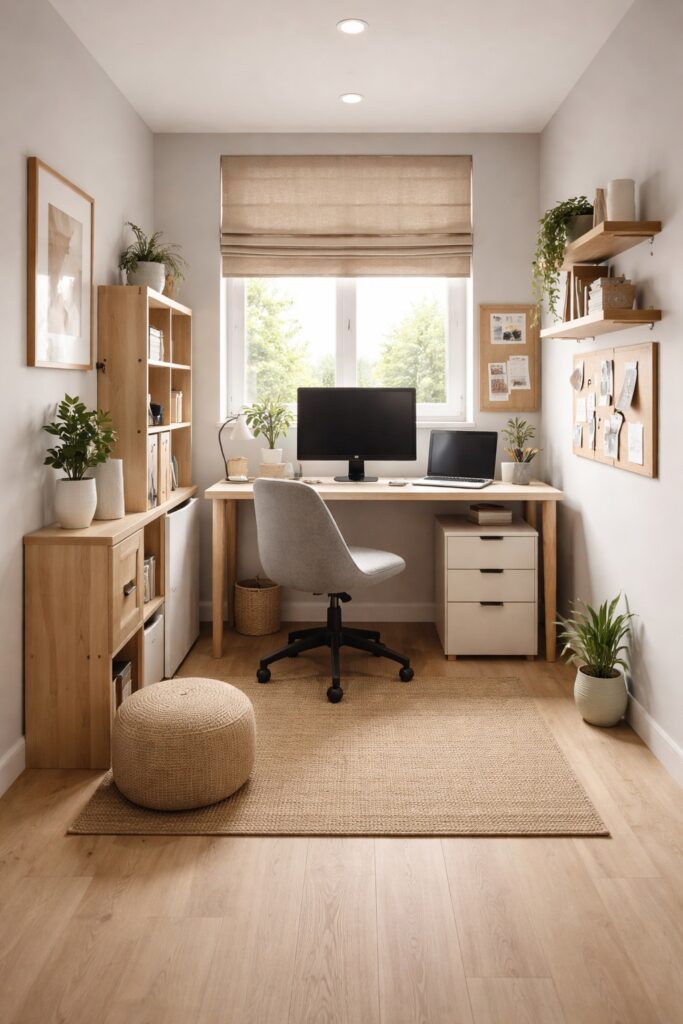
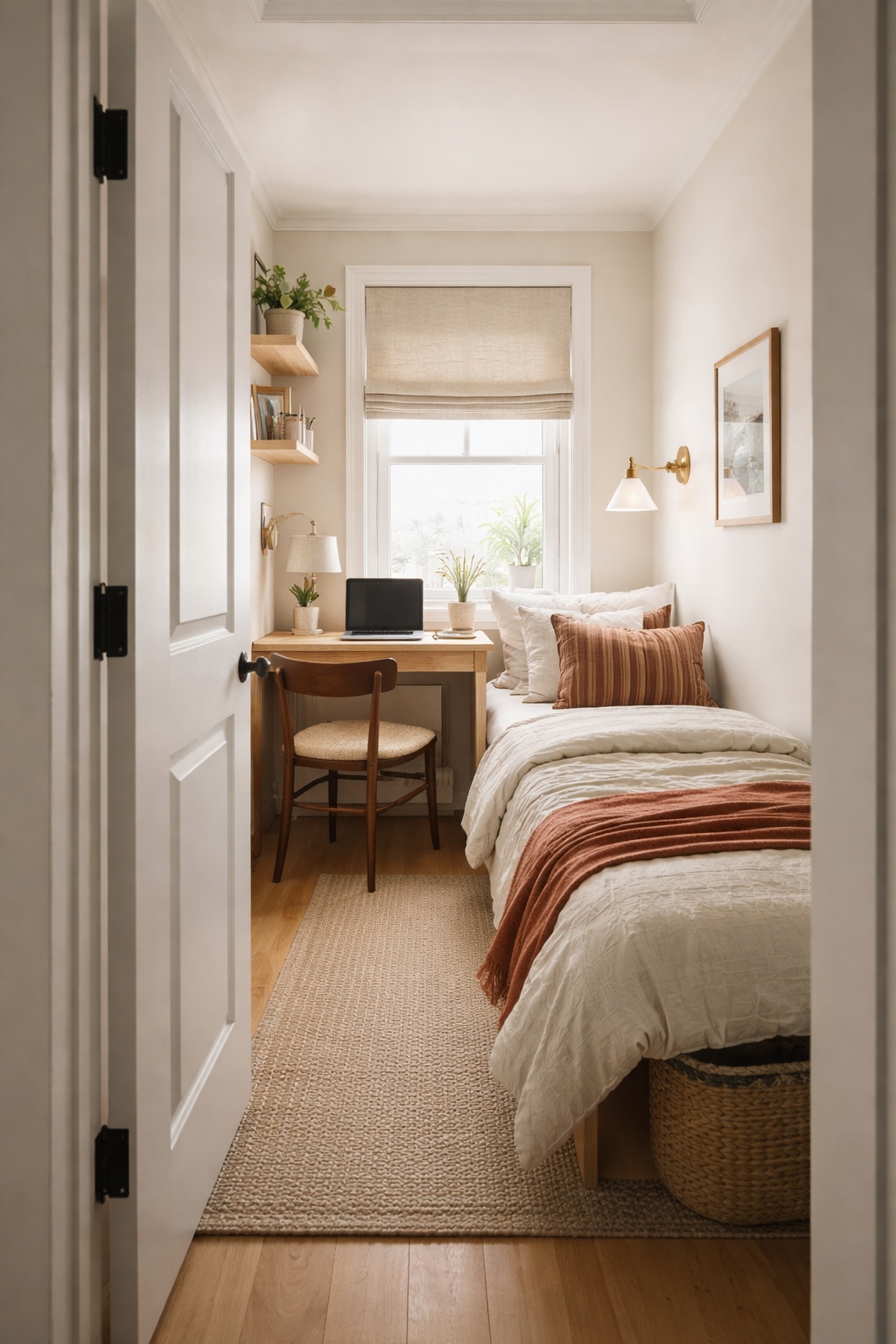
A box room home office is often the most realistic way to make use of a tiny third bedroom, especially as working from home becomes more common.
Turning a tiny third bedroom into a functional home office can feel like a challenge, but with the right approach, even the smallest room can become a productive and comfortable workspace.
Understanding the Box Room Home Office Limitations
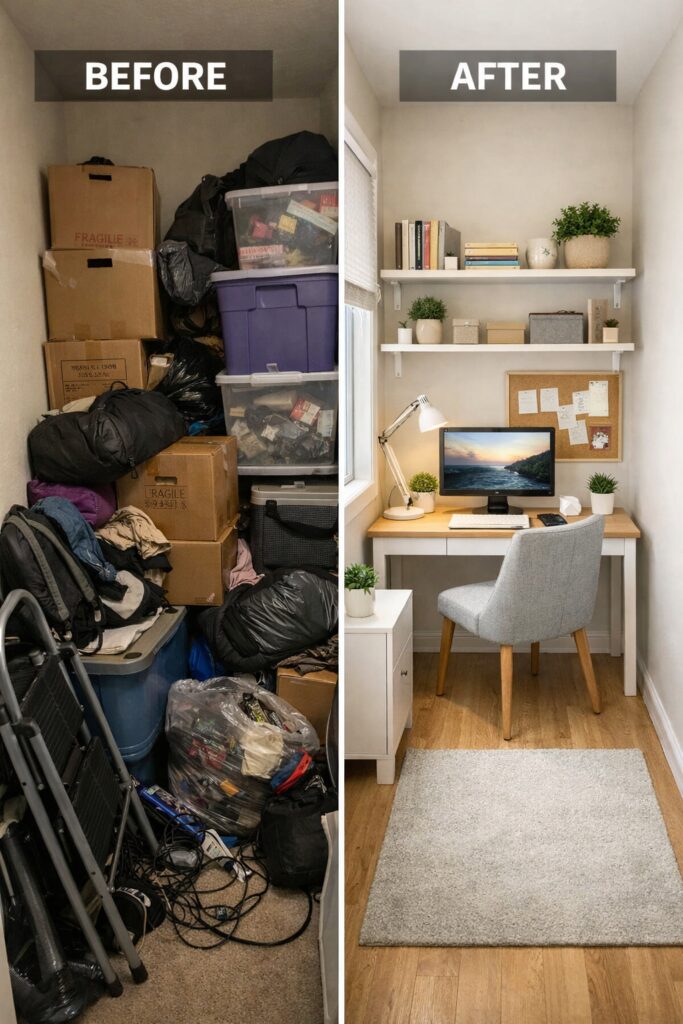
Before making any changes, it helps to be realistic about what a box room can and cannot do. These rooms are often limited by width rather than length, with restricted natural light and minimal storage.
Trying to force a traditional office layout into a small room usually leads to frustration. The key is to work with the proportions of the space rather than against them, prioritising function over convention.
This approach is especially useful when making modern home offices work in period homes, where space is limited and original features need to be respected.
Rethinking the Layout First
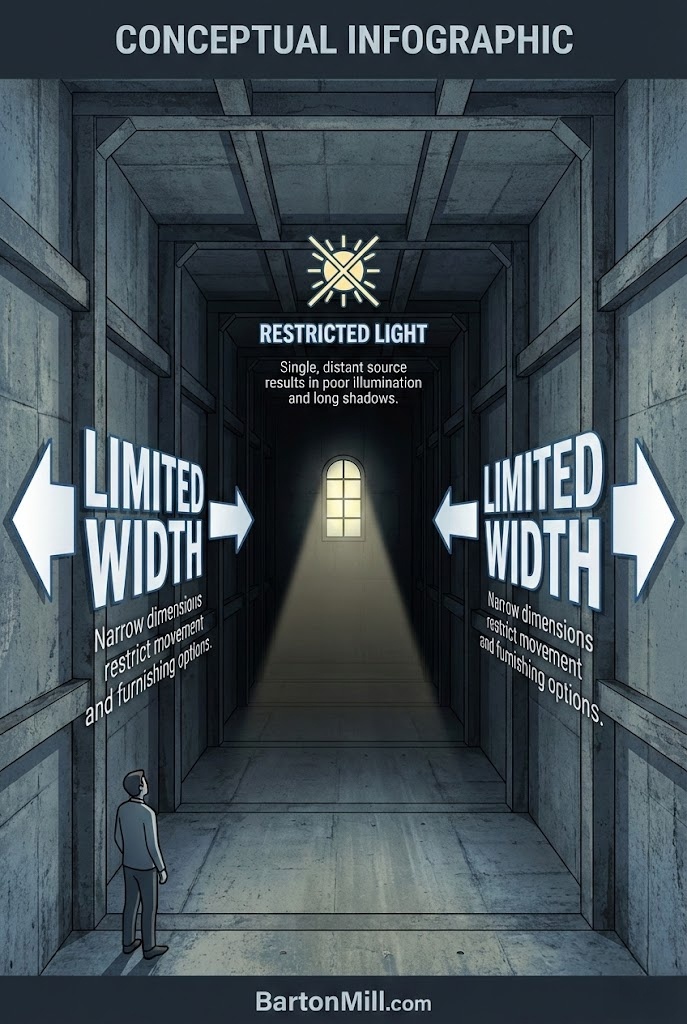
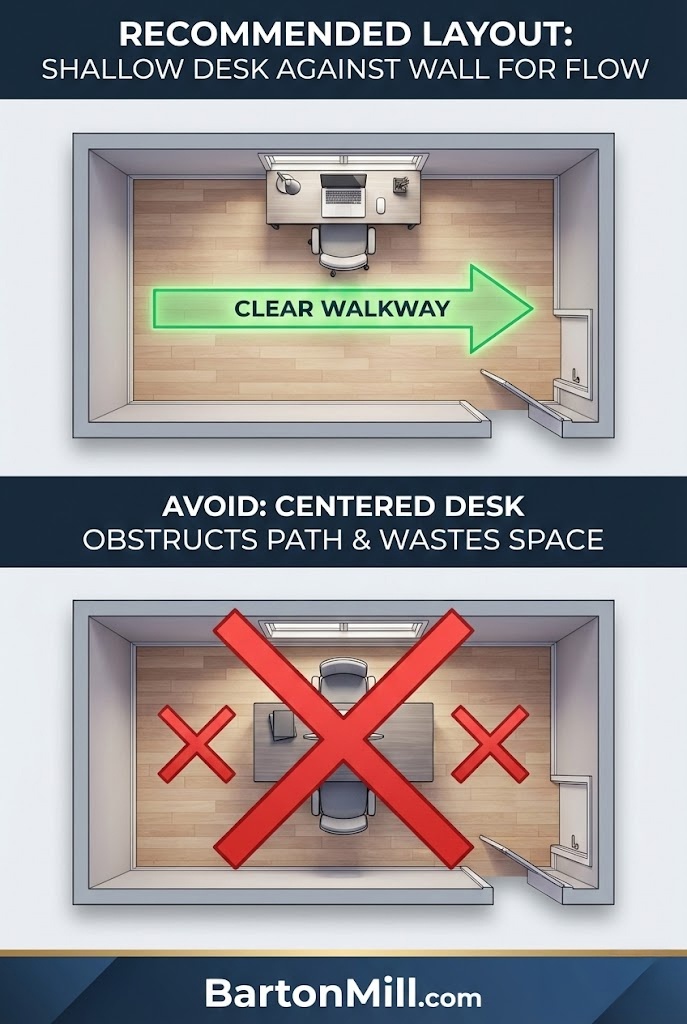
Layout matters more than furniture size in a small home office. Instead of placing a desk in the centre of the room, look at how the walls can be used more efficiently.
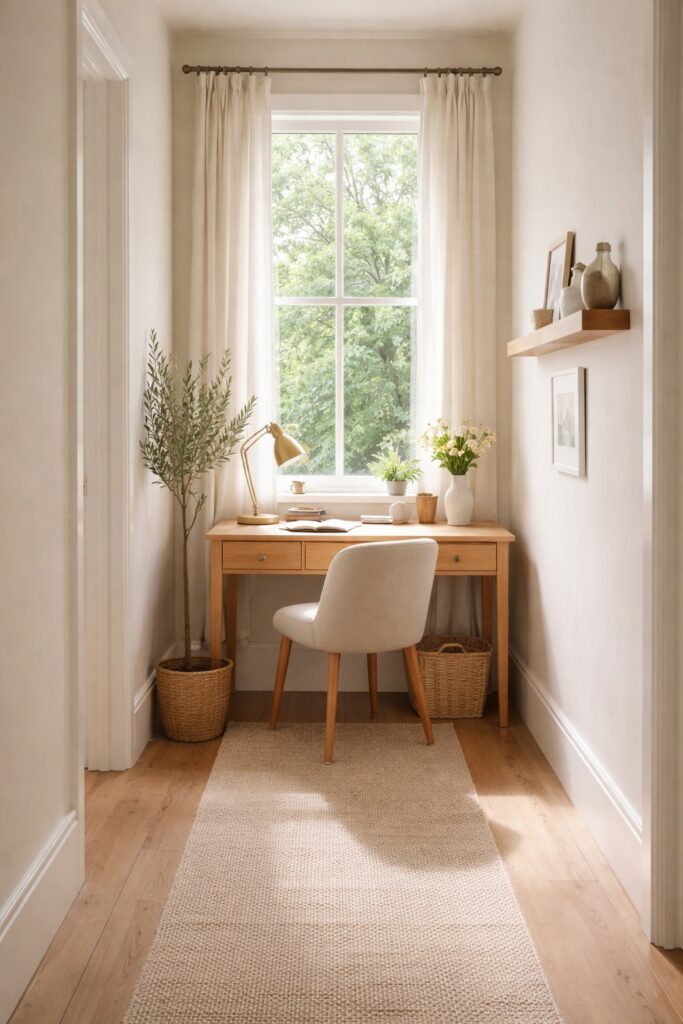
Positioning a desk against the longest wall or under a window often frees up floor space. In particularly narrow rooms, a shallow desk can be more practical than a standard depth one. The goal is to allow comfortable movement without making the room feel cramped.
Choosing the Right Desk for a Small Space
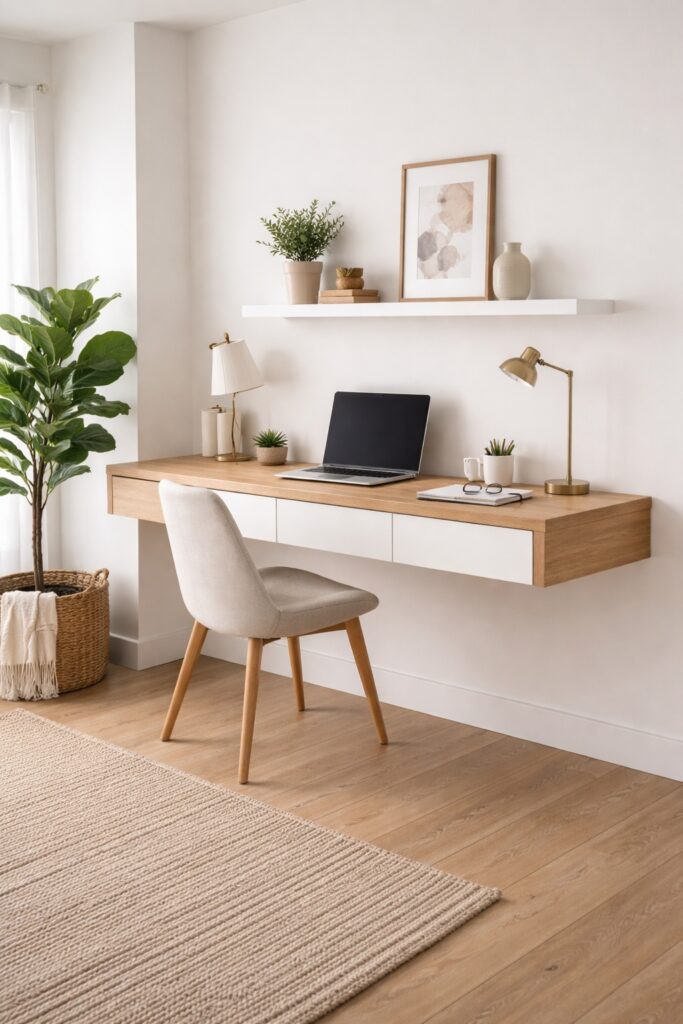
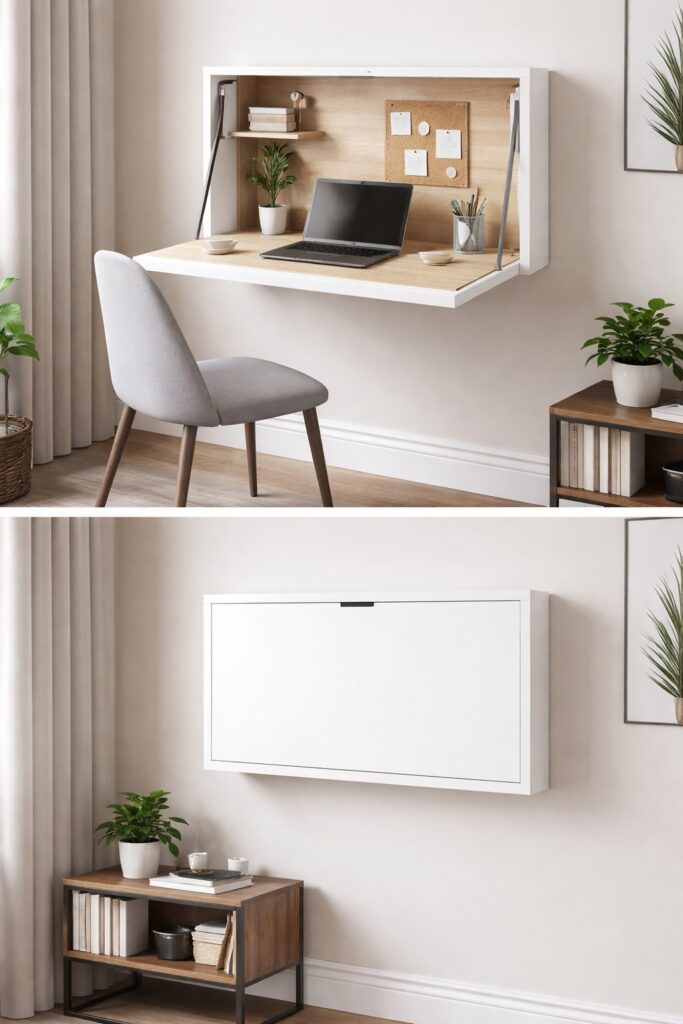
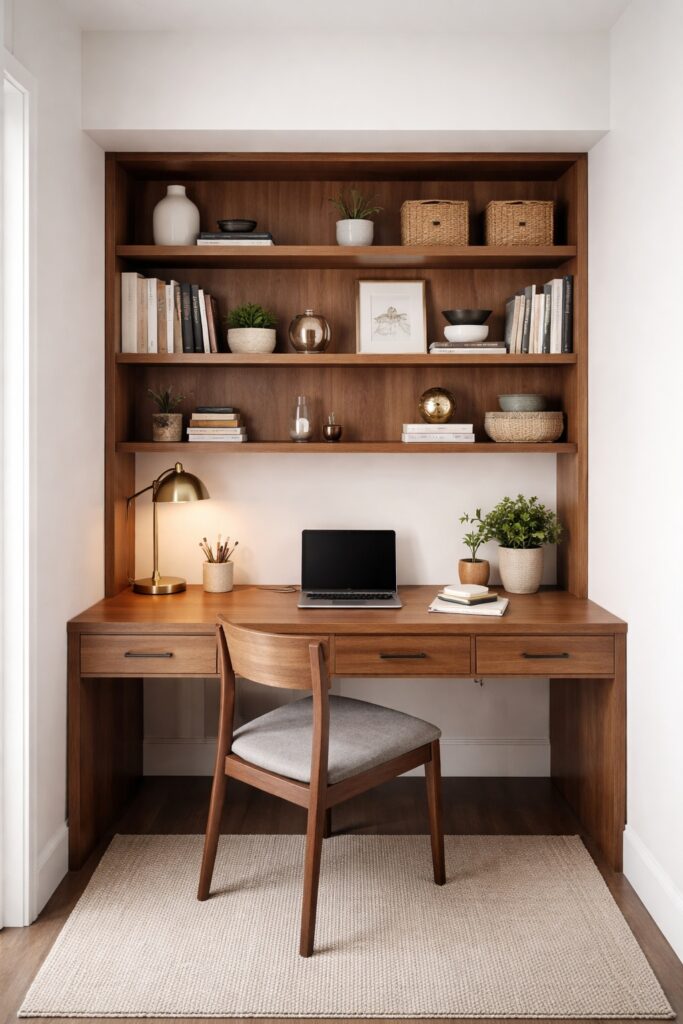
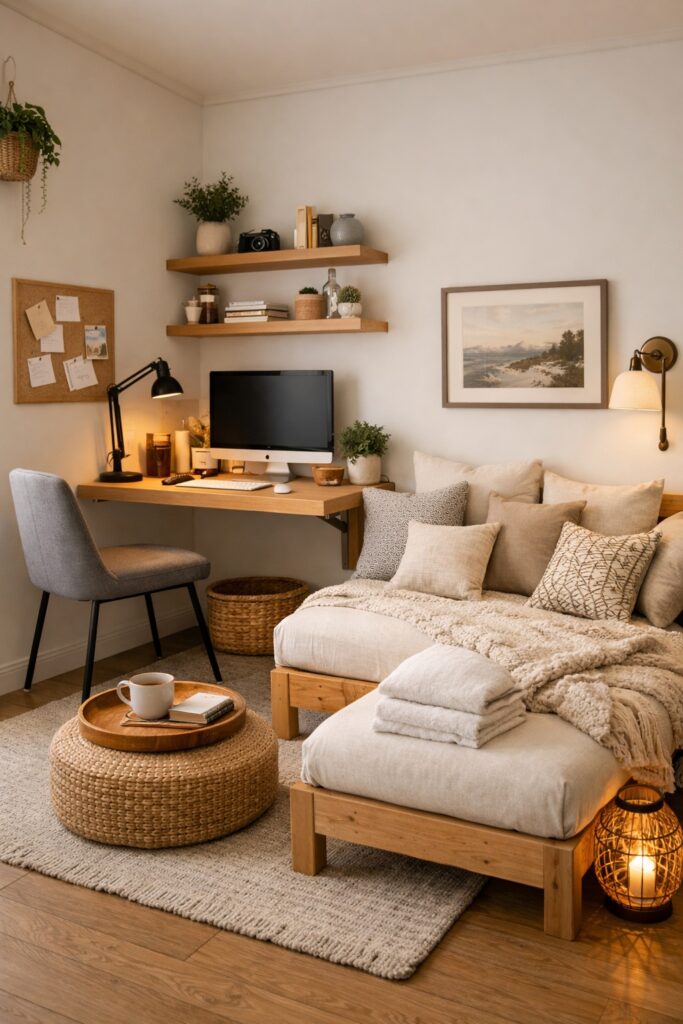
A desk that is too bulky will overwhelm a box room. Slimline desks, wall mounted desks, or bespoke options designed to fit the exact width of the room are often the best solution.
If the room needs to remain flexible, a fold down or floating desk can provide a workspace without permanently dominating the room. This approach works especially well if the box room occasionally needs to double as storage or a guest space.
Storage Without Clutter
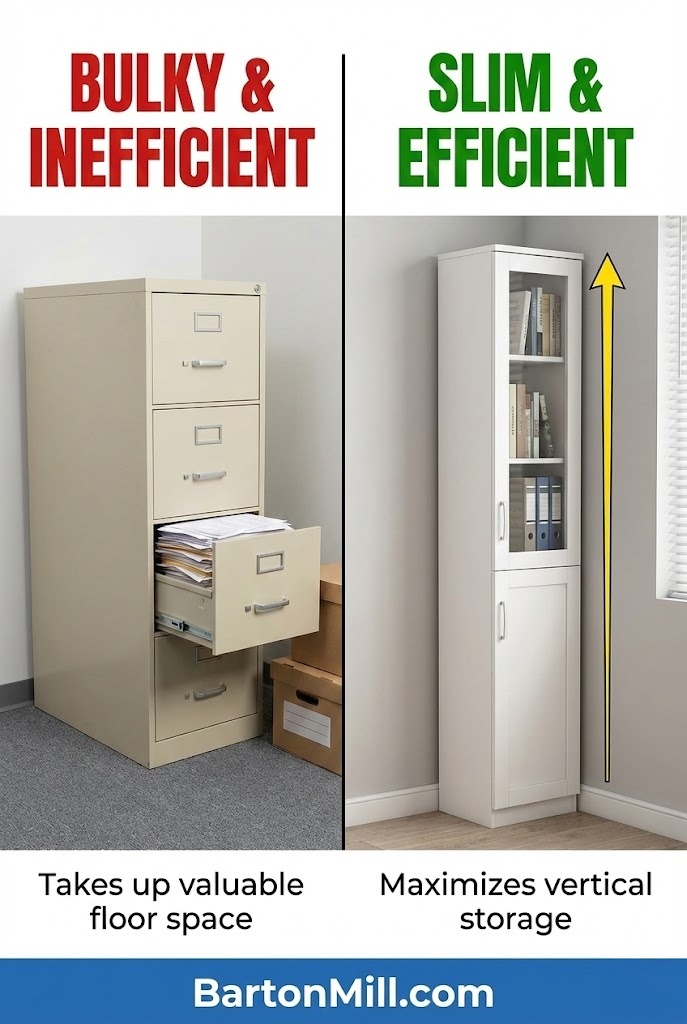
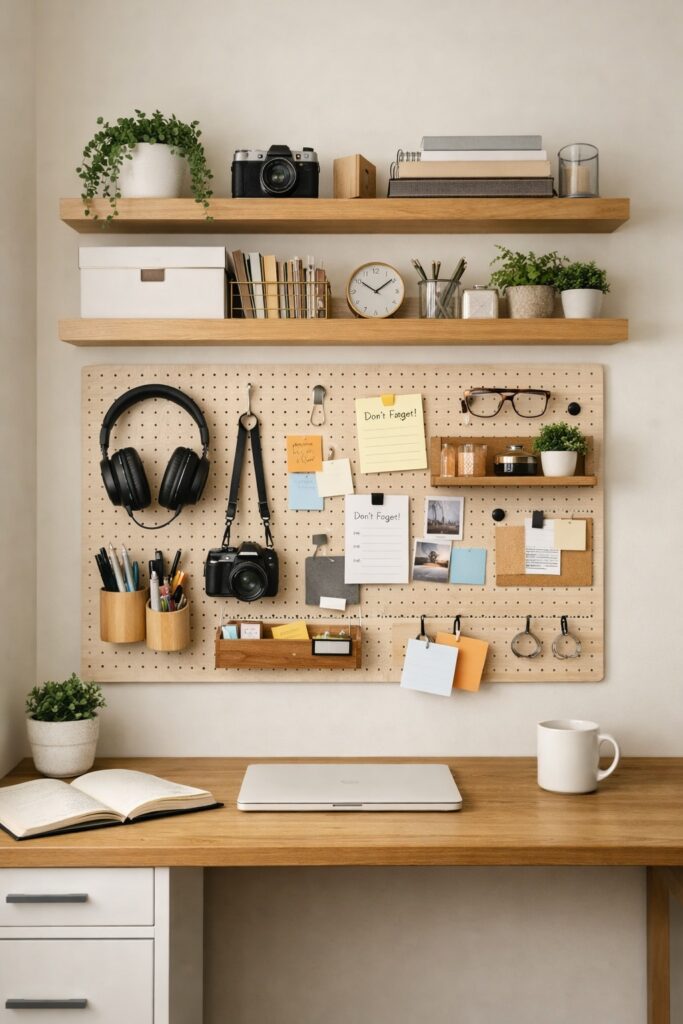
Storage is essential in a home office, but traditional filing cabinets rarely work in small rooms. Vertical storage is far more effective.
Wall shelves, slim cupboards, and peg boards allow you to store essentials without using valuable floor space. Keeping surfaces as clear as possible helps the room feel calmer and more spacious, which is important in a small working environment.
Lighting a Small Home Office Properly
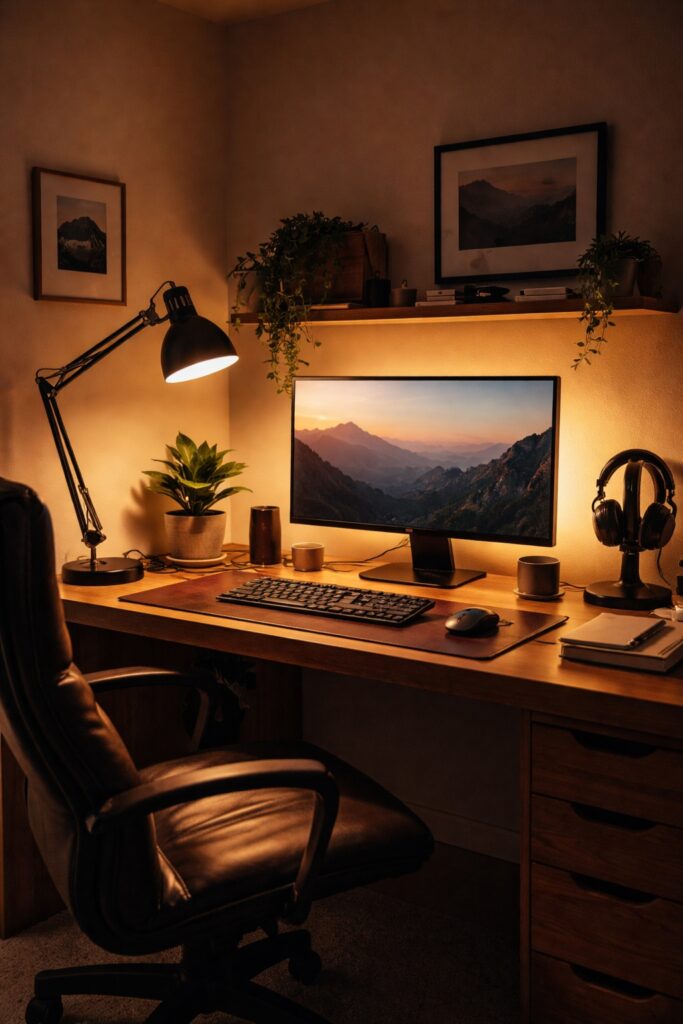
Lighting can make or break a box room office. Many of these rooms have limited daylight, which can make them feel closed in during working hours.
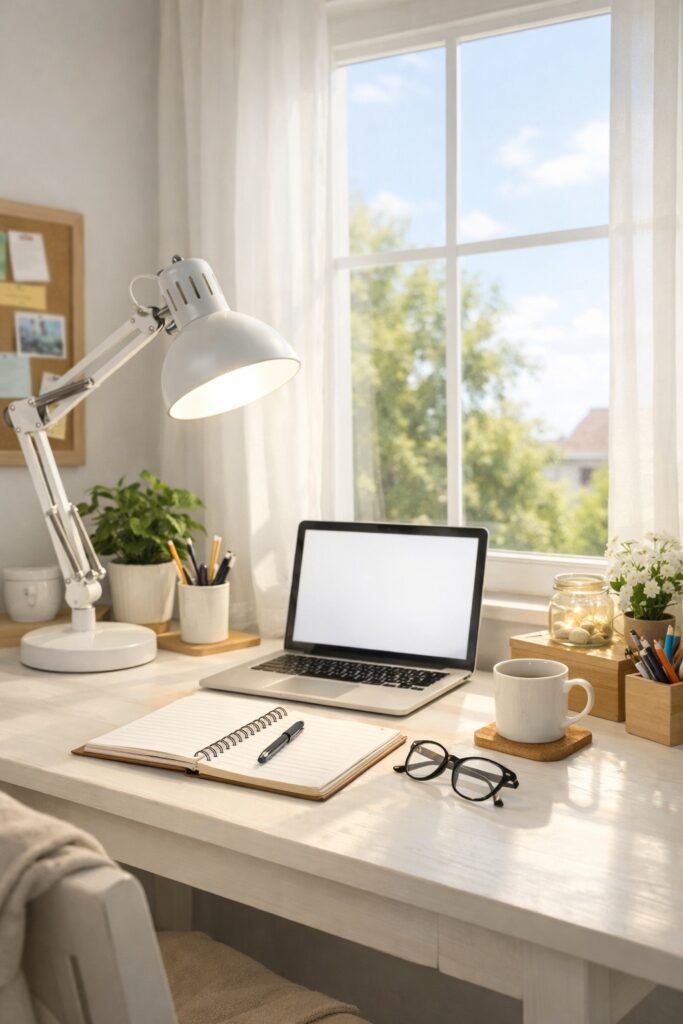
Layered lighting works best. A combination of general lighting and a focused task light prevents eye strain and adds depth to the room. Positioning a desk lamp carefully can also help define the workspace and make the room feel intentional rather than improvised.
Making the Room Feel Bigger Than It Is
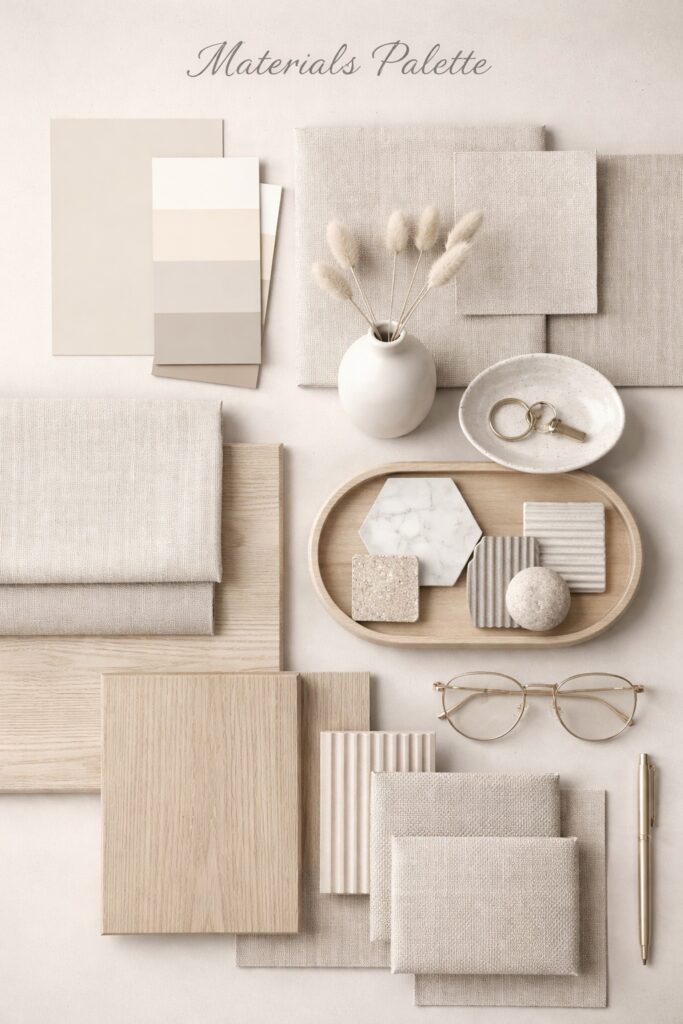
Visual tricks can help a small room feel more open. Light wall colours reflect more light and reduce the sense of enclosure. Soft neutrals often work better than stark white, which can feel cold in a compact space.
Keeping furniture finishes consistent also helps. Too many contrasting colours or materials can make a small room feel busy and cluttered.
In compact spaces, choosing the right white paint for small rooms can help reflect light and reduce the feeling of enclosure.
Comfort Still Matters
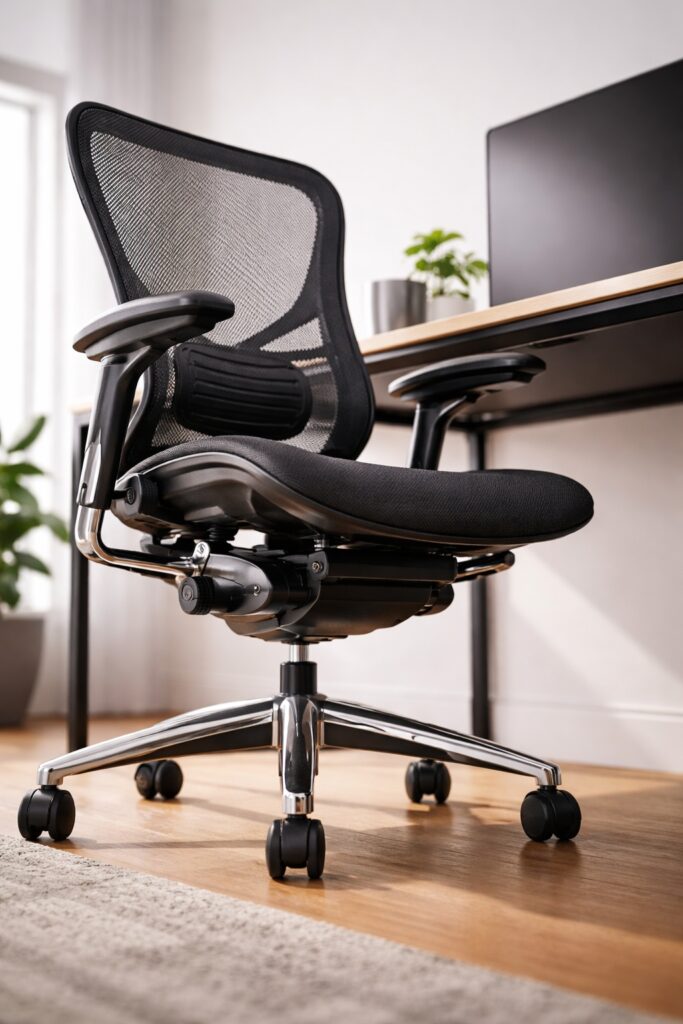
It can be tempting to sacrifice comfort in a small room, but this usually leads to a space you avoid using. A supportive chair, adequate legroom, and good lighting are essential, even in a compact office.
Many of the same principles used when creating a comfortable working space at home apply here, particularly around lighting, texture, and warmth.
If space is tight, prioritise the chair over the desk. A comfortable chair makes a bigger difference to daily use than a larger work surface.
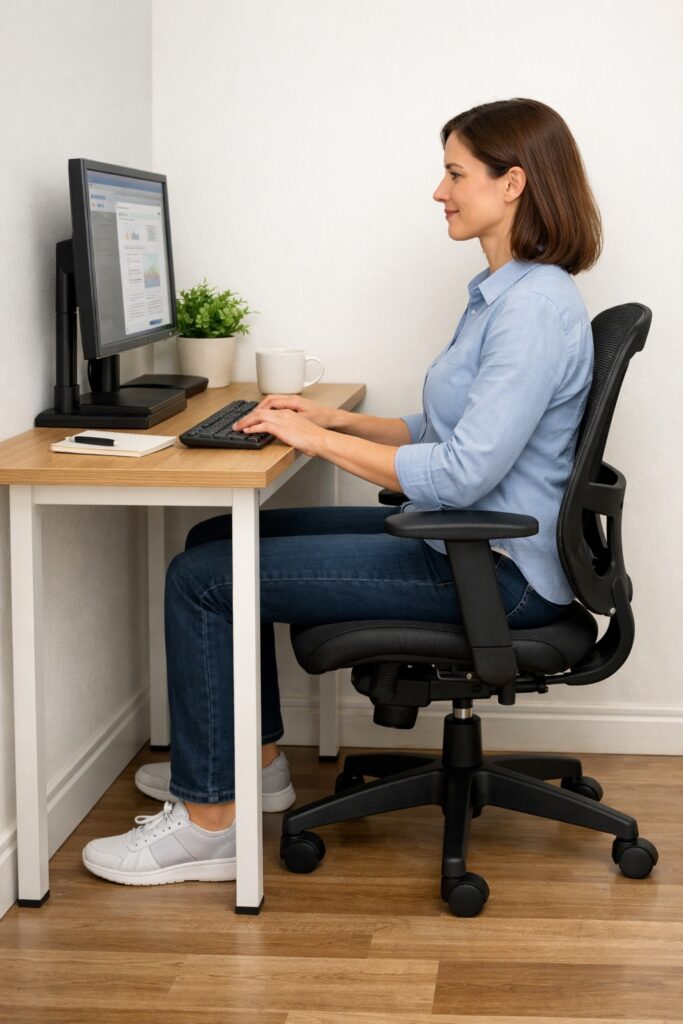
Comfort should never be overlooked in a small office. Official guidance on working safely from home highlights the importance of proper seating, screen height, and lighting, even when space is limited.
Sound and Privacy Considerations
Box rooms are often positioned near staircases or shared walls, which can make noise an issue. Simple additions such as thicker curtains, a rug, or soft furnishings can help absorb sound and make the room feel quieter.
If the room does not have a door that fully closes, upgrading it can significantly improve privacy and concentration.
Paying attention to posture is especially important in smaller rooms. Advice on good posture when working at a desk reinforces why chair support and desk height matter as much as layout.
When the Box Room Needs to Do Double Duty
In some homes, the third bedroom still needs to function as a guest room or storage space. In these cases, flexibility is key.
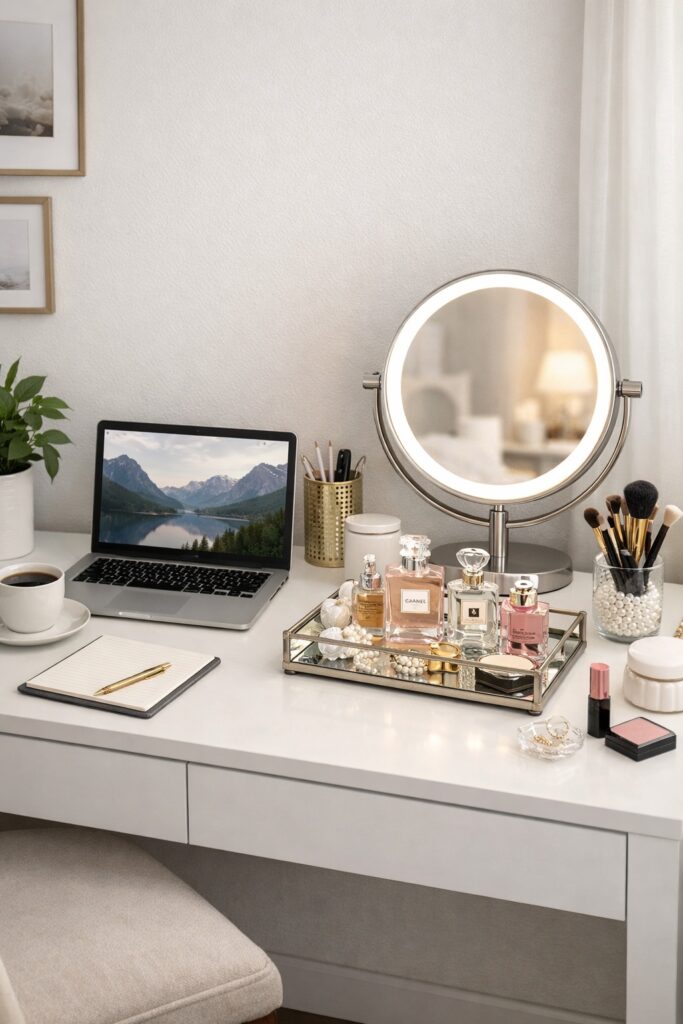
Multi purpose furniture, such as a desk that doubles as a dressing table or shelves that hold both work items and household storage, can help the room serve more than one role without feeling cluttered.
Accepting the Scale of the Space
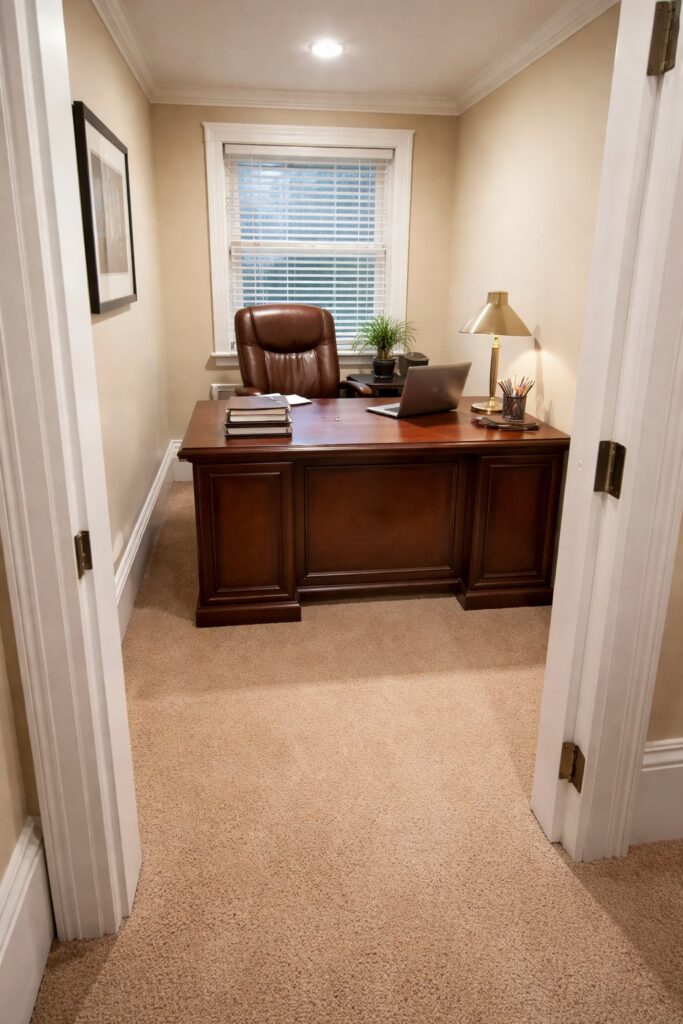
One of the biggest mistakes with a box room office is trying to make it feel like a full sized study. Accepting the scale of the room allows you to design it more effectively.
A small, well planned office that feels calm and functional is far more useful than a cramped room filled with oversized furniture.
Final Thoughts
The box room dilemma is less about size and more about approach. With thoughtful layout choices, smart storage, and careful attention to lighting, a tiny third bedroom can become a highly effective home office.
Rather than seeing the box room as a compromise, treat it as an opportunity to create a focused, distraction free workspace that fits neatly into the flow of your home.